What Is a Legend?
Taught in US schools

Key Takeaways
- A legend is a traditional story that people believe has a basis in real history, even if the details have been greatly exaggerated.
- Legends differ from myths (which feature gods and explain natural phenomena) and tall tales (wildly impossible American folk stories).
- Legends endure because they embody a culture's values - bravery, justice, loyalty, or ingenuity.
What Is a Legend?
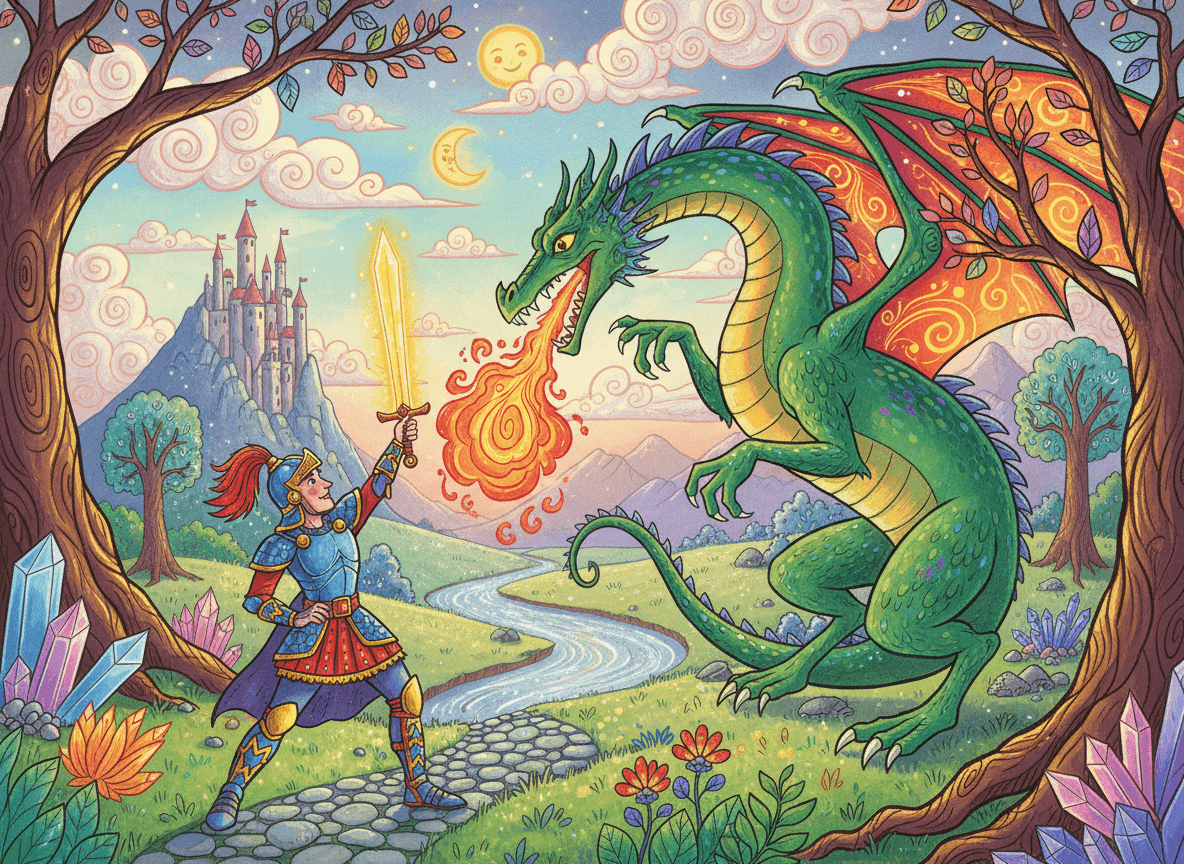
A legend is a traditional story that people believe - or once believed - is based on real events or real people, even if the details have been greatly exaggerated over time. Legends have been passed down across generations, usually by word of mouth, and they often teach something important about the values of the culture that created them.
The key difference between a legend and pure fiction: a legend has a historical kernel - a real person, place, or event at its core.
How Legends Compare to Related Genres
Legend: Based (loosely) on real history; human heroes; moral lessons - King Arthur, Robin Hood, Pocahontas, Johnny Appleseed
Myth: Features gods and supernatural beings; explains natural phenomena - Greek myths (Zeus, Poseidon), Norse myths (Thor)
Tall Tale: American folk heroes; wildly impossible, comic exaggeration - Paul Bunyan, Pecos Bill, John Henry, Calamity Jane
Folktale: Traditional story from a culture; teaches a lesson; no historical basis required - Cinderella, Anansi the Spider
Famous Legends
World Legends
-
King Arthur - The legendary British king who pulled a sword from a stone and led the Knights of the Round Table. Historians debate whether a real Arthur-like figure existed in post-Roman Britain.
-
Robin Hood - The English outlaw who robbed from the rich to give to the poor. Based possibly on medieval ballads about real outlaws in Sherwood Forest.
American Legends
-
Johnny Appleseed (John Chapman) - A real 19th-century nurseryman who planted apple trees across Ohio and Indiana, whose story grew into a legend of a gentle, barefoot wanderer.
-
Davy Crockett - A real frontiersman and congressman (1786–1836) whose bravery at the Alamo became the stuff of legend.
-
Pocahontas - A real Powhatan woman (c. 1596–1617) whose life was dramatically retold and mythologized, particularly her relationship with John Smith.
Why Legends Last
Legends persist because they embody values a culture holds dear:
- King Arthur = chivalry, justice, loyalty
- Robin Hood = justice for the poor, resistance to corrupt authority
- Johnny Appleseed = generosity, harmony with nature
- Davy Crockett = frontier bravery, independence
These stories are retold because they show who a culture wants to be, not just who they were.
Practice Activities
- Read two versions of the same legend (e.g., two retellings of King Arthur) and compare how the details changed.
- Use a Venn diagram to compare a legend and a myth, identifying what they share and what makes each unique.
- Research the real historical person behind a legend and discuss what is fact vs. what was added over time.
- Write your own short legend based on a real person you admire, exaggerating one heroic quality.
- Create a class museum where each student presents an illustration and summary of a different legend from around the world.
Frequently Asked Questions
What is the difference between a legend and a myth?
A myth features gods, goddesses, or supernatural beings and usually explains how something in the natural world came to be (the seasons, thunder, fire). A legend is set in a more historical world and features human (or partly human) heroes, with events believed to have some basis in reality.
What is the difference between a legend and a tall tale?
Both exaggerate, but tall tales are a specifically American genre with impossible, comic exaggeration (Paul Bunyan dug the Grand Canyon, Pecos Bill rode a tornado). Legends come from cultures worldwide and are generally taken more seriously as history.
Is Johnny Appleseed a legend or a tall tale?
Johnny Appleseed sits on the border. John Chapman was a real historical person who planted apple trees across the frontier. Over time his story was embellished until it has qualities of both a legend (real person, historical basis) and a tall tale (superhuman feats). Most teachers classify him as an American legend or folk hero.
Free Legend Worksheets
Curriculum-aligned printable worksheets for 3rd – 5th Grade. Download free.