What Is Mystery? (Literary Genre)
Taught in US schools
Key Takeaways
- Mystery is a genre built around a puzzle, crime, or unexplained event to be solved.
- Clues, suspects, red herrings, and a resolution are the hallmarks of mystery structure.
- Mysteries engage inference and prediction - readers actively solve the puzzle alongside the character.
- The genre ranges from cozy mysteries for young readers to complex detective fiction for older students.
What Is the Mystery Genre?
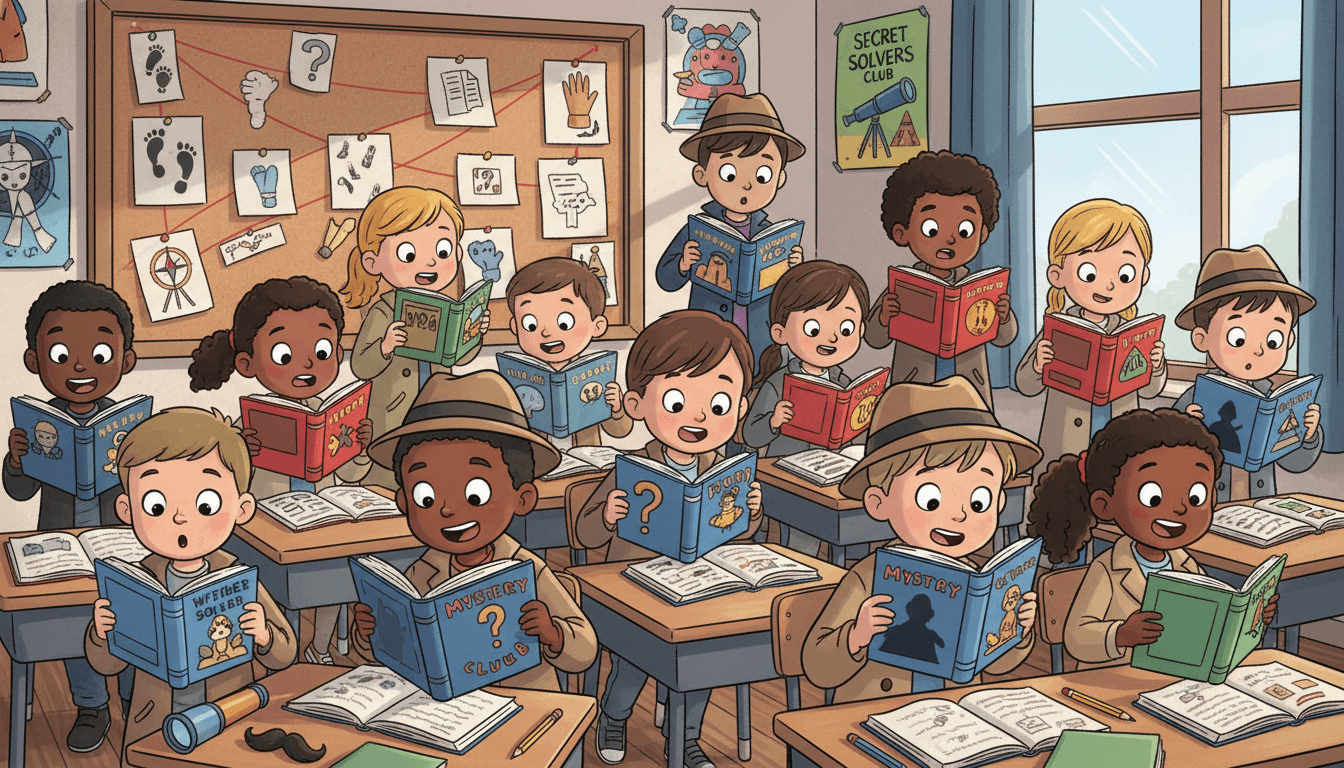
Mystery is a fiction genre in which a puzzle or unexplained event - often a crime such as a theft or disappearance - forms the central conflict of the story. The reader is invited to solve the mystery alongside the protagonist by gathering clues, evaluating suspects, and reasoning toward a conclusion.
Mystery is one of the most popular genres for elementary readers because it is inherently interactive - good mysteries make readers active participants, not passive observers.
Elements of a Mystery Story
The Central Puzzle or Crime Every mystery has a question at its center: Who stole the trophy? What happened to the missing painting? Where did the ghost come from? This question drives the entire plot.
The Investigator (Protagonist) The main character is typically a detective, an amateur sleuth, or a curious child who takes it upon themselves to solve the mystery. Famous examples: Sherlock Holmes, Encyclopedia Brown, Cam Jansen, Nancy Drew.
Suspects Characters who might be responsible for the mystery. A good mystery has multiple plausible suspects, keeping readers guessing.
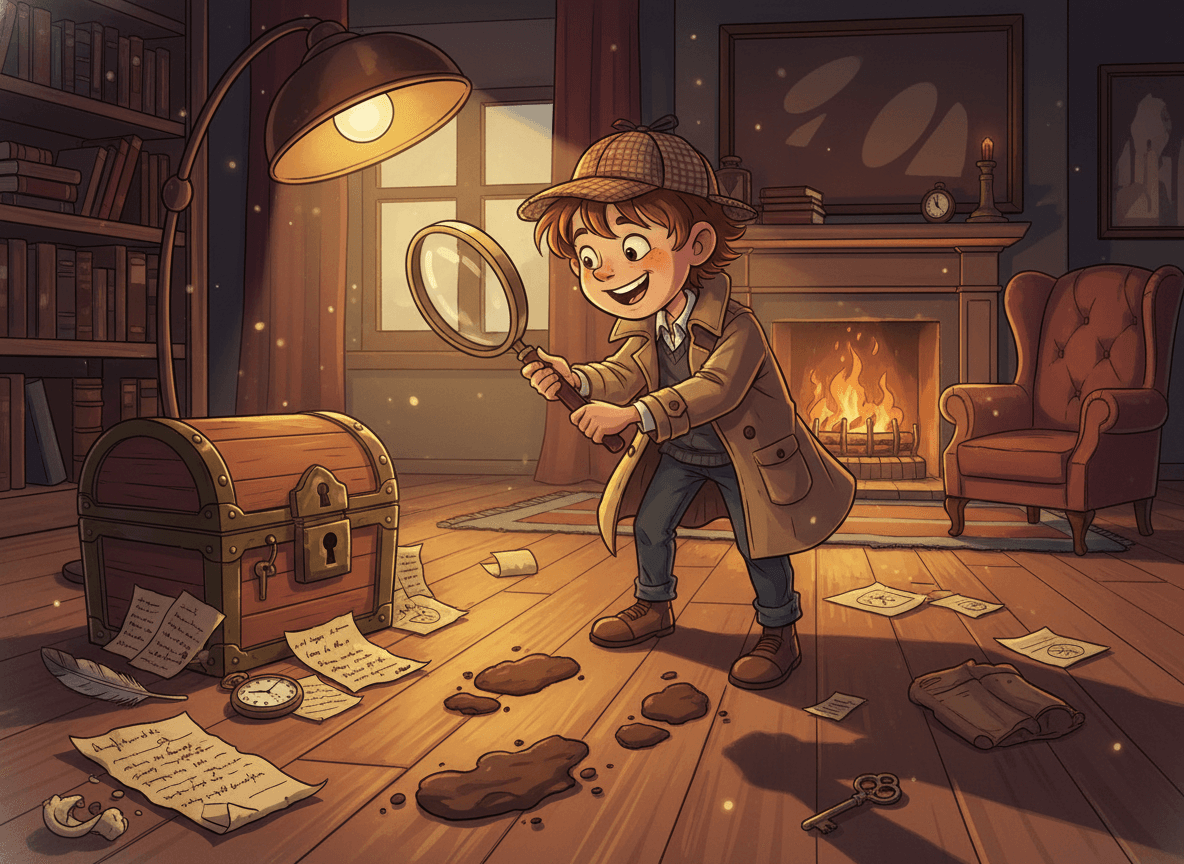
Clues Evidence that points toward the solution. Authors carefully plant clues throughout the story. Good mystery readers learn to notice details that seem small but are actually significant.
Red Herrings False clues or misleading information designed to lead both the protagonist and the reader in the wrong direction. Red herrings create suspense and surprise.
The Climax and Resolution The moment when the mystery is solved - the investigator reveals the solution, explains how they figured it out, and the puzzle is resolved.
Why Mystery Is Great for Developing Readers
Mystery is one of the most cognitively active genres for readers:
-
Inference - readers must connect clues to draw conclusions that are not stated directly
-
Prediction - readers constantly predict: "I think it was the librarian because..."
-
Active attention - every detail might matter; readers can't skim
-
Logical reasoning - the genre rewards systematic, evidence-based thinking
Writing Mystery Stories
Mystery is an excellent writing genre for upper elementary students:
- Start with the ending - what is the solution? Who did it? Why?
- Work backward - plant clues that lead to the solution
- Add red herrings - at least one false lead
- Build suspects - give each one a plausible motive
- Create an investigator with a clear personality and method
Practice Activities
- Read a mystery picture book (like The Mysteries of Harris Burdick by Chris Van Allsburg) and have students write a solution - comparing their reasoning as a class.
- Play the game "Clue" as a class logic and inference exercise.
- Create a classroom mystery: the teacher "steals" a classroom object and leaves 3 clues. Students investigate and present their conclusions with evidence.
- Have students identify red herrings in a mystery they are reading: "Which clues turned out to be misleading? How did the author plant them?"
Frequently Asked Questions
What is the mystery genre?
Mystery is a fiction genre in which a puzzle or unexplained event - often a crime - forms the central conflict of the story. A protagonist (often a detective, amateur sleuth, or curious child) investigates by gathering clues, interviewing suspects, and reasoning toward a solution. The reader is typically given enough information to try to solve the mystery alongside the protagonist.
What are the key elements of a mystery story?
Key elements of mystery include: (1) a central puzzle or crime to be solved; (2) a protagonist investigator; (3) suspects - people who might have committed the crime; (4) clues - evidence that points toward the solution; (5) red herrings - false clues or misleading information designed to throw readers off; (6) a climax where the mystery is solved; and (7) a resolution that explains how and why.
What are good mystery books for elementary students?
Popular mystery series for elementary readers include: 'A to Z Mysteries' by Ron Roy (grades 2-3), 'Cam Jansen' by David Adler (grades 2-3), 'Encyclopedia Brown' by Donald J. Sobol (grades 3-4), 'Hilo' (graphic novel, grades 2-4), 'From the Mixed-Up Files of Mrs. Basil E. Frankweiler' by E.L. Konigsburg (grades 4-5), and 'The Westing Game' by Ellen Raskin (grades 5+).
Free Mystery Worksheets
Curriculum-aligned printable worksheets for 2nd – 5th Grade. Download free.