What Is Opinion Writing?
Taught in US schools

Key Takeaways
- Opinion writing states a point of view and supports it with reasons - it's not just 'I think' or 'I feel.'
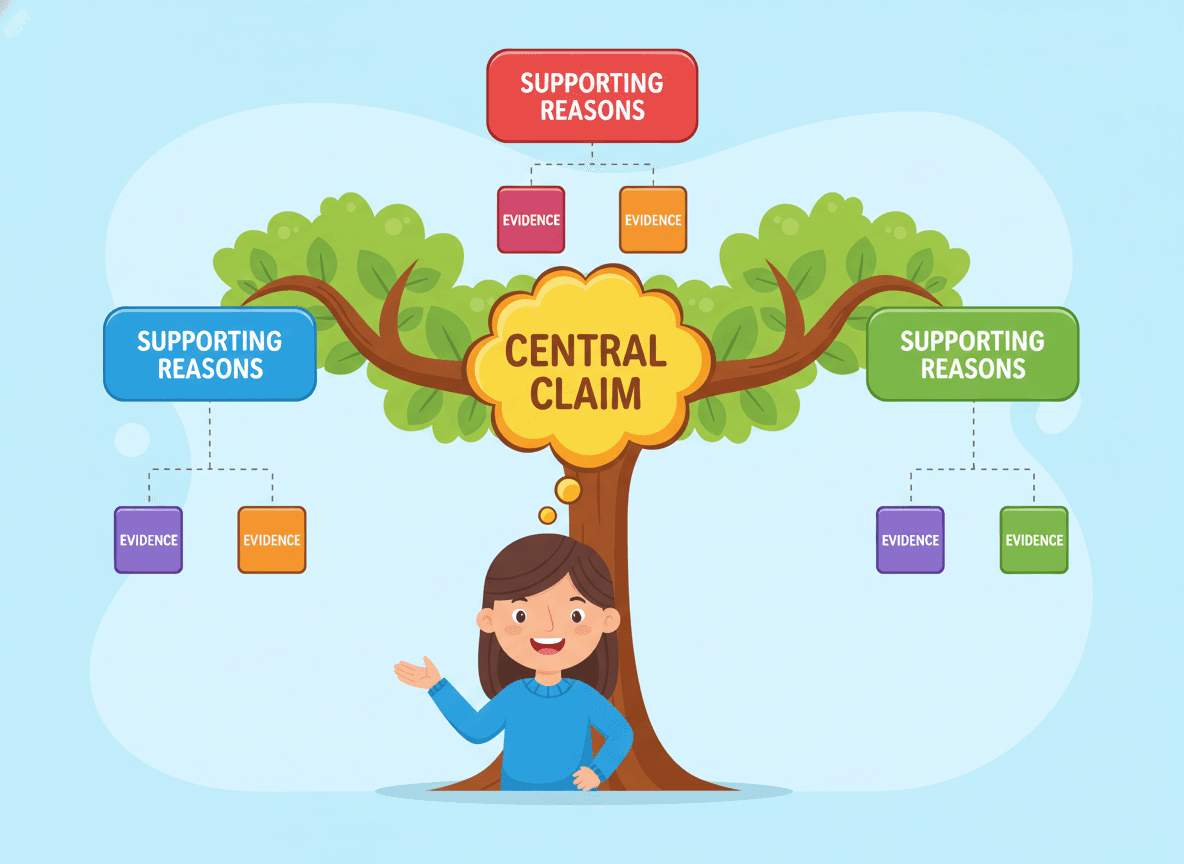
- Structure: opinion/claim → reasons + evidence → conclusion.
- Linking words (because, therefore, for example, in addition) connect reasons to the opinion.
- By 4th-5th grade, opinion writing becomes argumentative - it includes evidence from sources and addresses counterarguments.
What Is Opinion Writing?
Opinion writing is writing that states a point of view and supports it with reasons and evidence.
It's more than "I think" or "I feel" - it requires the writer to explain why their opinion is valid and to persuade the reader.
The core structure:
- State your opinion (claim) - clearly and specifically
- Give reasons - why do you hold this opinion?
- Support with evidence - examples, facts, or details
- Conclude - restate the opinion and wrap up
Opinion Writing Structure by Grade
Kindergarten: Draw and write a preference with a reason. "My favorite animal is a dog because it is friendly."
1st–2nd Grade: State an opinion, give 2+ reasons with examples, provide a conclusion.
3rd Grade: Multi-sentence paragraph with an opinion, organized reasons, linking words, and a conclusion.
4th Grade: Multi-paragraph essay; each reason has its own paragraph with specific evidence; introduction and conclusion.
5th Grade: Full essay with a clear thesis, text-based evidence, brief address of opposing views, and a strong conclusion.
Key Opinion Writing Moves
Strong opinion statement:
Weak: "I think summer is good." Strong: "Summer is the best season because it offers the most freedom, outdoor activities, and time for creative exploration."
Linking words that build the argument:
Introducing reasons: One reason is, For example, First
Adding reasons: In addition, Furthermore, Also
Concluding: Therefore, For all these reasons, In conclusion
Back to the claim: After each piece of evidence, connect it back to the opinion.
"This shows that summer gives students the freedom to explore their own interests."
Opinion vs. Argument
Opinion writing (K-5): Supported by reasons, examples, and personal knowledge. Audience: teacher and peers. Evidence: general knowledge, personal experience.
Argumentative writing (6-12): Supported by research from credible sources; requires addressing and refuting counterarguments; cites evidence. Evidence: published sources, data, expert quotes.
Opinion writing in grades 4-5 bridges these - introducing opposing views and text-based evidence prepares students for full argument writing.
What Grade Do Kids Write Opinion Pieces?
K-1: State an opinion on a topic and give a reason (W.K.1, W.1.1).
2nd Grade: Introduce the topic, state an opinion, supply reasons with linking words, provide a concluding statement (W.2.1).
3rd Grade: Introduce topic, state opinion, organize reasons and details with linking words, provide conclusion (W.3.1).
4th Grade: State opinion clearly, organize reasons logically with text-based evidence, address opposing viewpoints, provide a conclusion (W.4.1).
5th Grade: Write opinion pieces on topics with an introduction, logically ordered reasons, carefully chosen evidence, and a conclusion (W.5.1).
Common Misconceptions
"Opinions don't need evidence." An unsupported opinion is weak. Even in kindergarten, opinions should be accompanied by at least one reason. The expectation for evidence grows each year.
"Stronger words make opinions better." "I absolutely 100% believe dogs are the best pets!!!" is not stronger than a well-reasoned, evidence-based claim. Passion is not a substitute for reasoning.
"You can't write an opinion if you're not sure." Writers pick a position to argue, even if they personally see both sides. Opinion writing is practice in the discipline of building a case, not just an expression of preference.
Practice Activities
-
Opinion warm-ups: Daily 5-minute quick writes on low-stakes opinion prompts (best pizza topping, best season, best superhero power).
-
Two-column reasoning: Opinion in the center; "Reasons FOR" on the left, "Examples/Evidence" on the right.
-
Counterargument dialogue: Partner 1 argues a position; Partner 2 plays devil's advocate; both practice addressing objections.
-
Evidence from reading: After reading an article, students write an opinion paragraph that cites the text.
-
Peer review: Exchange drafts; partner checks: Is the opinion stated clearly? Is each reason supported? Do linking words connect ideas?
Frequently Asked Questions
What is the difference between opinion and argumentative writing?
Opinion writing (K-5) focuses on clearly stating a position and supporting it with reasons and examples - the evidence is often personal experience or general knowledge. Argumentative writing (middle school and up) adds more rigorous requirements: evidence from credible sources, addressing and refuting counterarguments, and logical structure. The Common Core intentionally uses 'opinion' through 5th grade and shifts to 'argument' in grades 6-12. However, 4th-5th grade opinion writing lays the groundwork - introducing opposing views and text-based evidence prepares students for the transition.
What is the structure of an opinion piece?
Introduction: Hook the reader + state the opinion/claim clearly. Body: Each paragraph presents one reason, supported by examples, facts, or details. Linking words connect reasons to the opinion (because, for example, in addition, furthermore). Conclusion: Restate the opinion in new words; call to action or closing thought. In 2nd-3rd grade, this is a single paragraph with 2-3 reasons. In 4th-5th grade, it expands to a full essay with an introduction, multiple body paragraphs, and a conclusion.
What are linking words and why do they matter in opinion writing?
Linking words (also called transitional words or sentence connectors) show how reasons connect to the opinion and to each other. Opinion starters: In my opinion, I believe, I think, It is clear that. Introducing reasons: One reason is, For example, First, Another reason. Adding reasons: In addition, Furthermore, Also, Moreover. Contrasting: However, Although, On the other hand. Concluding: Therefore, As a result, In conclusion, For all these reasons. Without linking words, opinion pieces read as a list of disconnected statements. With them, the argument flows logically.
How do you support an opinion with evidence?
In K-2, evidence is often personal experience or general knowledge: 'I think dogs make the best pets because they play with you and keep you company.' In 3rd grade, students begin using text-based evidence from books or articles they've read. In 4th-5th grade, students quote or paraphrase sources directly: 'According to the Humane Society, dogs are the most popular pet in America.' Evidence types: statistics, expert quotes, examples, anecdotes, logical reasoning. Always connecting evidence back to the opinion ('This shows that...') is a key 4th-5th grade skill.
What is a counterclaim and when do students learn to address one?
A counterclaim is the opposing point of view - what someone who disagrees with your opinion might say. Addressing it (acknowledging it and then refuting it) makes an argument stronger by showing the writer understands the complexity of the issue. 'Some people think cats are better pets because they're independent. However, I believe dogs are better because their loyal, social nature creates a deeper bond with their owners.' Addressing counterarguments is introduced in 4th-5th grade opinion writing and becomes a formal requirement in 6th grade argumentative writing.
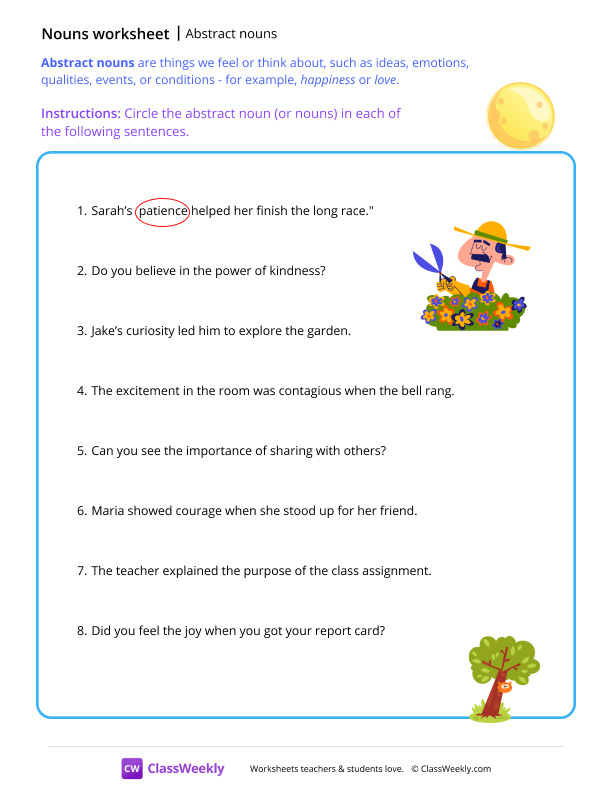
Free Opinion Writing Worksheets
Curriculum-aligned printable worksheets for Kindergarten – 5th Grade. Download free.