What Is Peer Editing?
Taught in US schools
Key Takeaways
- Peer editing asks students to give and receive specific, constructive feedback on each other's writing.
- It must be taught explicitly - students need frameworks for what to look for and how to give feedback.
- Good feedback is specific, kind, and helpful (not just 'good job!' or harsh criticism).
- Peer editing builds both revision skills and the ability to read like a writer.
What Is Peer Editing?
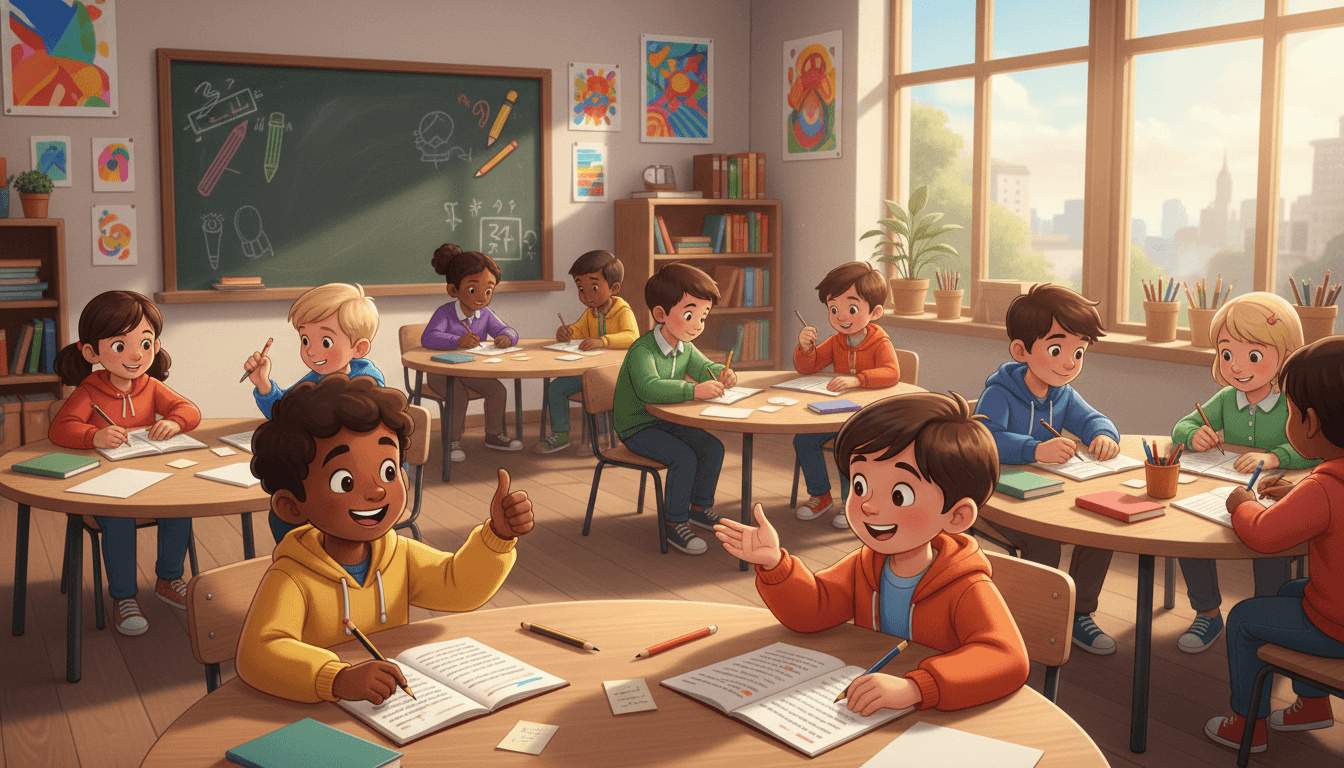
Peer editing is the process of students reading and providing constructive feedback on each other's writing drafts. It is a structured part of the revision stage of the writing process.
Done well, peer editing benefits both the writer (who receives another perspective on their work) and the editor (who practices analytical reading and develops a better eye for quality writing). Seeing what works and what confuses readers in someone else's writing sharpens awareness of those same elements in your own.
Why Peer Editing Matters
Writers often become blind to their own writing - they know what they meant to say, so they read it the way they intended, not the way it's actually written. A fresh reader sees gaps, confusions, and opportunities that the writer can't see from inside the piece.
Peer editing teaches students to read like writers - a habit that, once developed, improves all their writing.
It also distributes the feedback load. In a class of 25 students, a teacher cannot provide deep, timely feedback on every draft. Peer editors extend the feedback capacity of the classroom dramatically.
The TAG Model for Peer Feedback
TAG is one of the most effective and easy-to-teach feedback structures:
T - Tell something specific you liked A - Ask a question about something confusing G - Give a suggestion for improvement
This ensures feedback is:
-
Balanced - starts with something positive
-
Specific - "I liked how you described the smell of the rain" not "good job"
-
Actionable - gives the writer something concrete to consider
What Students Look for When Peer Editing
Content: Is the main idea or story clear? Are there enough details? Is anything confusing?
Organization: Is there a clear beginning, middle, and end? Do ideas flow logically from one to the next?
Voice: Does it sound like the writer? Is it interesting and engaging to read?
Word choice: Are there specific, vivid words? Are any words repeated too much?
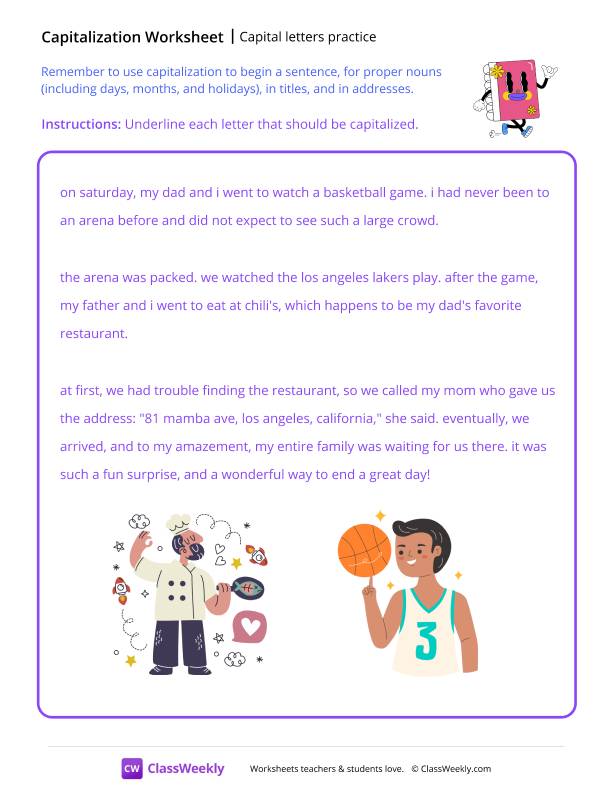
Conventions: Are there obvious spelling, capitalization, or punctuation errors? (This comes last - content before conventions.)
Teaching Peer Editing Explicitly
Peer editing rarely works well without explicit instruction. Steps:
- Model with a sample piece of writing - think aloud as you give feedback using the TAG structure
- Practice together as a class before doing it in pairs
- Use a structured peer editing form or checklist, especially in grades 2-3
- Remind students that the goal is to help the writer, not to show off their own expertise
Practice Activities
- Practice TAG feedback as a whole class using an anonymous student sample (or teacher-written sample) before using it in pairs.
- Give students a "peer editor checklist" with 3-4 specific items to look for at their grade level.
- Teach students to read the piece once for enjoyment, then re-read with the editing task in mind.
- Peer editor letters: after editing, students write a brief note to the author explaining their feedback.
Frequently Asked Questions
What is peer editing in writing?
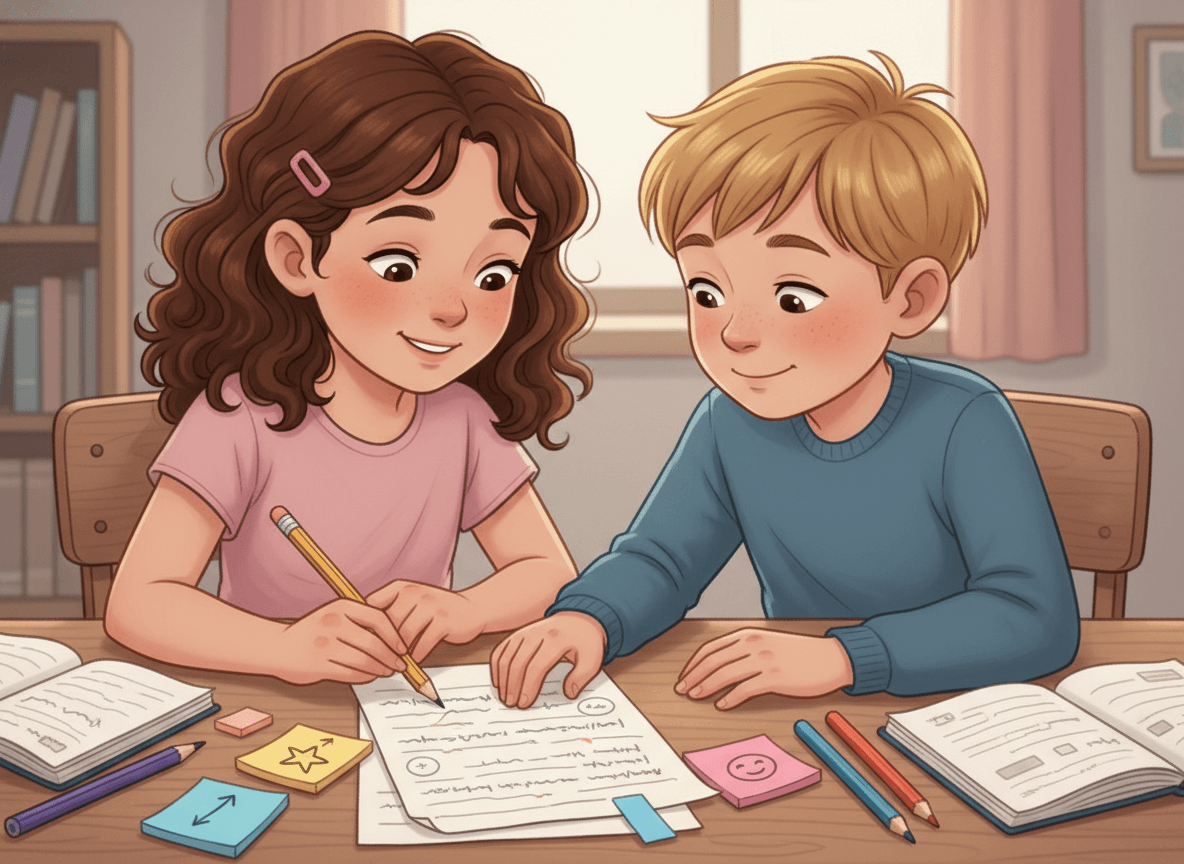
Peer editing is the process of one student reading and providing feedback on another student's writing draft. The goal is to help the writer improve their piece before the final version. A good peer editor points out what is working well, asks questions about confusing parts, and makes specific suggestions for improvement - all in a respectful, constructive way.
What should students look for when peer editing?
A structured approach helps: (1) Content and ideas - Is the main idea clear? Are there enough details? (2) Organization - Does it have a clear beginning, middle, and end? Do ideas flow logically? (3) Voice and word choice - Does it sound like the writer? Are word choices interesting and specific? (4) Sentence fluency - Do sentences vary in length and structure? (5) Conventions - Are there spelling, capitalization, or punctuation errors? Younger students focus on fewer elements; older students handle more.
What is the TAG feedback model for peer editing?
TAG is a common peer feedback structure: Tell something you liked (be specific). Ask a question about something that was confusing. Give a suggestion for improvement. This structure ensures feedback is balanced (positive + constructive), specific (not just 'I liked it'), and actionable (the writer knows what to consider changing).
Free Peer Editing Worksheets
Curriculum-aligned printable worksheets for 2nd – 5th Grade. Download free.