What Is Persuasive Writing?
Taught in US schools
Key Takeaways
- Persuasive writing argues for a specific position using reasons, evidence, and logical structure.
- A strong persuasive piece states a clear claim, supports it with evidence, and addresses counterarguments.
- Persuasive language includes appeal to logic (logos), emotion (pathos), and credibility (ethos).
- Persuasive writing in elementary school bridges into the argument writing of middle and high school.
What Is Persuasive Writing?
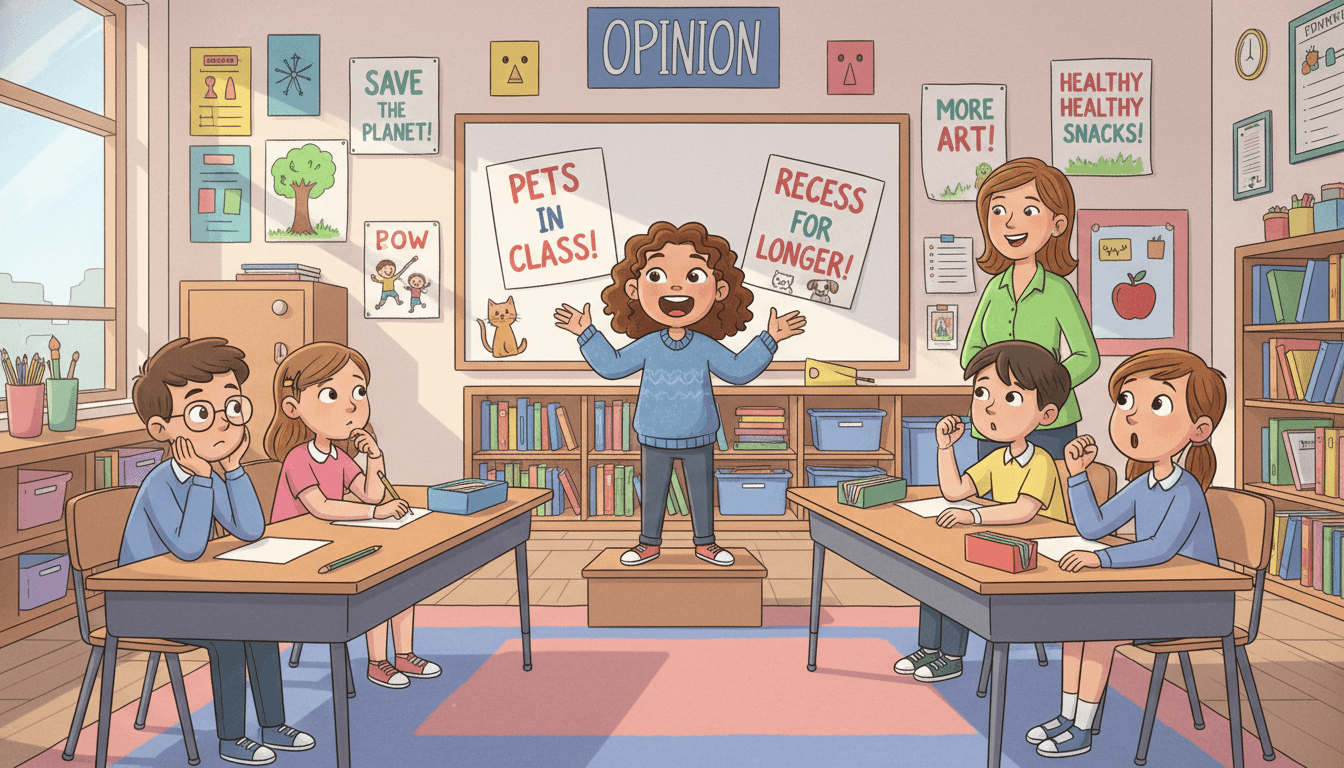
Persuasive writing attempts to convince the reader to agree with a position, change their mind, or take an action. Unlike narrative writing (which tells a story) or informational writing (which explains), persuasive writing has a clear goal: to influence the reader's thinking.
Persuasive writing is everywhere in the real world - in advertisements, political speeches, editorials, letters to editors, legal briefs, and fundraising appeals. Learning to write persuasively - and to read persuasive texts critically - is one of the most practical literacy skills students develop.
Structure of a Persuasive Essay
Introduction:
- Hook: grabs the reader's attention
- Background: brief context for the issue
- Claim (thesis): a clear statement of the writer's position
Body Paragraphs (one per reason):
- Topic sentence: states one reason
- Evidence: facts, statistics, examples, expert quotes, anecdotes
- Explanation: connects the evidence back to the claim
Counterargument and Rebuttal:
- Acknowledge: "Some people believe..."
- Refute: "However, this argument fails because..."
Conclusion:
- Restate the claim in new words
- Summary of strongest reasons
- Call to action: what should the reader do or think?
The Three Persuasive Appeals
Logos (logic): Factual evidence, statistics, expert opinions, logical reasoning. "Studies show that students who exercise before school perform 20% better on concentration tests."
Pathos (emotion): Appeals to the reader's feelings, values, and empathy. "Imagine coming to school hungry every day, unable to focus on a single lesson."
Ethos (credibility): Establishing trust and authority. "According to Dr. Karen Chen, a leading childhood nutrition expert..."
What Grade Do Kids Learn Persuasive Writing?
3rd grade (W.3.1): Students write opinion pieces with stated opinions and supporting reasons.
4th grade (W.4.1): Students write opinion pieces with an introduced topic, stated opinion, reasons supported by facts, and a concluding statement.
5th grade (W.5.1): Students write opinion pieces with a clear stance, logically ordered reasons, evidence, and counterarguments - approaching argument writing.
Common Misconceptions
Louder = more persuasive: Simply asserting something more forcefully doesn't make it more convincing. Evidence and logic are more persuasive than volume or repetition alone.
Good persuasive writing ignores the other side: Acknowledging and rebutting counterarguments actually makes an argument stronger. Readers who see the other side addressed are more likely to be convinced.
Opinion and persuasion are the same: All persuasive writing contains an opinion, but not all opinion writing is fully persuasive. Persuasive writing is structured, evidence-based, and addresses counterarguments.
Practice Activities
-
Claim practice: Give a topic; students write 3 different possible claims for each.
-
Evidence treasure hunt: Research evidence for a position using 2 reliable sources.
-
Counterargument practice: Write the strongest possible argument against your own position, then rebut it.
-
Class debate → persuasive essay: Hold a structured debate, then students write individual persuasive essays based on their position.
-
Analyze real persuasive texts: Read an advertisement or editorial and identify the claim, evidence, and appeals.

Frequently Asked Questions
What is persuasive writing?
Persuasive writing is a type of writing that attempts to convince the reader to agree with a specific point of view or to take a particular action. The writer presents a clear claim (position), supports it with reasons and evidence, often acknowledges and refutes opposing views (counterarguments), and ends with a call to action or summary of the argument.
How is persuasive writing different from opinion writing?
Opinion writing (taught in grades 3-4) states a preference and gives reasons: 'I think we should have more recess because it helps us focus.' Persuasive writing (grades 4-5 and beyond) is more sophisticated - it uses structured argument, evidence, counterarguments, and persuasive rhetoric. Opinion writing is the scaffold; persuasive writing is the more rigorous form that develops into argument writing in middle school.
What are the three pillars of persuasion?
Aristotle identified three persuasive appeals: (1) Logos (logic) - using facts, statistics, examples, and logical reasoning. (2) Pathos (emotion) - connecting to readers' feelings, values, and beliefs. (3) Ethos (credibility) - establishing the writer as trustworthy and knowledgeable. Effective persuasive writing uses all three, though elementary instruction often focuses on logos and pathos.
What structure does a persuasive essay typically follow?
A typical persuasive essay structure: (1) Introduction with a hook and a clear claim (thesis). (2) Body paragraphs - each presents one reason supported by evidence (facts, examples, anecdotes). (3) Counterargument - acknowledging and refuting an opposing view strengthens the argument. (4) Conclusion - restates the claim and ends with a call to action or compelling final thought.
What are effective persuasive writing techniques?
Key techniques: Strong, clear claim statements; specific evidence (facts, statistics, expert quotes, examples); emotional appeals that connect to readers' values; rhetorical questions ('Don't we all want cleaner air?'); repetition for emphasis; concession and rebuttal (acknowledging opposing views then countering them); and confident, assertive language rather than hedging.
Free Persuasive Writing Worksheets
Curriculum-aligned printable worksheets for 4th – 5th Grade. Download free.