Who Was Sacagawea?
Taught in US schools
Key Takeaways
- Sacagawea was a Lemhi Shoshone woman who joined the Lewis and Clark Expedition in 1804, serving as interpreter and guide through the western frontier.
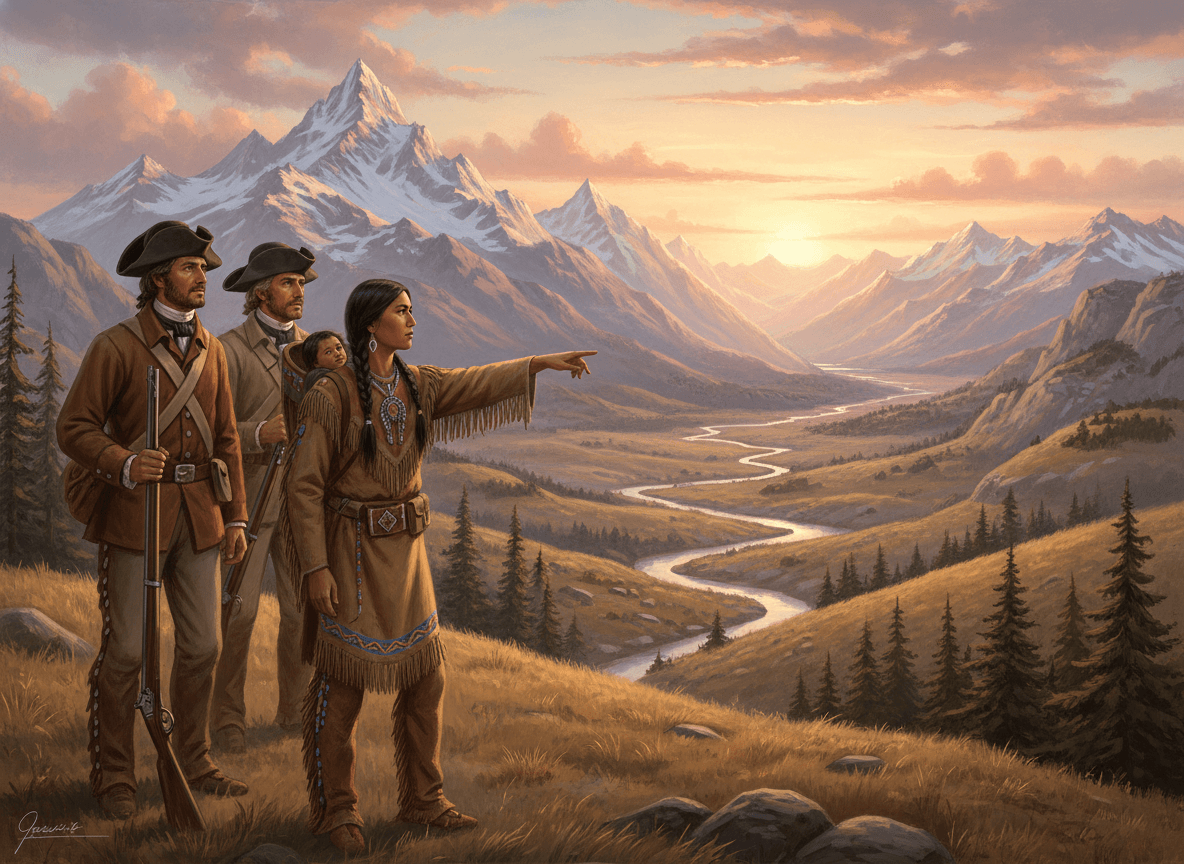
- Her presence with the expedition - particularly while carrying her infant son - signaled peaceful intentions to Indigenous nations the explorers encountered.
- Sacagawea was honored on the US golden dollar coin beginning in 2000 and remains one of the most recognized figures in American history.
Who Was Sacagawea?
Sacagawea (c. 1788–1812 or 1884) was a Lemhi Shoshone woman who became one of the most important contributors to the Lewis and Clark Expedition (1804–1806) - the first American overland expedition to the Pacific Coast.
Her knowledge of Indigenous languages, western terrain, and edible plants, combined with her skill as an interpreter, helped the Corps of Discovery successfully navigate thousands of miles of unexplored territory.
Early Life
Sacagawea was born around 1788 in present-day Idaho, in the homeland of the Lemhi Shoshone people. Around age 12, she was captured by members of the Hidatsa tribe during a raid and taken to present-day North Dakota. She was later acquired by French-Canadian fur trapper Toussaint Charbonneau as his wife.
By the time Lewis and Clark arrived at the Mandan villages in the winter of 1804–1805, Sacagawea was around 16 years old and pregnant with her first child.
Joining the Expedition
Meriwether Lewis and William Clark were assembling their Corps of Discovery under orders from President Thomas Jefferson to explore the territory acquired in the Louisiana Purchase (1803). They needed interpreters who could communicate with Indigenous nations along the route.
When Lewis and Clark learned that Charbonneau's wife spoke Shoshone - a language they would need to negotiate for horses to cross the Rocky Mountains - they invited her to join the expedition.
Jean Baptiste Charbonneau, Sacagawea's son, was born in February 1805. She carried him on her back for the entire journey.
Her Contributions to the Expedition
Interpreter: Translated between Shoshone and other Indigenous languages, enabling negotiations for horses and supplies
Peaceful signal: A woman carrying a baby told other tribes the group was not a war party
Navigation: Identified landmarks in her homeland (present-day Idaho and Montana) and helped the party find mountain passes
Foraging: Identified edible plants that supplemented the expedition's food supplies
Quick action: When a boat capsized, she calmly retrieved valuable journals, instruments, and medicines that would otherwise have been lost
Legacy
Sacagawea is one of the most widely honored women in American history:
-
US golden dollar coin (2000–present) features Sacagawea and her infant son
-
More statues are dedicated to Sacagawea in the United States than to any other American woman
-
Her story is taught in schools as an example of courage, resourcefulness, and the essential role of Indigenous knowledge in American exploration
Practice Activities
- Create a timeline of Sacagawea's life alongside the key events of the Lewis and Clark Expedition.
- Compare a primary source (journal entries from Lewis and Clark mentioning Sacagawea) with a secondary source (a textbook or biography) - how are the portrayals similar or different?
- Write a first-person journal entry from Sacagawea's perspective during one day of the expedition.
- Research the Shoshone people today - where do they live, and what aspects of their culture have been preserved?
- Discuss: Why do you think Sacagawea is on a coin? What does it say about what our country values?
Frequently Asked Questions
How did Sacagawea come to join the Lewis and Clark Expedition?
As a young girl, Sacagawea was captured by a rival tribe and later purchased or won in a gambling game by French-Canadian fur trapper Toussaint Charbonneau. Lewis and Clark hired Charbonneau as an interpreter, and when they learned his wife Sacagawea spoke Shoshone, they asked her to come along to help communicate with Shoshone people whose horses and guidance the expedition would need.
Why was Sacagawea's role so important?
Sacagawea served as interpreter between the expedition and several Indigenous nations, helped identify edible plants and navigate the terrain, and retrieved important supplies when a boat capsized. Her presence - traveling with a baby - also communicated to other tribes that the group was not a war party.
What happened to Sacagawea after the expedition?
Historians disagree. One record suggests she died in 1812 at around age 25 at Fort Manuel in present-day South Dakota. Another tradition among the Shoshone suggests she lived until 1884 and died at around age 96. The date of her death remains historically disputed.
Free Sacagawea Worksheets
Curriculum-aligned printable worksheets for 3rd – 5th Grade. Download free.