What Are the Seasons?
Taught in US schools

Key Takeaways
- There are four seasons: spring, summer, fall (autumn), and winter.
- Seasons are caused by Earth's tilt on its axis - NOT by how close Earth is to the sun.
- Each season has characteristic temperature, daylight length, and changes in plants and animals.
- Seasons are opposite in the Northern and Southern Hemispheres.
What Are the Seasons?
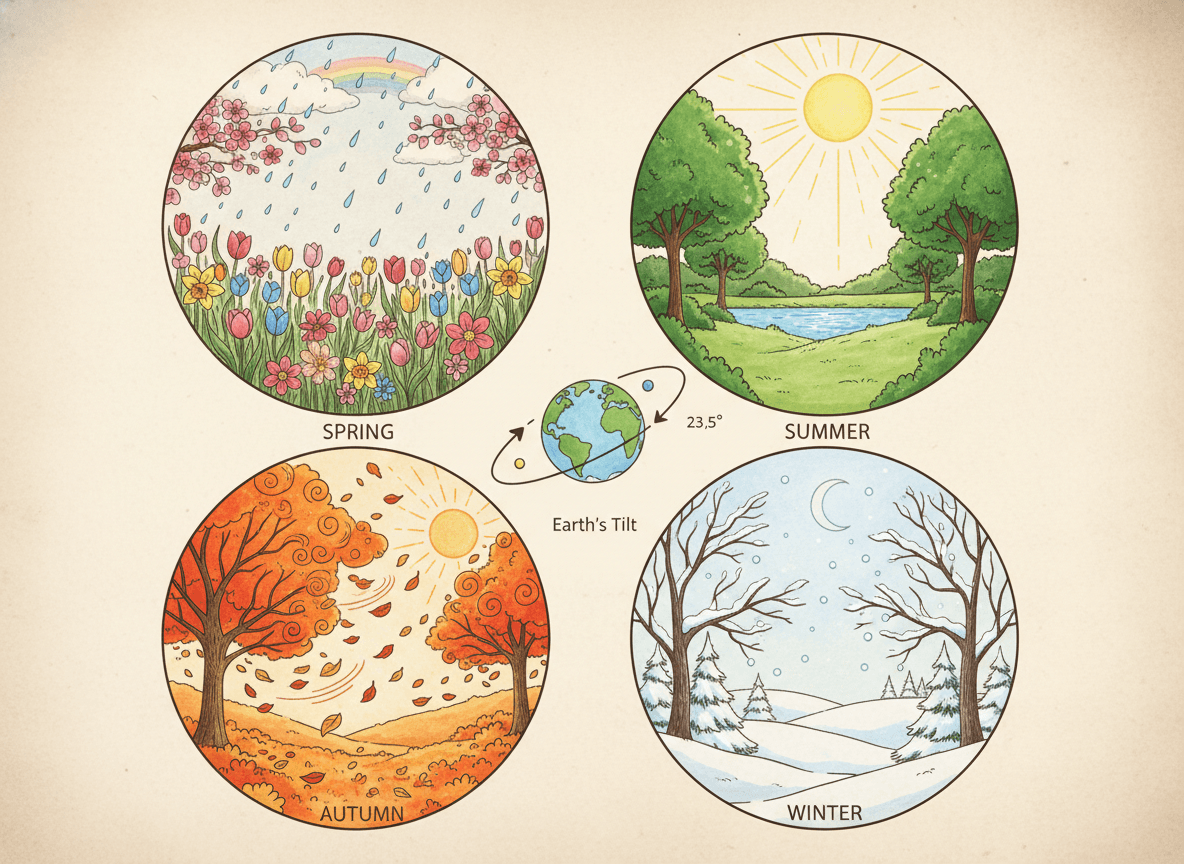
The four seasons - spring, summer, fall (autumn), and winter - are the regular, predictable changes in climate that occur throughout the year. Each season brings characteristic changes in temperature, the amount of daylight, weather patterns, and the behavior of plants and animals.
What Causes the Seasons?
A common misconception: seasons are caused by Earth moving closer to or farther from the sun. This is not correct.
The real cause: Earth's axial tilt. Earth is tilted on its axis at about 23.5 degrees. As Earth orbits the sun over the course of a year, different parts of Earth are tilted toward or away from the sun at different times.
-
Tilted toward the sun → more direct sunlight → warmer temperatures → longer days = Summer
-
Tilted away from the sun → less direct sunlight → cooler temperatures → shorter days = Winter
-
In between these extremes → Spring and Fall
The Four Seasons
Spring
- Temperatures begin to warm
- Days get longer
- Plants bud and bloom; grass turns green
- Many animals are born; others return from migration
- More rain; sometimes snow in early spring
Summer
- Hottest temperatures of the year
- Longest days, shortest nights (summer solstice is the longest day)
- Plants are fully green and growing
- Animals are most active; insects are plentiful
- Less rainfall in many regions; more thunderstorms in others
Fall (Autumn)
- Temperatures begin to cool
- Days get shorter
- Leaves change color from green to red, orange, and yellow, then fall from deciduous trees
- Animals prepare for winter (storing food, growing thicker coats)
- Harvest time for many crops
Winter
- Coldest temperatures of the year
- Shortest days, longest nights (winter solstice is the shortest day)
- Many trees have bare branches
- Some animals hibernate (bears, groundhogs); others migrate to warmer places (birds, monarch butterflies)
- Snow and ice in colder climates
Seasonal Changes in Nature
Temperature: Warming - Hottest - Cooling - Coldest
Daylight: Increasing - Longest - Decreasing - Shortest
Plants: Blooming - Full leaf - Color change / drop - Dormant
Animals: Birth / return - Most active - Preparing - Hibernating / gone
Practice Activities
- Create a class "seasons book" - students draw and describe one thing that happens in each season in their own environment.
- Seasonal observation journals: students go outside once a month and record observations about temperature, plant life, animal sightings, and daylight.
- Sort seasonal clothing, activities, and natural events into the correct season using picture cards.
- Read A Tree for All Seasons by Robin Bernard or The Reasons for Seasons by Gail Gibbons and discuss the science.
Frequently Asked Questions
What causes the seasons?
Seasons are caused by Earth's tilt on its axis (about 23.5 degrees). As Earth orbits the sun throughout the year, different parts of Earth receive more direct sunlight at different times. When the Northern Hemisphere is tilted toward the sun, it experiences summer (more direct sunlight, longer days, warmer temperatures). When tilted away, it experiences winter. The seasons are NOT caused by Earth being closer to or farther from the sun.
What are the characteristics of each season?
Spring: temperatures warm up, plants bloom, many animals have babies, more rainfall, daylight increases. Summer: hottest temperatures, longest days and shortest nights, plants are fully grown, animals are active. Fall (Autumn): temperatures cool, leaves change color and fall, animals prepare for winter, daylight decreases. Winter: coldest temperatures, shortest days and longest nights, many plants are dormant, some animals hibernate.
Why are seasons opposite in the Northern and Southern Hemispheres?
Because seasons are caused by Earth's tilt, when the Northern Hemisphere is tilted toward the sun (and experiencing summer), the Southern Hemisphere is tilted away (and experiencing winter). This is why Australia and South America have winter in July and summer in December - the opposite of North America and Europe.
Free Seasons Worksheets
Curriculum-aligned printable worksheets for Kindergarten – 2nd Grade. Download free.


