What Are Tally Marks?
Taught in US schools
Key Takeaways
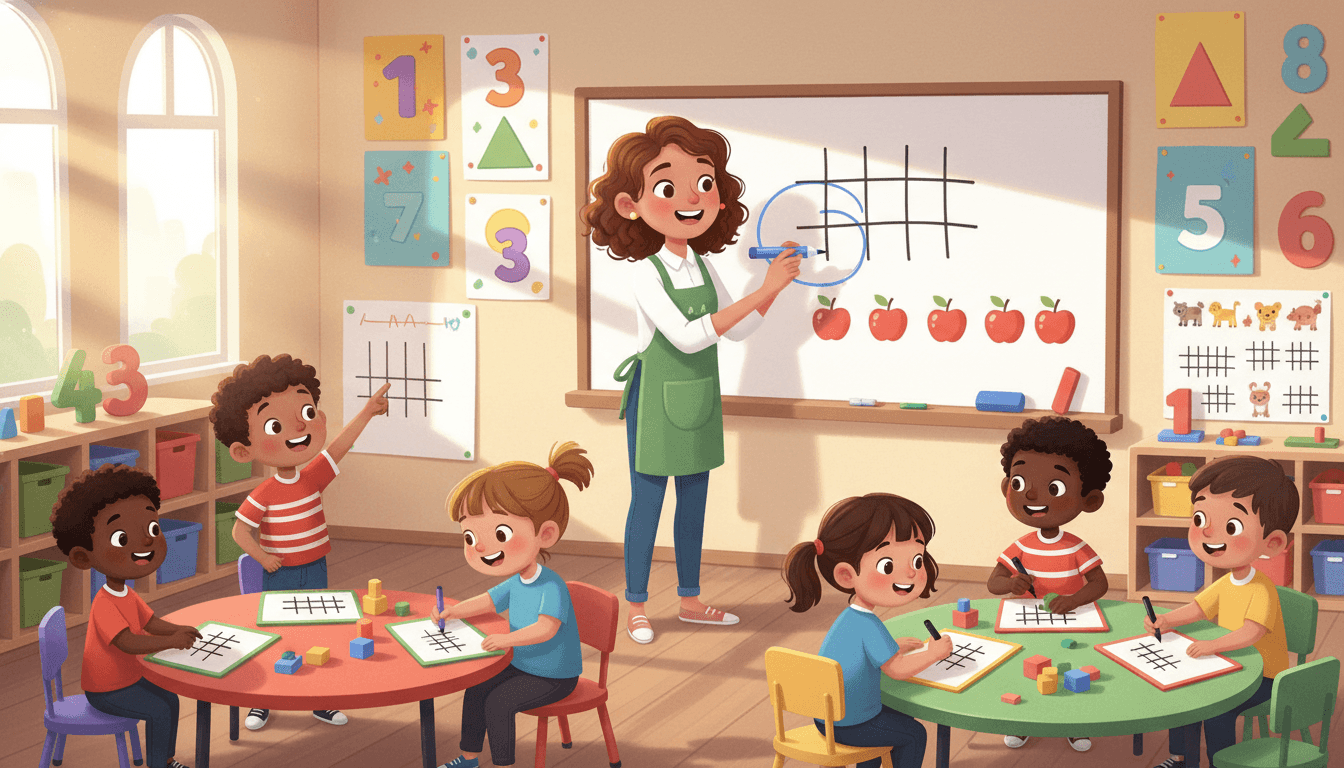
- Tally marks use vertical lines to count, with every fifth mark drawn diagonally across the previous four.
- Groups of five make tally marks easy to count quickly by fives.
- Tally marks are used for data collection - keeping track of votes, observations, and surveys.
- Reading tally charts connects to skip counting by 5s and builds a foundation for graphing.
What Are Tally Marks?
Tally marks are a simple, ancient system for keeping count. Each count gets one vertical line (|). When you reach five, you draw a diagonal line across the previous four, creating a bundle (||||). This grouping in fives makes tallies quick to record and easy to count.
Tally marks appear across history - cave walls, prison walls in movies, score-keeping in games - because they require no special tools and work in any language.
How to Write Tally Marks
1: \
2: \
3: \
4: \
5: \
6: \
10:
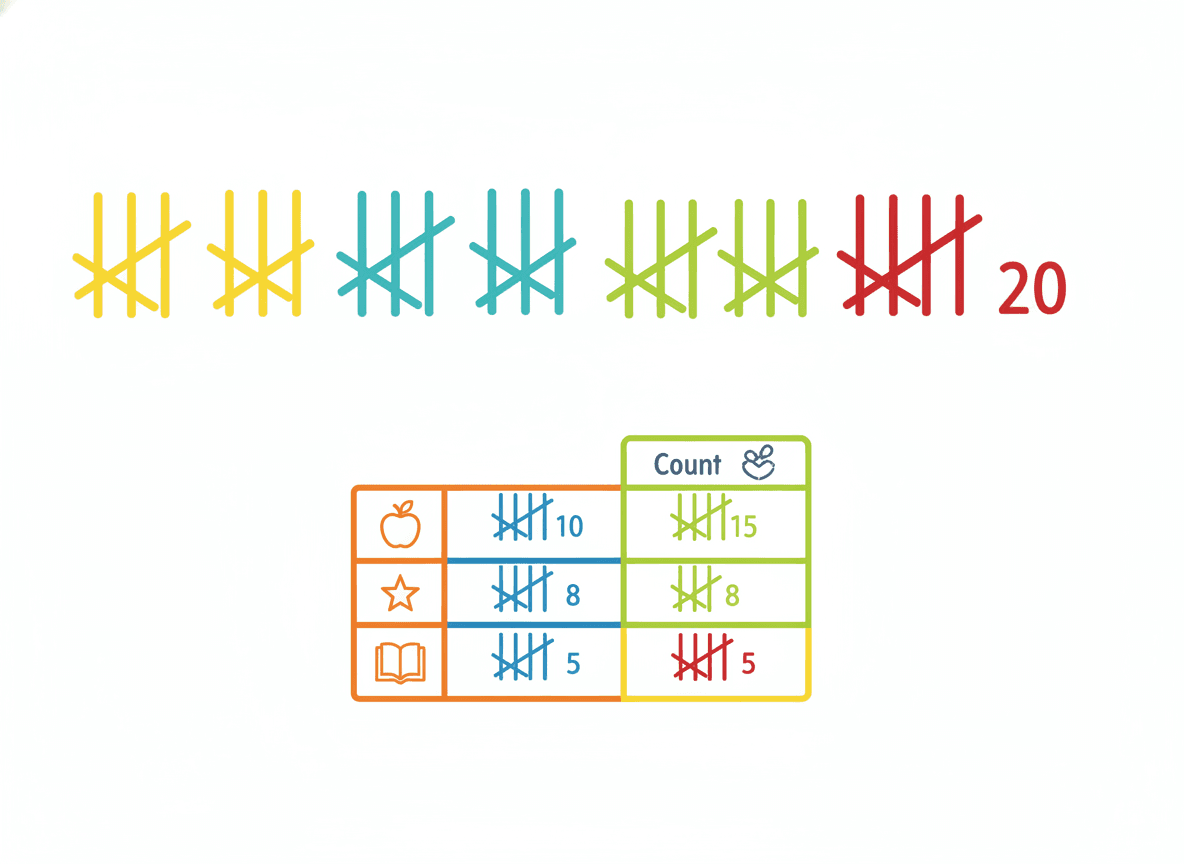
Reading tallies: count groups of five, then add the remaining singles.
Tally Charts
A tally chart organizes tally data in a table with categories. Example:
Pizza: ̶ - 7
Sandwich: ̶ - 6
Salad: 3 Students collect data by asking classmates, recording a tally mark for each response, then counting totals.
Connection to Graphing
Tally marks are raw data. After collecting tallies, students can transfer the totals to a bar graph or pictograph. This data collection → display → analysis pipeline is the beginning of statistical reasoning.
What Grade Do Kids Learn Tally Marks?
Kindergarten: Students use tally marks informally to count objects.
1st grade (1.MD.C.4): Students organize and represent data using tally charts and answer questions about the data.
2nd grade (2.MD.D.10): Students create and analyze tally charts alongside bar graphs and picture graphs.
Common Misconceptions
Drawing the diagonal first: Some students draw the diagonal mark before completing four vertical marks. Reinforce: four vertical marks, then one diagonal across them.
Losing count: Students may mark tallies in the wrong row or lose their place. Slow data collection (one mark at a time, checking each) builds accuracy.
Forgetting to count the diagonal: When reading tallies, some students count the diagonal as a separate mark rather than recognizing the whole bundle as 5.
Practice Activities
-
Classroom survey: Ask a question (favorite season, pet at home), collect data with tally marks, then create a graph.
-
Tally reading practice: Show tally charts and have students convert to numbers.
-
Skip-count connection: After tallying, count groups by 5s, then add singles.
-
Sports scorekeeping: Use tally marks to keep score during a class game.
-
Animal count: Watch a nature video clip and use tally marks to count different animals.
Frequently Asked Questions
What are tally marks?
Tally marks are a quick counting system using vertical lines. You draw one vertical mark for each count. When you reach 5, you draw a diagonal line across the previous four vertical marks to make a bundle of five. This grouping makes it easy to count large quantities quickly by counting groups of five.
Why do we group tally marks in fives?
Grouping in fives makes counting faster and less error-prone. Instead of counting 17 individual lines, you count 3 complete bundles of 5 (= 15) and then 2 extra lines = 17. It also connects to skip-counting by 5s, which most students learn in kindergarten and 1st grade.
How are tally marks used in data collection?
Tally marks are used to record data in real time. For example, while counting how many cars of each color pass by, you make a tally mark for each car in the appropriate row. After collecting data, you count the tallies to find totals. This raw data can then be used to create bar graphs or pictographs.
What is a tally chart?
A tally chart is a table with categories in one column and tally marks in another. For example, a survey about favorite fruits might have rows for Apple, Banana, and Orange with tally marks showing how many students chose each. The final step is counting and recording totals in a third column.
How do students learn to read tally marks?
Students learn to recognize a bundle of five (four vertical lines with one diagonal across them) as the number 5. Then they count full bundles by fives and add the remaining single marks. Reading 'IIII II' (a bundle of five plus two singles) = 7. This connects directly to place-value grouping concepts.
Free Tally Marks Worksheets
Curriculum-aligned printable worksheets for Kindergarten – 2nd Grade. Download free.