What Is a Book Report?
Taught in US schools
Key Takeaways
- A book report summarizes a book AND includes the student's own thoughts or evaluation.
- Fiction reports focus on story elements: characters, setting, plot, theme.
- Nonfiction reports focus on main ideas, key facts, and the author's purpose.
- Book reports teach students to read with a purpose and communicate about what they read.
What Is a Book Report?
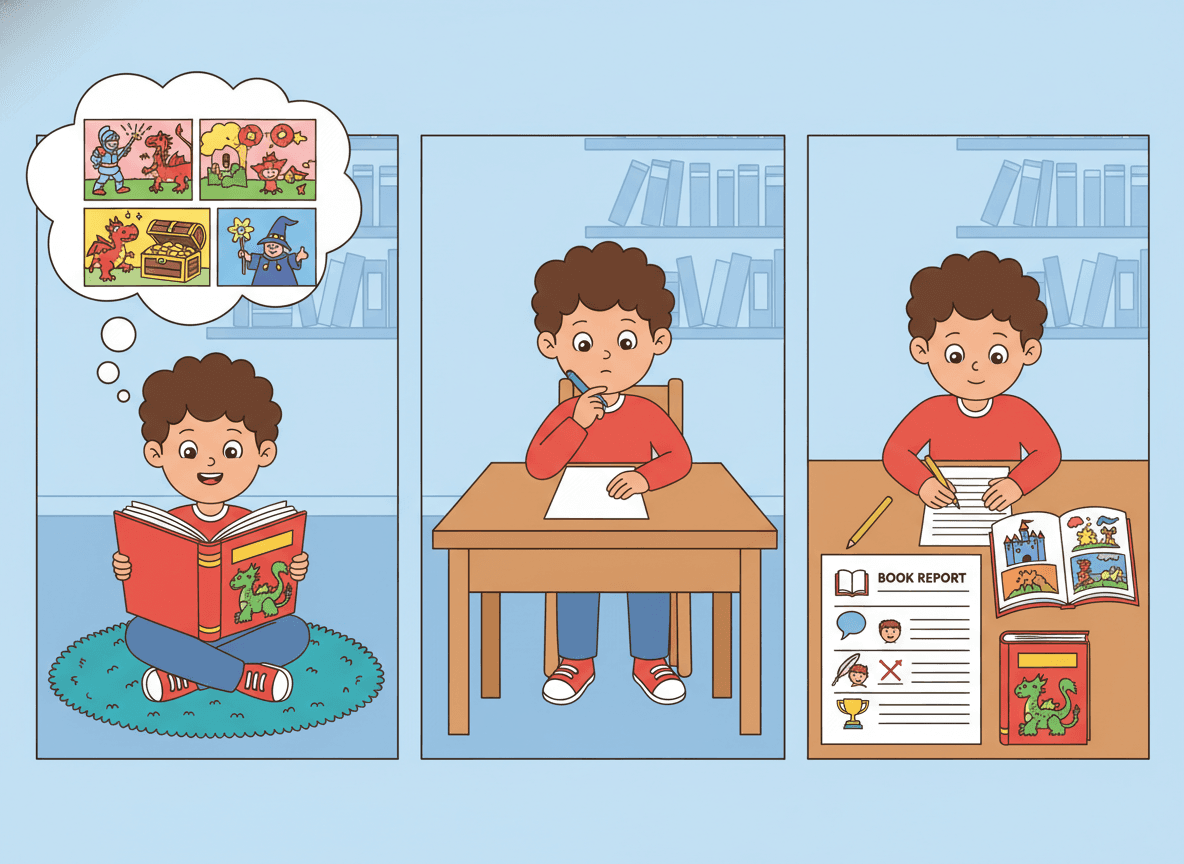
A book report is a written response to a book a student has read. It combines two tasks: summarizing the book (telling what it was about) and responding to the book (sharing thoughts, opinions, or evaluations).
Book reports teach students to read actively - knowing that they will need to write about a book changes how carefully students pay attention to characters, events, and main ideas.
Fiction vs. Nonfiction Book Reports
Fiction book reports focus on story elements:
-
Title and author
-
Setting - where and when the story takes place
-
Main characters - who they are and how they change
-
Plot summary - beginning, middle, end; the main problem and solution
-
Theme - the big message or lesson
-
Personal response - what you thought, what surprised you, would you recommend it?
Nonfiction book reports focus on content:
-
Title, author, and topic
-
Main idea - what is the central topic?
-
Key facts or ideas - 3-5 important things you learned
-
Author's purpose - why did the author write this?
-
Personal response - what was most interesting? What questions do you still have?
A Simple Structure for Elementary Students
A clear template helps students organize their thinking:
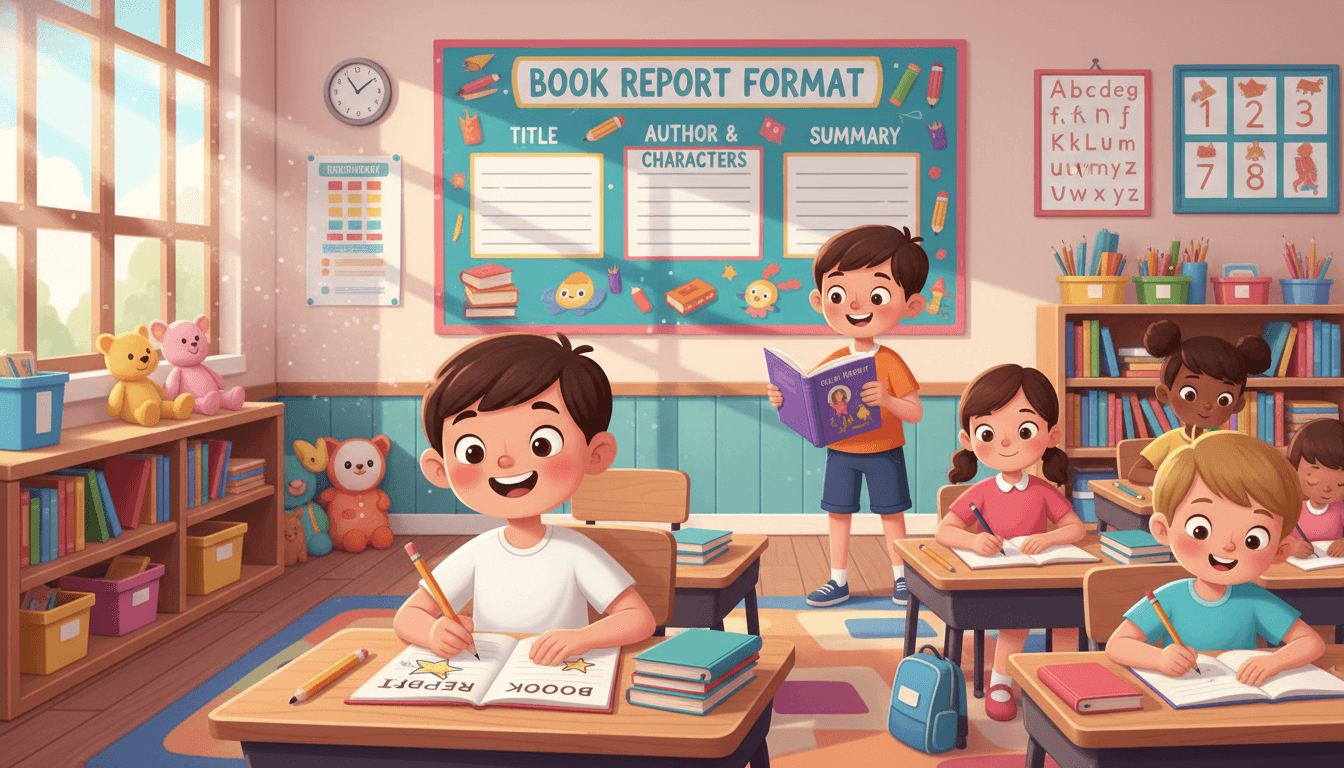
- Introduction - title, author, genre, one sentence about what the book is about
- Summary - 3-5 sentences covering the main events or ideas (without giving away the ending)
- Favorite Part / Important Detail - a specific moment or fact with explanation
- Personal Reaction - Did you like it? Would you recommend it? Why or why not?
- Conclusion - one sentence wrapping up your thoughts
Practice Activities
- Provide a structured book report template for younger grades (fill-in-the-blank format) and gradually reduce scaffolding as students develop.
- Have students create a "book report in a bag" - place 3-5 objects in a bag that represent key elements of the book, then present each object as part of their oral report.
- Teach the difference between summarizing and retelling: a summary is short and hits the key points; a retelling includes everything in order.
- Require students to include one direct quote from the book with an explanation of why they chose it.
Frequently Asked Questions
What should a book report include?
A basic book report includes: (1) the book's title and author, (2) the genre, (3) a summary of the main plot or key ideas, (4) descriptions of main characters (for fiction) or important facts learned (for nonfiction), and (5) the student's personal reaction - what they liked, disliked, or found interesting. Upper grade reports may also include a recommendation and textual evidence.
What is the difference between a book report and a book review?
A book report focuses on describing what the book is about - summarizing the plot, characters, and events. A book review focuses on evaluating the book - arguing whether it is good or bad and why, with evidence. Book reports are more common in elementary school; book reviews are introduced in upper grades.
How long should an elementary book report be?
Length depends on grade level. A second-grade report might be a single paragraph or a structured template filling one page. A fifth-grade report might be 3-5 paragraphs with textual evidence. The goal is not length but quality: a clear summary, specific details, and honest personal response.
Free Book Report Worksheets
Curriculum-aligned printable worksheets for 2nd – 5th Grade. Download free.