What Are Story Elements?
Taught in US schools
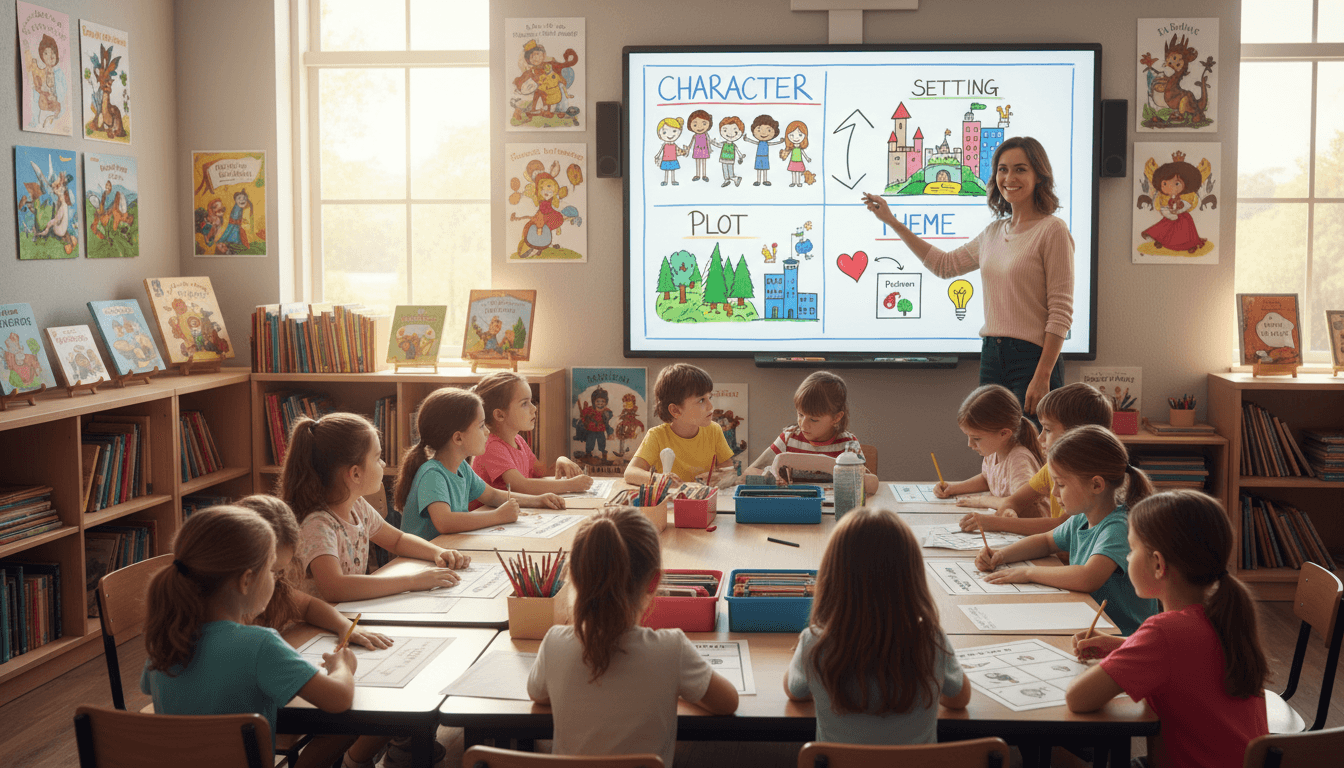
Key Takeaways
- The five core story elements are characters, setting, plot, conflict, and resolution.
- Story elements work together - each one affects the others and shapes the whole narrative.
- Identifying story elements is a foundational comprehension skill built from kindergarten through 5th grade.
- Story maps and graphic organizers help students organize story elements as they read.
What Are Story Elements?
Story elements are the essential building blocks of any work of fiction. Every narrative - from a picture book to a novel - is constructed from the same fundamental components. When students understand story elements, they can comprehend, analyze, and create stories at any level.
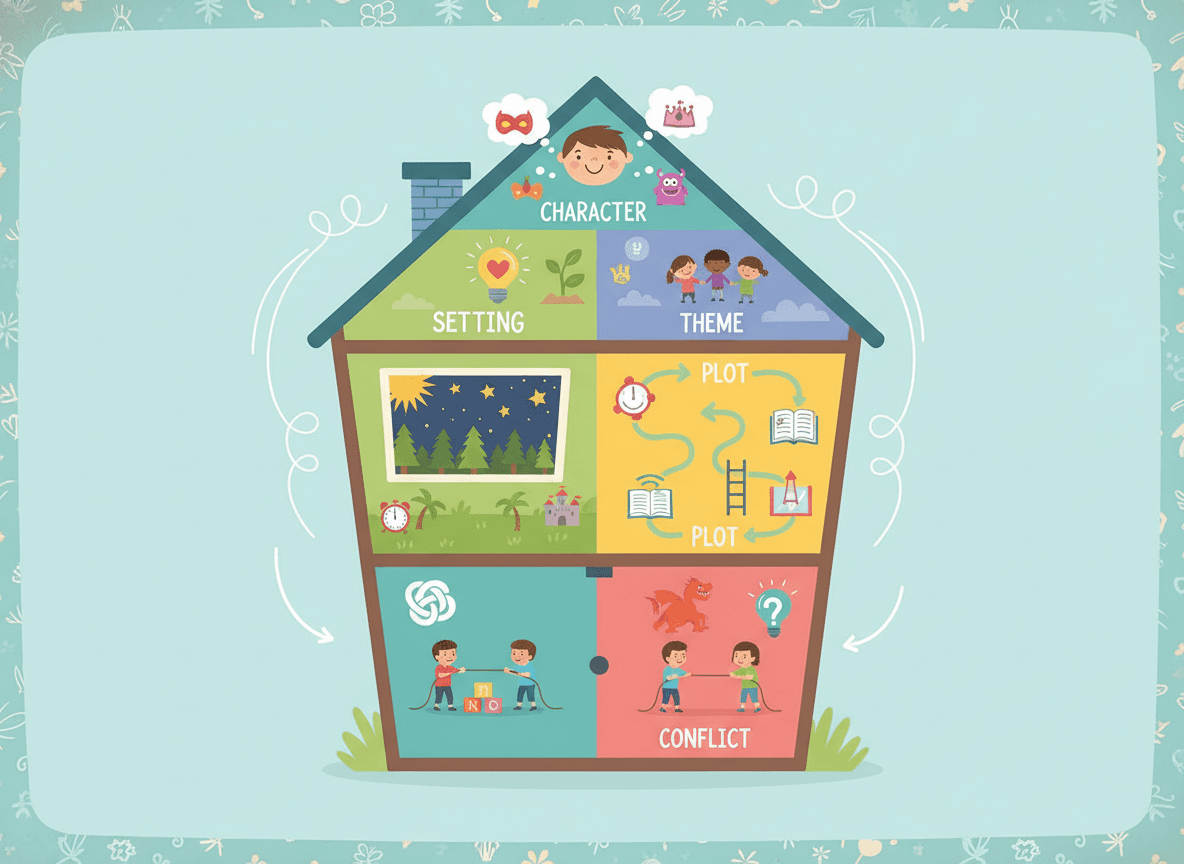
The five core story elements are: characters, setting, plot, conflict, and resolution.
The Five Story Elements
1. Characters
The people, animals, or beings in the story. Every story needs at least one main character (protagonist) whose journey or problem the story follows.
2. Setting
Where and when the story takes place - the location, time period, and atmosphere that shape all events.
3. Plot
The sequence of events organized around a central conflict. Plot moves from the beginning (exposition) through rising action to the climax, then falling action, and finally resolution.
4. Conflict
The central problem or challenge the main character faces. Conflict is the engine of plot - it creates tension and drives characters to make decisions.
Types of conflict:
- Character vs. character (between two people or beings)
- Character vs. nature (against environmental forces)
- Character vs. self (an internal struggle)
- Character vs. society (against rules, systems, or expectations)
5. Resolution
How the conflict is solved and the story concludes. A resolution brings closure and often reflects the story's theme.
How Story Elements Connect
Story elements don't work in isolation - each affects the others. A character's personality shapes how they respond to the conflict. The setting creates the conditions for certain plot events. The resolution reflects what the characters learned and how they changed.
Understanding these connections moves students from identifying elements to analyzing how they work together to create meaning.
What Grade Do Kids Learn Story Elements?
K–1st grade (RL.1.3): Students identify characters, setting, and key events.
2nd–3rd grade (RL.2.5, RL.3.3): Students describe how characters respond to challenges, distinguish different parts of a story's structure, and use vocabulary like conflict and resolution.
4th–5th grade (RL.4.3, RL.5.3): Students analyze how story elements interact and influence each other; compare elements across texts.
Common Misconceptions
Every story has a happy resolution: Many meaningful stories end in loss, ambiguity, or change - not victory. Fairy tales often resolve happily, but literary fiction does not always.
Setting is just the location: Setting also includes time, atmosphere, and culture. A story set in 1850 rural America has a very different setting from one set in 2025 New York City.
Conflict is always between two characters: Internal conflicts and character vs. nature conflicts are just as valid and important as character vs. character.
Practice Activities
-
Story map: After reading, students fill in a graphic organizer for all five elements.
-
Element spotlight: Assign each student one element to present to the class with text evidence.
-
Story element sort: Give sentence strips from a text and students sort them into the correct element category.
-
Before vs. after character: Show how conflict changes the main character - compare beginning and end.
-
Design your own story: Students plan all five elements before writing their own narrative.
Frequently Asked Questions
What are the five story elements?
The five core story elements are: (1) Characters - who is in the story. (2) Setting - where and when the story takes place. (3) Plot - the sequence of events. (4) Conflict - the central problem or challenge. (5) Resolution - how the conflict is solved and the story ends. Some frameworks also include Theme as a sixth element.
What is conflict in a story?
Conflict is the central problem or challenge that the main character must face and overcome. Without conflict, there is no story - it drives the entire plot. Conflict can be external (character vs. character, character vs. nature) or internal (character vs. self, dealing with a decision or emotion). The conflict is introduced early and resolved by the end.
What is the resolution of a story?
The resolution is how the conflict is solved at the end of the story. It is the final stage after the climax and falling action. Resolutions can be happy, sad, ambiguous, or surprising. A strong resolution ties up loose ends and leaves readers with a sense of closure, though some texts end with intentional openness to provoke thought.
How are story elements used in writing?
When students write narratives, they must create all the story elements: interesting characters with clear motivations, a vivid setting, a problem that drives the plot, events that build tension, and a satisfying resolution. Story elements are as important in writing instruction as in reading comprehension.
What is a story map?
A story map is a graphic organizer with labeled sections for each story element - usually characters, setting, problem, events, and solution. Students fill in each section as they read or after completing a text. Story maps help students organize their understanding and identify gaps in comprehension.
Free Story Elements Worksheets
Curriculum-aligned printable worksheets for Kindergarten – 5th Grade. Download free.