What Is Descriptive Writing?
Taught in US schools

Key Takeaways
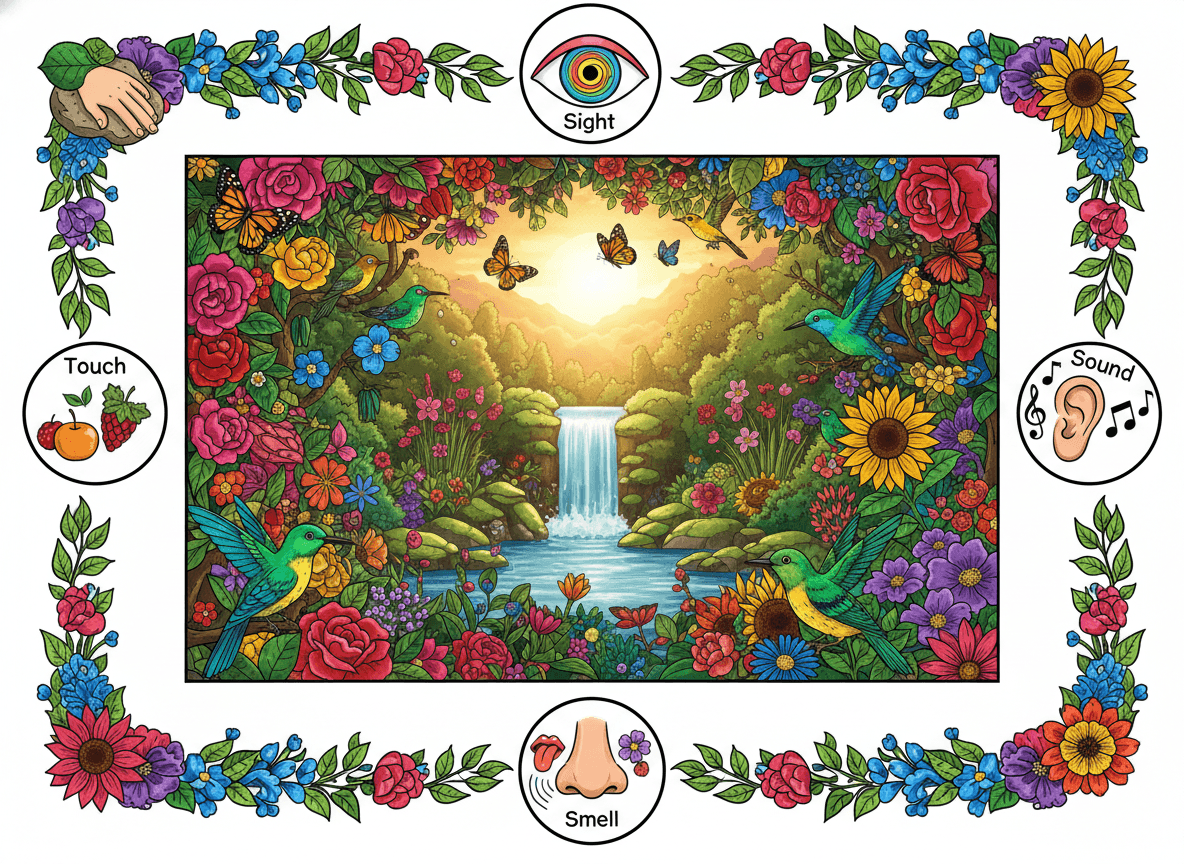
- Descriptive writing uses sensory details (sight, sound, smell, taste, touch) to bring writing to life.
- Strong descriptive writing uses precise, specific words rather than vague or overused ones.
- Figurative language - similes, metaphors, personification - enriches description.
- Descriptive writing appears in all types of writing: narrative, informational, and persuasive.
What Is Descriptive Writing?
Descriptive writing uses specific, sensory, and figurative language to create a vivid picture in the reader's mind. Rather than simply stating facts, descriptive writing immerses the reader in an experience - making them see, hear, smell, feel, and even taste what is being described.
Effective description goes beyond listing adjectives. It chooses the exact right word, engages multiple senses, and uses comparison and figurative language to surprise readers into seeing something familiar in a new way.
The Five Senses in Description
Engaging all five senses moves writing from flat to vivid:
Sight: "The sky was the color of a bruise - deep purple fading into sickly yellow."
Sound: "Rain drummed against the tin roof without pause."
Smell: "The kitchen smelled of burnt sugar and something worse."
Touch: "The cold water hit like a slap."
Taste: "The lemon was so sour it made her eyes water."
Show, Don't Tell
Telling: "He was angry."
Showing: "His jaw tightened, his hands curled into fists, and he didn't speak for a very long time."
Showing uses specific physical details to create emotion rather than labeling it. It invites readers to feel the emotion themselves.
Precise Word Choice
Strong description uses precise verbs and specific nouns rather than vague ones:
walked: trudged, sauntered, crept, sprinted
said: whispered, snapped, announced, mumbled
nice: generous, warm, compassionate, gracious
big: enormous, towering, vast, looming Replacing weak words with precise ones is one of the highest-impact descriptive writing skills.
What Grade Do Kids Learn Descriptive Writing?
2nd grade (W.2.3): Students write narratives with descriptions of actions and feelings.
3rd grade (W.3.3b): Students use dialogue and description of actions, thoughts, and feelings.
4th–5th grade (W.4.3b, W.5.3b): Students use concrete words, phrases, and sensory details to convey experience vividly.
Common Misconceptions
More adjectives = better description: Students sometimes pile adjectives onto every noun. Better description chooses ONE precise, vivid adjective rather than stacking three generic ones. "The old, big, brown dog" is weaker than "the gray-muzzled retriever."
Description only applies to setting: Character, emotion, objects, events, and ideas can all be described vividly. Strong writers describe selectively but powerfully across all elements.
Description slows down writing: Well-crafted description creates momentum. It grounds readers in the story world and makes them care what happens. Only poor description feels slow - because it tells instead of shows.
Practice Activities
-
Sensory detail chart: Fill in a 5-column chart (one column per sense) for a given scene or object.
-
Show, don't tell conversion: Rewrite 5 "telling" sentences as showing passages.
-
Verb replacement: Take a paragraph with weak verbs and replace each with a more precise one.
-
Mystery object description: Describe an object using all five senses without naming it; classmates guess what it is.
-
Setting snapshot: Students write a 5-sentence description of a real or imagined place, using at least 3 different senses.
Frequently Asked Questions
What is descriptive writing?
Descriptive writing uses vivid, sensory details and precise language to paint a picture in the reader's mind. Instead of telling readers what something is like, descriptive writing shows them - through specific details that engage the senses, figurative comparisons, and carefully chosen words. The goal is to create a clear, immersive experience.
How do the five senses improve description?
Engaging multiple senses makes description richer and more immersive: Sight ('the orange flames leaped three feet high'), Sound ('the wood crackled and spat'), Smell ('the sharp scent of smoke drifted into the street'), Touch ('the intense heat pushed us back'), Taste ('bitter ash filled the air'). Most beginning writers default to sight alone - teaching all five senses expands descriptive range.
What is 'show, don't tell' in descriptive writing?
'Show, don't tell' is a classic writing principle: instead of telling readers how to feel, show the details that lead them to feel it. 'She was nervous' (telling) vs. 'Her hands trembled as she held the microphone, and her voice came out higher than she intended' (showing). Showing uses specific, sensory details to create emotion rather than simply labeling it.
How do strong word choices improve description?
Precise, specific words are far more descriptive than vague or general ones. 'The dog walked into the room' is weak. 'The elderly beagle shuffled into the kitchen, nails clicking on the tile' is specific and vivid. Strong description replaces weak verbs (walked, went, said) with precise ones (shuffled, darted, whispered) and vague nouns (thing, place, person) with specific ones.
How does descriptive writing fit into other writing types?
Descriptive writing is not just a standalone genre - it enhances all writing types. Narratives use description to build setting and character. Informational writing uses description to clarify concepts and make information memorable. Persuasive writing uses description to make arguments emotionally compelling. Description is a skill woven through every type of writing students produce.
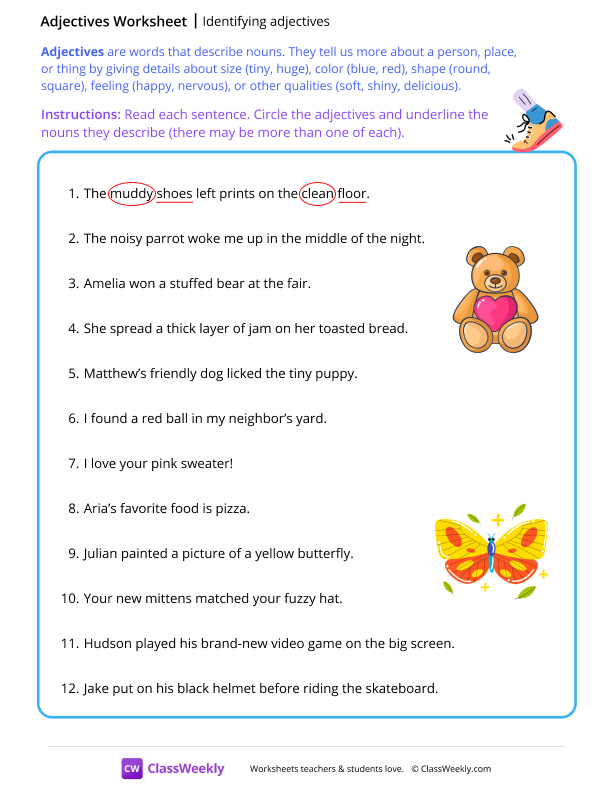
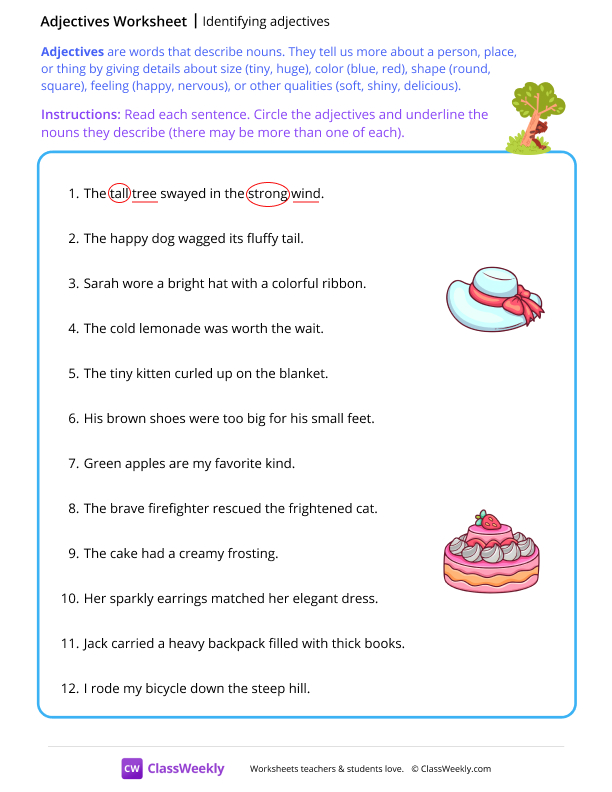
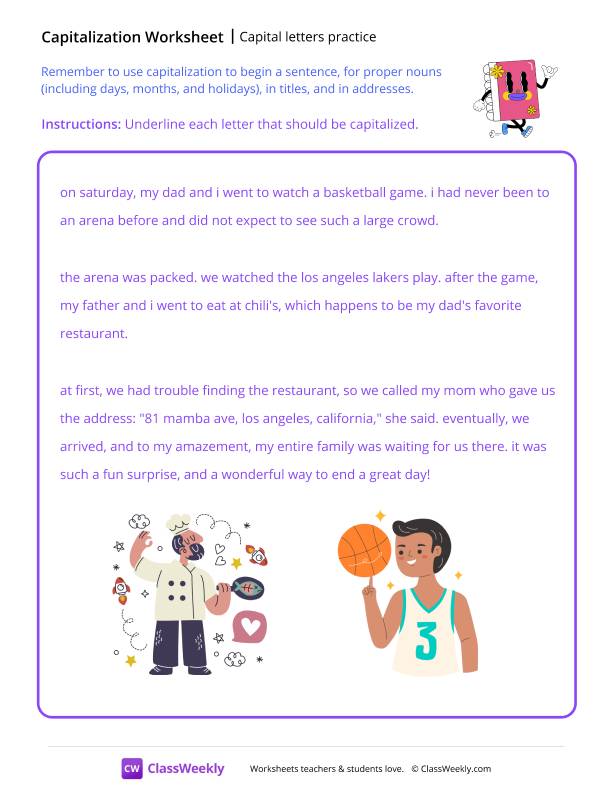
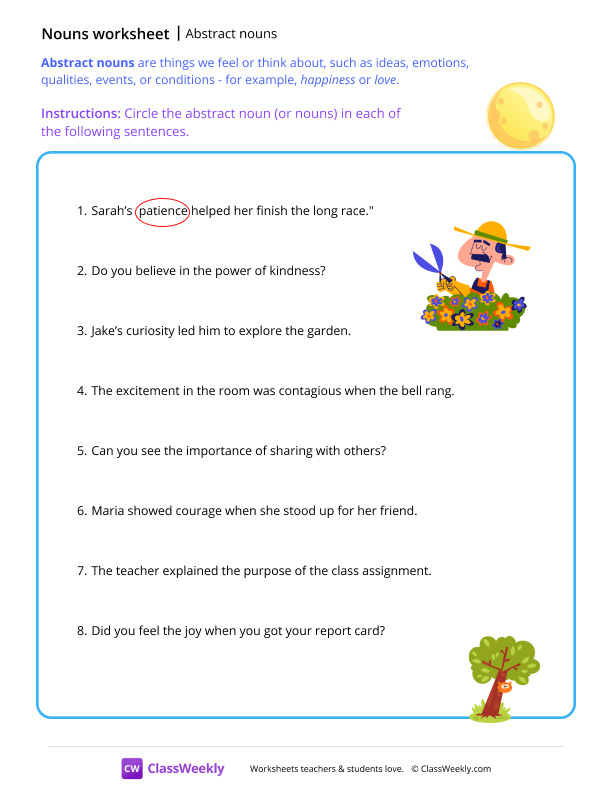
Free Descriptive Writing Worksheets
Curriculum-aligned printable worksheets for 2nd – 5th Grade. Download free.