What Is Financial Literacy?
Taught in US schools

Key Takeaways
- Financial literacy means understanding how money works and making informed decisions about it.
- Core concepts for kids include earning, spending, saving, and giving.
- A budget is a plan for how to use money - spending less than you earn is the key habit.
- Starting financial education early builds lifelong money habits and decision-making skills.
What Is Financial Literacy?
Financial literacy is the ability to understand how money works and to make smart decisions about earning, spending, saving, and giving. It is a life skill that affects every adult - and the habits and mindsets students develop early follow them for decades.
For elementary students, financial literacy is not about stock portfolios or mortgages. It's about building core concepts and habits: money has value and limits, choices have tradeoffs, saving today enables spending tomorrow, and giving is part of a healthy relationship with money.
Core Concepts for Elementary Students
Earning Money is earned through work. People trade their time and skills for pay. Even at young ages, students can understand that earning takes effort and that different jobs pay differently.
Needs vs. Wants A need is something essential for health and survival: food, shelter, clothing. A want is something desirable but not essential: toys, candy, entertainment. One of the most important early financial habits is being able to tell the difference - and making intentional choices.
Spending Every time you spend money, you are making a choice. Spending on one thing means you have less for something else. Comparison shopping - checking prices before buying - is a practical spending skill.
Saving Setting aside money now to use later. Students learn about short-term saving goals (saving for a toy) and, in later grades, the concept of interest - money the bank pays you for letting them hold your savings.
Budgeting A budget is a plan for how to use money. The basic rule: don't spend more than you earn. Students practice budgeting through classroom simulations and math problems involving income and expenses.
Giving Many financial literacy frameworks include charitable giving - the choice to use a portion of money to help others. This introduces values-based financial decision-making.
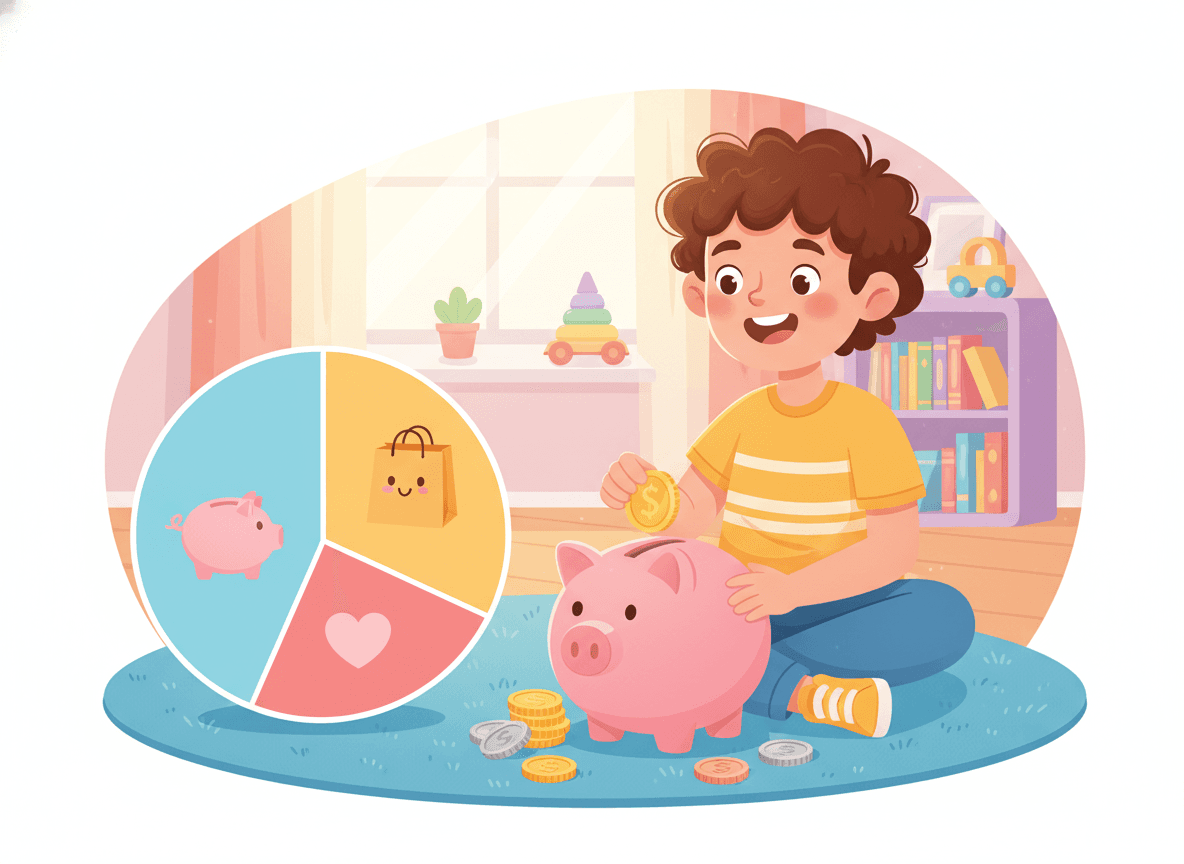
The Spend-Save-Give Framework
A simple framework many elementary programs use:
-
Spend - money for current purchases
-
Save - money set aside for a goal
-
Give - money set aside for helping others
This three-jar model (or envelope system) is concrete and manageable for young students.
Practice Activities
- Set up a classroom economy: students earn "class dollars" for completing work and following expectations, and can spend them at a class store or auction.
- Give students a pretend budget ($10) and a menu of options. Ask them to make spending choices and explain their reasoning.
- Use picture books: Alexander, Who Used to Be Rich Last Sunday (spending choices), The Berenstain Bears' Trouble with Money (saving and spending habits).
- Have students make a savings goal chart: What do you want to save for? How much does it cost? How long will it take to save?
Frequently Asked Questions
What is financial literacy for kids?
Financial literacy for kids means learning the basics of how money works. At the elementary level, this includes understanding that money is earned through work, making choices about spending vs. saving, understanding the difference between needs and wants, and recognizing that there are limits to available money. These early concepts build the foundation for more complex financial understanding in later years.
What financial concepts should elementary students learn?
Key concepts by grade band: K-2: money identification, counting money, needs vs. wants, saving. Grades 3-5: earning and income, budgeting (spending plan), comparison shopping, simple banking concepts (deposit, withdrawal, interest), introduction to giving and charitable choices. A basic understanding of goods and services and supply and demand connects financial literacy to social studies.
How do you teach financial literacy in elementary school?
Effective strategies include: classroom economy simulations where students earn, spend, and save classroom currency; word problems involving money math; picture books about saving and spending decisions; discussions of family financial choices at an age-appropriate level; and real-world projects like planning a class event within a budget.
Free Financial Literacy Worksheets
Curriculum-aligned printable worksheets for Kindergarten – 5th Grade. Download free.