What Is Journaling in School?
Taught in US schools
Key Takeaways
- Journaling builds writing fluency by giving students regular, low-stakes writing practice.
- It encourages reflection, self-awareness, and personal voice development.
- Journals are not heavily graded - the goal is volume and habit, not perfection.
- Journal writing can be free choice or prompt-based; both serve different purposes.
What Is Journaling?
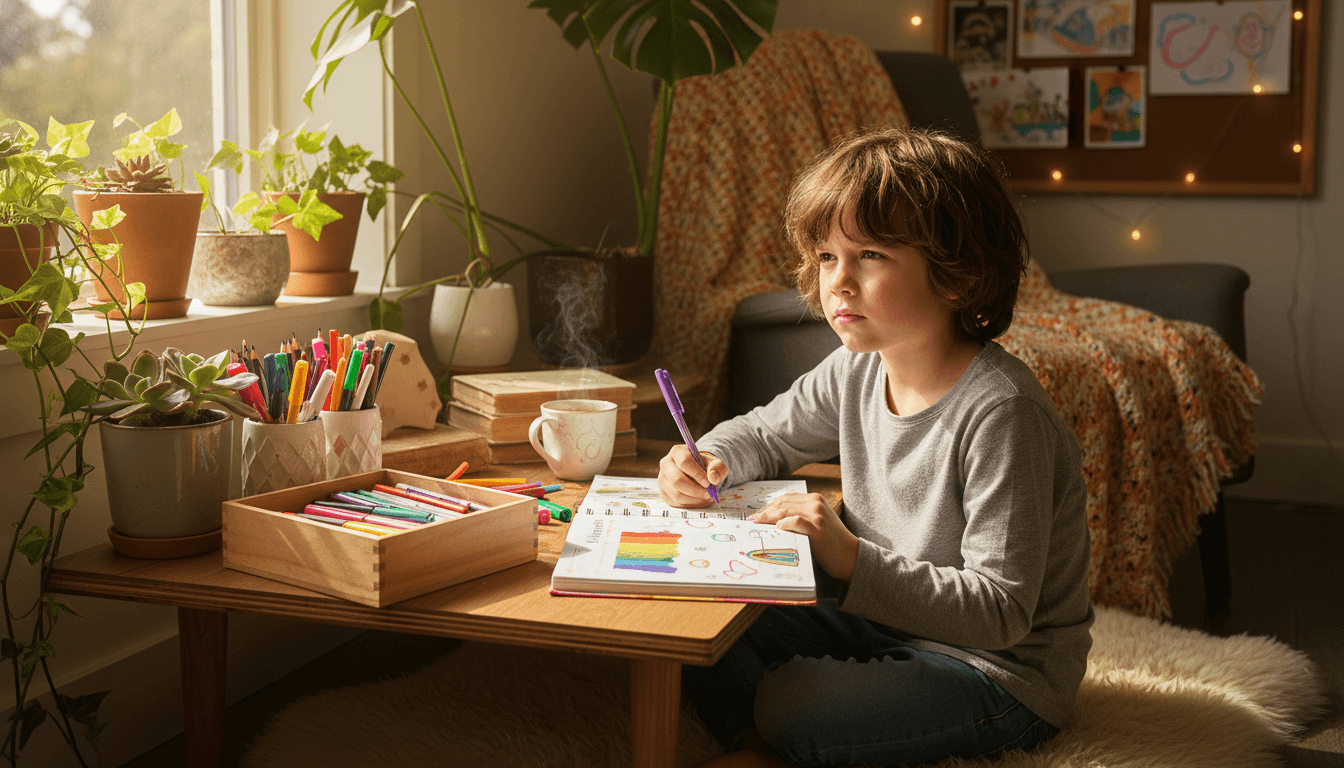
Journaling is the practice of writing regularly in a personal notebook or journal. In school, it gives students a consistent, low-pressure space to practice writing, develop their voice, and process ideas and experiences - without the pressure of producing a polished final product.
Journals are private or semi-private by design. When students know their writing won't be heavily graded or publicly judged, they write more freely - and that freedom is where voice develops.
Types of Journals in the Classroom
Personal Journal Free writing about life, thoughts, feelings, and events. Students write what they want to write. The teacher may collect to check for effort but not to correct grammar or spelling.
Writer's Notebook A collection tool for writers - students record interesting observations, overheard phrases, powerful words, questions they wonder about, and seeds for future stories. Made famous by Ralph Fletcher's A Writer's Notebook.
Reading Response Journal Students write reactions to books they are reading. Prompts might include: "What surprised you?" "How does this connect to your own life?" "What question would you ask the author?"
Learning Log Students reflect on what they learned in a lesson: "What did I understand today? What confused me? What questions do I have?"
Gratitude Journal Students write three things they are grateful for each day. Research-backed for improving mood, positive thinking, and emotional regulation.
Making Journaling Effective
Volume over correctness. The goal of journaling is practice, not perfection. Spending time correcting every misspelling defeats the purpose - students need to write a lot to develop fluency, and correcting every error slows them down.
Protect the time. Ten minutes of daily journaling (or three days per week) builds the habit. Skipping repeatedly means the habit never forms.
Model vulnerability. Teachers who share their own journal entries - including crossed-out words and incomplete thoughts - show students that real writing is messy.
Give good prompts. When students are stuck, prompts help. Good prompts are specific and open-ended: "Describe a moment when you felt really proud of yourself" rather than "Write about your weekend."
Practice Activities
- Start every morning with 10 minutes of free journal writing before instruction begins - this builds writing fluency and a daily writing habit.
- "First thought" journaling: students write the first thing that comes to mind in response to a one-word prompt: freedom, surprise, loud.
- After a science lesson, students write in their learning log: "Today I learned... It reminds me of... I still wonder..."
- Keep writer's notebooks all year; at the end, students mine them for story ideas to develop into full pieces.

Frequently Asked Questions
What is journaling in elementary school?
Journaling in school is the practice of regularly writing in a personal notebook or journal - usually for a set amount of time each day or week. Students may write freely about anything on their mind, respond to a teacher-provided prompt, reflect on their learning, or write about their feelings and experiences. Journals are typically private or semi-private and are assessed for effort and volume, not correctness.
What are the benefits of journaling for kids?
Regular journaling builds writing fluency (the ability to write smoothly and quickly), strengthens the habit of daily writing, develops personal voice, supports emotional processing and self-reflection, generates ideas for future writing projects, and improves spelling and grammar through practice. Research also shows journaling benefits emotional regulation - putting feelings into words reduces their intensity.
What types of journals do students keep?
Common journal types include: personal journals (free writing about life and feelings), writer's notebooks (collecting ideas, observations, interesting words, and story seeds for future pieces), reading response journals (reactions to books), learning logs (reflections on what was learned in class), gratitude journals (three things the student is grateful for each day), and science or math journals (recording observations and thinking).
Free Journaling Worksheets
Curriculum-aligned printable worksheets for Kindergarten – 5th Grade. Download free.
Common Core Standards