What Are Literary Devices?
Taught in US schools
Key Takeaways
- Literary devices are tools authors use to craft meaning, emotion, and effect in writing.
- They include figurative language (simile, metaphor) and structural devices (foreshadowing, flashback).
- Recognizing literary devices helps readers understand what the author intended - not just what the words say.
- Students who know literary devices become better readers AND better writers.
What Are Literary Devices?
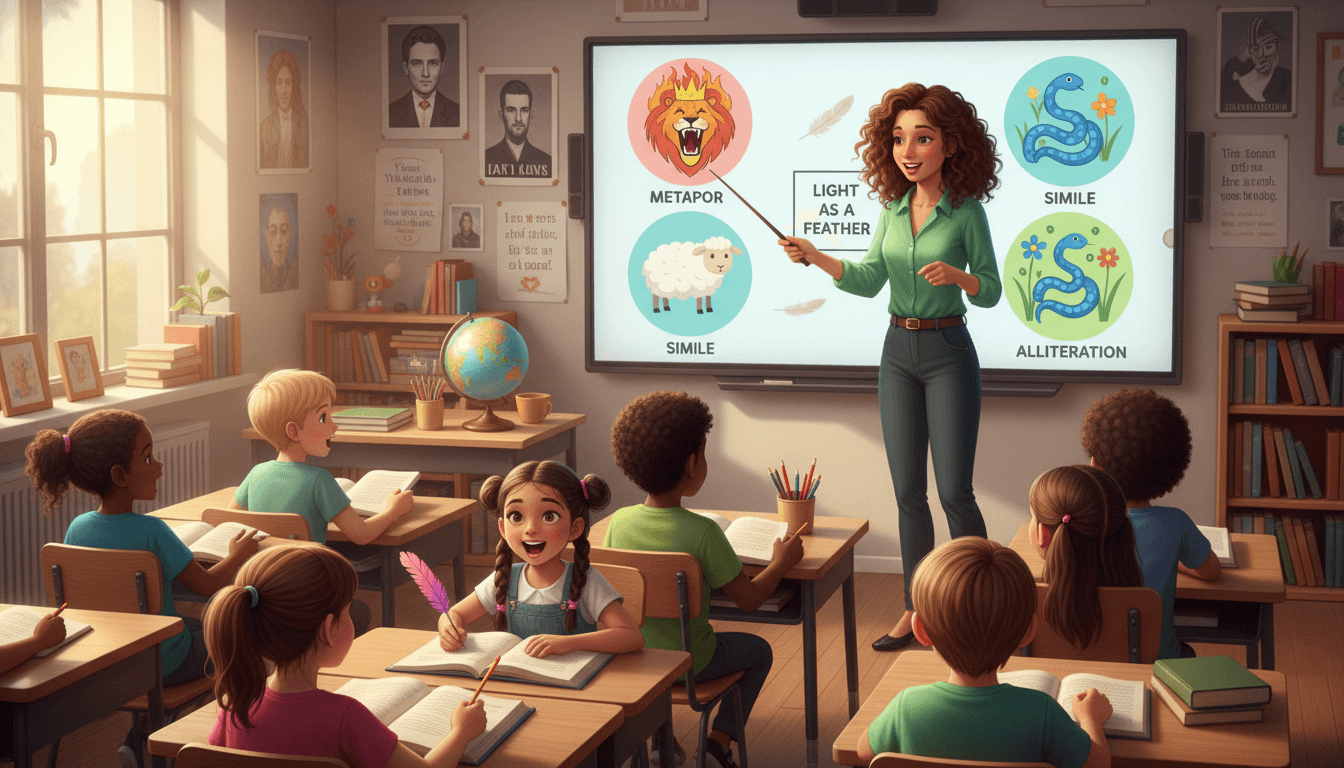
Literary devices are deliberate techniques that authors use to craft meaning, create emotion, and achieve specific effects in their writing. They are the tools of the writer's craft - the choices authors make about language, structure, and storytelling to shape how readers experience a text.
Recognizing literary devices helps readers understand not just what a text says but how the author chose to say it - and why those choices matter.
Figurative Language Devices
These devices create vivid, non-literal meaning through creative language use.
Simile - Comparing two unlike things using like or as:
"Her voice was like honey poured over warm bread."
Metaphor - Comparing two unlike things without like or as, stating one is the other:
"The classroom was a zoo by the end of the day."
Personification - Giving human qualities to non-human things:
"The wind whispered secrets through the trees."
Hyperbole - Deliberate exaggeration for effect:
"I've told you a million times."
Alliteration - Repetition of the same consonant sound at the beginning of nearby words:
"Sally sells seashells by the seashore."
Onomatopoeia - Words that sound like what they describe:
buzz, crash, sizzle, thump
Imagery - Descriptive language that appeals to the senses:
"The sharp smell of pine, the crunch of dry leaves, and the cold bite of November air filled her senses."
Structural and Narrative Devices
These devices shape how a story is organized and experienced.
Foreshadowing - Hints or clues about events that will happen later in the story.
Flashback - A scene that interrupts the present narrative to show something from the past.
Mood - The overall feeling or atmosphere of a text - dark, hopeful, mysterious, joyful.
Tone - The author's attitude toward the subject - serious, humorous, sarcastic, admiring.
Point of View - The perspective from which the story is told: first person (I), third person limited, third person omniscient.
Symbolism - When a person, object, or event represents something beyond its literal meaning. A dove symbolizes peace; a storm symbolizes trouble.
Irony - When there is a gap between what is said or expected and what actually occurs.
Practice Activities
- "Device hunt" - read a short passage and highlight every literary device found. Identify each by name and discuss its effect.
- Before studying a device, ask students to write without it; then rewrite using it. Compare: what changed?
- Keep a class "literary device museum" - post examples from books read throughout the year under each device's name.
- Author's craft discussion: "Why did the author use a simile here? What would be lost if they had written the literal meaning instead?"
Frequently Asked Questions
What are literary devices?
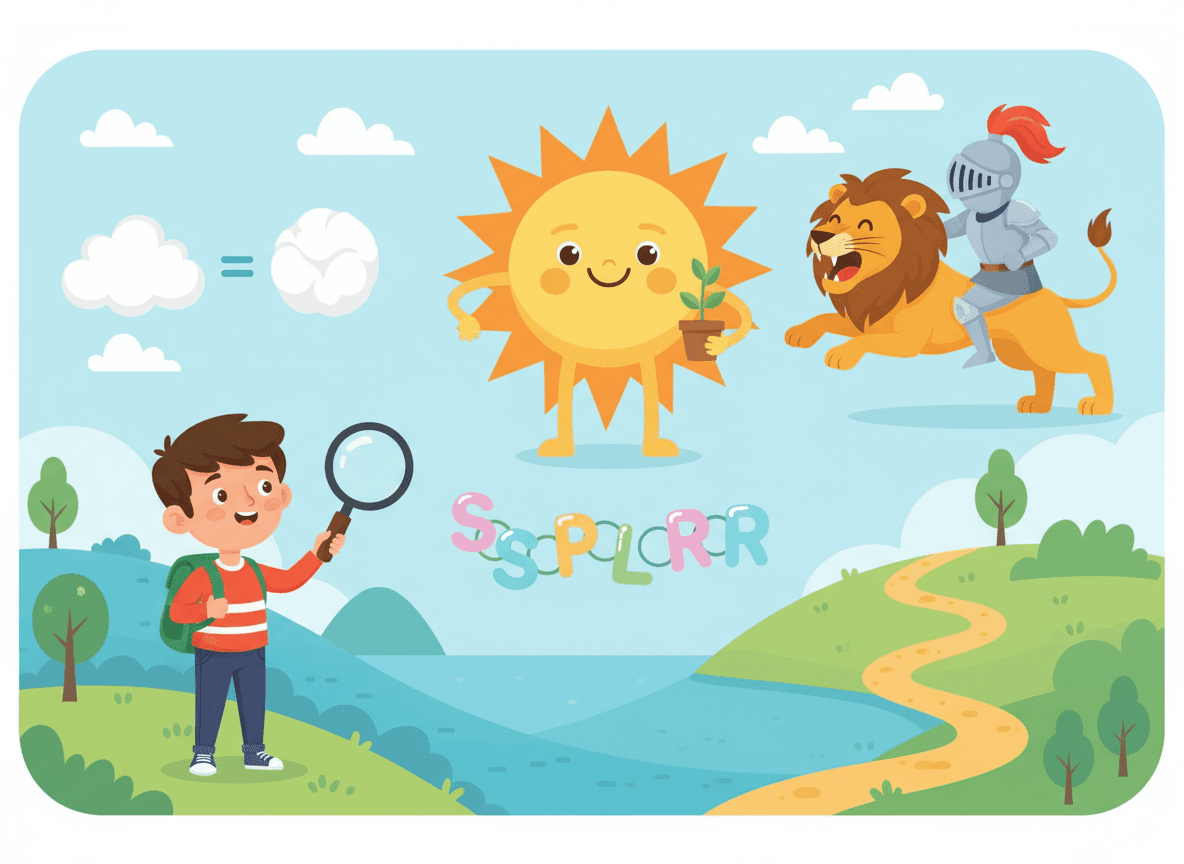
Literary devices are deliberate techniques authors use to enhance the impact of their writing. They fall into two main categories: figurative language devices (simile, metaphor, personification, hyperbole, alliteration, onomatopoeia, imagery) that create vivid, non-literal language; and structural/narrative devices (foreshadowing, flashback, irony, mood, tone, point of view, symbolism) that shape how a story is organized and experienced.
What literary devices should elementary students know?
By grade 5, students should be familiar with: simile, metaphor, personification, hyperbole, alliteration, onomatopoeia, and imagery (figurative language); and foreshadowing, flashback, mood, tone, point of view, and theme (narrative/structural devices). Symbolism and irony are introduced in grades 4-5.
Why do we teach literary devices?
Understanding literary devices helps students read more deeply - they can identify what an author is doing and why, not just what happens in the plot. It also makes students better writers. When students recognize that a simile creates a vivid comparison, they start using similes deliberately in their own writing. Literary devices are the tools of the craft of writing.
Free Literary Devices Worksheets
Curriculum-aligned printable worksheets for 2nd – 5th Grade. Download free.
Common Core Standards