What Is a Proper Noun?
Taught in US schools

Key Takeaways
- A proper noun names a specific person, place, or thing and is always capitalized.
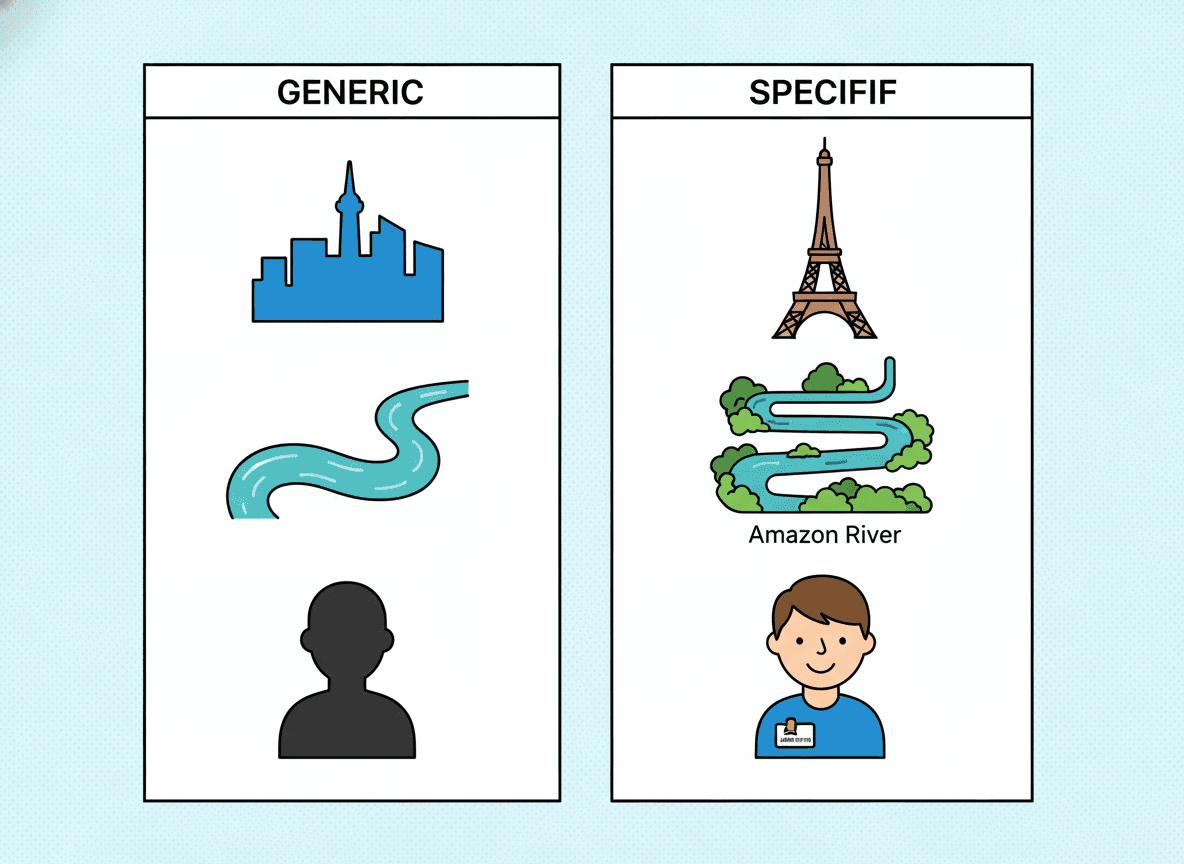
- Common nouns name general categories (city); proper nouns name specific examples (Chicago).
- Proper nouns include names of people, cities, countries, schools, organizations, holidays, and brands.
- Every word in most proper nouns is capitalized (Golden Gate Bridge, Pacific Ocean).
What Is a Proper Noun?
A proper noun is the specific name of a particular person, place, thing, or idea. Unlike common nouns, which name general categories, proper nouns name one specific member of that category.
The rule: Proper nouns are always capitalized - no matter where they appear in a sentence.
girl: Emma
city: Seattle
river: Mississippi River
dog: Biscuit
school: Lincoln Elementary
holiday: Thanksgiving
month: October
day: Friday
Common Noun vs. Proper Noun
Here's the key question: Is this one specific thing, or is it a general category?
-
mountain is a common noun - it refers to any mountain in general
-
Mount Everest is a proper noun - it refers to one specific mountain
-
teacher is a common noun - it refers to anyone who teaches
-
Mrs. Rodriguez is a proper noun - it refers to one specific teacher
-
book is a common noun - it refers to any book in general
-
Charlotte's Web is a proper noun - it refers to one specific book
Capitalization Rules for Proper Nouns
Every significant word in a proper noun is capitalized:
Golden Gate Bridge (not Golden gate bridge) Pacific Ocean (not Pacific ocean) New York City (not New york city)
Small connecting words (of, the, and) within a proper noun are usually lowercase:
Statue of Liberty Museum of Natural History
Titles before names are proper nouns and are capitalized:
Dr. King, President Washington, Coach Miller
Titles used alone (without a specific name) are usually common nouns and are not capitalized:
"I saw the president on TV." (no specific name) "I saw President Biden on TV." (specific name → proper noun)
Practice Activities
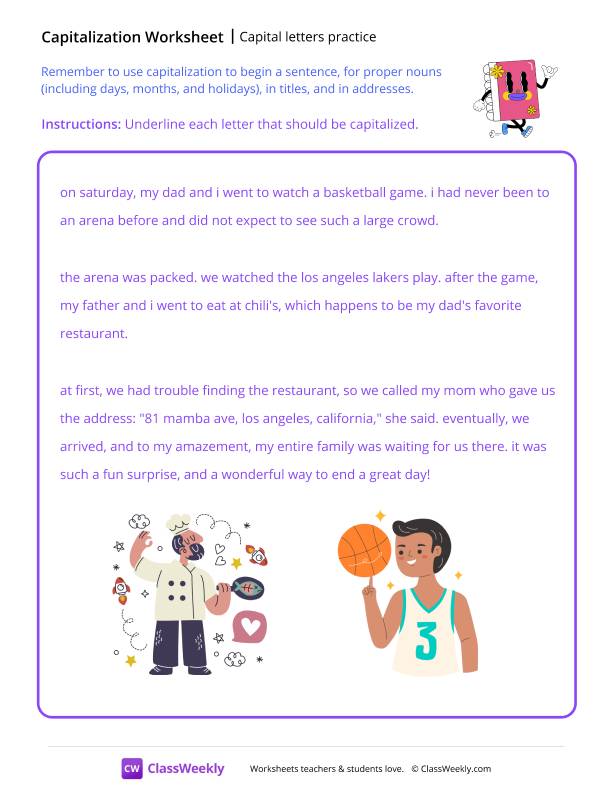
- Give students a paragraph with all proper nouns written in lowercase. Students find them all and capitalize them.
- "Common to proper" game: give students a common noun and challenge them to name a specific proper noun in that category (city → Dallas, river → Nile).
- Proper noun scavenger hunt: students look around the classroom, school, or their books for proper nouns and record them.
- Write a paragraph about your neighborhood using at least 5 specific proper nouns (street names, store names, school name, etc.).
Frequently Asked Questions
What is a proper noun?
A proper noun is the official or specific name of a particular person, place, or thing. Proper nouns are always capitalized, no matter where they appear in a sentence. Examples: Maria, Tuesday, Eiffel Tower, Pacific Ocean, Amazon River, United States, Thanksgiving, Nike, Harry Potter. The key: proper nouns name ONE specific thing; common nouns name a general category.
What is the difference between a common noun and a proper noun?
A common noun is a general name for a person, place, or thing: girl, city, river, holiday, dog. A proper noun is the specific name of one particular person, place, or thing: Emma, Paris, Mississippi River, New Year's Day, Biscuit. Common nouns are only capitalized at the beginning of a sentence; proper nouns are always capitalized.
What kinds of words are proper nouns?
Proper nouns include: people's names and titles (Dr. King, President Lincoln, Aunt Rosa), geographic names (Pacific Ocean, Rocky Mountains, Texas, France), specific places (Disneyland, Central Park, the White House), days and months (Monday, January), holidays (Fourth of July, Hanukkah), organizations and brands (NASA, Target, the Boston Red Sox), and titles of specific works (Charlotte's Web, The Lion King).
Free Proper Noun Worksheets
Curriculum-aligned printable worksheets for 1st – 5th Grade. Download free.