What Was Reconstruction?
Taught in US schools
Key Takeaways
- Reconstruction (1865–1877) was the federal government's effort to reunite the nation after the Civil War and guarantee rights for formerly enslaved people.
- Three constitutional amendments passed during Reconstruction: the 13th (abolished slavery), 14th (citizenship), and 15th (voting rights for Black men).
- The end of Reconstruction in 1877 led to the rise of Jim Crow laws and nearly a century of legalized racial segregation in the South.
What Was Reconstruction?
Reconstruction (1865–1877) was the period after the Civil War when the United States government worked to:
- Reunite the nation - bringing the defeated Confederate states back into the Union
- Rebuild the war-devastated South
- Integrate formerly enslaved people into society as free citizens with legal rights
It was one of the most important - and ultimately incomplete - chapters in American history.
The Three Reconstruction Amendments
Three constitutional amendments, ratified during and just after the Civil War, fundamentally changed what America claimed to stand for:
13th Amendment: 1865 - Abolished slavery throughout the United States
14th Amendment: 1868 - Guaranteed citizenship and equal protection under the law for all people born or naturalized in the US
15th Amendment: 1870 - Prohibited denying the right to vote based on race, color, or previous condition of servitude Together, these amendments were meant to build a new America - one where formerly enslaved people were full citizens. In practice, realizing this vision faced enormous resistance.
Key Events and Institutions
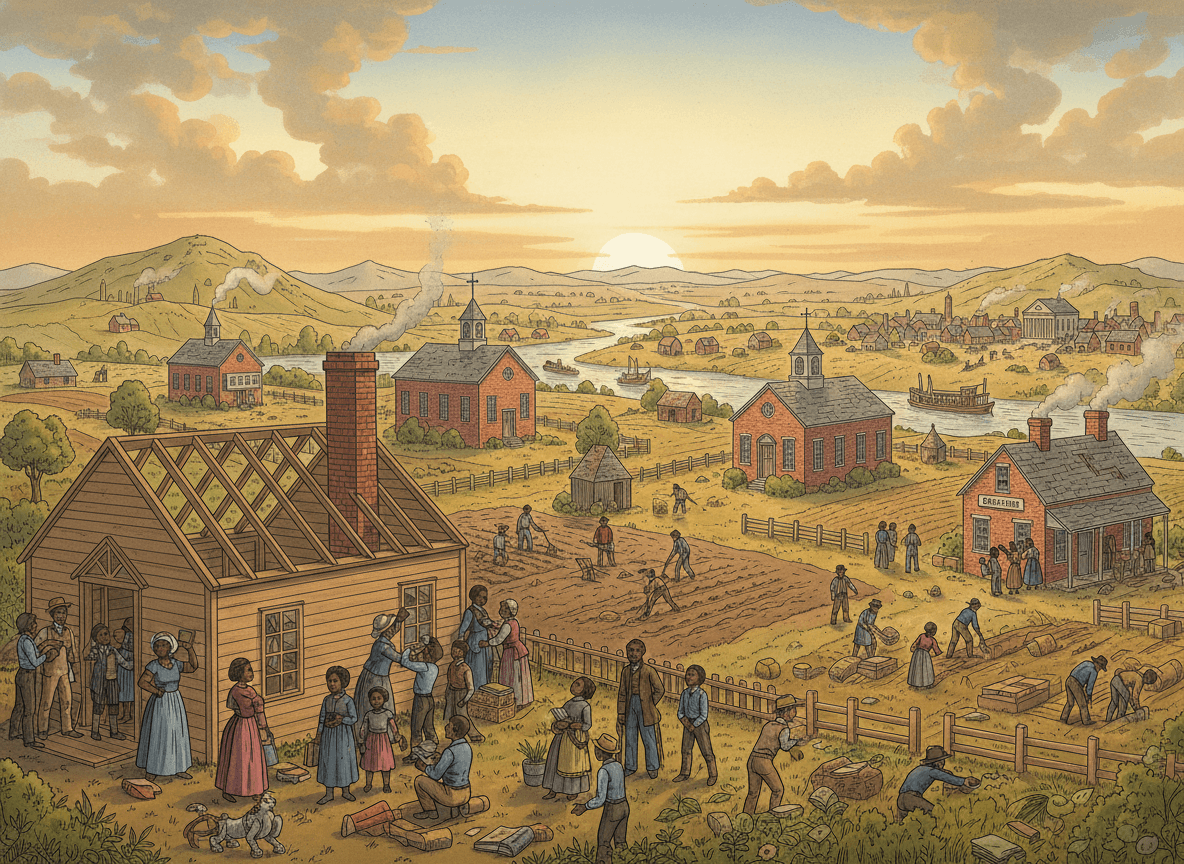
Freedmen's Bureau (1865–1872) A federal agency that helped formerly enslaved people access education, healthcare, food, and legal support. It helped establish many schools for Black Americans, including several that became Historically Black Colleges and Universities (HBCUs).
Black Political Participation During Reconstruction, Black men voted and ran for office for the first time. Dozens of Black men were elected to Congress, state legislatures, and local offices - including Hiram Revels and Blanche Bruce as US Senators from Mississippi.
Sharecropping Many formerly enslaved people ended up as sharecroppers - farming land owned by white landowners in exchange for a share of the crop. In practice, this system kept Black families trapped in debt and poverty, with little real economic freedom.
Resistance to Reconstruction
Reconstruction faced violent and political resistance from the start:
-
Black Codes: Laws passed by Southern states to restrict Black Americans' movement, labor, and rights
-
Ku Klux Klan (KKK): A white supremacist terrorist organization that used violence and intimidation to prevent Black Americans from voting and exercising their rights
-
Political opposition: Many white Southerners and some Northern Democrats opposed federal enforcement of Black civil rights
The End of Reconstruction and the Rise of Jim Crow
The Compromise of 1877 ended Reconstruction when federal troops were withdrawn from the South. Without federal protection:
- Southern states passed Jim Crow laws - laws that legally enforced racial segregation in schools, transportation, restaurants, and public spaces
- Voting rights were stripped through poll taxes, literacy tests, and violence
- The rights promised by the 14th and 15th Amendments became largely unenforceable in the South for nearly another century
The promises of Reconstruction would not be fulfilled until the Civil Rights Movement of the 1950s and 1960s.
Practice Activities
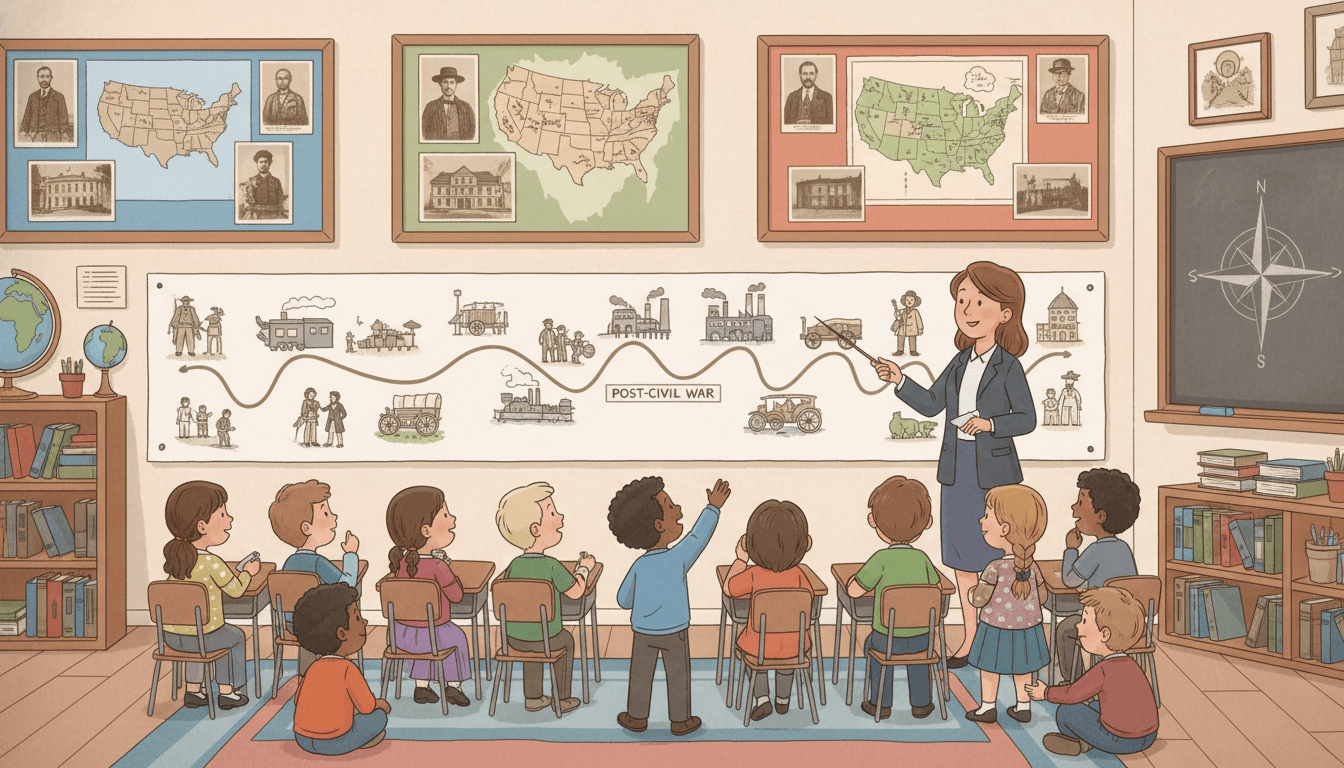
- Create a timeline of Reconstruction events from the end of the Civil War through the end of Reconstruction in 1877.
- Read the text of the 13th, 14th, and 15th Amendments - summarize what each one says in your own words.
- Research a Black politician elected during Reconstruction (such as Hiram Revels or John Roy Lynch) and write a biography.
- Compare Reconstruction policies to what actually happened for Black Southerners - why was there such a gap between the law and reality?
- Connect Reconstruction to the Civil Rights Movement - which rights promised in the 1860s were still being fought for 100 years later?
Frequently Asked Questions
Why did Reconstruction end in 1877?
The Compromise of 1877 resolved a disputed presidential election by awarding the presidency to Rutherford B. Hayes in exchange for withdrawing federal troops from the South. Without federal military protection, Southern state governments quickly dismantled Reconstruction-era policies and passed laws restricting Black Americans' rights.
What was the Freedmen's Bureau?
The Freedmen's Bureau was a federal agency established in 1865 to help formerly enslaved people and poor white Southerners transition to freedom. It provided food, housing, medical care, education, and legal support. It helped establish many historically Black colleges and universities (HBCUs) before Congress shut it down in 1872.
What were Black Codes?
Black Codes were laws passed by Southern states immediately after the Civil War to severely restrict the rights of Black Americans. They limited where Black people could live, work, and travel, and effectively forced many into labor arrangements similar to enslavement. The 14th Amendment's guarantee of equal protection was meant to combat these laws.
Free Reconstruction Worksheets
Curriculum-aligned printable worksheets for 5th Grade. Download free.