What Is Regrouping in Math?
Taught in US schools
Key Takeaways
- Regrouping (carrying) in addition moves excess tens to the next column when a place value reaches 10 or more.
- Regrouping (borrowing) in subtraction takes a group of ten from the next column when there aren't enough ones.
- Place-value understanding is essential - regrouping makes no sense without knowing what each digit represents.
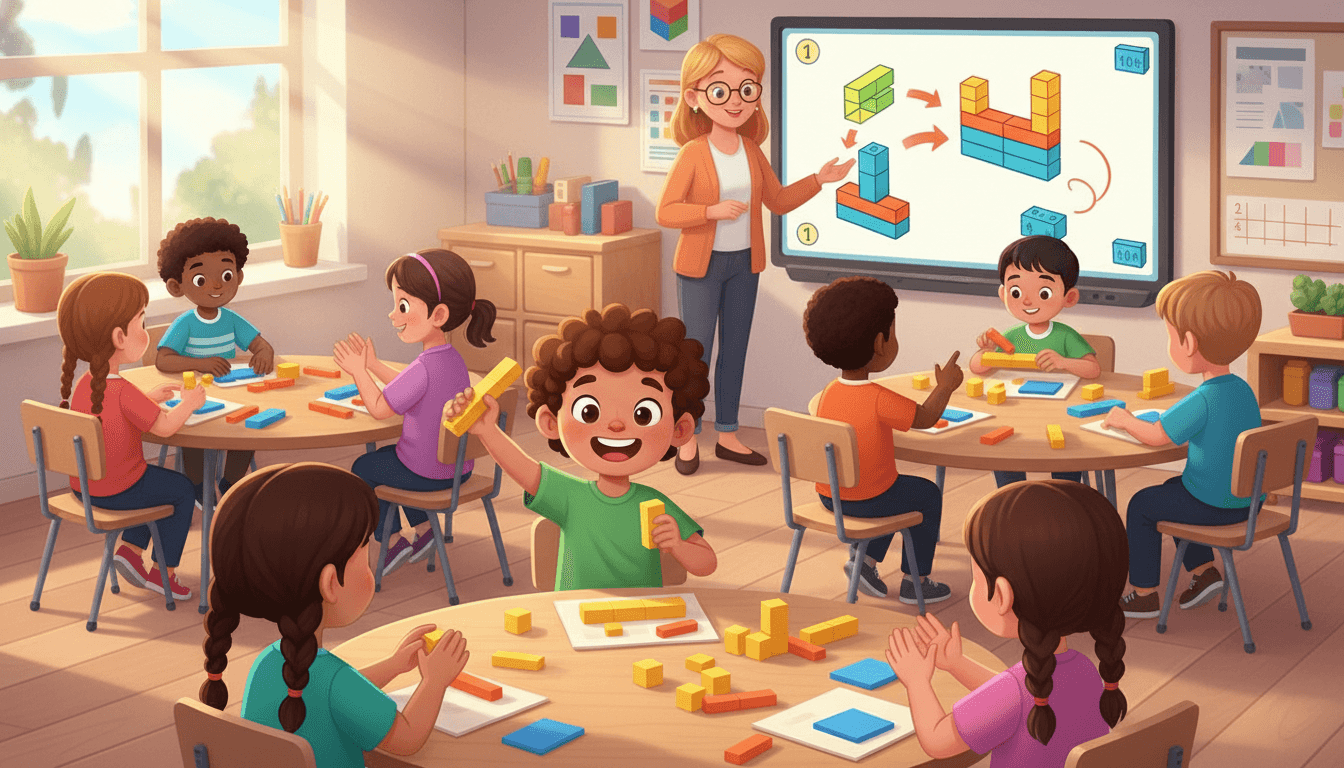
- Base-ten blocks and drawings make the regrouping process concrete before students work abstractly.
What Is Regrouping?
Regrouping is the process of reorganizing place-value groups in addition and subtraction. When you add numbers and a column's sum reaches 10 or more, you regroup by carrying to the next place. When you subtract and don't have enough in a column, you regroup by borrowing from the next place.
Regrouping is often called carrying (in addition) and borrowing (in subtraction), though the preferred modern term is regrouping because it more accurately describes the mathematical action.
Regrouping in Addition
Example: 47 + 35
- Add the ones: 7 + 5 = 12. Write 2 in the ones place, carry 1 ten to the tens column.
- Add the tens: 4 + 3 + 1 (carried) = 8. Write 8 in the tens place.
- Answer: 82
The carried 1 represents a group of 10 that was "full" in the ones column and moved up to become a ten.
Regrouping in Subtraction
Example: 53 - 28
- Subtract the ones: 3 - 8. Can't do it - regroup! Take 1 ten from the tens place, giving 13 ones.
- 13 - 8 = 5. Write 5 in the ones place.
- Tens: 4 (after giving one away) - 2 = 2. Write 2 in the tens place.
- Answer: 25
What Grade Do Kids Learn Regrouping?
1st grade (1.NBT.C.4): Adding a two-digit number to a two-digit number, understanding regrouping as composing a ten.
2nd grade (2.NBT.B.7): Adding and subtracting within 1,000 with multiple regroupings, using models (base-ten blocks, drawings).
3rd grade (3.NBT.A.2): Fluently adding and subtracting within 1,000 using the standard algorithm.
Common Misconceptions
The carry/borrow is forgotten: Students complete each column correctly but forget to add or subtract the regrouped amount. Color-coding the carried digit or circling it helps.
Regrouping is confusing without place-value understanding: Students who memorize "carry the 1" without understanding that it represents a ten often make systematic errors. Base-ten blocks or expanded form solve this.
You always have to regroup: Some students regroup even when it's not necessary (e.g., in 5 + 3 = 8, no carrying is needed). Encourage students to check each column before deciding.
Practice Activities
-
Base-ten block trading: Model addition with blocks and physically trade 10 ones for 1 ten rod.
-
Color-coded algorithms: Use one color for carries (addition) and another color for borrows (subtraction).
-
Expanded-form addition: Write 47 as 40 + 7 and 35 as 30 + 5, add each part, then recombine.
-
Error analysis: Show worked examples with common regrouping errors and have students find and fix mistakes.
-
Two-round computation: Solve without regrouping first (estimate), then solve with regrouping and compare.
Frequently Asked Questions
What is regrouping in math?
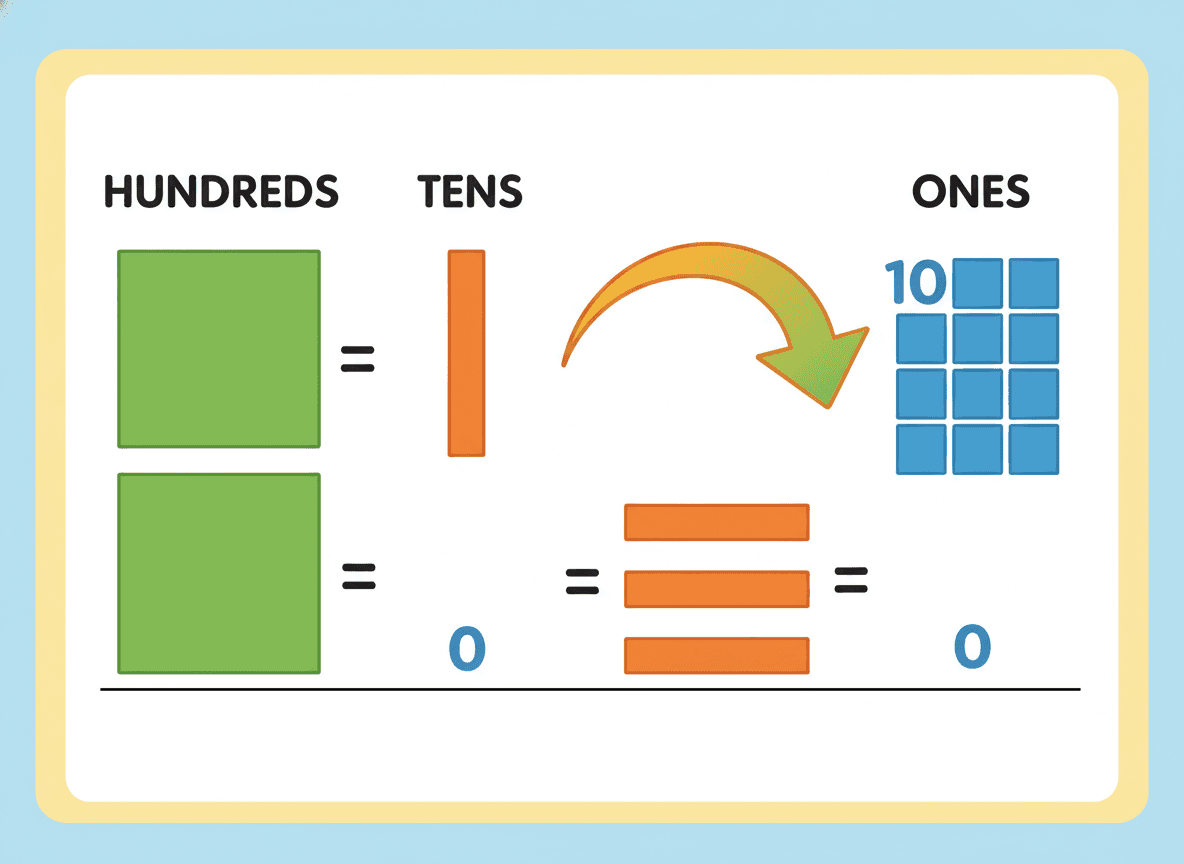
Regrouping is adjusting place-value groups during addition or subtraction. In addition, when a column's digits sum to 10 or more, you 'carry' the extra ten to the next column. In subtraction, when you don't have enough in a column to subtract, you 'borrow' a ten from the next column and add it as 10 ones.
What is the difference between carrying and borrowing?
Carrying (also called regrouping up) happens in addition - you move a ten to the next column. Borrowing (also called regrouping down or trading) happens in subtraction - you take a ten from the next column and split it into 10 ones. Both are forms of regrouping because they reorganize place-value groups.
How do base-ten blocks help teach regrouping?
Base-ten blocks make regrouping physical and visual. Students literally trade 10 unit cubes for 1 rod (ten) when adding, or trade 1 rod for 10 unit cubes when subtracting. This hands-on action builds understanding of why regrouping works before students move to the abstract algorithm.
At what grade do students learn regrouping?
Students begin regrouping in 1st grade with two-digit addition (1.NBT.C.4). Second grade extends this to three-digit numbers using multiple regroupings (2.NBT.B.7). By 3rd grade, students apply regrouping fluently within 1,000 (3.NBT.A.2) and encounter it in multi-digit multiplication contexts.
Why do some teachers avoid the word 'borrowing'?
The word 'borrowing' implies that you return what you took, which doesn't happen in subtraction. 'Regrouping' or 'trading' more accurately describes the action of exchanging one ten for ten ones. Many math curricula now use regrouping as the standard term to avoid this conceptual confusion.
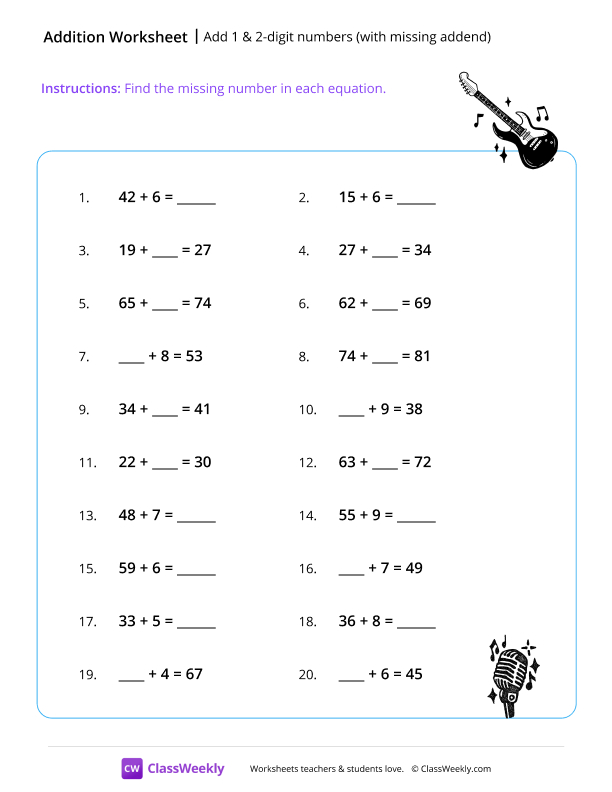
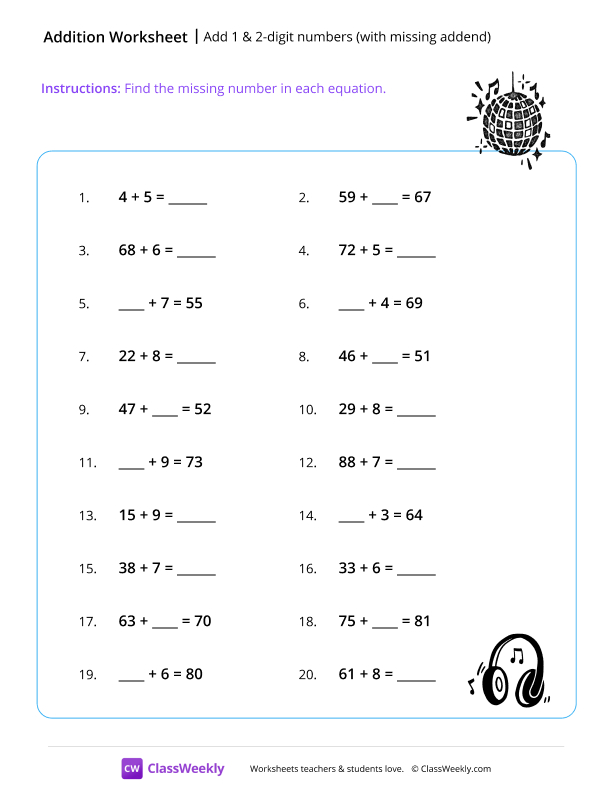
Free Regrouping Worksheets
Curriculum-aligned printable worksheets for 1st – 3rd Grade. Download free.