What Is Sequence of Events?
Taught in US schools
Key Takeaways
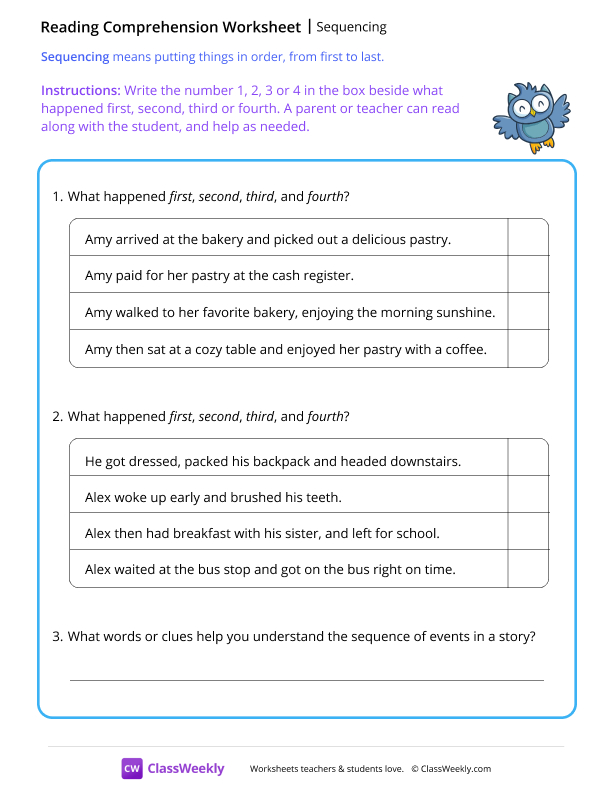
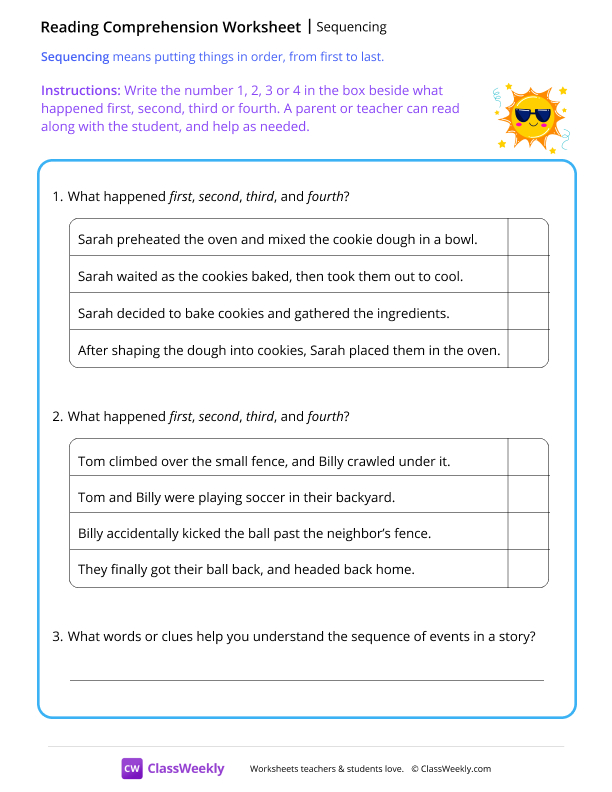
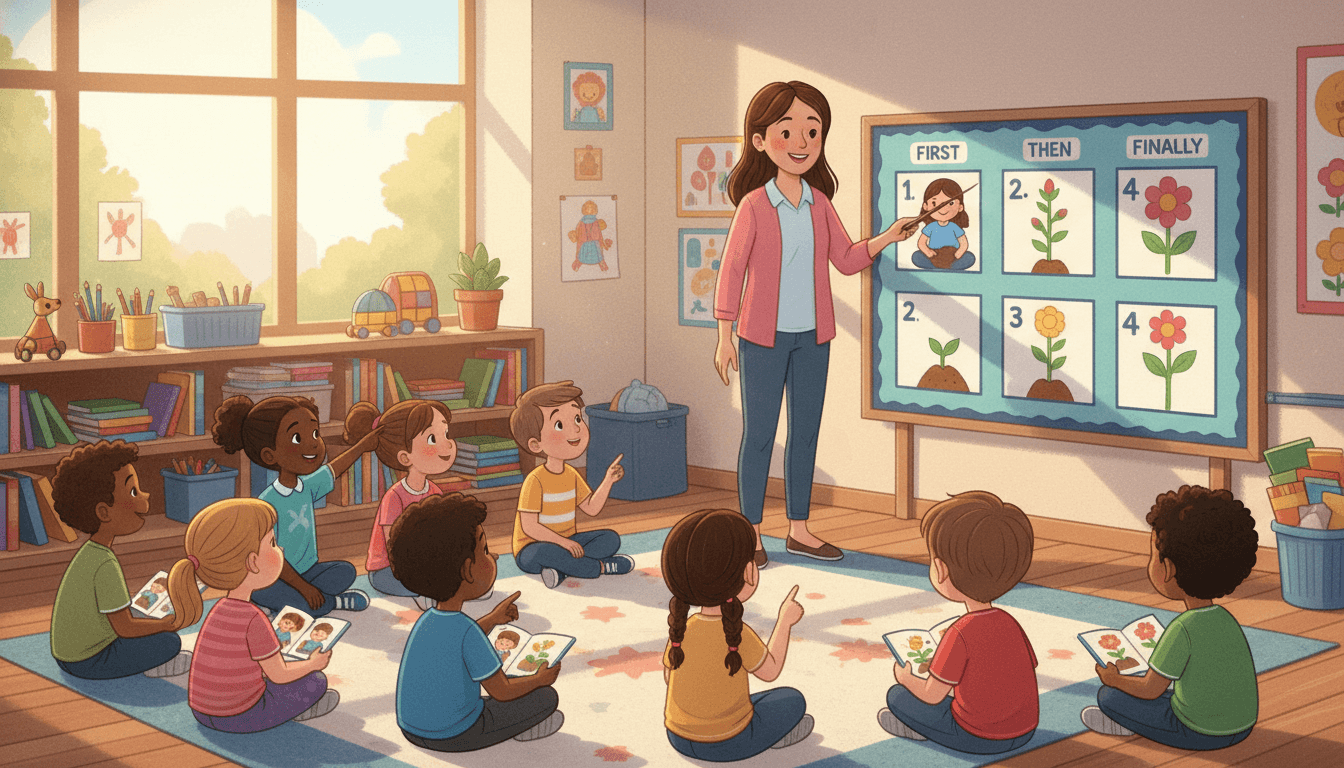
- Sequence of events means understanding the order in which things happen - first, next, then, last.
- Sequence signal words (first, second, then, next, after, finally) help readers track order in both fiction and nonfiction.
- Understanding sequence is essential for retelling, summarizing, and following multi-step directions.
- Sequence applies to both fiction (story events) and nonfiction (steps in a process, cause and effect).
What Is Sequence of Events?
Sequence of events is the order in which things happen in a text. Whether students are reading a story (plot events), a how-to guide (step-by-step instructions), or a science text (life cycle stages), understanding sequence is fundamental to comprehension.
The basic question is: What happened first? What happened next? What happened last?
Sequence in Fiction
In a story, sequence follows the plot: beginning → middle → end (with rising and falling action in between). Events must be understood in order to make sense of cause and effect and character development.
Readers track sequence in fiction by asking:
- What happened first to set up the problem?
- What happened next?
- How did earlier events cause later events?
- How did the story end, and why?
Sequence in Nonfiction
In informational texts, sequence appears in many forms:
-
Procedural texts: Steps in a recipe, instructions for a science experiment
-
Historical timelines: Events organized in the order they occurred
-
Life cycles: Egg → caterpillar → chrysalis → butterfly
-
Cause and effect: One event causes another in a chain
Sequence Signal Words
Teaching students to recognize signal words helps them track sequence:
Order signals: first, second, third, next, then, after that, later, finally, last
Time signals: in the morning, during, while, before, after, when
Cause-effect signals: because, so, as a result, therefore
What Grade Do Kids Learn Sequence of Events?
1st grade (RL.1.3): Students describe the connection between two events or steps in a text.
2nd–3rd grade (RI.2.3, RL.3.3, RI.3.3): Students describe the relationship between a series of events, including use of temporal words and signal language; use sequence to describe steps in a process.
Common Misconceptions
The story is told in sequence: Many stories use flashbacks, foreshadowing, or non-linear structure. The events can happen in a different order than they are told. Students need to distinguish "story order" (how it's told) from "event order" (when events actually happened in the story's world).
Sequence is always numbered: Not all sequence is labeled with numbers. Students must learn to recognize sequence even when signal words are missing - by using cause-and-effect logic.
Sequence only matters in nonfiction: Story sequence matters enormously for understanding cause and effect in fiction. Why did the character do that? Because of what happened earlier.
Practice Activities
-
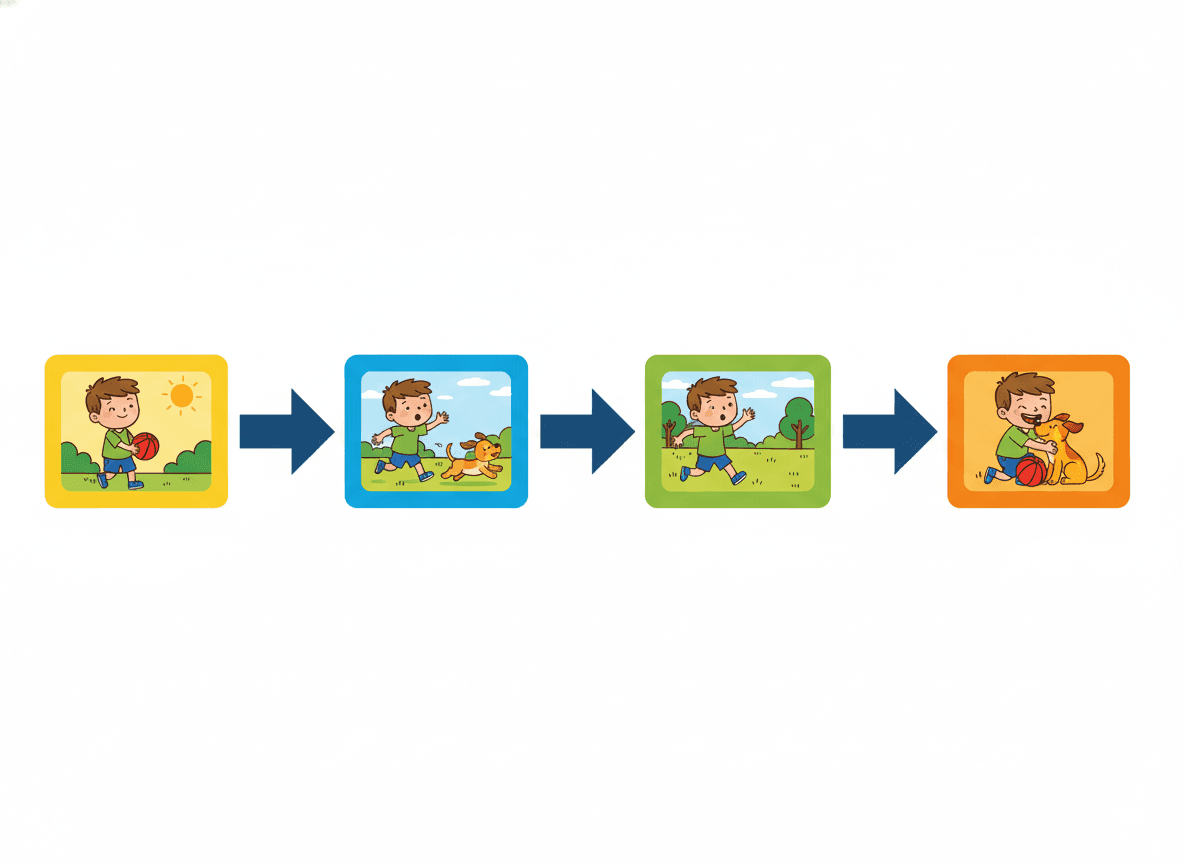
Sequencing cards: Cut apart story events (or procedural steps) and students arrange them in correct order.
-
Signal word highlight: Color-code sequence signal words in a passage.
-
Timeline creation: After reading history or biography, students create a timeline of key events.
-
Write your routine: Students write their morning routine using sequence signal words, then share with a partner.
-
Scrambled story: Give students sentences from a familiar story in random order; they reorder them and explain their reasoning.
Frequently Asked Questions
What does sequence of events mean in reading?
Sequence of events refers to the order in which events, steps, or actions occur. In fiction, it's the order of story events from beginning to middle to end. In nonfiction, it describes the order of steps in a process (how to make a sandwich), the timeline of historical events, or the sequence of a scientific process. Understanding sequence is critical for comprehension.
What are sequence signal words?
Signal words help readers identify sequence: First, Second, Third, Next, Then, After, Before, Meanwhile, Later, Finally, Last, At the beginning, In the end, Subsequently, and As a result. These transition words act as signposts telling the reader that the order of events matters and is being tracked explicitly.
How is sequence used in nonfiction texts?
In informational texts, sequence appears in: step-by-step how-to instructions, chronological history texts, descriptions of scientific processes (life cycle of a butterfly, how volcanoes erupt), and cause-and-effect relationships. Students reading nonfiction must recognize when the author is organizing information by sequence versus by comparison, problem-solution, or another text structure.
How does understanding sequence improve writing?
Writers use sequence to organize narratives and procedural texts. A story that jumps around in time confuses readers; a how-to text that lists steps out of order fails completely. Teaching students to read sequence also teaches them to write with sequence - to plan the order of events before writing and to use transition words to guide readers.
What is the difference between sequence and chronological order?
Chronological order is sequence organized by real time - things listed in the order they occurred historically or biologically. Sequence is the broader concept: it includes chronological order but also any intentional ordering (steps in a recipe, events in a story). A mystery novel may not be chronological (it might use flashbacks) but still has a sequence the author chose deliberately.
Free Sequence of Events Worksheets
Curriculum-aligned printable worksheets for 1st – 3rd Grade. Download free.