What Is Symbolism in Literature?
Taught in US schools

Key Takeaways
- A symbol is something that represents something beyond its literal meaning.
- Symbols can be objects, colors, animals, weather, or characters.
- Recognizing symbols helps readers understand theme and deeper meaning.
- Some symbols are universal; others are specific to a story's cultural or historical context.
What Is Symbolism?
Symbolism is a literary device in which a person, object, place, event, or color in a story represents something beyond its literal meaning. An author uses symbols to add layers of meaning - to say something about an idea without stating it directly.
Symbols create depth. When a character in a story lights a candle in a dark room, the author may simply be depicting a scene. But if that character has been struggling with depression and hopelessness, the lit candle may symbolize a turning point - a spark of hope in the darkness.
Reading symbolically means asking: What else could this mean?
How to Recognize Symbols
Symbols in literature often reveal themselves through:
-
Repetition - if something appears again and again, pay attention
-
Extra description - when an author describes something with more detail than the plot requires, it's often a signal
-
Connection to theme - symbols usually connect directly to the story's central ideas and themes
-
Universal cultural associations - many symbols carry associations readers bring from wider cultural knowledge
Common Symbols and Their Meanings
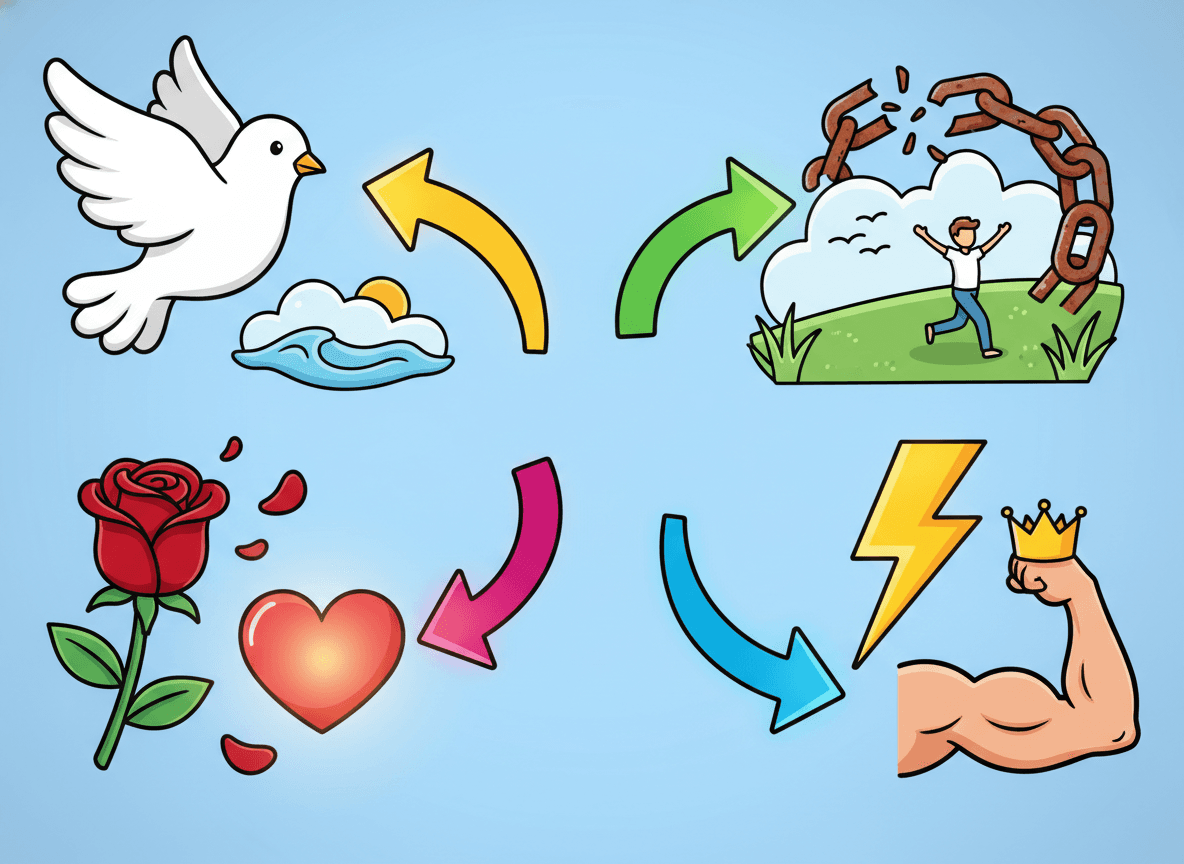
Dove / white bird: Peace, hope, freedom
Storm / dark clouds: Conflict, danger, approaching trouble
Light / candle / fire: Hope, knowledge, warmth, truth
Darkness: Fear, ignorance, the unknown
A journey / road: Life's path, growth, change
Seasons: Life cycles (spring = rebirth, winter = death)
A cage or chains: Restriction, loss of freedom, oppression
Water: Life, cleansing, rebirth, or danger
A rose: Love and beauty - but also pain (thorns)
Important: Symbols are not universal laws. The meaning of a symbol depends on context. A snake might represent evil in one story and wisdom in another. Always interpret symbols within the specific story's context.
Symbols vs. Themes vs. Motifs
-
Symbol - a specific object or image that represents an abstract idea
-
Theme - the central message or insight of the story (freedom, loss, courage)
-
Motif - a recurring element that reinforces the theme (water appearing repeatedly throughout)
Symbols and motifs are tools authors use to develop theme.
Practice Activities
- Introduce symbolism with visual examples before using literature: a flag, a red cross, a recycling symbol. "These aren't just pictures - they represent ideas. Literature works the same way."
- After reading a text, ask: "What objects, settings, or events appeared more than once? Why might the author keep returning to those?"
- Give students a symbol (a cracked mirror) and ask them to write a short scene in which the object symbolizes something about a character or situation.
- Compare how different authors use the same symbol: how does fire function in Number the Stars vs. Roll of Thunder, Hear My Cry?
Frequently Asked Questions
What is symbolism in literature?
Symbolism is a literary device in which something in a story - an object, character, place, event, color, or animal - represents an idea or concept beyond its literal meaning. A character might carry a lantern that symbolizes hope; a crumbling house might symbolize a failing family; winter might symbolize death or hardship. Recognizing symbols allows readers to access deeper layers of meaning in a text.
What are examples of common symbols in literature?
Common symbols students encounter include: a dove or white bird (peace, hope, freedom), a storm or dark clouds (conflict, danger, foreboding), light/candles/fire (knowledge, hope, warmth), darkness (ignorance, fear, the unknown), a journey or road (life, growth, change), a rose (love, beauty, but also pain - because of thorns), a mirror (truth, self-reflection), chains or cages (slavery, restriction, loss of freedom).
How do you find symbols in a story?
Pay attention to objects, settings, colors, or events that appear repeatedly or that the author describes with unusual attention. Ask: 'Why is this here? What else might this mean beyond the literal?' Notice when an author gives something more description than necessary for plot - that extra attention often signals symbolic importance. Also consider the story's themes: what ideas is the story exploring? Symbols often connect directly to those themes.
Free Symbolism Worksheets
Curriculum-aligned printable worksheets for 3rd – 5th Grade. Download free.
Common Core Standards