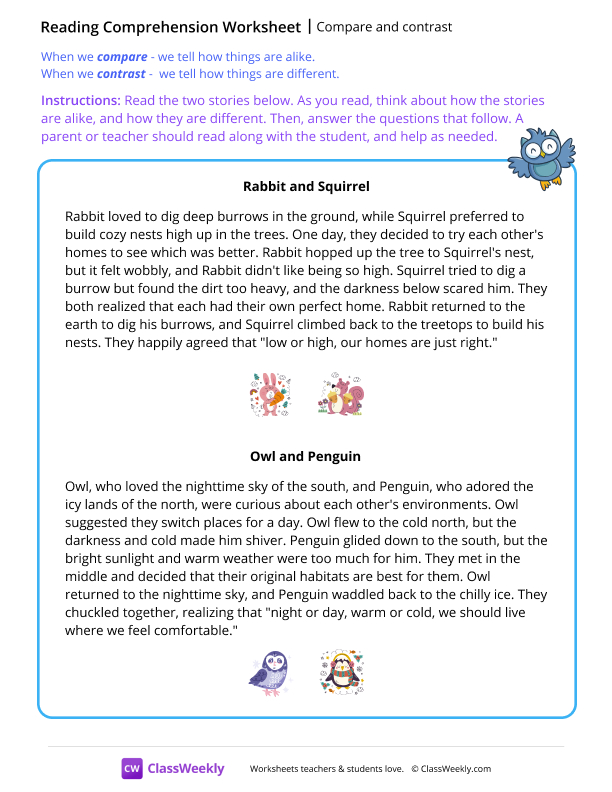
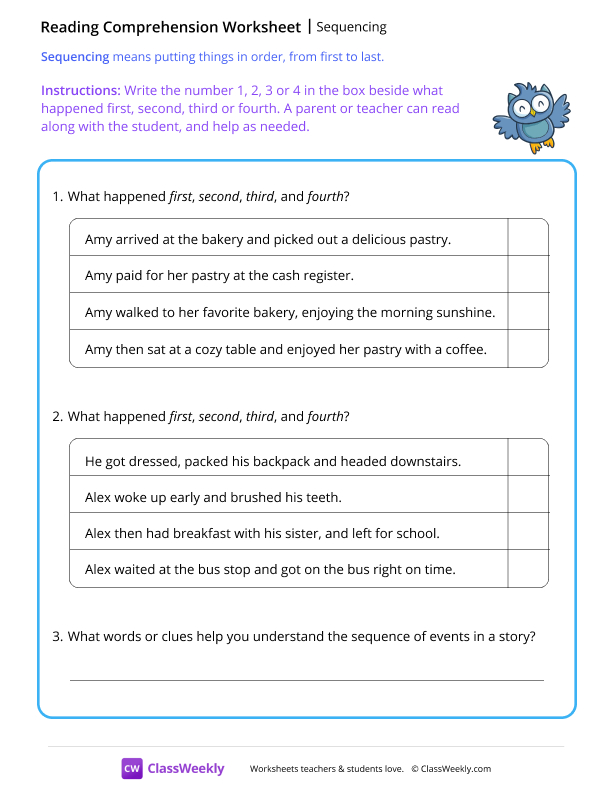
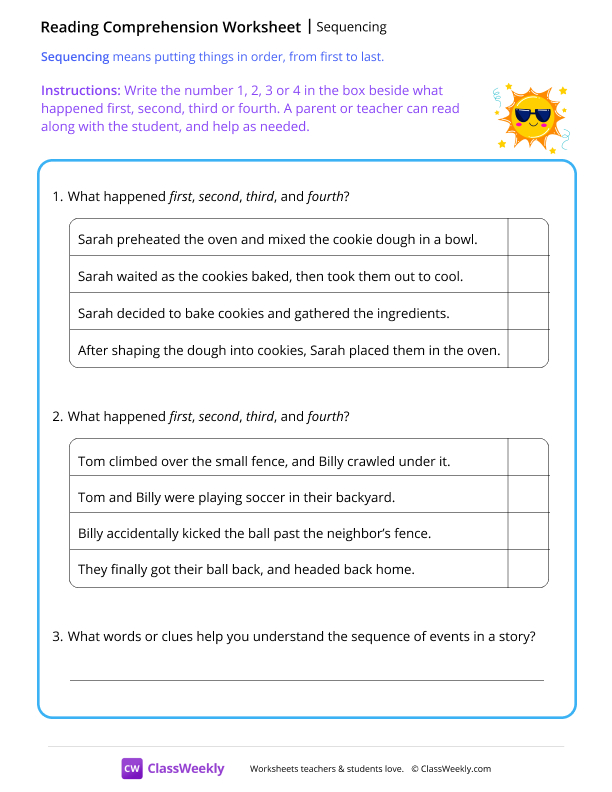
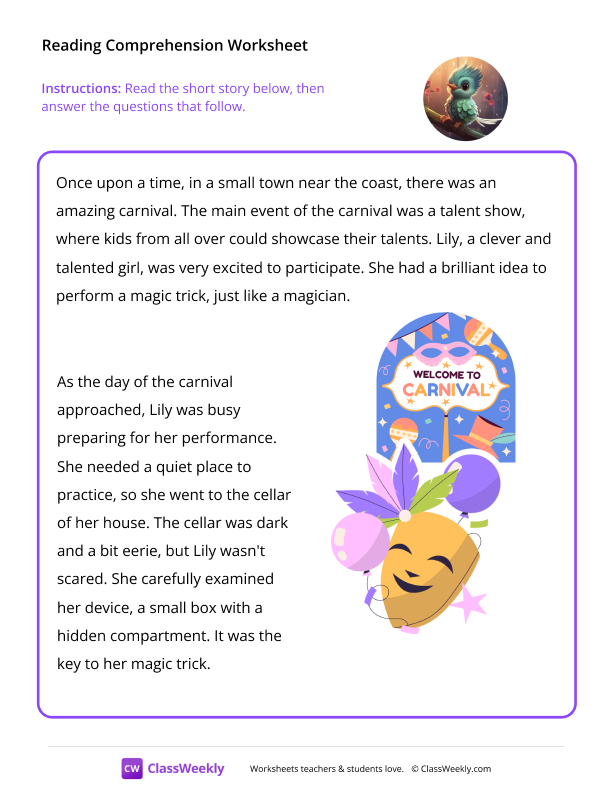
What Is a Think-Aloud?
Taught in US schools
Key Takeaways
- A think-aloud makes invisible cognitive processes visible by narrating thinking out loud.
- Teachers model the strategies expert readers, writers, and thinkers use automatically.
- Think-alouds can model any cognitive task: comprehension strategies, math problem-solving, editing, decision-making.
- Gradual release follows the think-aloud: 'I do → we do → you do together → you do alone.'
What Is a Think-Aloud?
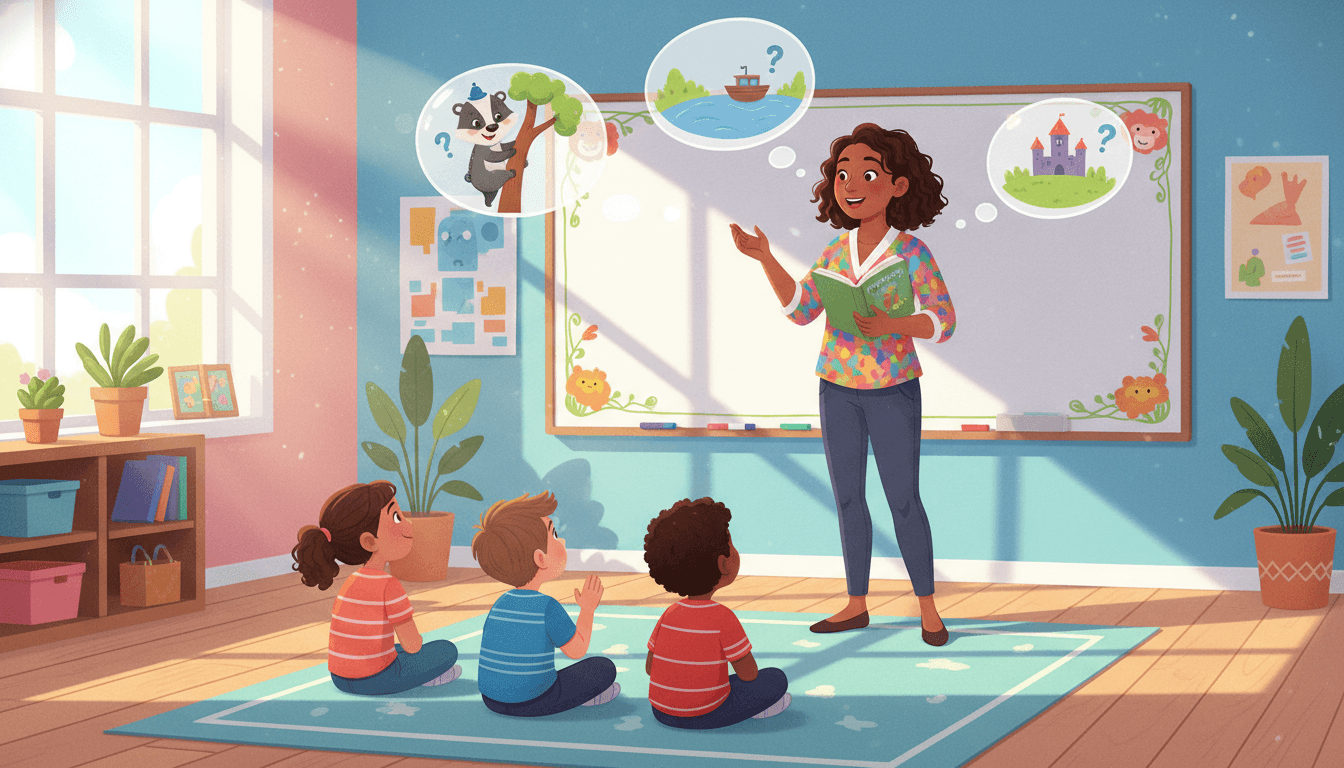
A think-aloud is an instructional strategy in which a teacher narrates their inner thought process out loud while performing a task - reading, writing, solving a math problem, or making a decision. It makes the invisible visible: students see and hear the mental moves that competent thinkers make automatically.
Think-alouds are one of the most powerful modeling strategies available because they reach past observable behavior to show the reasoning and strategy underneath it.
What a Think-Aloud Sounds Like
While reading aloud, a teacher might say: "Hmm, the author said the room was 'dead quiet.' I'm picturing a room where no one is even breathing - that's a lot of tension. I'm connecting this to another story where silence meant someone was hiding. I'm predicting something scary is about to happen..."
While solving a math problem: "Okay, 47 + 35. I could stack these and add - but mentally, I think I'll round 47 to 50, add 35 to get 85, then subtract 3. That gives me 82. Let me double-check that makes sense..."
What Think-Alouds Can Model
Reading strategies: Making predictions, visualizing, making connections, asking questions, identifying the main idea, making inferences, monitoring comprehension, summarizing.
Writing strategies: Brainstorming ideas, choosing a strong word, organizing paragraphs, checking for clarity, revising a sentence.
Math strategies: Reading the problem, identifying known and unknown quantities, choosing a strategy, estimating, checking work.
Metacognitive strategies: "I don't understand this part. I'll reread it. I'll break it into parts. I'll ask myself: what do I know for sure?"
The Gradual Release Connection
Think-alouds are part of the gradual release of responsibility framework:
- I do (think-aloud): Teacher models, narrating all thinking.
- We do (shared think-aloud): Teacher + students think aloud together.
- You do together: Student pairs do think-alouds for each other.
- You do alone: Students apply strategies independently.
This progression ensures students internalize the strategies rather than just watching the teacher demonstrate them.
What Grade Are Think-Alouds For?
Think-alouds are effective across all grades and are used throughout the school day - not only in reading instruction. They are especially high-impact in K-2 when students are learning foundational reading strategies, and in 3rd-5th when comprehension strategies become more complex.
Common Misconceptions
Think-alouds are just reading aloud: Reading aloud voices the text. Think-alouds interrupt the reading to share what's happening in the reader's mind - these are completely different.
Think-alouds are only for reading: Think-alouds are equally powerful in writing, math, science inquiry, and social problem-solving. Any task involving invisible cognitive process benefits from being made visible.
Students immediately replicate what is modeled: Internalization takes time and repetition. A single think-aloud demonstration doesn't ensure students will apply the strategy. Repeated modeling over many weeks, followed by coached practice, builds toward independence.
Practice Activities
-
Teacher think-aloud demonstration: Teacher reads a complex text passage and voices all confusion, prediction, and strategy use.
-
Student think-aloud pairs: Partners take turns reading and thinking aloud; listener provides a star (what worked) and a wonder (a question).
-
Think-aloud recording: Students record themselves thinking aloud while reading; teacher listens and provides feedback.
-
Strategy focus: Choose one strategy per week for think-aloud modeling; students track their use of that strategy in reading journals.
-
Cross-subject think-alouds: Model mathematical thinking aloud while solving a word problem at the start of math class.
Frequently Asked Questions
What is a think-aloud strategy?
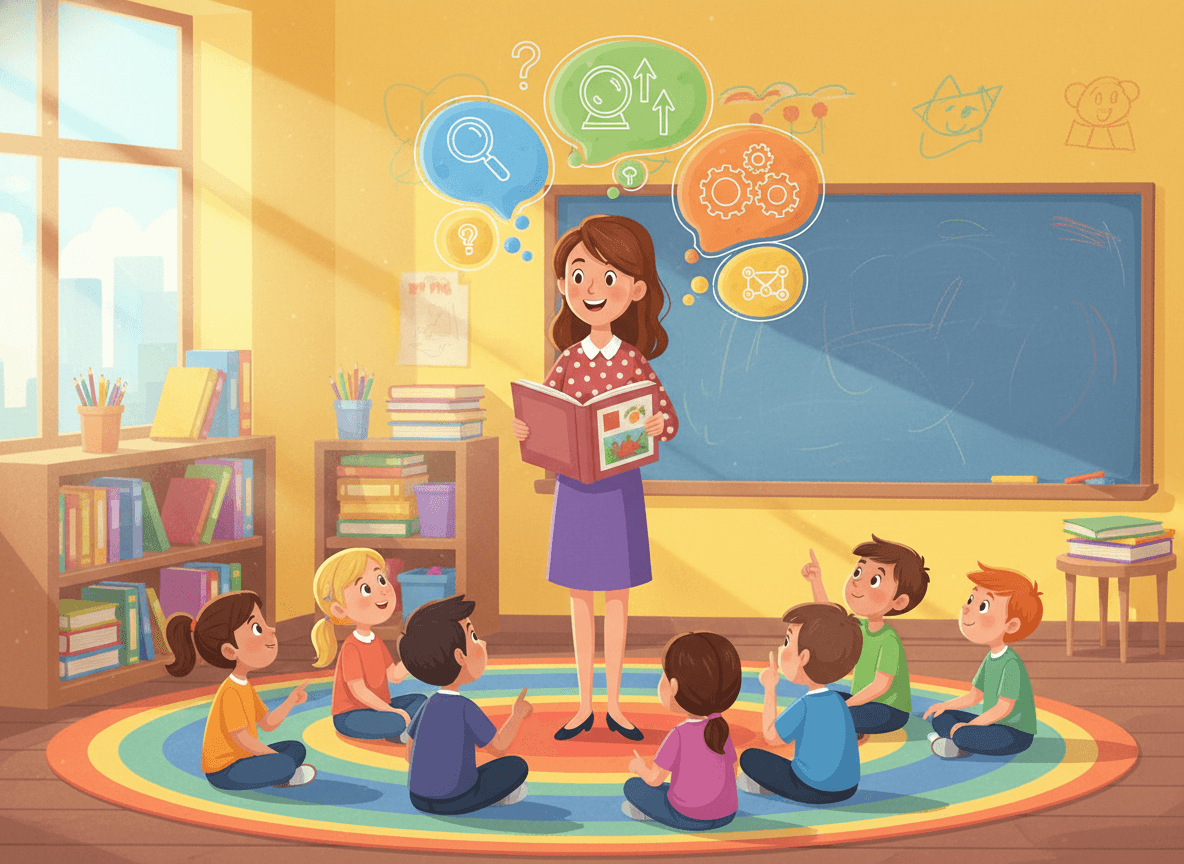
A think-aloud is when a teacher (or student) narrates their mental processes out loud while performing a task. It makes thinking transparent: 'I just read that the character smiled but said nothing. I'm thinking: why is she hiding her reaction? I'm going to make an inference here...' Think-alouds show students the invisible cognitive work that expert readers and thinkers do automatically.
What strategies can think-alouds model?
Reading: making predictions, visualizing, making connections, asking questions, identifying main idea, making inferences, monitoring comprehension. Writing: brainstorming, choosing words, organizing ideas, revising for clarity, checking conventions. Math: making a plan, estimating, checking for reasonableness, trying a different strategy. Think-alouds are effective for any cognitive process that students need to learn.
How is a think-aloud different from just reading aloud?
Reading aloud is voicing the words on the page. A think-aloud interrupts the reading to share what is happening in the reader's mind - the predictions, confusions, connections, questions, and strategies being used. The internal mental commentary is what makes a think-aloud uniquely powerful: it shows students that competent readers are actively thinking throughout, not just decoding.
How does the gradual release model connect to think-alouds?
The gradual release model (I do, we do, you do) frames how instruction moves from teacher-led to student-independent. A think-aloud is the 'I do' stage - the teacher models alone, making thinking visible. Then 'we do' - the teacher thinks aloud with student participation. Then 'you do together' - students think aloud in pairs. Finally 'you do alone' - students apply the strategy independently.
Can students do think-alouds?
Yes. Student think-alouds are a powerful assessment and learning tool. When a student verbalize their thinking process - 'I'm confused here because... I'm going to try...' - the teacher can observe what strategies the student uses, identify misconceptions, and provide targeted support. Pairs doing mutual think-alouds also learn from each other's approaches.
Free Think-Aloud Worksheets
Curriculum-aligned printable worksheets for Kindergarten – 5th Grade. Download free.