Past and present tenses
Written by Adi Ackerman, Head Teacher
"Past and present tenses" is written for 3rd Grade (Ages 8-9), and it covers Common Core L.3.1.E. If your little one is a year younger but already steady on verbs, the page still works. You may just need to read the instructions out loud. And if they are older and past and present tenses never quite stuck, this is a short review rather than busywork.

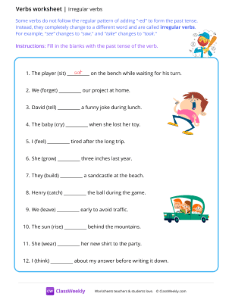
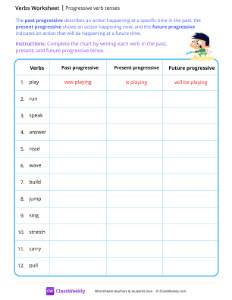
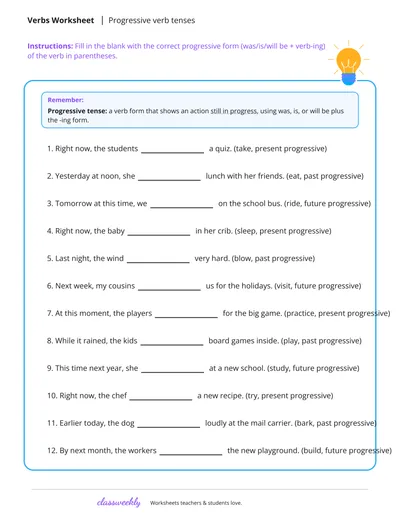
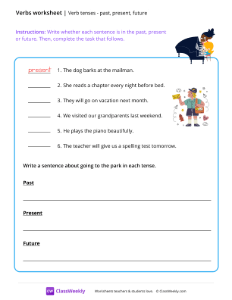
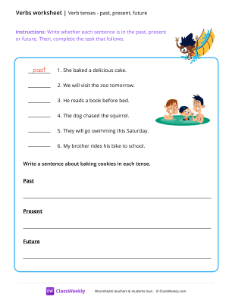
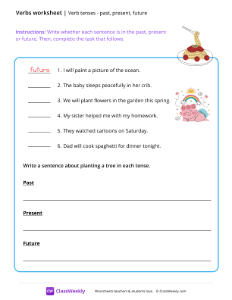
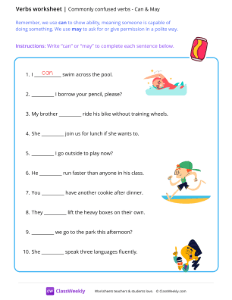
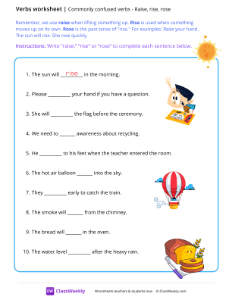
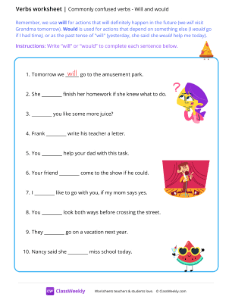
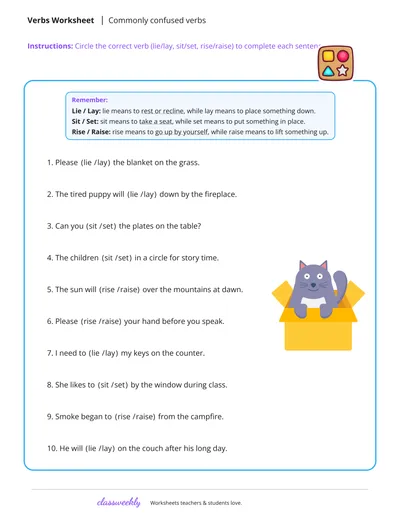
Past and present tenses worksheet for 3rd grade: students rewrite each sentence in the tense shown in parentheses (past or present). Part of our past and present tenses verbs collection. Aligned to Common Core standards.
How do I use this worksheet?
Introduce the skill with a brief whole-class activity, such as calling out examples and asking students to give a thumbs up when they hear past and present tenses in a sentence. Then let students work through it independently, using a partner or small group only if they want to talk through their thinking, referring to a class anchor chart if one is available. When reviewing answers, ask students to explain why an answer is correct rather than just confirming it. These past and present tenses worksheets work well as a focused practice activity, a homework assignment, or a warm-up at the start of a language arts lesson.
What students will practice
- Students will identify and correctly use past and present tenses in sentences and short passages.
- Students will distinguish past and present tenses from related language concepts and apply rules consistently.
- Students will demonstrate understanding of past and present tenses through guided and independent practice, in both reading and their own writing.
Curriculum Links
Common Core State Standards
Language · 3rd Grade
Standard: Form and use the simple verb tenses (e.g., I walked; I walk; I will walk).
View all L.3.1.E worksheets →Find this in the curriculum
Browse the grade, subject, and topic this belongs to.
FAQ
How do I use this past and present tenses worksheet?
⌄
Introduce the skill with a brief whole-class activity, such as calling out examples and asking students to give a thumbs up when they hear past and present tenses in a sentence. Then let students work through it independently, using a partner or small group only if they want to talk through their thinking, referring to a class anchor chart if one is available. When reviewing answers, ask students to explain why an answer is correct rather than just confirming it. These past and present tenses worksheets work well as a focused practice activity, a homework assignment, or a warm-up at the start of a language arts lesson.
What does this worksheet teach?
⌄
These past and present tenses worksheets for 3rd grade give students the targeted language arts practice they need to master this important grammar skill. Students identify, sort, complete, and write using past and present tenses through a variety of exercises designed to reinforce both recognition and application. Our verbs worksheets connect grammar practice to reading and writing so students see how past and present tenses works in real language. Building a solid understanding of past and present tenses in 3rd grade sets students up for stronger writing and clearer communication in every subject.
Can I use this past and present tenses worksheet for homeschool or classroom?
⌄
Yes, both. We made it for 3rd Grade verbs, and the page works the same whether it lands on a kitchen table or a center rotation. At home, most families go through it together and talk the answers out loud, and that talking is where most of the learning happens with past and present tenses. In class it runs well as independent work while you pull a small group. Print one copy or thirty, whichever the day needs.
How do past and present tense worksheets build tense consistency in 3rd grade writing?
⌄
Students practice recognizing when tense shifts are appropriate versus when they create inconsistency, developing the habit of maintaining a consistent tense throughout their own writing.
What types of activities appear in past and present tense worksheets for 3rd grade?
⌄
Common activities include converting sentences from past to present tense (and vice versa), completing sentences with the correct tense, and identifying the tense of underlined verbs in a passage.
Why is tense consistency important for 3rd grade narrative writing?
⌄
Inconsistent tense shifts confuse readers about when events occurred - 3rd graders who understand tense differences write clearer, more coherent narratives that are easier to read and understand.
What verb skills should third graders learn beyond basic tenses?
⌄
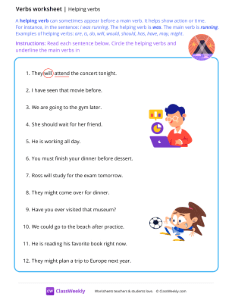
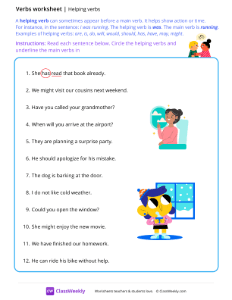
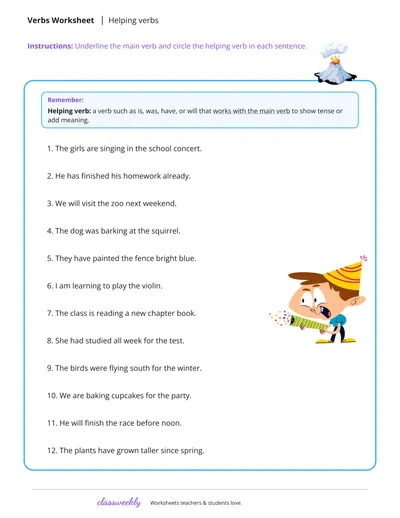
Third graders expand their verb knowledge to include subject-verb agreement, helping verbs (also called auxiliary verbs), and linking verbs. CCSS L.3.1f requires students to ensure subject-verb agreement: singular subjects take singular verbs (The dog runs) and plural subjects take plural verbs (The dogs run). Students learn helping verbs (is, am, are, was, were, has, have, had, do, does, did, will, would, could, should, can, may, might) that combine with main verbs to show time, ability, or possibility. Linking verbs (is, are, was, were, seem, become, feel, look) connect the subject to a word that describes or renames it. Worksheets that ask students to identify the type of verb in a sentence (action, linking, helping), correct subject-verb agreement errors, and use helping verbs to change meaning ("She can swim" versus "She should swim") build comprehensive verb knowledge that supports more sophisticated writing and reading comprehension.
How do I teach subject-verb agreement to a third grader?
⌄
The core rule is simple: singular subjects pair with singular verbs and plural subjects pair with plural verbs. The confusing part is that singular verbs often end in s (he runs, she sings, it falls) while plural verbs do not (they run, we sing, the leaves fall), which is the opposite of how nouns work. Start with clear examples using "he" and "they": "He walks" versus "They walk." Then practice with noun subjects: "The boy walks" versus "The boys walk." The tricky cases for third graders include compound subjects ("Mom and Dad are" not "Mom and Dad is"), sentences with prepositional phrases between subject and verb ("The box of crayons is" not "The box of crayons are"), and indefinite pronouns (everyone, nobody, each are singular). Worksheets that highlight the subject and ask students to choose the correct verb form build the skill. Reading sentences aloud also helps because incorrect agreement often "sounds wrong" to native speakers. CCSS L.3.1f makes subject-verb agreement a priority third grade skill.
What are helping verbs and why do third graders need to learn them?
⌄
Helping verbs (auxiliary verbs) work alongside main verbs to express shades of meaning that the main verb alone cannot convey. They show time ("She is running" shows action happening now, "She was running" shows past continuous action, "She will run" shows future), ability ("She can run"), possibility ("She might run"), obligation ("She should run"), and permission ("She may run"). Third graders need helping verbs because they are writing longer, more complex narratives and explanations that require these nuances. Without helping verbs, students are limited to simple past, present, and future. With them, they can express ongoing actions, possibilities, and obligations that make their writing more precise and their reading comprehension deeper. Common helping verbs include: am, is, are, was, were, be, been, being, have, has, had, do, does, did, will, would, shall, should, can, could, may, might, and must. Worksheets that present sentences and ask students to identify the helping verb and explain what meaning it adds develop both recognition and understanding, supporting CCSS L.3.1 language standards.
Ratings & Reviews
No reviews yet. Be the first to share what you think.
Reviews are for ClassWeekly members.
Make a Request
Spotted something to fix, or want a worksheet we don't have yet? Tell us and we'll make it.
Worksheet Details
| Grade | 3rd Grade |
| Subject | Grammar & Writing |
| Topic | Verbs |
| Standard | L.3.1.E |
| Pages | 1 page |
| Difficulty | Medium |
Learn More
What is ClassWeekly?
ClassWeekly offers free worksheets and printable learning resources for kids in preschool to grade 5. All worksheets are aligned to Common Core, NGSS, and C3 Framework standards and designed by educators. Become a member to access the full library and download unlimited PDFs.