How do they feel? (making inferences)
Written by Adi Ackerman, Head Teacher
"How do they feel? (making inferences)" is written for 2nd Grade (Ages 7-8), and it covers Common Core RL.2.1. If your little one is a year younger but already steady here, the page still works. You may just need to read the instructions out loud. And if they are older and making inferences never quite stuck, this is a short review rather than busywork.
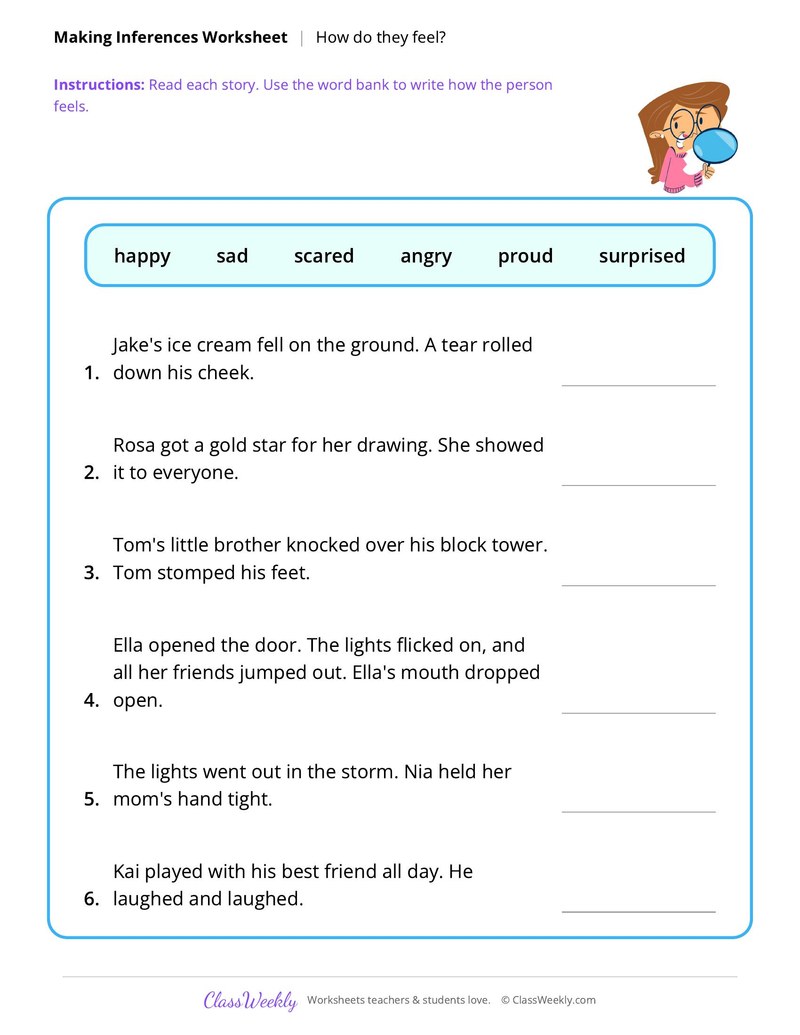
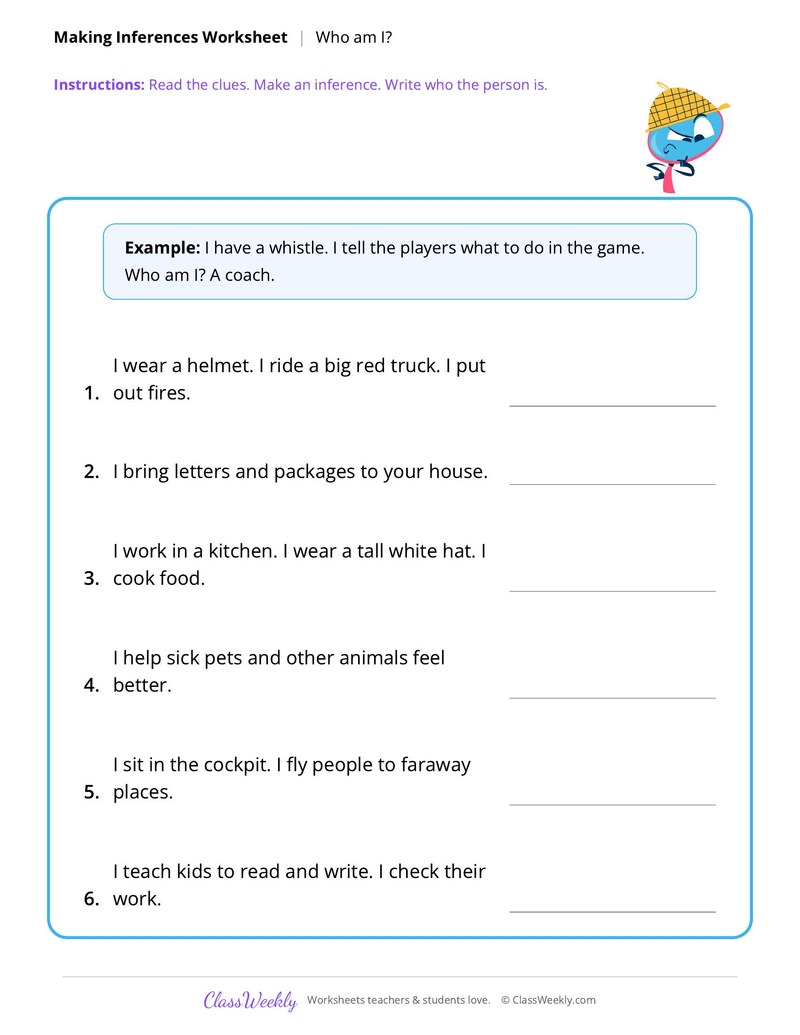
Free printable 2nd grade reading worksheet on making inferences (how do they feel?). Read each story. Answer key included. Aligned to RL.2.1. Part of our making inferences collection.
How do I use this worksheet?
Begin with a shared reading or oral warm-up that highlights making inferences so students hear and see the skill in context before practicing it independently. Have students work through it independently after a quick group example, checking in with a partner if they get stuck, especially for phonics-based tasks where saying an answer aloud first helps. After completing the worksheet, use one or two examples from the page to start a discussion: "Where else have you seen this in your reading?" These making inferences worksheets are ideal for use during small group reading time, as independent center work, or as a homework activity.
What students will practice
- Students will identify and apply making inferences knowledge to decode and comprehend grade-level text.
- Students will recognize patterns and rules related to making inferences in spoken and written language.
- Students will build fluency and confidence with making inferences through guided and independent decoding.
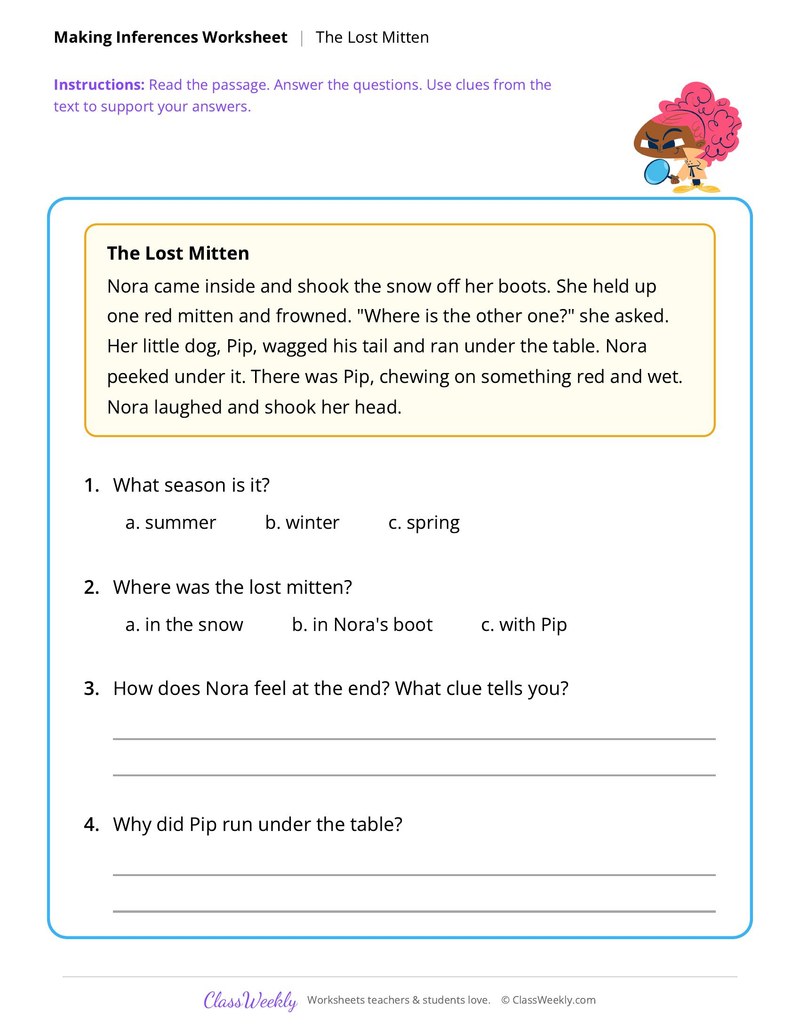
Curriculum Links
Common Core State Standards
Reading: Literature · 2nd Grade
Standard: Ask and answer such questions as who, what, where, when, why, and how to demonstrate understanding of key details in a text.
View all RL.2.1 worksheets →Find this in the curriculum
Browse the grade, subject, and topic this belongs to.
FAQ
How do I use this making inferences worksheet?
⌄
Begin with a shared reading or oral warm-up that highlights making inferences so students hear and see the skill in context before practicing it independently. Have students work through it independently after a quick group example, checking in with a partner if they get stuck, especially for phonics-based tasks where saying an answer aloud first helps. After completing the worksheet, use one or two examples from the page to start a discussion: "Where else have you seen this in your reading?" These making inferences worksheets are ideal for use during small group reading time, as independent center work, or as a homework activity.
What does this worksheet teach?
⌄
These making inferences worksheets for 2nd grade give students focused practice with one of the key skills in early literacy. Students read, identify, and respond to making inferences through a variety of activities designed for their grade level. Our conclusions inferences worksheets build both decoding skills and reading comprehension, helping students connect what they practice on paper to the books they read every day. Regular practice with making inferences strengthens the reading skills that 2nd grade students need to become confident, independent readers.
Can I use this making inferences worksheet for homeschool or classroom?
⌄
Yes, both. We made it for 2nd Grade making inferences, and the page works the same whether it lands on a kitchen table or a center rotation. At home, most families go through it together and talk the answers out loud, and that talking is where most of the learning happens. In class it runs well as independent work while you pull a small group. Print one copy or thirty, whichever the day needs.
What does making an inference mean for 2nd graders?
⌄
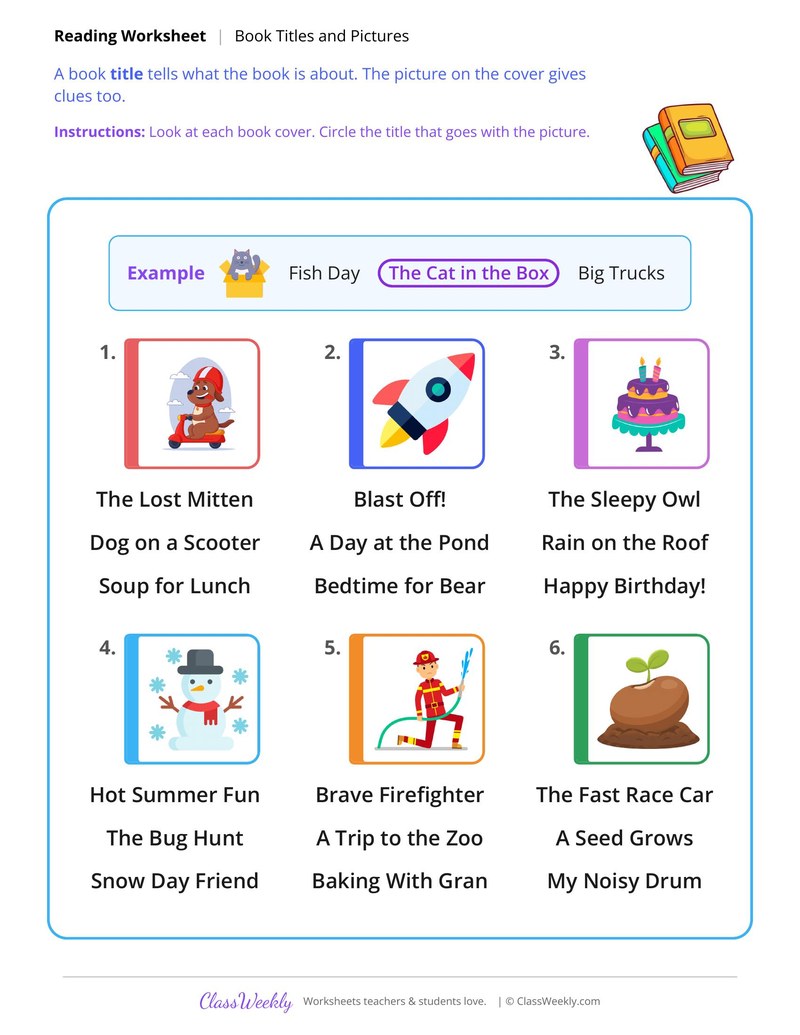
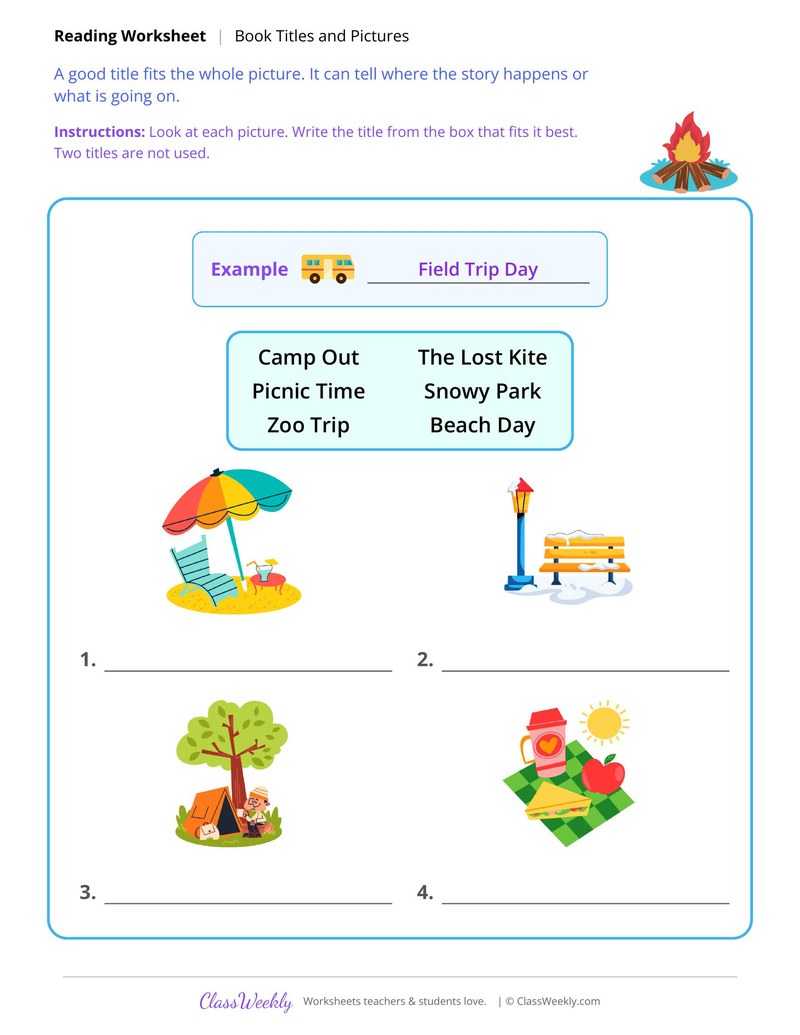
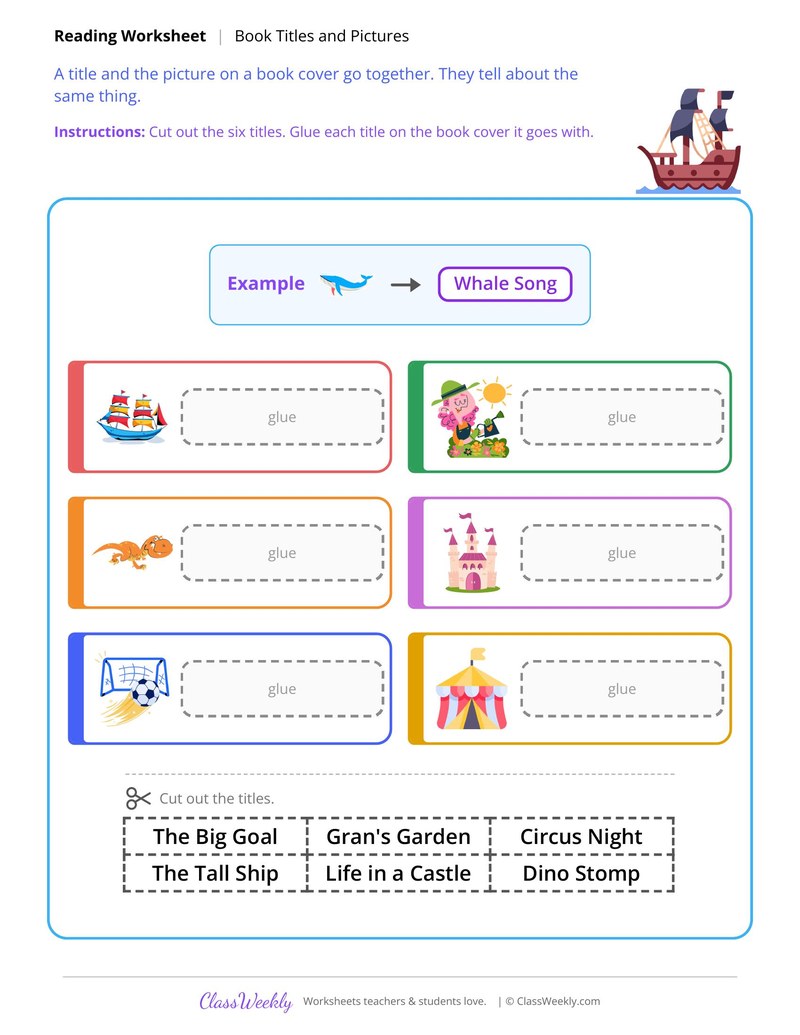
It means using clues plus what you already know to figure out something the text does not say. If a book cover shows a rocket blasting off, a reader can infer the book is about space, so Blast Off! fits better than A Day at the Pond.
How do book titles and pictures help with inferences?
⌄
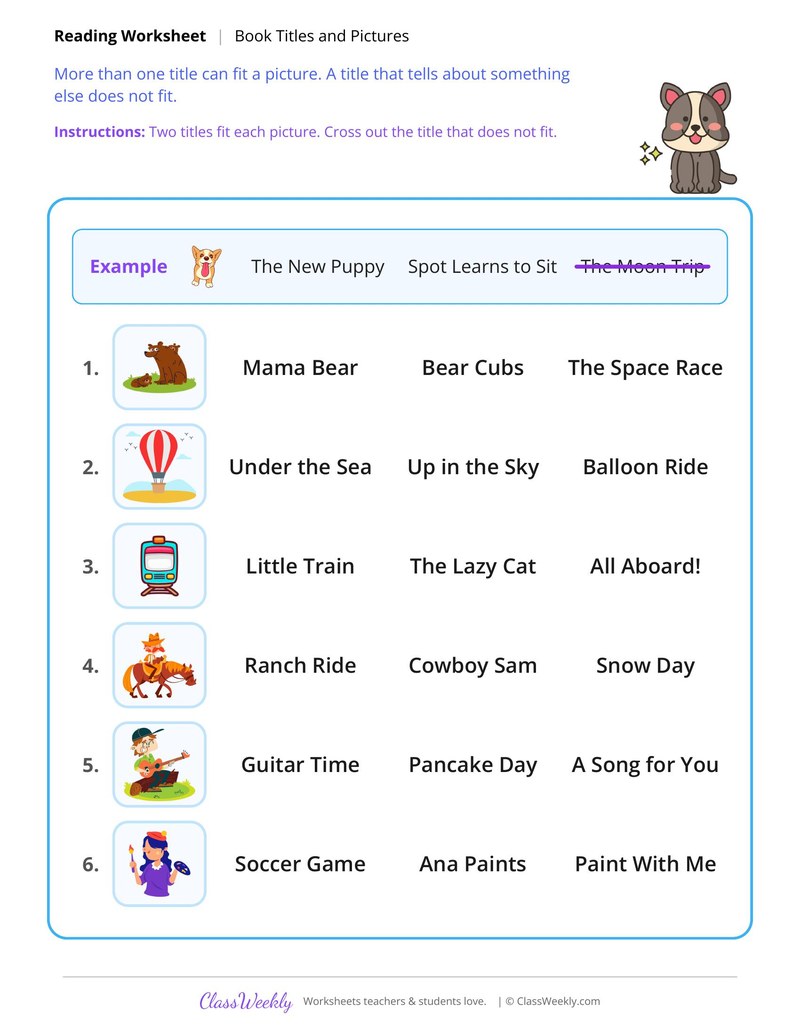
A cover picture and its title tell about the same thing. Children look at covers like a snowman with a red scarf and choose Snow Day Friend, or cross out a title like The Space Race that does not fit a picture of a mother bear and her cubs.
How can I help my child make inferences?
⌄
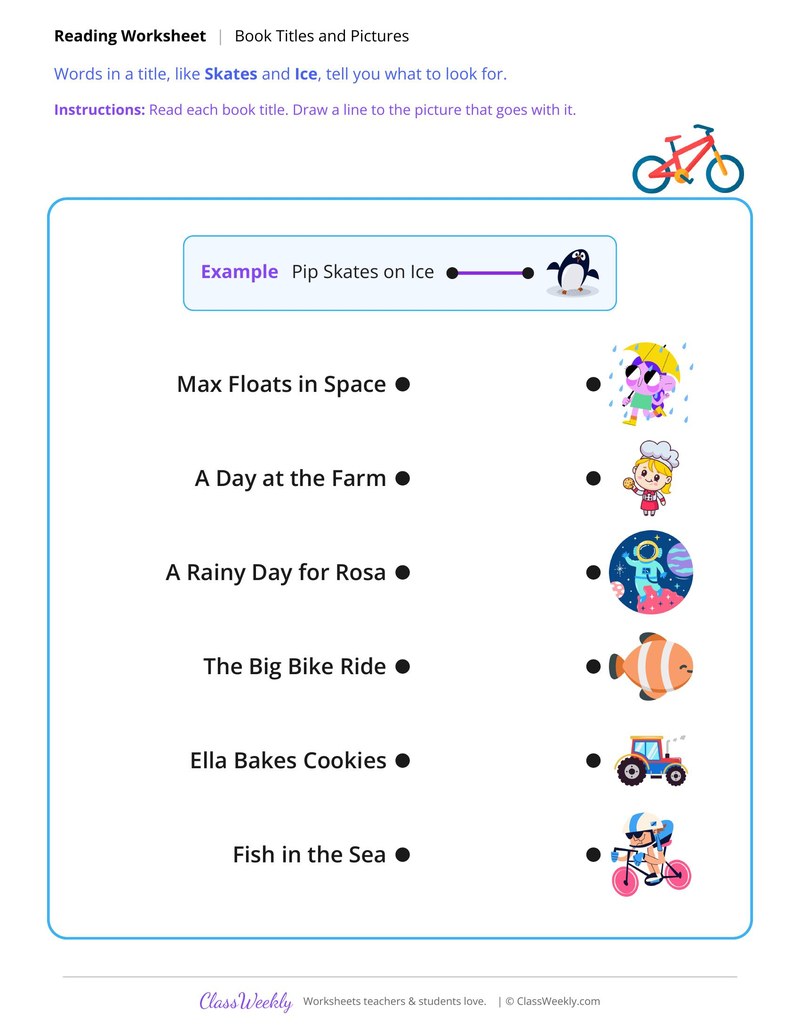
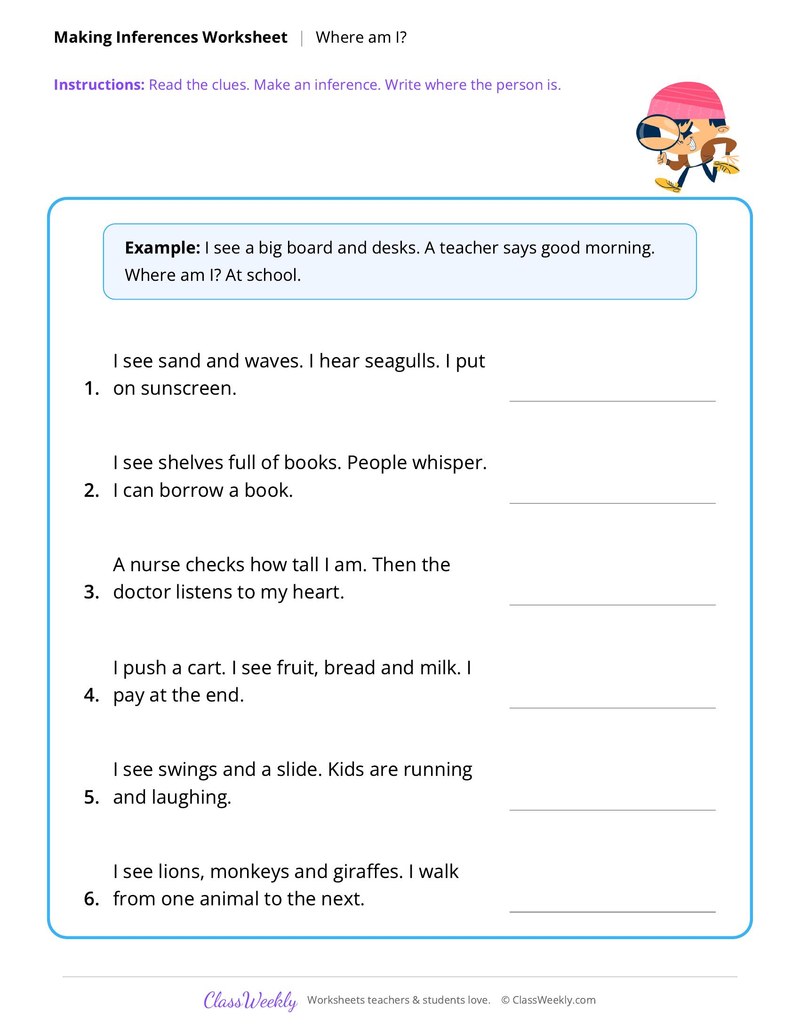
Ask what clues your child sees and what they already know about them. Then ask for the guess and the proof, such as I think it is a farm book because I see a tractor.
Ratings & Reviews
No reviews yet. Be the first to share what you think.
Reviews are for ClassWeekly members.
Make a Request
Spotted something to fix, or want a worksheet we don't have yet? Tell us and we'll make it.
Worksheet Details
| Grade | 2nd Grade |
| Subject | Reading |
| Topic | Making Inferences |
| Standard | RL.2.1 |
| Pages | 1 page |
| Difficulty | Medium |
Learn More
What is ClassWeekly?
ClassWeekly offers free worksheets and printable learning resources for kids, from preschool up. All worksheets are aligned to Common Core, NGSS, and C3 Framework standards and designed by educators. We also have free online learning games for thousands of skills, and kids' answers turn into a progress report for the grown-up. Start a free 30-day trial to download the worksheets.