Choose a Title and Name the Picture Clue
Written by Adi Ackerman, Head Teacher
"Choose a Title and Name the Picture Clue" is written for 3rd Grade (Ages 8-9). If your little one is a year younger but already steady on making inferences and predictions, the page still works. You may just need to read the instructions out loud. And if they are older and making inferences never quite stuck, this is a short review rather than busywork.
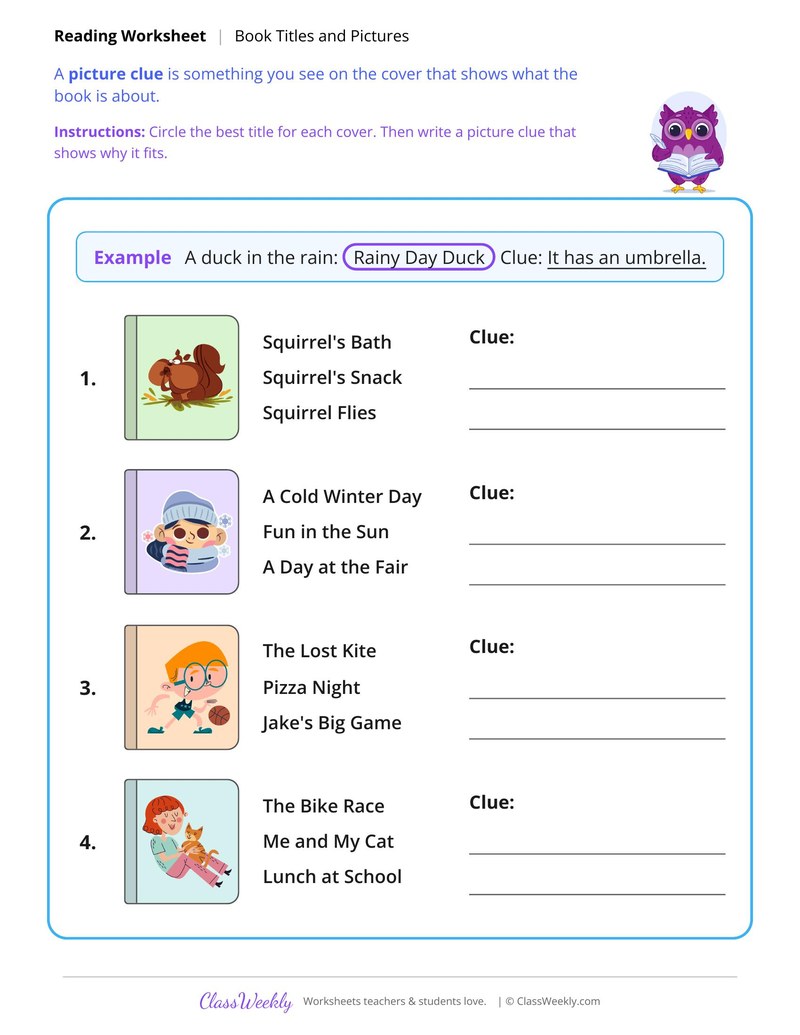
3rd grade reading worksheet: circle the best title for covers like a squirrel eating an acorn, then write the picture clue. Answer key included. Part of our making inferences collection.
How do I use this worksheet?
After reading, ask your child what the story does not say out loud, then which sentence gave it away. Have your child read each quoted clue aloud before writing what it shows, and check that the answer fits the clue rather than matching the key word for word.
What students will practice
- Students will circle the best of three titles for each book cover.
- Students will write a picture clue that shows why the title fits.
- Students will use clues like an umbrella in a picture of a duck in the rain.

Curriculum Links
Find this in the curriculum
Browse the grade, subject, and topic this belongs to.
FAQ
How do I use this making inferences worksheet?
⌄
After reading, ask your child what the story does not say out loud, then which sentence gave it away. Have your child read each quoted clue aloud before writing what it shows, and check that the answer fits the clue rather than matching the key word for word.
What does this worksheet teach?
⌄
Circle the best title for covers like a squirrel eating an acorn, then write the picture clue. The directions on the page read: Circle the best title for each cover. Then write a picture clue that shows why it fits. The page opens with a worked example, and an answer key is included.
Can I use this making inferences worksheet for homeschool or classroom?
⌄
Yes, both. We made it for 3rd Grade making inferences and predictions, and the page works the same whether it lands on a kitchen table or a center rotation. At home, most families go through it together and talk the answers out loud, and that talking is where most of the learning happens with making inferences. In class it runs well as independent work while you pull a small group. Print one copy or thirty, whichever the day needs.
What is an inference?
⌄
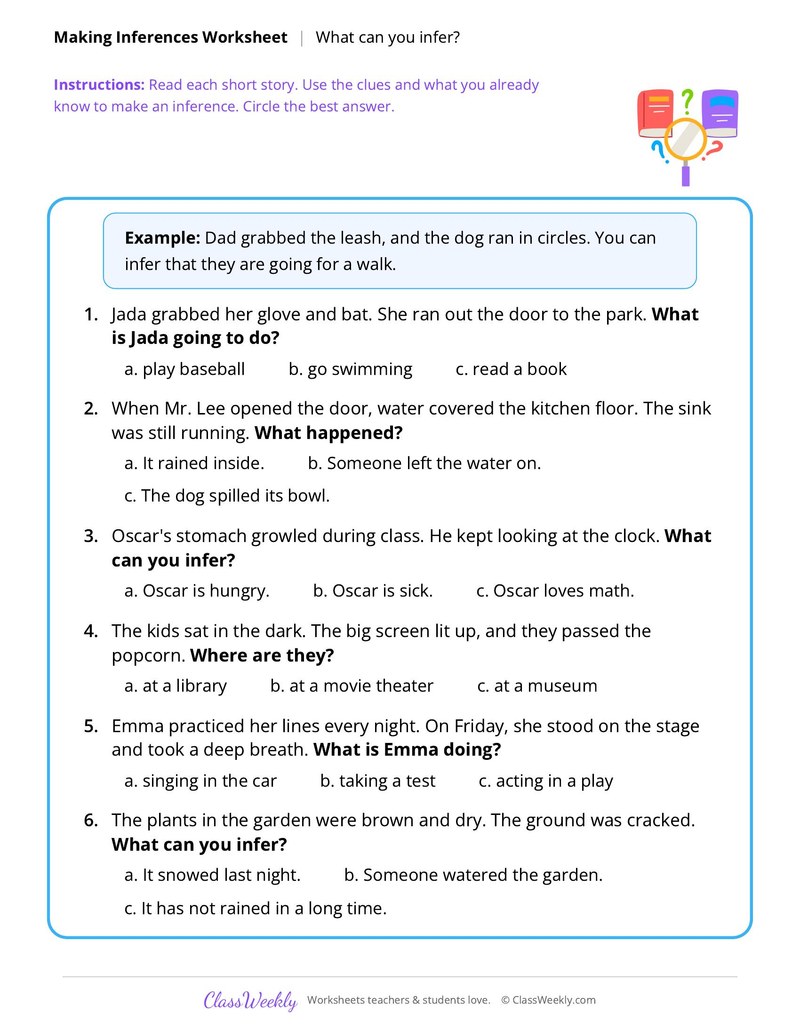
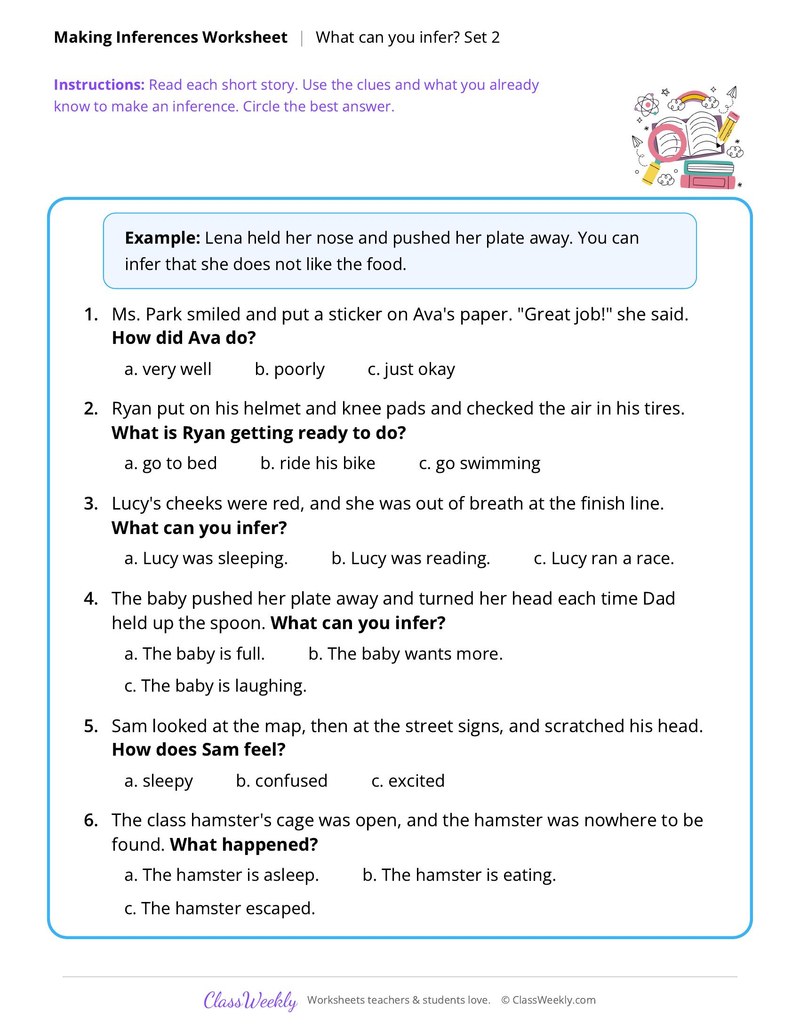
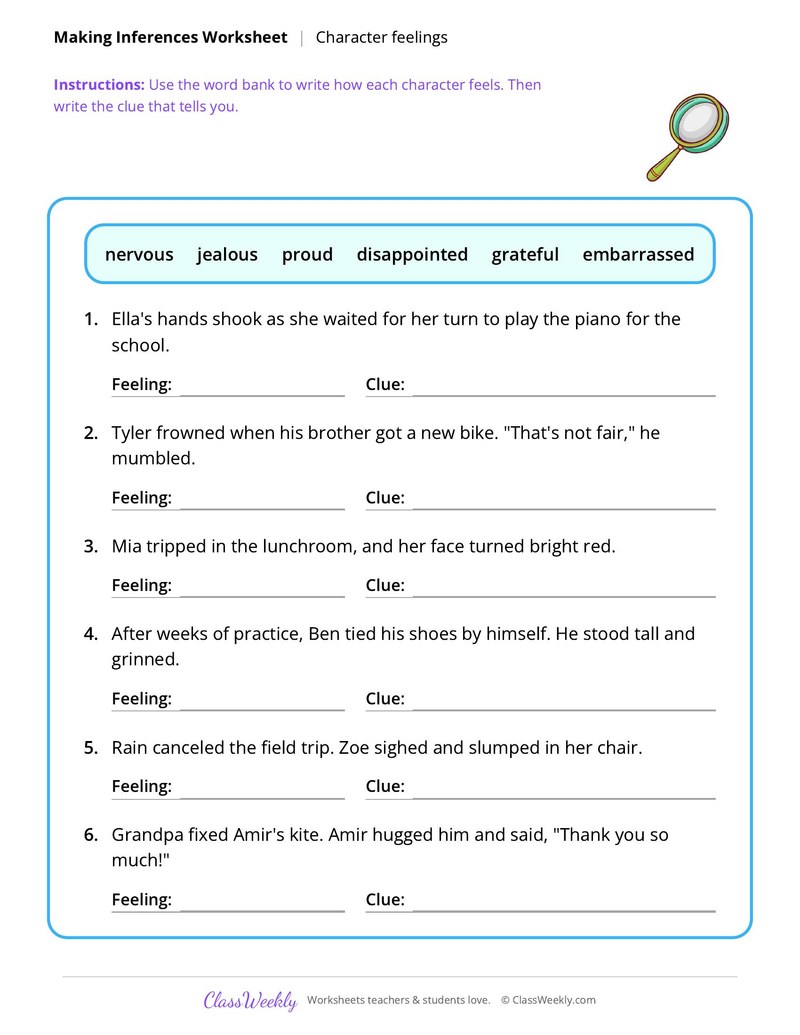
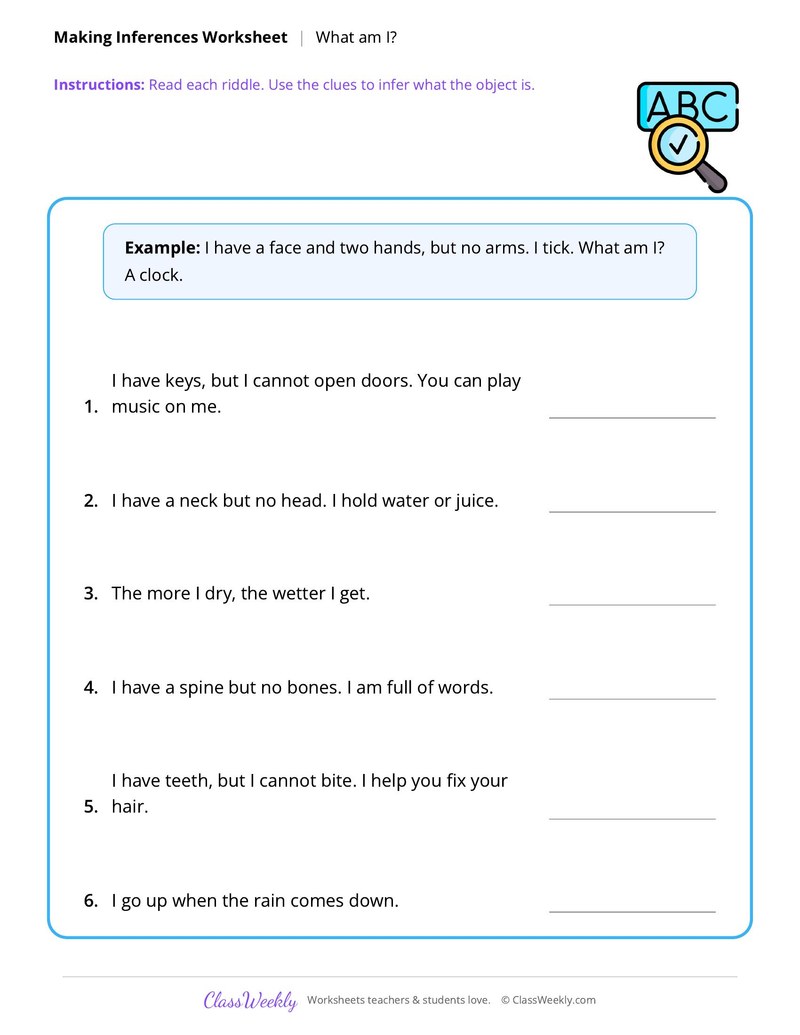
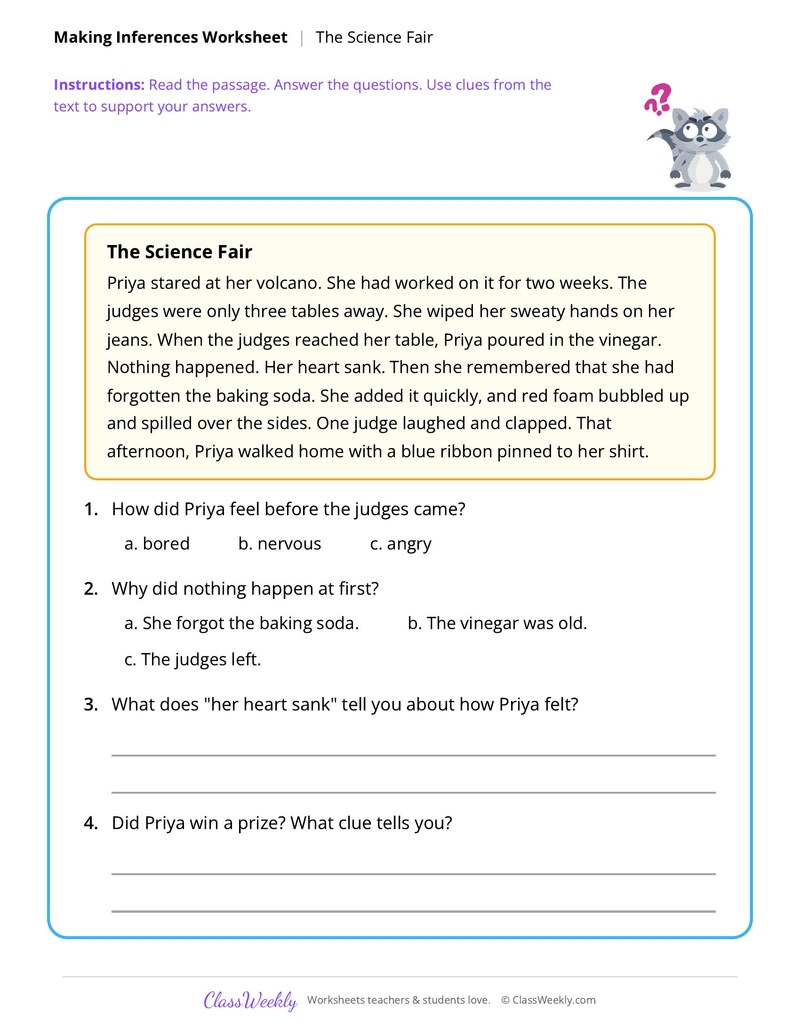
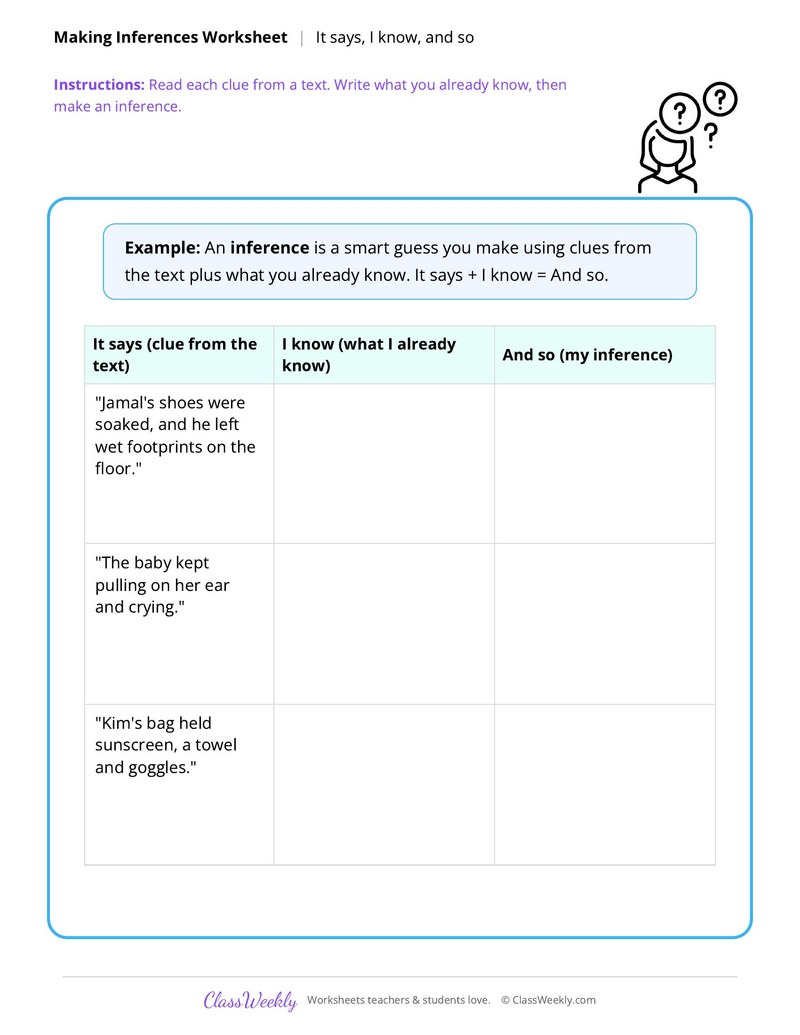
An inference is an idea you figure out from clues, the details in a story, plus what you already know. If Amira holds her bag strap so tightly that her fingers turn white, you can infer that she feels nervous, even though the story never says so.
How do the clue charts work?
⌄
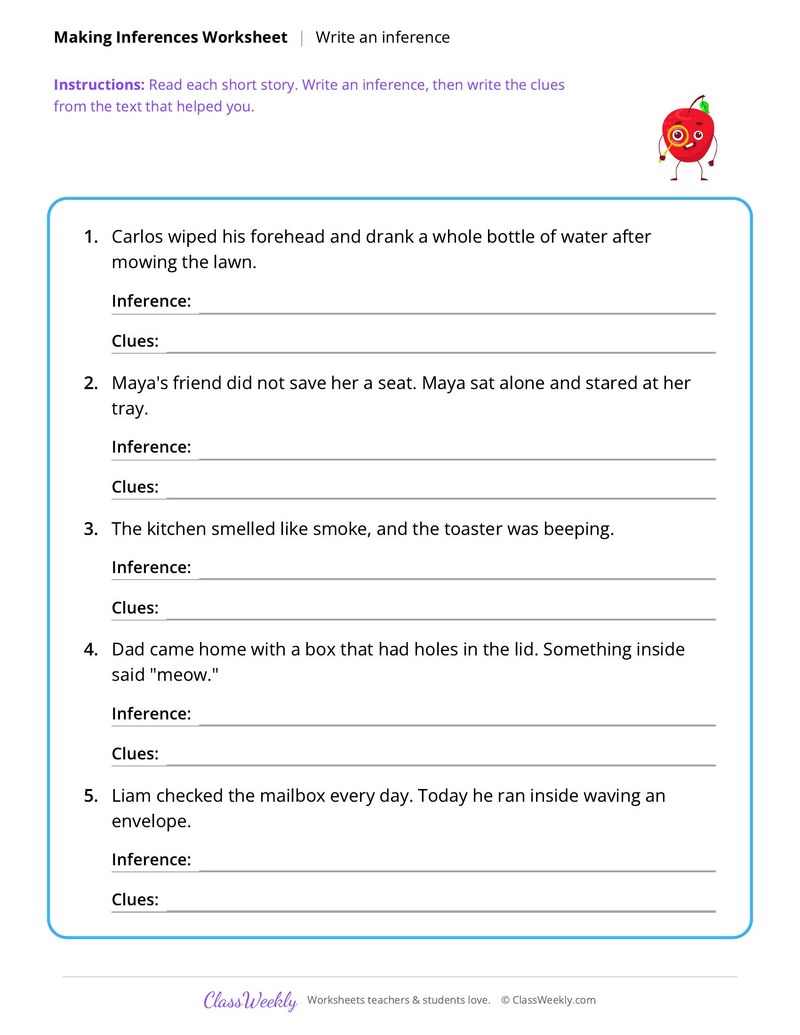
Each chart row gives a sentence from the story with its paragraph number. Children write what the clue shows, such as how a character feels, where the story happens or what happened offstage, and how the clue shows it.
What if my child's inference is different from the key?
⌄
That can be fine. The key lists other answers to accept, so check whether your child's answer fits the clue. Ask which words in the sentence led to the idea, and reread the paragraph together if the answer does not fit.
Is there an answer key for each worksheet?
⌄
Yes. Every making inferences sheet has an answer key, and the story sheets give sample answers and say what to accept.
What is the difference between an inference and a prediction?
⌄
An inference is an idea about what is true right now that the story does not say, like how a character feels. A prediction is a smart guess about what will happen next. Both come from clues in the story plus what you already know (RL.3.1).
How do the book title sheets teach inferences?
⌄
Children look at a book cover, such as a girl in a space suit or a dog riding a scooter, and decide which title fits. The last sheet asks them to write the picture clue that shows why, which is the same clue plus reason habit the story sheets build.
Ratings & Reviews
No reviews yet. Be the first to share what you think.
Reviews are for ClassWeekly members.
Make a Request
Spotted something to fix, or want a worksheet we don't have yet? Tell us and we'll make it.
Worksheet Details
| Grade | 3rd Grade |
| Subject | Reading |
| Topic | Making Inferences and Predictions |
| Pages | 1 page |
| Difficulty | Medium |
Learn More
What is ClassWeekly?
ClassWeekly offers free worksheets and printable learning resources for kids, from preschool up. All worksheets are aligned to Common Core, NGSS, and C3 Framework standards and designed by educators. We also have free online learning games for thousands of skills, and kids' answers turn into a progress report for the grown-up. Start a free 30-day trial to download the worksheets.