Mop Materials True or False
Written by Adi Ackerman, Head Teacher
"Mop Materials True or False" is written for 3rd Grade (Ages 8-9). If your little one is a year younger but already steady on engineering and design, the page still works. You may just need to read the instructions out loud. And if they are older and criteria and constraints never quite stuck, this is a short review rather than busywork.
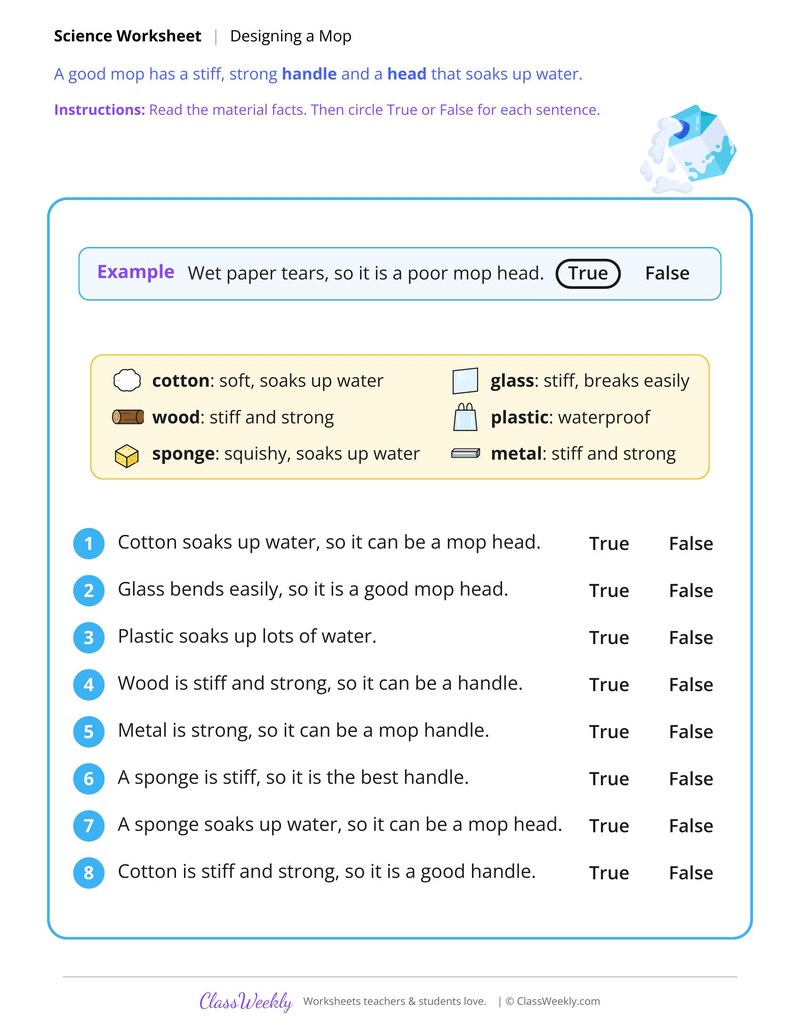
3rd grade science worksheet: read mop material facts and circle true or false for sentences about cotton, glass and sponge. Answer key included. Part of our criteria and constraints engineering and design collection.
How do I use this worksheet?
Start with something students can look at or think about: a photo, a short video, a jar on the windowsill, or a question like "what do you already know about criteria and constraints?" Then let them work through it independently, using a partner or small group only if they want to talk through their thinking, keeping a word bank or anchor chart in view so the vocabulary stays available. When you review, ask students how they knew, and let them point to the part of the diagram or reading that told them. These criteria and constraints worksheets work well as a lead in before an investigation, as a way to capture what students noticed afterward, or as review before an assessment.
What students will practice
- Students will read facts about cotton, glass, wood, plastic, sponge and metal.
- Students will circle true or false for sentences about mop handles and mop heads.
- Students will connect each material's property to the mop part it suits.
Curriculum Links
Find this in the curriculum
Browse the grade, subject, and topic this belongs to.
FAQ
How do I use this criteria and constraints worksheet?
⌄
Start with something students can look at or think about: a photo, a short video, a jar on the windowsill, or a question like "what do you already know about criteria and constraints?" Then let them work through it independently, using a partner or small group only if they want to talk through their thinking, keeping a word bank or anchor chart in view so the vocabulary stays available. When you review, ask students how they knew, and let them point to the part of the diagram or reading that told them. These criteria and constraints worksheets work well as a lead in before an investigation, as a way to capture what students noticed afterward, or as review before an assessment.
What does this worksheet teach?
⌄
Read mop material facts and circle true or false for sentences about cotton, glass and sponge. The directions on the page read: Read the material facts. Then circle True or False for each sentence. The page opens with a worked example, and an answer key is included.
Can I use this criteria and constraints worksheet for homeschool or classroom?
⌄
Yes, both. We made it for 3rd Grade engineering and design, and the page works the same whether it lands on a kitchen table or a center rotation. At home, most families go through it together and talk the answers out loud, and that talking is where most of the learning happens with criteria and constraints. In class it runs well as independent work while you pull a small group. Print one copy or thirty, whichever the day needs.
What is engineering design for 3rd graders?
⌄
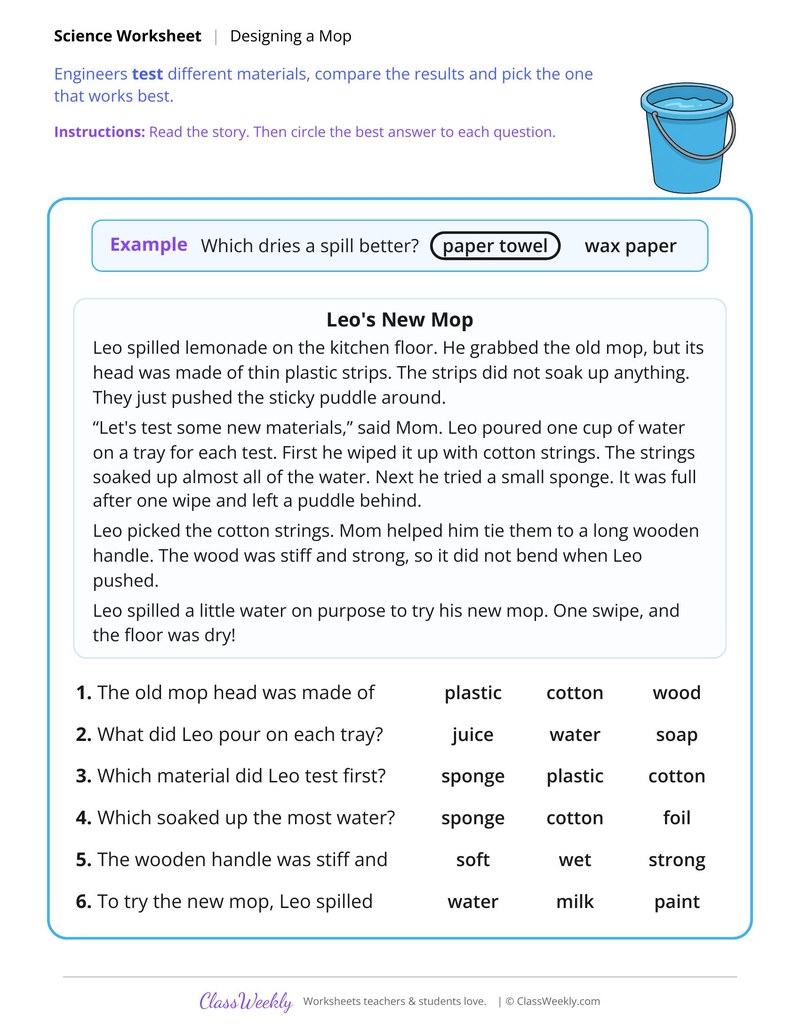
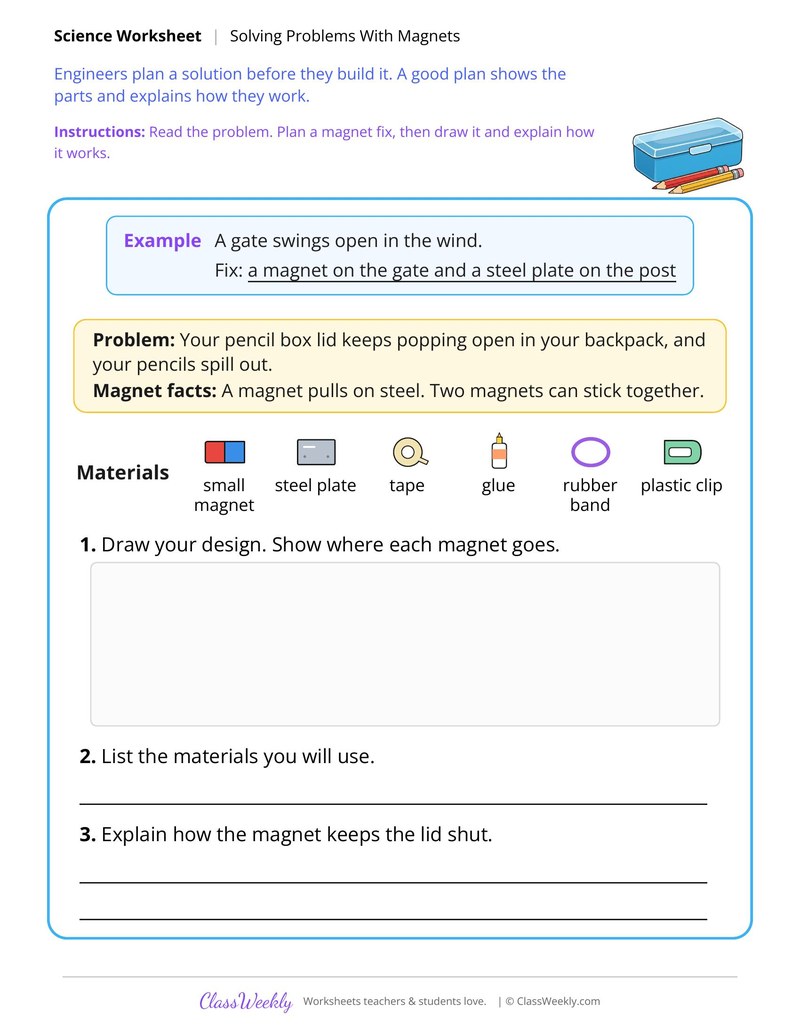
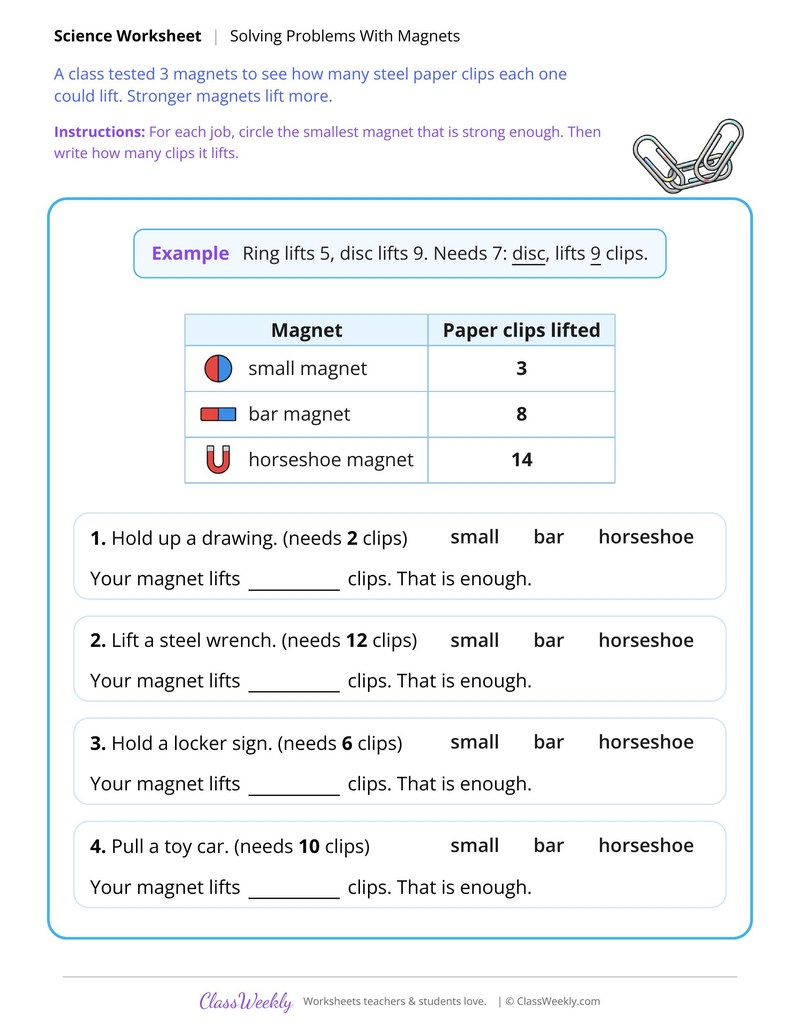
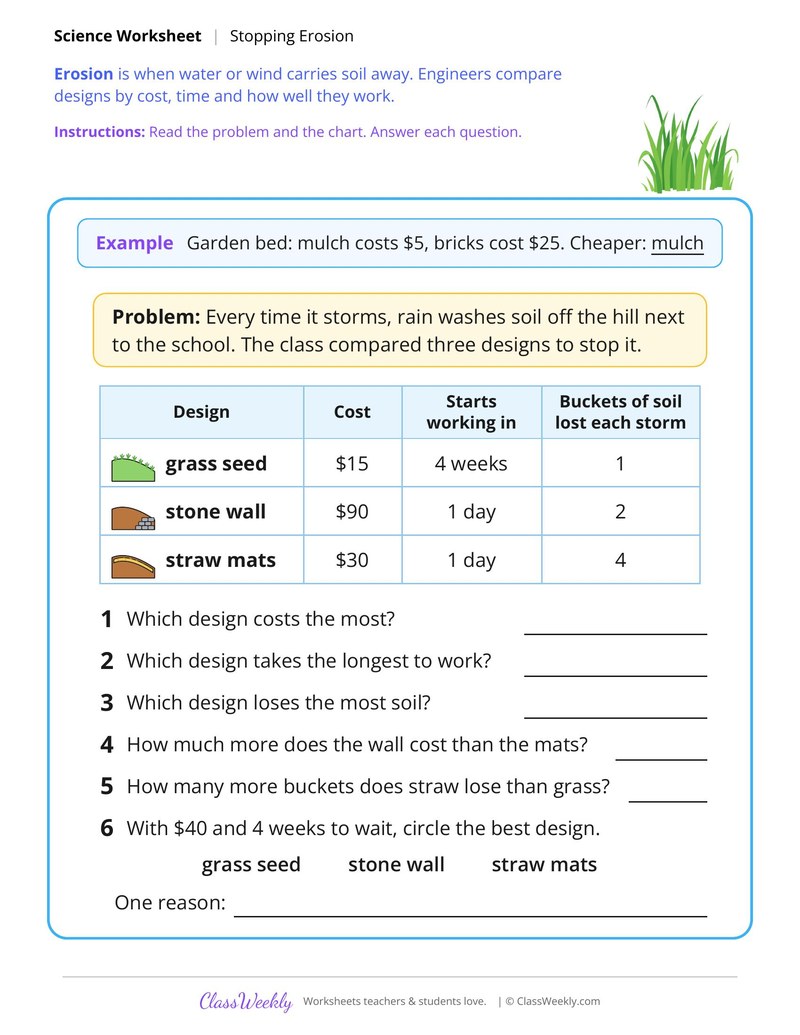
Engineering design is a set of steps for solving a problem. Children name the problem, list what the solution must do and the limits on it, then compare and test ideas. These sheets use real problems like a hill that loses soil in storms or a pencil box lid that pops open.
What are criteria and constraints?
⌄
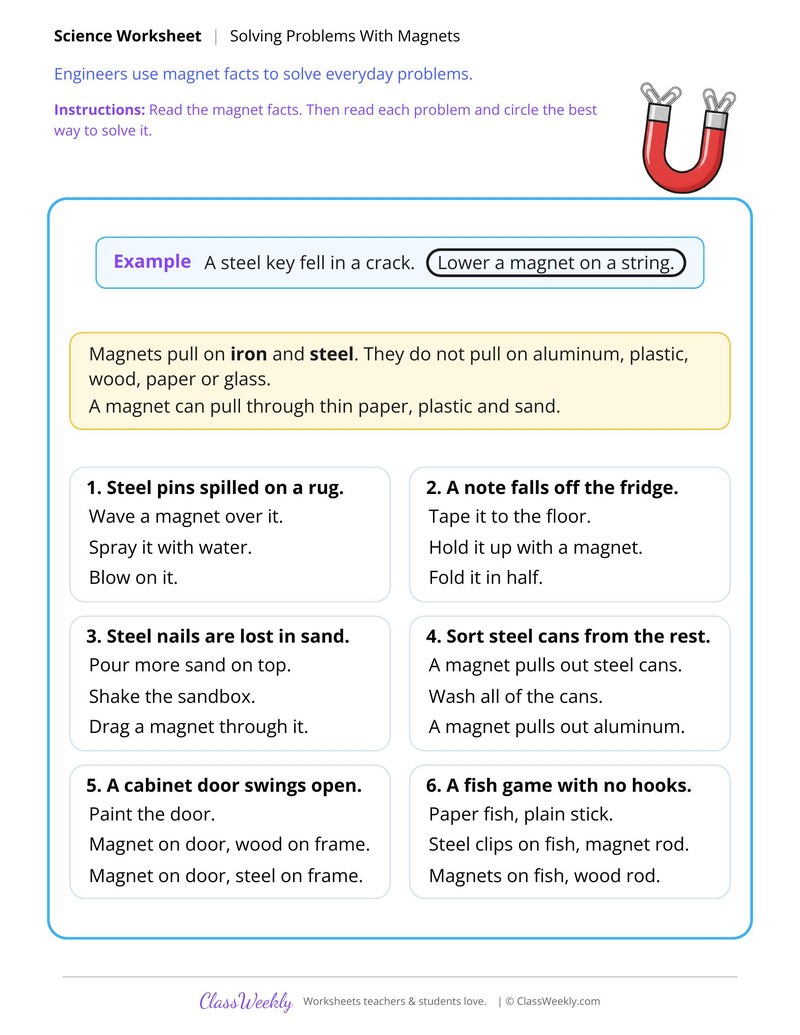
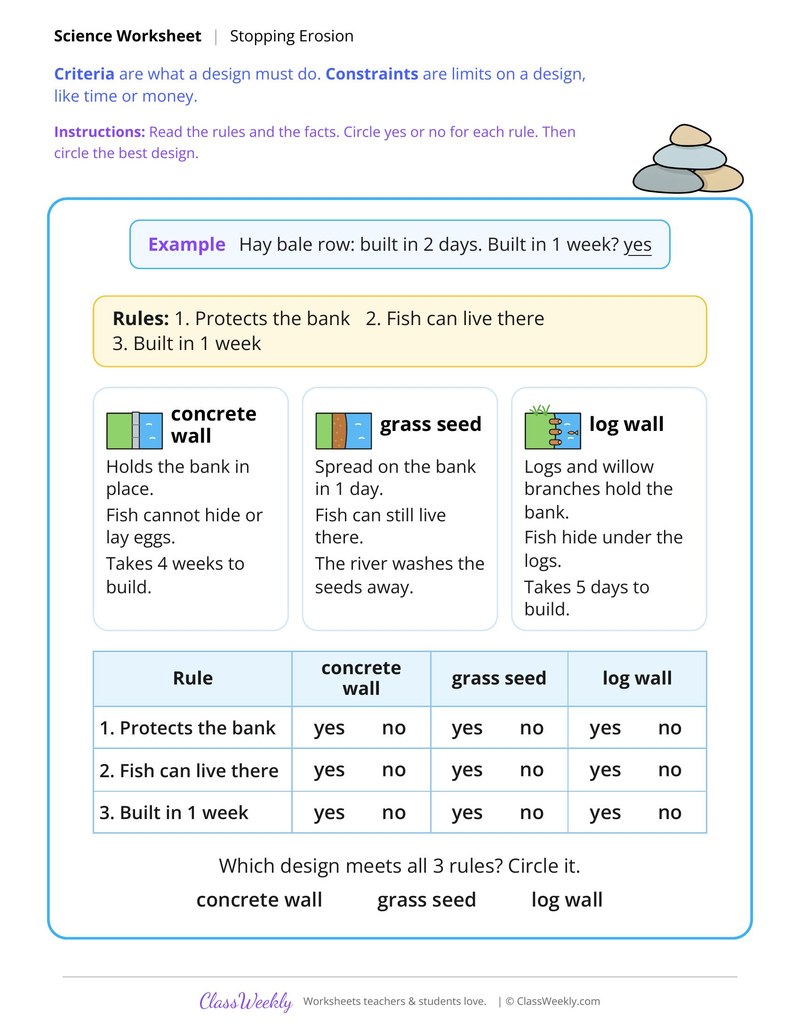
Criteria are what a design must do, like protect a riverbank. Constraints are limits, like time or money. On Riverbank Erosion Which Design Fits the Rules, children check a concrete wall, grass seed and a log wall against 3 rules.
How do these sheets compare design solutions?
⌄
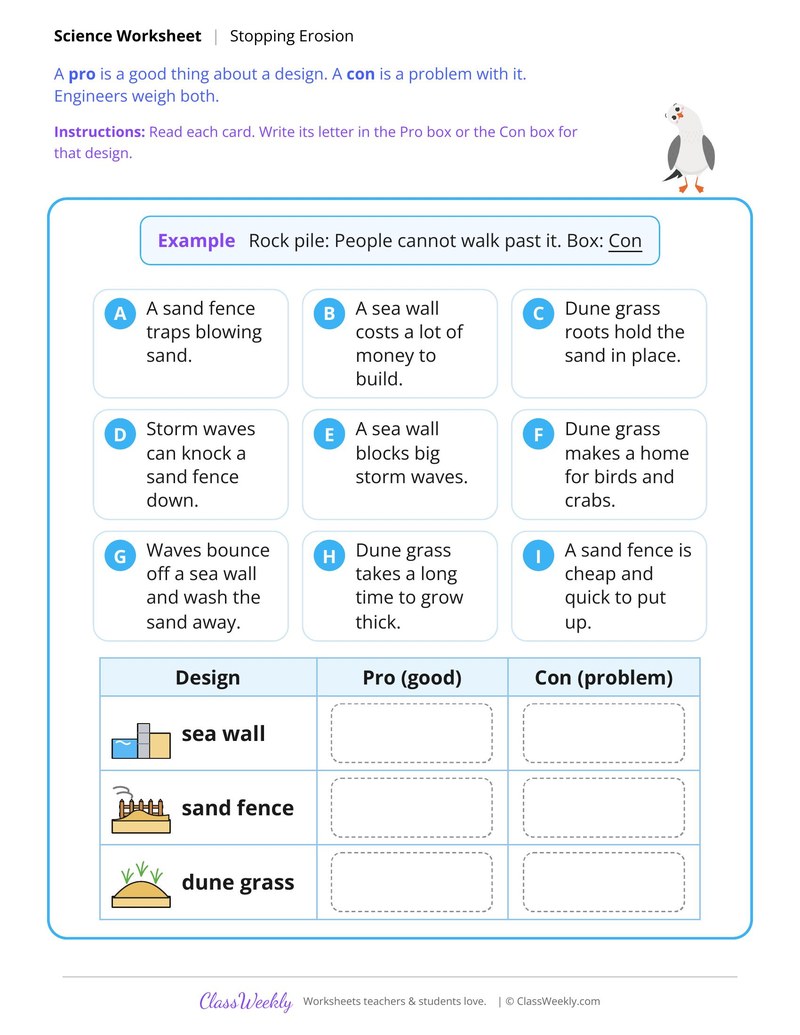
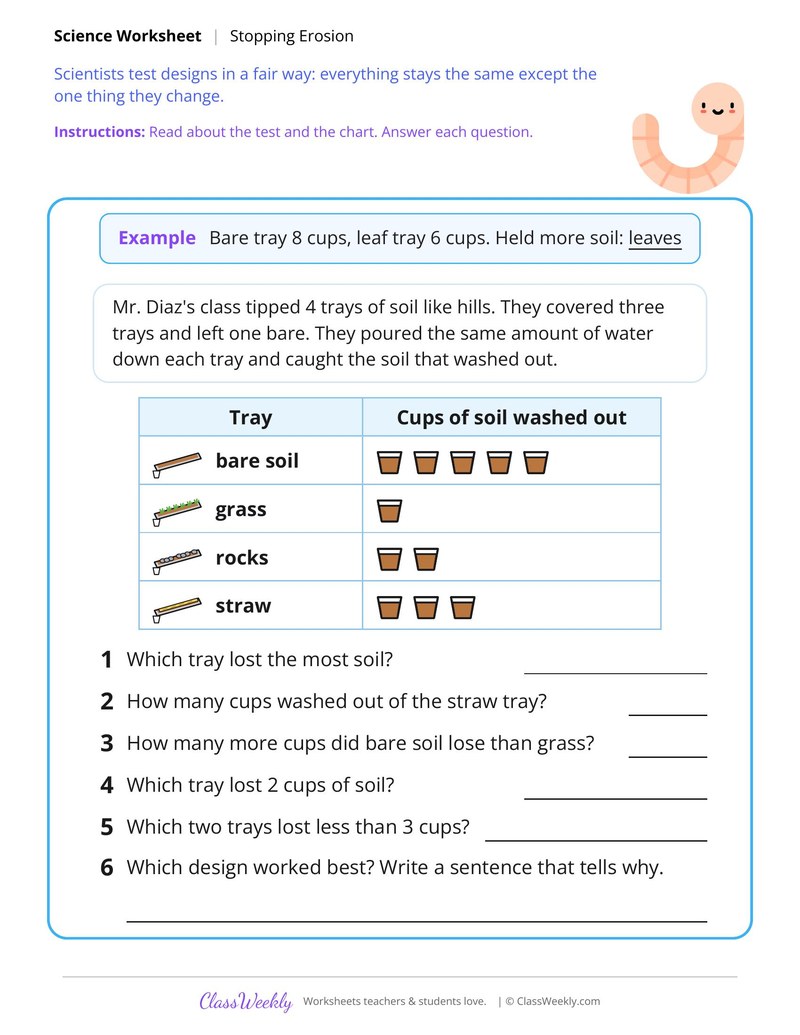
Children read charts of cost, time and results, sort pros and cons and read the results of fair tests. Then they choose the best design and write a reason for it.
Do the engineering worksheets have answer keys?
⌄
Most sheets come with an answer key. Open design pages, where children draw and explain their own plan, do not have one because answers will vary.
Ratings & Reviews
No reviews yet. Be the first to share what you think.
Reviews are for ClassWeekly members.
Make a Request
Spotted something to fix, or want a worksheet we don't have yet? Tell us and we'll make it.
Worksheet Details
| Grade | 3rd Grade |
| Subject | Science |
| Topic | Engineering and Design |
| Pages | 1 page |
| Difficulty | Medium |
What is ClassWeekly?
ClassWeekly offers free worksheets and printable learning resources for kids, from preschool up. All worksheets are aligned to Common Core, NGSS, and C3 Framework standards and designed by educators. We also have free online learning games for thousands of skills, and kids' answers turn into a progress report for the grown-up. Start a free 30-day trial to download the worksheets.