Sort the Changes, Cut and Glue
Written by Adi Ackerman, Head Teacher
"Sort the Changes, Cut and Glue" is written for 3rd Grade (Ages 8-9). If your little one is a year younger but already steady on matter, the page still works. You may just need to read the instructions out loud. And if they are older and physical and chemical changes never quite stuck, this is a short review rather than busywork.
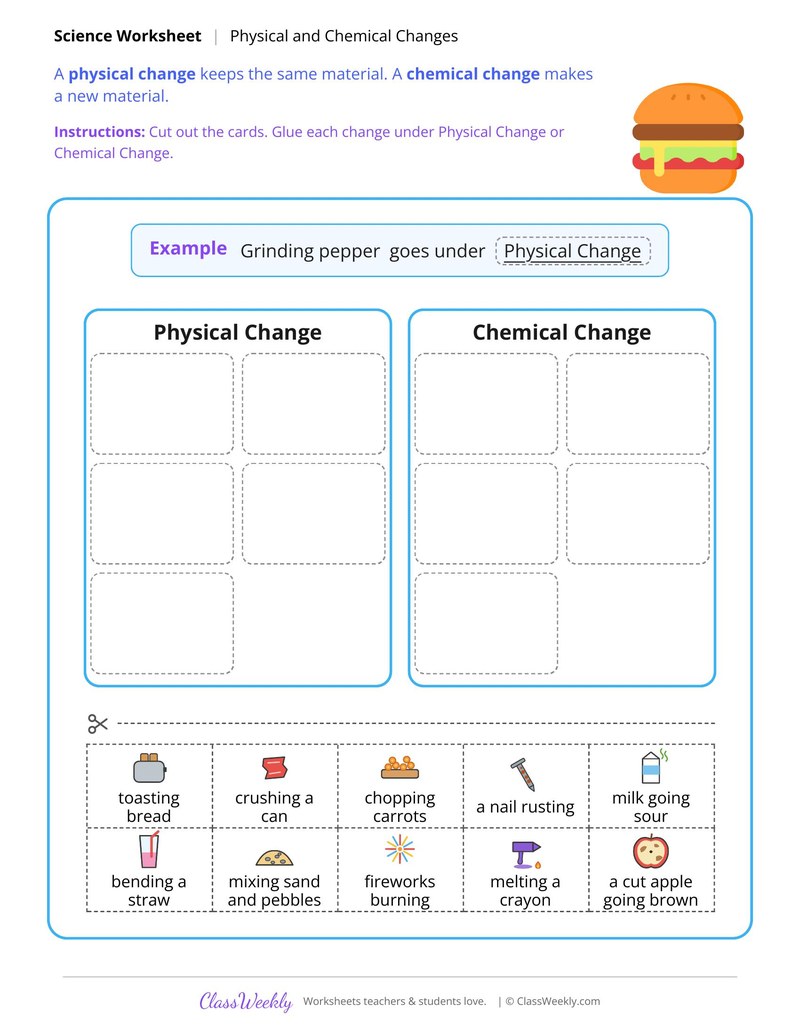
3rd grade science worksheet: cut and glue changes like toasting bread, crushing a can and a nail rusting under physical or chemical. Answer key included. Part of our physical and chemical changes matter collection.
How do I use this worksheet?
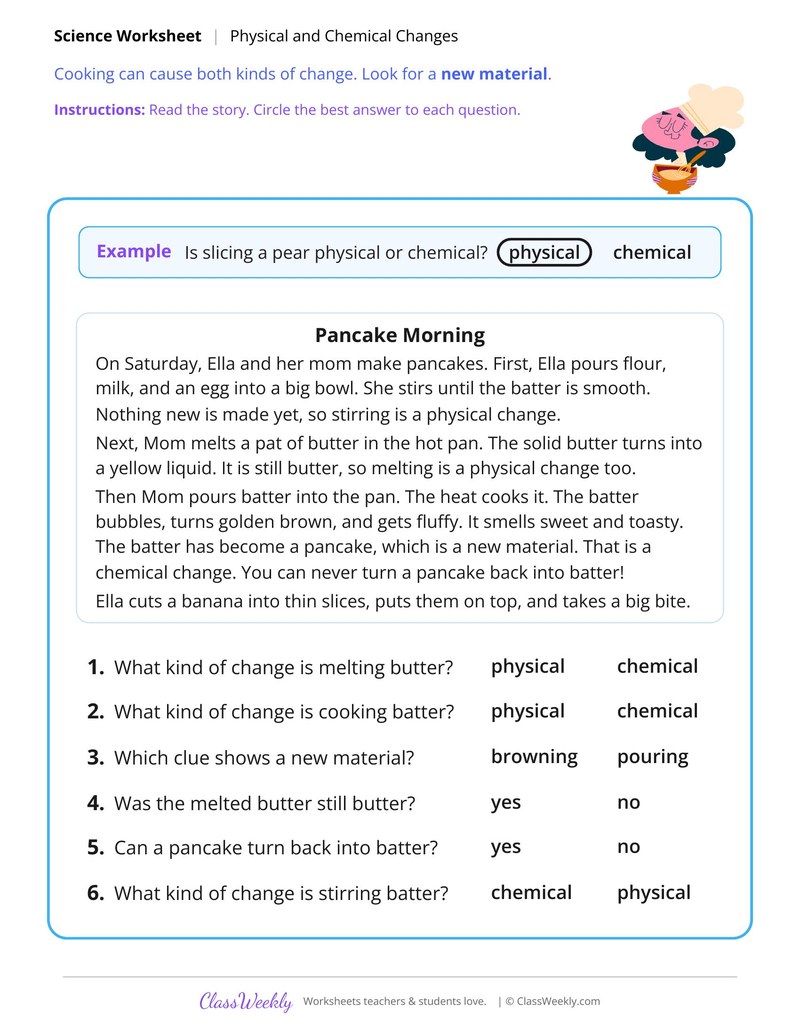
Cook or bake with children and pause at each step to ask if a different material was made. Use the clue list on the page to decide.
What students will practice
- Students will tell that a physical change keeps the same material.
- Students will sort ten cards, such as chopping carrots and milk going sour.
- Students will glue each change under Physical Change or Chemical Change.
Curriculum Links
Find this in the curriculum
Browse the grade, subject, and topic this belongs to.
FAQ
How do I use this physical and chemical changes worksheet?
⌄
Cook or bake with children and pause at each step to ask if a different material was made. Use the clue list on the page to decide.
What does this worksheet teach?
⌄
Cut and glue changes like toasting bread, crushing a can and a nail rusting under physical or chemical. The directions on the page read: Cut out the cards. Glue each change under Physical Change or Chemical Change. The page opens with a worked example, and an answer key is included.
Can I use this physical and chemical changes worksheet for homeschool or classroom?
⌄
Yes, both. We made it for 3rd Grade matter, and the page works the same whether it lands on a kitchen table or a center rotation. At home, most families go through it together and talk the answers out loud, and that talking is where most of the learning happens with physical and chemical changes. In class it runs well as independent work while you pull a small group. Print one copy or thirty, whichever the day needs.
What is the difference between a physical and a chemical change?
⌄
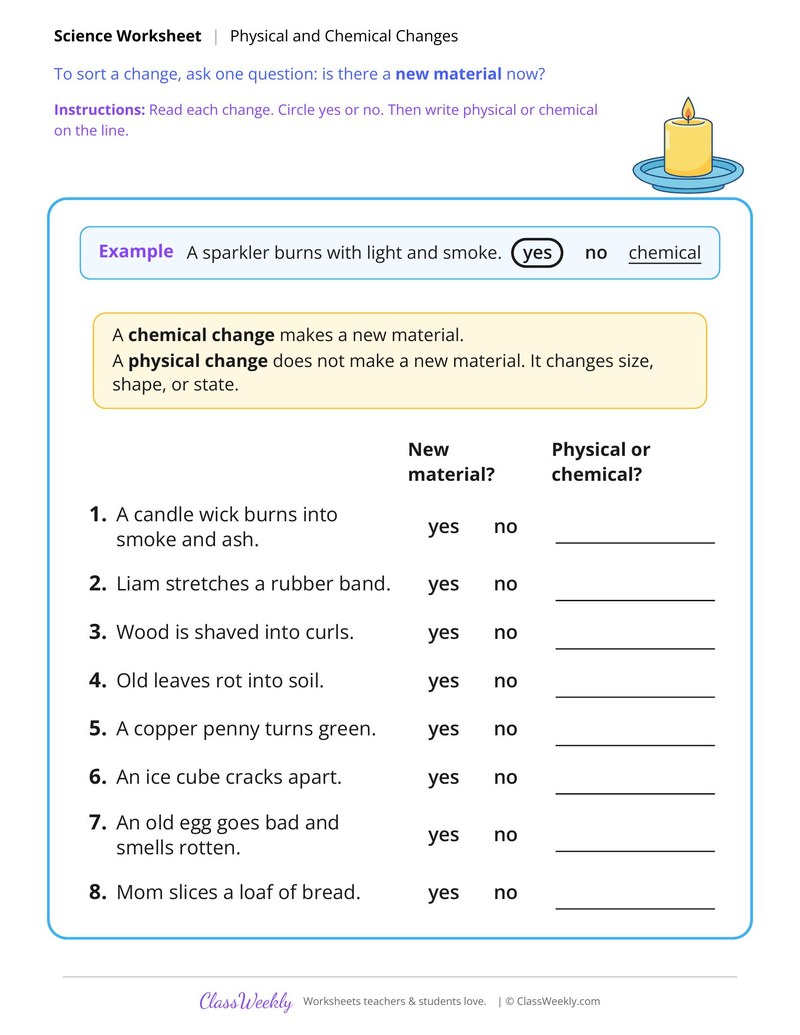
A physical change keeps the same material, like folding a shirt or melting ice. A chemical change makes a different material, like toasting bread or a nail rusting.
What are the clues of a chemical change?
⌄
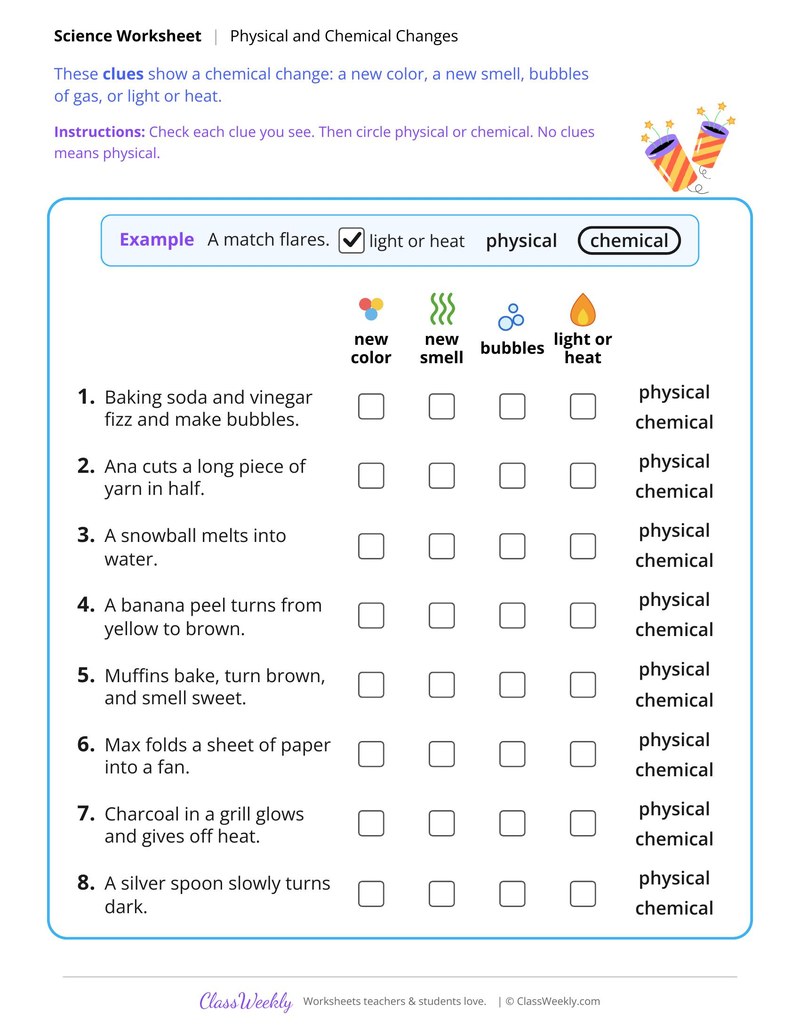
A different color, a different smell, bubbles of gas, or light and heat. If none of these clues appear, the change is likely physical.
Do these sheets have answer keys?
⌄
Yes. Every sheet in this set has an answer key, and each page opens with a worked example.
Ratings & Reviews
No reviews yet. Be the first to share what you think.
Reviews are for ClassWeekly members.
Make a Request
Spotted something to fix, or want a worksheet we don't have yet? Tell us and we'll make it.
What is ClassWeekly?
ClassWeekly offers free worksheets and printable learning resources for kids, from preschool up. All worksheets are aligned to Common Core, NGSS, and C3 Framework standards and designed by educators. We also have free online learning games for thousands of skills, and kids' answers turn into a progress report for the grown-up. Start a free 30-day trial to download the worksheets.