Idiom Picture Story at the Bakery
Written by Adi Ackerman, Head Teacher
"Idiom Picture Story at the Bakery" is written for 3rd Grade (Ages 8-9), and it covers Common Core L.3.5.A. If your little one is a year younger but already steady on idioms and similes, the page still works. You may just need to read the instructions out loud. And if they are older and idioms never quite stuck, this is a short review rather than busywork.
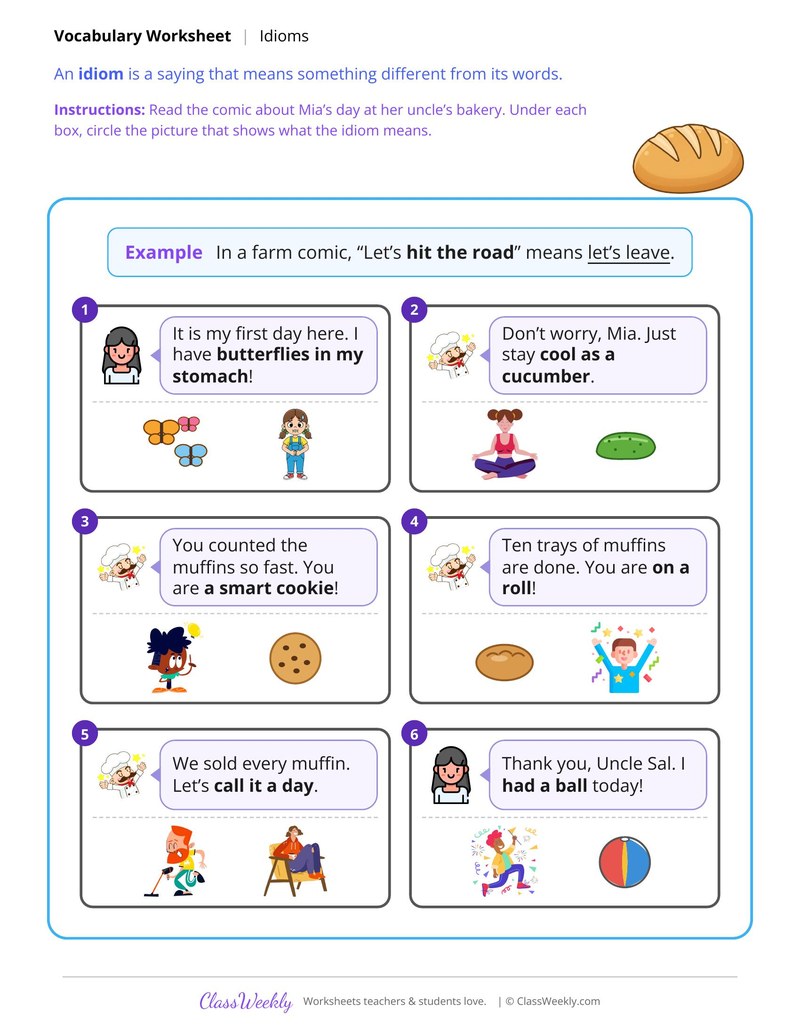
3rd grade vocabulary worksheet: read a comic about Mia at her uncle's bakery and circle the picture for idioms like a smart cookie. Answer key included. Part of our idioms collection. Aligned to Common Core standards.
How do I use this worksheet?
Ask your child what a phrase would mean if it were really true before giving the real meaning, since the gap between the literal picture (actual cats falling from the sky) and the actual meaning (it's raining hard) is what makes idioms memorable. This is also a great one to collect as a family: whenever you say an idiom out loud this week, pause and ask if they know what it really means.
What students will practice
- Students will read a comic about Mia's day at Uncle Sal's bakery.
- Students will find idioms like butterflies in my stomach and on a roll.
- Students will circle the picture that shows what each idiom means.


Curriculum Links
Common Core State Standards
Language · 3rd Grade
Standard: Distinguish the literal and nonliteral meanings of words and phrases in context (e.g., take steps).
View all L.3.5.A worksheets →Find this in the curriculum
Browse the grade, subject, and topic this belongs to.
FAQ
How do I use this idioms worksheet?
⌄
Ask your child what a phrase would mean if it were really true before giving the real meaning, since the gap between the literal picture (actual cats falling from the sky) and the actual meaning (it's raining hard) is what makes idioms memorable. This is also a great one to collect as a family: whenever you say an idiom out loud this week, pause and ask if they know what it really means.
What does this worksheet teach?
⌄
Read a comic about Mia at her uncle's bakery and circle the picture for idioms like a smart cookie. The directions on the page read: Read the comic about Mia’s day at her uncle’s bakery. Under each box, circle the picture that shows what the idiom means. The page opens with a worked example, and an answer key is included.
Can I use this idioms worksheet for homeschool or classroom?
⌄
Yes, both. We made it for 3rd Grade idioms and similes, and the page works the same whether it lands on a kitchen table or a center rotation. At home, most families go through it together and talk the answers out loud, and that talking is where most of the learning happens with idioms. In class it runs well as independent work while you pull a small group. Print one copy or thirty, whichever the day needs.
Why are idioms hard for some kids and easy for others?
⌄
Kids who've heard an idiom used casually at home already have a head start. Kids meeting one for the first time need the gap between the literal words and the real meaning explained directly.
How can I practice idioms at home?
⌄
Ask what a phrase would mean if it were really true before giving the real meaning. Then collect idioms as a family: whenever one comes up in conversation, pause and check if your child knows it.
Is this the same as figurative language in general?
⌄
Idioms are one type of figurative language. This topic also covers similes, a second type that works differently, since a simile's comparison is meant literally rather than being a fixed, memorized phrase.
What is an idiom for a 3rd grader?
⌄
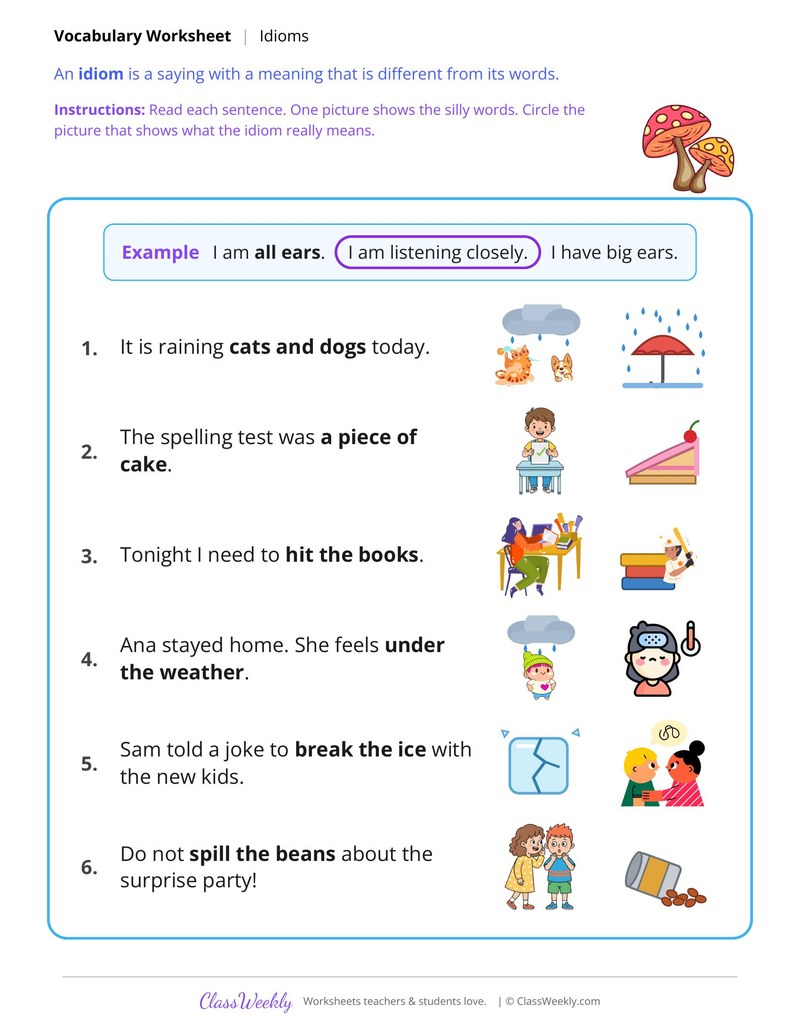
An idiom is a saying that means something different from its words, like a piece of cake meaning easy. Children learn to picture the silly words and then find the real meaning.
How do pictures help children learn idioms?
⌄
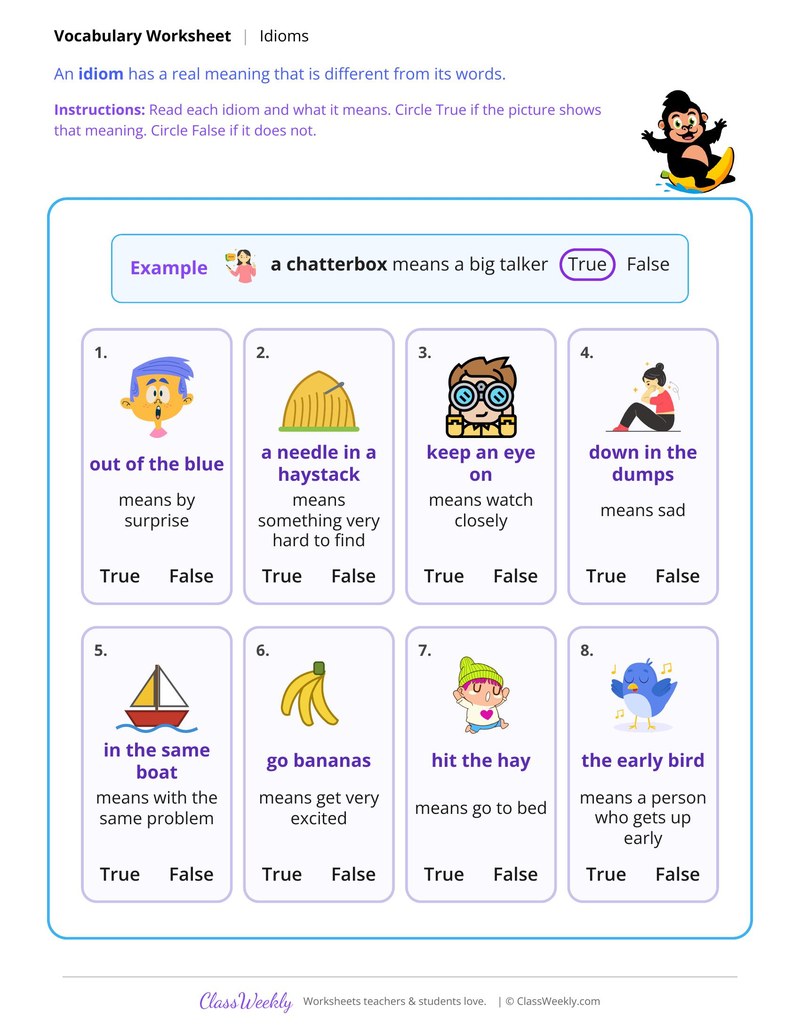
A picture of the real meaning, like a girl studying for hit the books, shows the idiom is not about its literal words. Some pages have children circle the right picture, and one has them draw both meanings themselves.
What is the difference between an idiom and a simile?
⌄
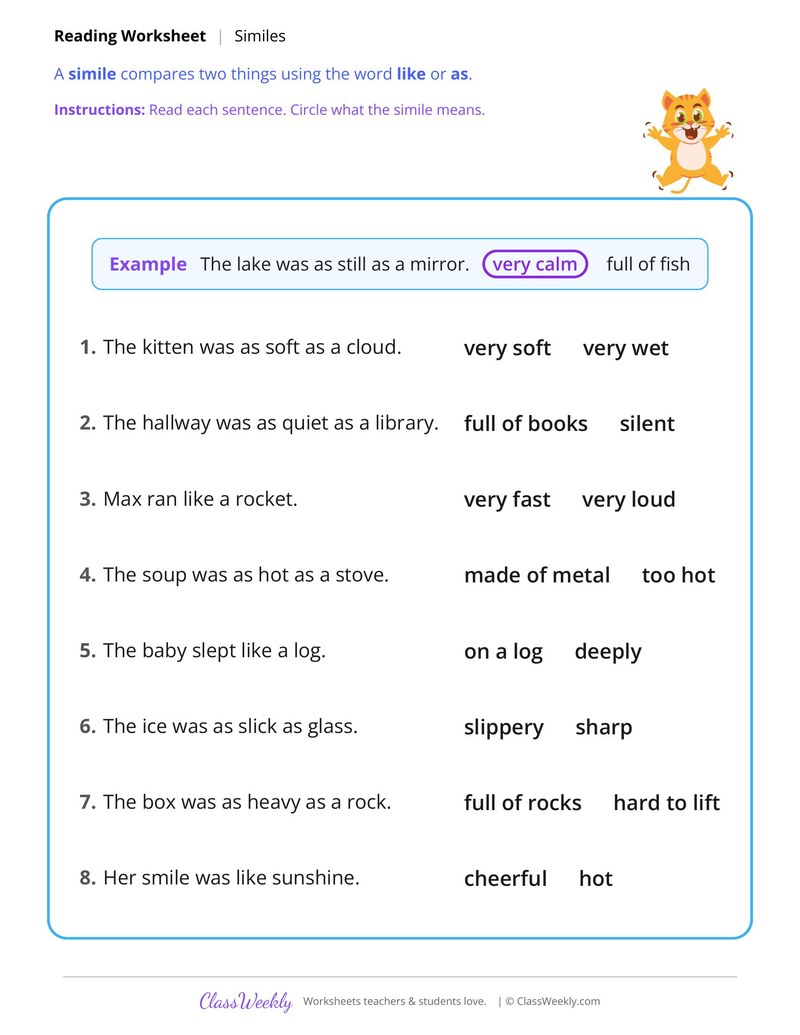
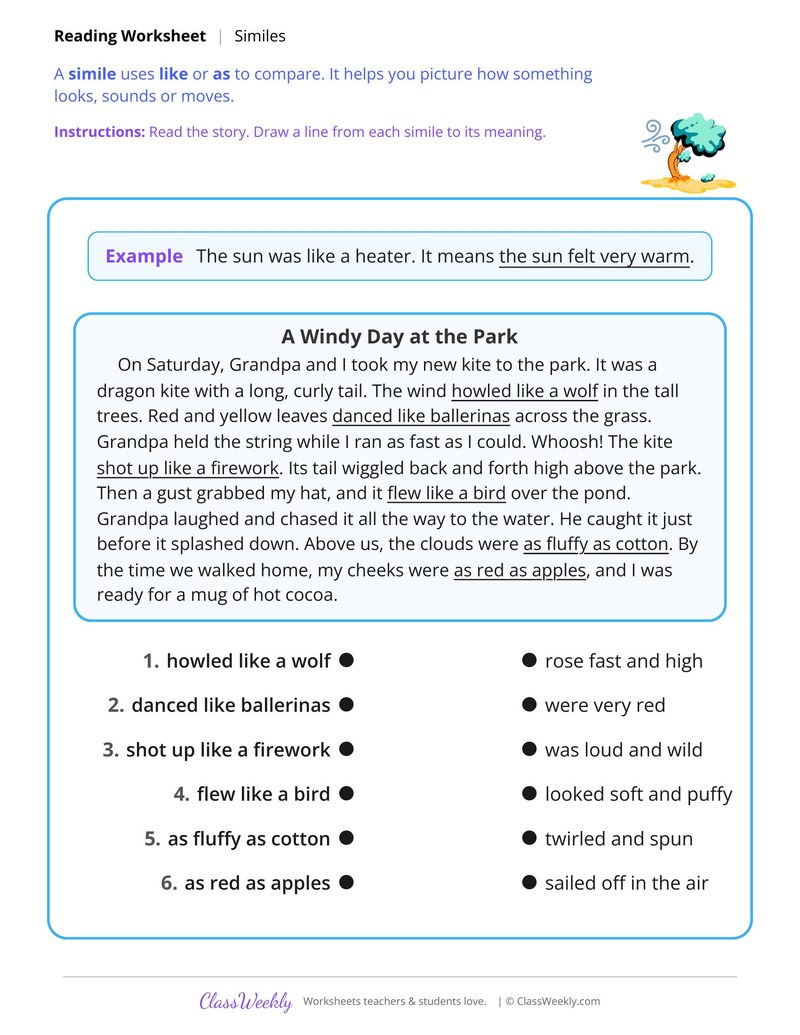
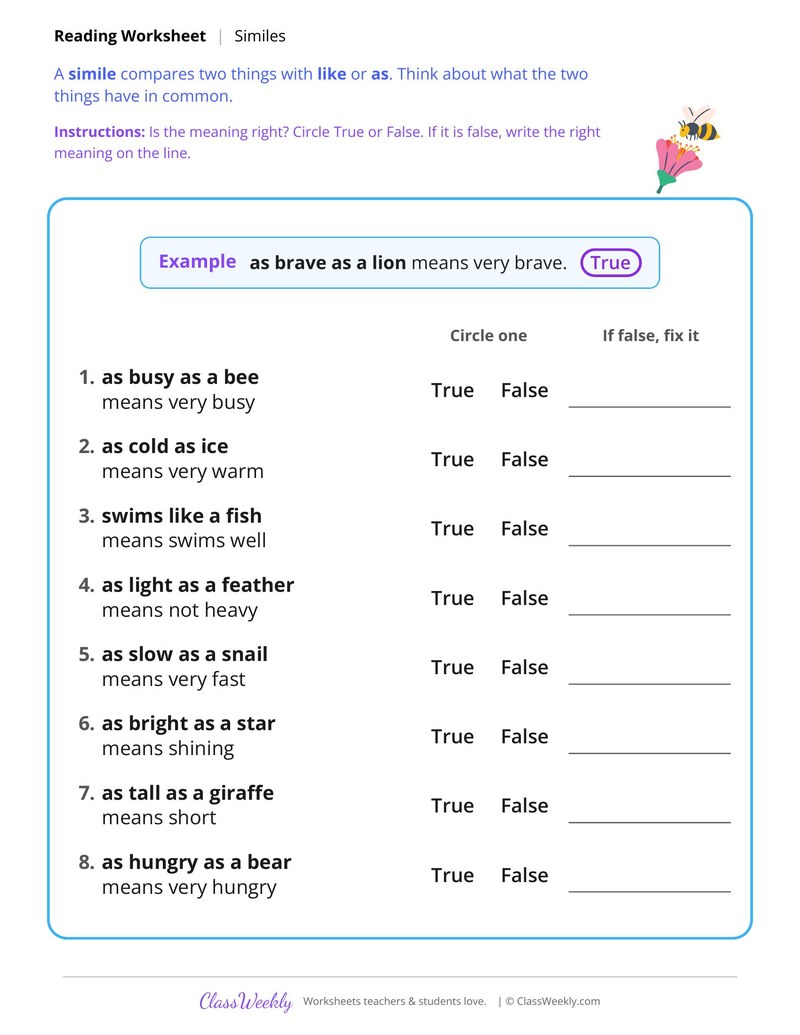
A simile is a comparison that uses like or as, such as as quiet as a mouse. An idiom is a fixed saying whose words do not add up to its meaning, such as under the weather.
Do these worksheets have answer keys?
⌄
Most sheets come with an answer key. The drawing page, where children draw what an idiom says and means, does not.
Ratings & Reviews
No reviews yet. Be the first to share what you think.
Reviews are for ClassWeekly members.
Make a Request
Spotted something to fix, or want a worksheet we don't have yet? Tell us and we'll make it.
Worksheet Details
| Grade | 3rd Grade |
| Subject | Vocabulary |
| Topic | Idioms and Similes |
| Standard | L.3.5.A |
| Pages | 1 page |
| Difficulty | Medium |
What is ClassWeekly?
ClassWeekly offers free worksheets and printable learning resources for kids, from preschool up. All worksheets are aligned to Common Core, NGSS, and C3 Framework standards and designed by educators. We also have free online learning games for thousands of skills, and kids' answers turn into a progress report for the grown-up. Start a free 30-day trial to download the worksheets.