Writing Prompts Lesson Plan for 1st Grade
A ready-to-teach writing prompts lesson for 1st Grade, built around writing true facts about themselves, telling about their own day in a journal, giving an opinion with a reason, writing steps in order, and finishing a story with a beginning, middle and end. Print the plan, print the practice pages, and you are set.
- Time
- 45 min
- Steps
- 5
- Practice pages
- 6
- Standards
- W.1.1, W.1.3, W.1.8
Lesson flow
45 minLearning objectives
By the end, students can:
- Respond to a prompt by writing one complete sentence
- Practice forming a clear idea into a grammatical sentence
- Build beginning writing skills through guided sentence prompts
Materials
Tick off as you get ready:
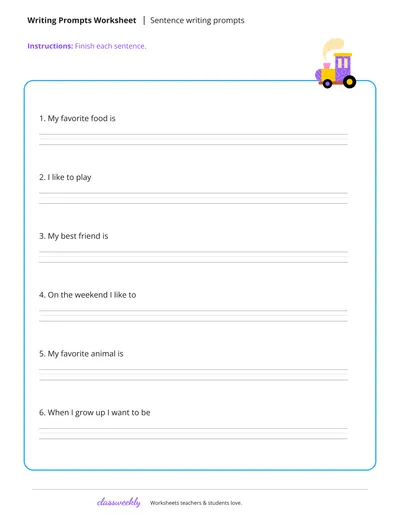
- Sentence writing prompts
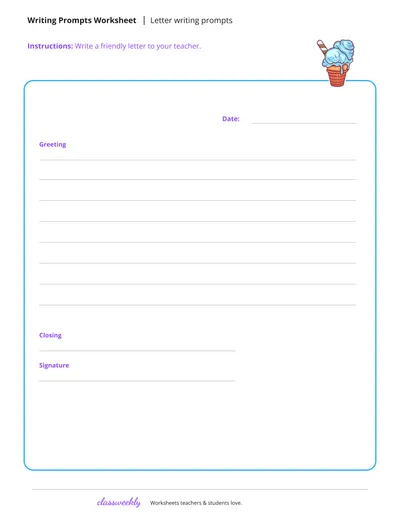
- Letter writing prompts
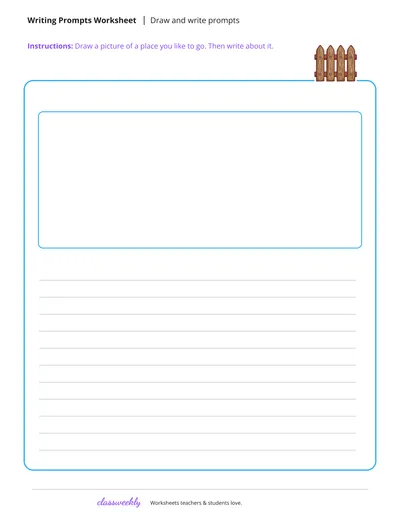
- Draw and write prompts
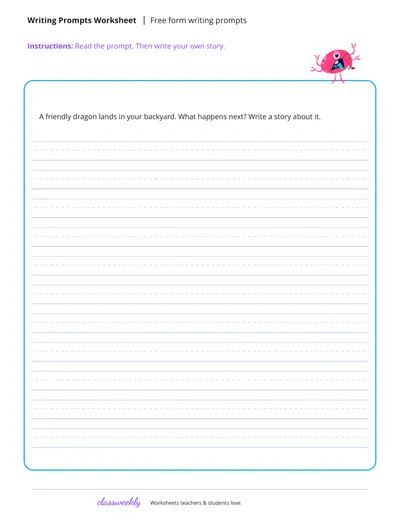
- Free form writing prompts
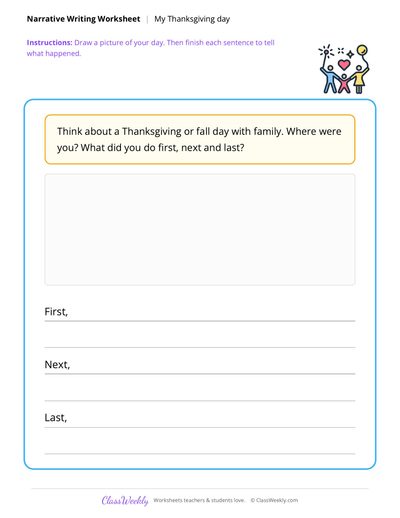
- Thanksgiving Narrative Writing Prompt
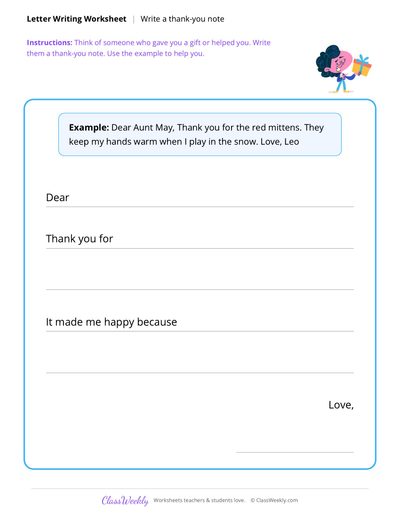
- Christmas Thank-You Note Writing
- Pencils, and whiteboard space for the modeled examples
Lesson steps
- 1
Notice it first
5 min · 0-5Put two sentences on the board, one that uses writing prompts correctly and one that does not. Ask students which sounds right before you name any rule. Noticing comes before naming.
- 2
Name the rule
I do8 min · 5-13Now name writing prompts and state the rule in one sentence. Write it where it can stay all week. Model correcting the broken sentence from the warm-up.
- 3
Fix them together
We do12 min · 13-25Work through four or five sentences as a class. Mix in one that is already correct, because students who are pattern-matching rather than thinking will "fix" it anyway and reveal themselves.
- 4
Independent practice
You do15 min · 25-40Hand out "Sentence writing prompts". Students work independently. Circulate and watch for the students who can do the exercise but cannot explain the rule, since that gap shows up later in their writing.
- 5
Apply it to real writing
5 min · 40-45Students find one place in their own writing folder where writing prompts applies, and fix it. This is the step that moves the rule from worksheet to writing.
Check for understanding
Read the last two sentences of each student's independent work. Applying writing prompts correctly in their own sentence matters more than getting the exercise items right.
Differentiation
Extra support
Students who stall: pull them into a small group and rebuild writing prompts with concrete materials or a simpler text before asking for the written work again. Do not send the page home as homework, it will just rehearse the misunderstanding.
Extension
Students who finish early: ask them to write their own writing prompts problem for a partner to solve, then check the partner's work. Creating a problem is harder than solving one and it surfaces whether they really understand writing prompts.
Skills covered
- Sentence writing prompts
- Letter writing prompts
- Draw and write prompts
- Free form writing prompts
- All about me
- Reflective writing
- Story writing
- Journal writing
- Seasonal writing
- Would you rather
- Opinion writing
- How-to writing