Ecosystems Lesson Plan for 4th Grade
A ready-to-teach ecosystems lesson for 4th Grade. Everything below is classroom-tested structure: an objective, a 45-minute sequence, a way to check who got it, and 6 printable practice pages.
- Time
- 45 min
- Steps
- 5
- Practice pages
- 6
- Standards
- 4-LS1-1, 5-LS2-1
Lesson flow
45 minLearning objectives
By the end, students can:
- Explore and describe what animals eat through observation and investigation
- Build ecosystems knowledge aligned to 4th Grade science standards
- Apply science vocabulary and inquiry skills to what animals eat activities
Materials
Tick off as you get ready:
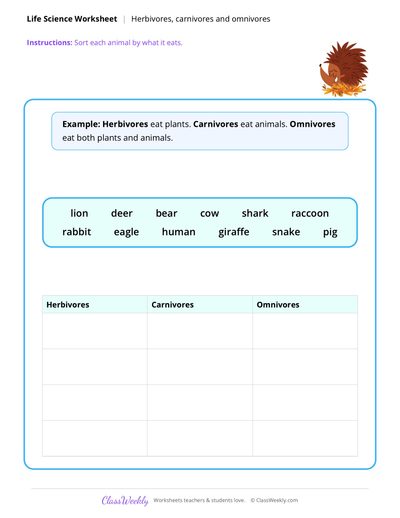
- Herbivores, carnivores and omnivores
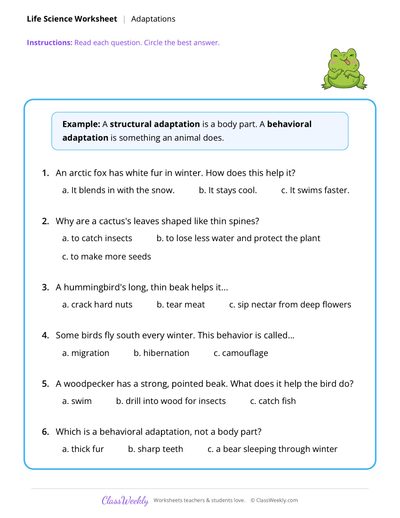
- Adaptations
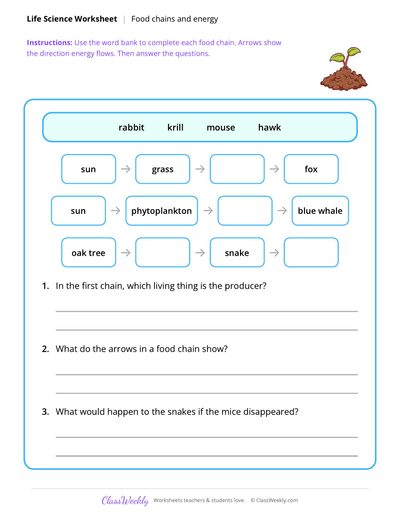
- Food chains and energy
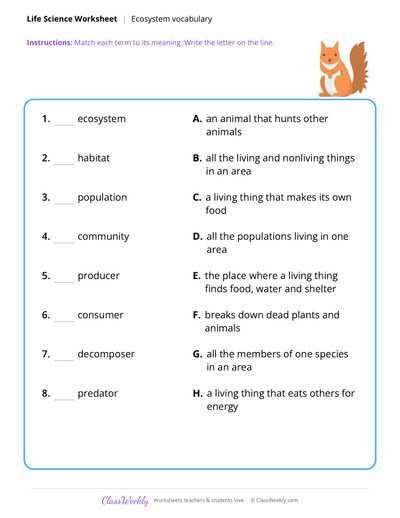
- Ecosystem vocabulary
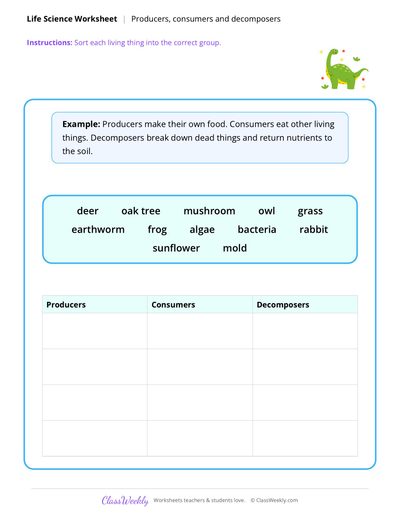
- Producers, consumers and decomposers
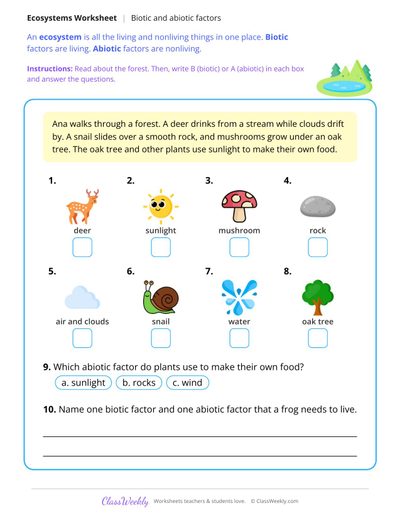
- Biotic and Abiotic Factors
- Pencils, and whiteboard space for the modeled examples
Lesson steps
- 1
Ask the question
5 min · 0-5Open with a question about ecosystems that students cannot answer yet. Take predictions and record them without correcting anything. Wrong predictions are the point: you will come back to them.
- 2
Explore
12 min · 5-17Students investigate ecosystems through a hands-on activity, a demonstration, or a set of images. Their job is to notice and describe, not to be right yet.
- 3
Explain
10 min · 17-27Now give the vocabulary and the explanation for ecosystems. Tie it directly back to what students just observed and to the predictions on the board. Name which predictions held up.
- 4
Independent practice
You do13 min · 27-40Hand out "Herbivores, carnivores and omnivores". Students record what they learned and answer the questions independently. Circulate and press for "how do you know?"
- 5
Extend the thinking
5 min · 40-45Ask where else ecosystems shows up outside the classroom. Collect two or three examples and leave the question open for tomorrow.
Check for understanding
Ask students to explain ecosystems to a partner in one sentence, then write that sentence down. Collect the sentences: they show you exactly which part of the idea did not land.
Differentiation
Extra support
Students who stall: pull them into a small group and rebuild ecosystems with concrete materials or a simpler text before asking for the written work again. Do not send the page home as homework, it will just rehearse the misunderstanding.
Extension
Students who finish early: ask them to write their own ecosystems problem for a partner to solve, then check the partner's work. Creating a problem is harder than solving one and it surfaces whether they really understand ecosystems.
Skills covered
- What animals eat
- Adaptations
- Food chains and food webs
- Ecosystem vocabulary
- Producers and consumers
- How ecosystems work