Writing similes and metaphors
Written by Adi Ackerman, Head Teacher
"Writing similes and metaphors" is written for 3rd Grade (Ages 8-9), and it covers Common Core L.3.5.A. If your little one is a year younger but already steady on writing topics, the page still works. You may just need to read the instructions out loud. And if they are older and writing similes and metaphors never quite stuck, this is a short review rather than busywork.

Writing similes and metaphors worksheet for 3rd grade: students fill in the blank to complete each simile or metaphor. Part of our writing similes and metaphors collection. Aligned to Common Core standards.
How do I use this worksheet?
Introduce the skill with a brief whole-class activity, such as calling out examples and asking students to give a thumbs up when they hear writing similes and metaphors in a sentence. Then let students work through it independently, using a partner or small group only if they want to talk through their thinking, referring to a class anchor chart if one is available. When reviewing answers, ask students to explain why an answer is correct rather than just confirming it. These writing similes and metaphors worksheets work well as a focused practice activity, a homework assignment, or a warm-up at the start of a language arts lesson.
What students will practice
- Students will identify and correctly use writing similes and metaphors in sentences and short passages.
- Students will distinguish writing similes and metaphors from related language concepts and apply rules consistently.
- Students will demonstrate understanding of writing similes and metaphors through guided and independent practice, in both reading and their own writing.


Curriculum Links
Common Core State Standards
Language · 3rd Grade
Standard: Distinguish the literal and nonliteral meanings of words and phrases in context (e.g., take steps).
View all L.3.5.A worksheets →Find this in the curriculum
Browse the grade, subject, and topic this belongs to.
FAQ
How do I use this writing similes and metaphors worksheet?
⌄
Introduce the skill with a brief whole-class activity, such as calling out examples and asking students to give a thumbs up when they hear writing similes and metaphors in a sentence. Then let students work through it independently, using a partner or small group only if they want to talk through their thinking, referring to a class anchor chart if one is available. When reviewing answers, ask students to explain why an answer is correct rather than just confirming it. These writing similes and metaphors worksheets work well as a focused practice activity, a homework assignment, or a warm-up at the start of a language arts lesson.
What does this worksheet teach?
⌄
These writing similes and metaphors worksheets for 3rd grade give students the targeted language arts practice they need to master this important grammar skill. Students identify, sort, complete, and write using writing similes and metaphors through a variety of exercises designed to reinforce both recognition and application. Our writing topics worksheets connect grammar practice to reading and writing so students see how writing similes and metaphors works in real language. Building a solid understanding of writing similes and metaphors in 3rd grade sets students up for stronger writing and clearer communication in every subject.
Can I use this writing similes and metaphors worksheet for homeschool or classroom?
⌄
Yes, both. We made it for 3rd Grade writing topics, and the page works the same whether it lands on a kitchen table or a center rotation. At home, most families go through it together and talk the answers out loud, and that talking is where most of the learning happens with writing similes and metaphors. In class it runs well as independent work while you pull a small group. Print one copy or thirty, whichever the day needs.
What is the difference between a simile and a metaphor?
⌄
A simile makes a comparison using 'like' or 'as' (e.g., 'her voice was like music'), while a metaphor states the comparison directly without these words (e.g., 'her voice was music') - 3rd graders learn to identify and write both.
How do similes and metaphors improve 3rd grade writing quality?
⌄
Figurative language creates vivid imagery and emotional resonance - a student who writes 'the wind was a monster rattling the windows' creates a much more powerful effect than 'the wind was very strong.'
How do these worksheets scaffold the process of creating original figurative language?
⌄
Worksheets guide students from identifying examples in mentor text, to completing sentence frames (as cold as ___), to creating their own original similes and metaphors from scratch - building confidence and creativity step by step.
What are good writing topics for 3rd graders?
⌄
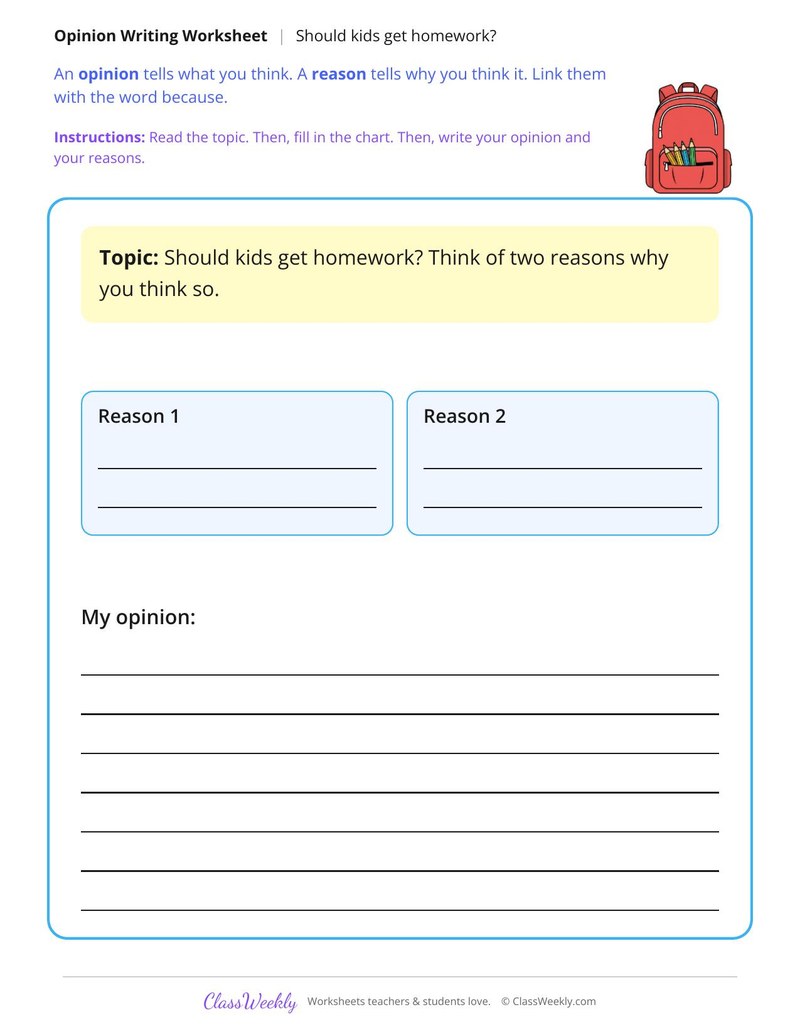
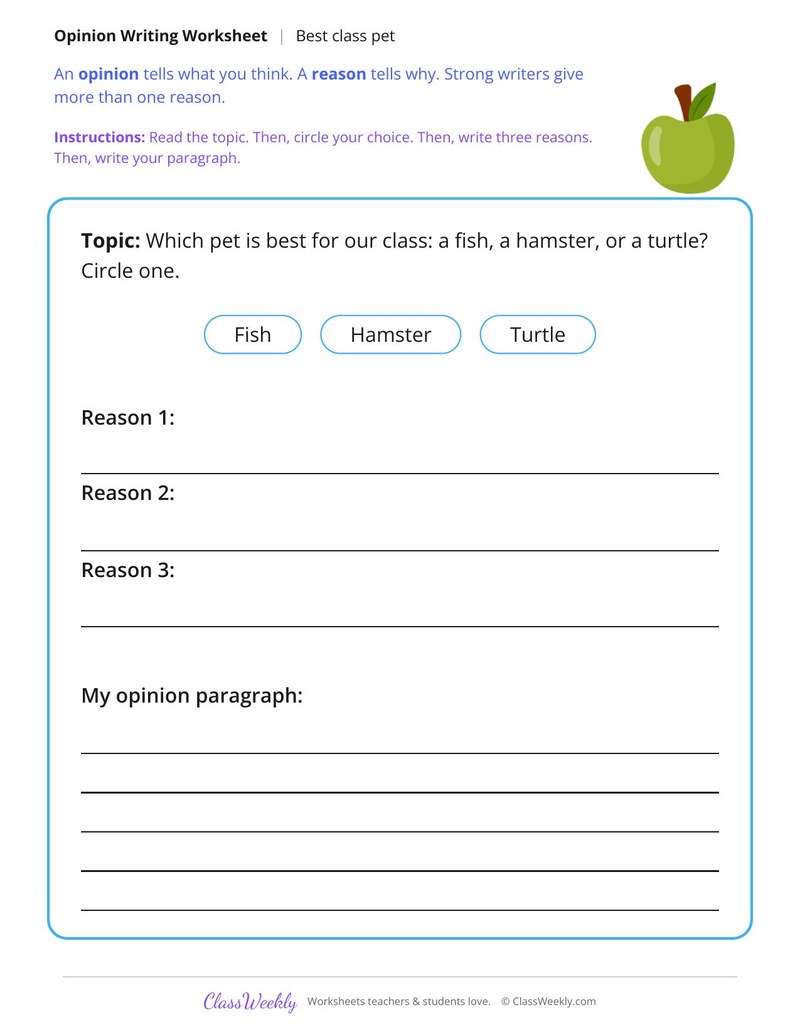
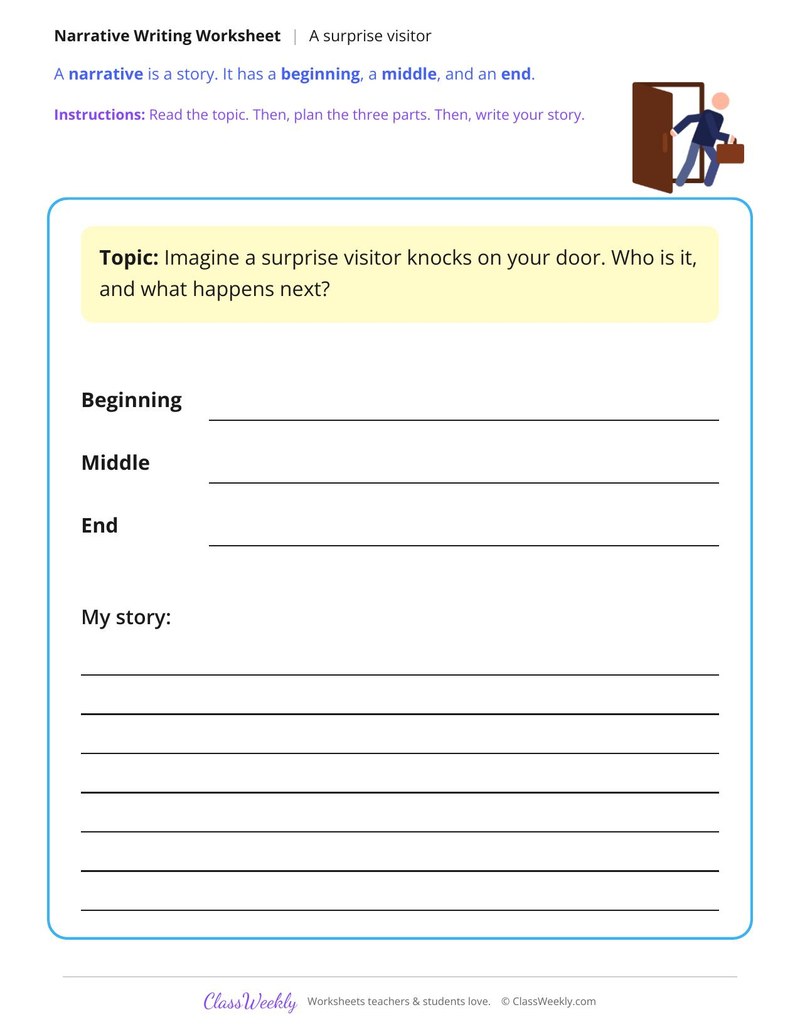
Good topics give a clear subject and a reason to write: an opinion on the best class pet, a story about a surprise visitor, facts about how something works, or a letter to a friend. Each sheet pairs one topic with a plan and lines, so the idea becomes finished writing.
How do you write the greeting and closing of a friendly letter?
⌄
Each word in a greeting starts with a capital, as in Dear Uncle Leo, and the greeting ends with a comma. In a closing, only the first word gets a capital, as in Your friend, and it ends with a comma too. Several sheets have children fix, sort and write greetings and closings.
How can I help my child plan a piece of writing?
⌄
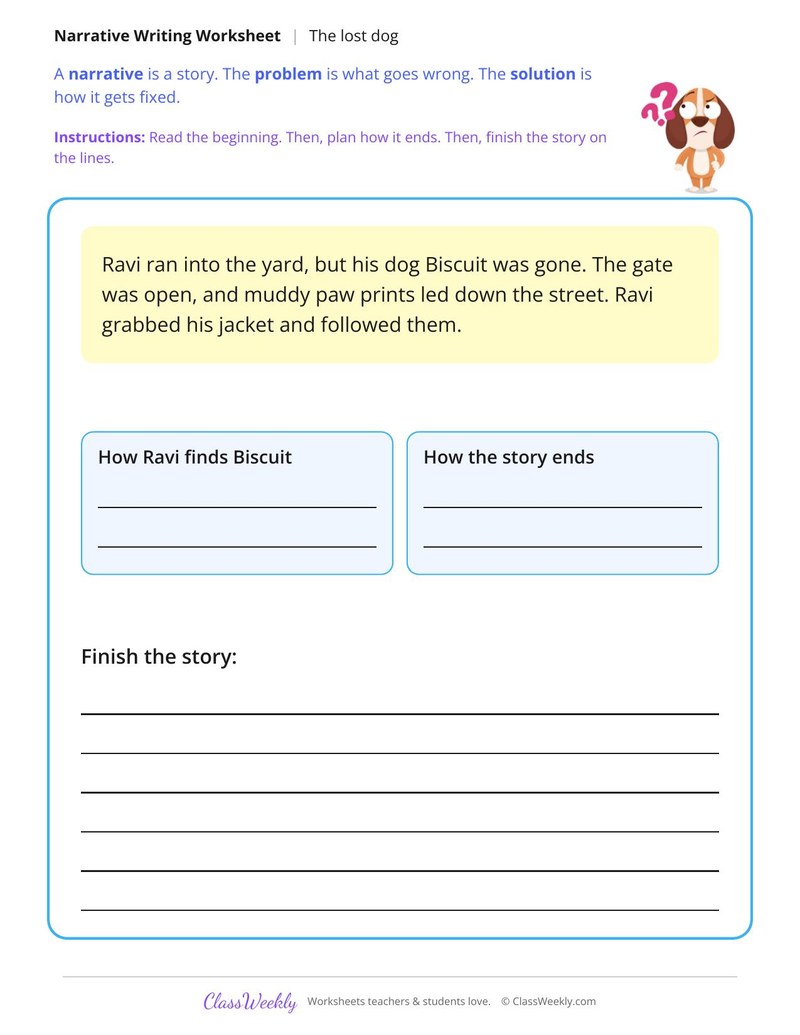
Talk about the topic first and jot two or three ideas on the plan boxes before writing on the lines. Reading the finished piece aloud helps your child hear missing words and fix them.
Do the writing topics worksheets have answer keys?
⌄
Some do, like the greeting and closing fix it pages. Open writing pages have no answer key because every child's piece is different.
Ratings & Reviews
No reviews yet. Be the first to share what you think.
Reviews are for ClassWeekly members.
Make a Request
Spotted something to fix, or want a worksheet we don't have yet? Tell us and we'll make it.
Worksheet Details
| Grade | 3rd Grade |
| Subject | Grammar & Writing |
| Topic | Writing Topics |
| Standard | L.3.5.A |
| Pages | 1 page |
| Difficulty | Medium |
Learn More
What is ClassWeekly?
ClassWeekly offers free worksheets and printable learning resources for kids, from preschool up. All worksheets are aligned to Common Core, NGSS, and C3 Framework standards and designed by educators. We also have free online learning games for thousands of skills, and kids' answers turn into a progress report for the grown-up. Start a free 30-day trial to download the worksheets.