Reading Comprehension
Written by Adi Ackerman, Head Teacher
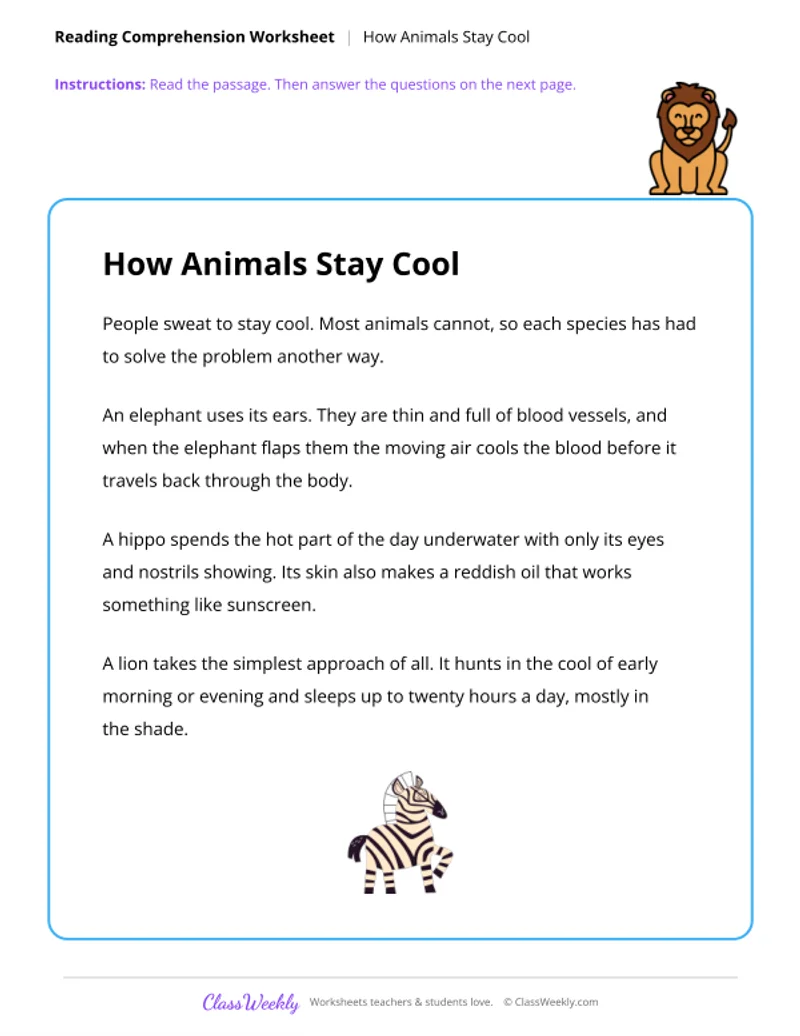
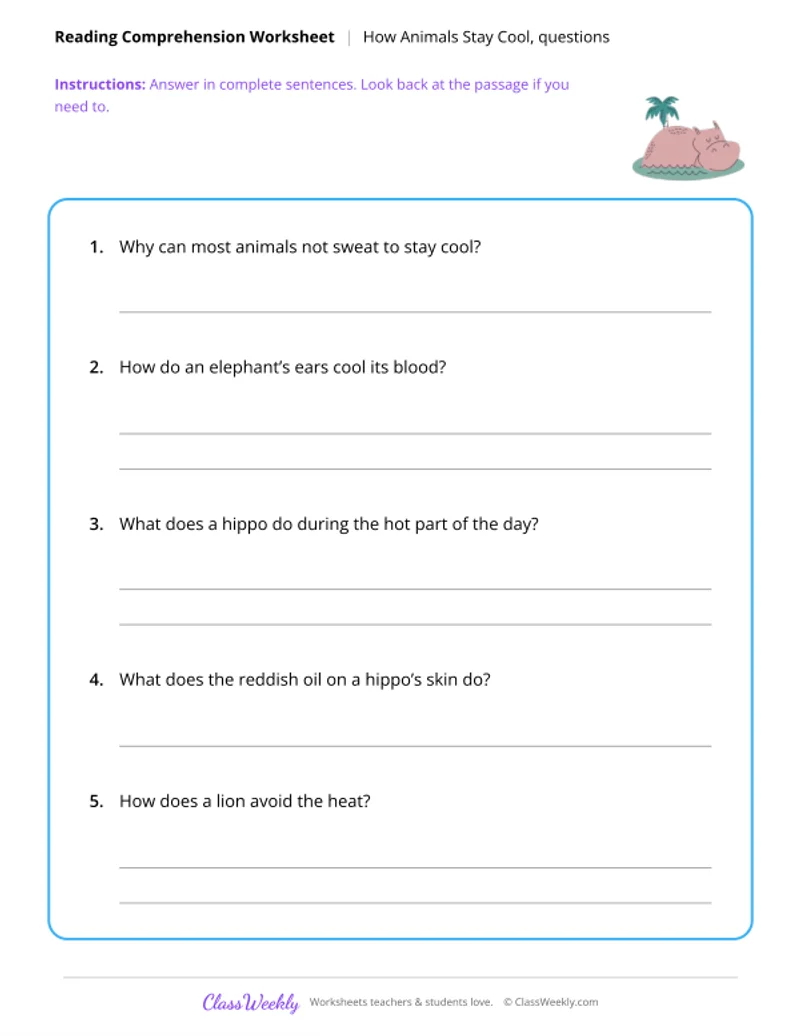
"Reading Comprehension - How Animals Stay Cool" is written for 3rd Grade (Ages 8-9), and it covers Common Core RI.3.1. If your little one is a year younger but already steady on paragraphs & passages, the page still works. You may just need to read the instructions out loud. And if they are older and reading comprehension: nonfiction never quite stuck, this is a short review rather than busywork.
2 pages in this set
Read a nonfiction passage comparing how elephants, hippos, and lions beat the heat, then answer five questions. Part of our reading comprehension: nonfiction paragraphs & passages collection. Aligned to Common Core standards.
How do I use this worksheet?
Begin with a shared reading or oral warm-up that highlights reading comprehension: nonfiction so students hear and see the skill in context before practicing it independently. Have students work through it independently, using a partner or small group only if they want to talk through their thinking, especially for phonics-based tasks where saying an answer aloud first helps. After completing the worksheet, use one or two examples from the page to start a discussion: "Where else have you seen this in your reading?" These reading comprehension: nonfiction worksheets are ideal for use during small group reading time, as independent center work, or as a homework activity.
What students will practice
- Students will identify and apply reading comprehension: nonfiction knowledge to decode and comprehend grade-level text.
- Students will recognize patterns and rules related to reading comprehension: nonfiction in spoken and written language.
- Students will build fluency and confidence with reading comprehension: nonfiction through guided and independent practice.


Curriculum Links
Common Core State Standards
Reading: Informational Text · 3rd Grade
Standard: Ask and answer questions to demonstrate understanding of a text, referring explicitly to the text as the basis for the answers.
View all RI.3.1 worksheets →Find this in the curriculum
Browse the grade, subject, and topic this belongs to.
FAQ
How do I use this reading comprehension: nonfiction worksheet?
⌄
Begin with a shared reading or oral warm-up that highlights reading comprehension: nonfiction so students hear and see the skill in context before practicing it independently. Have students work through it independently, using a partner or small group only if they want to talk through their thinking, especially for phonics-based tasks where saying an answer aloud first helps. After completing the worksheet, use one or two examples from the page to start a discussion: "Where else have you seen this in your reading?" These reading comprehension: nonfiction worksheets are ideal for use during small group reading time, as independent center work, or as a homework activity.
What does this worksheet teach?
⌄
These reading comprehension: nonfiction worksheets for 3rd grade give students focused practice with one of the key skills in early literacy. Students read, identify, and respond to reading comprehension: nonfiction through a variety of activities designed for their grade level. Our paragraphs passages worksheets build both decoding skills and reading comprehension, helping students connect what they practice on paper to the books they read every day. Regular practice with reading comprehension: nonfiction strengthens the reading skills that 3rd grade students need to become confident, independent readers.
Can I use this reading comprehension: nonfiction worksheet for homeschool or classroom?
⌄
Yes, both. We made it for 3rd Grade paragraphs & passages, and the page works the same whether it lands on a kitchen table or a center rotation. At home, most families go through it together and talk the answers out loud, and that talking is where most of the learning happens with reading comprehension: nonfiction. In class it runs well as independent work while you pull a small group. Print one copy or thirty, whichever the day needs.
What is a heading in a nonfiction article?
⌄
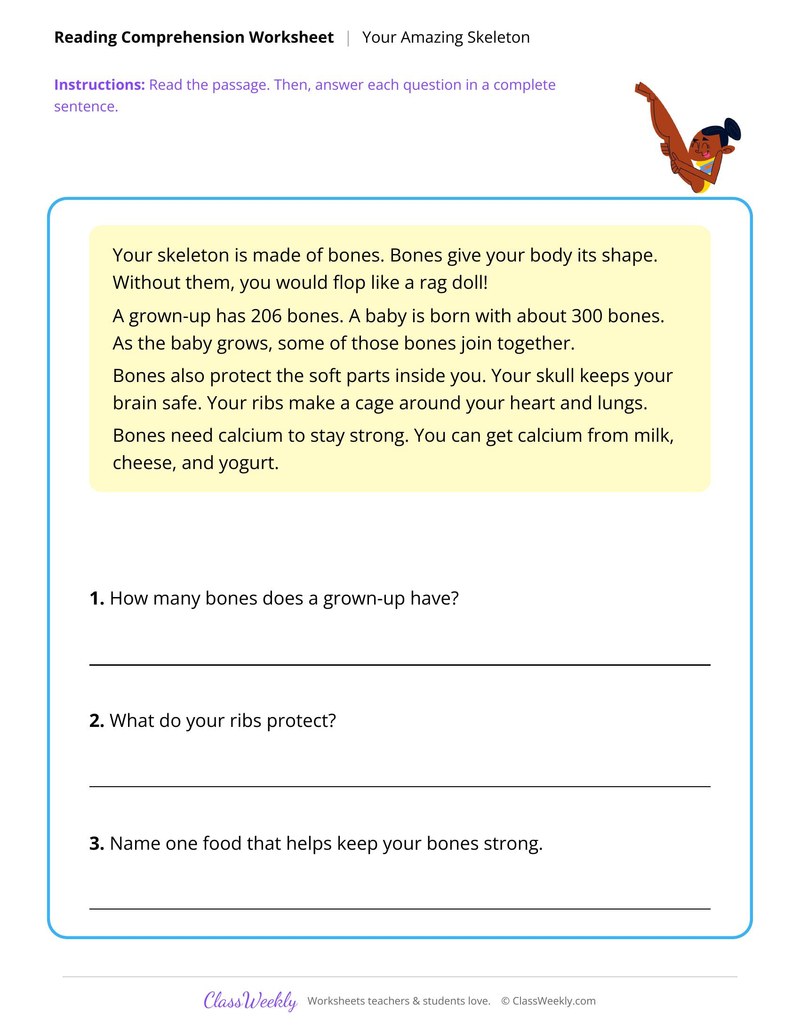
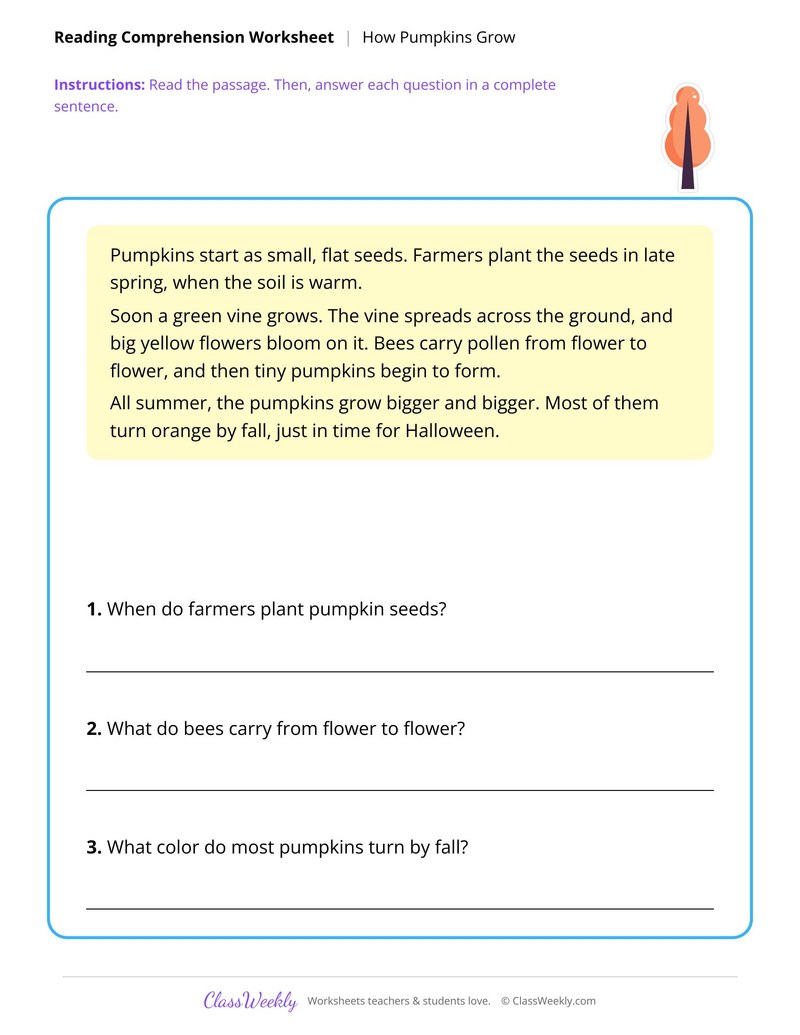
A heading is a short title over one part of an article that tells what that part is about. In Read About Sea Otters and Their Tools, the headings Thick Fur, Using Tools and Floating Together help children find where each fact is.
How do I help my child find the main idea?
⌄
Ask what the whole article is mostly about, not one part. The wrong choices on question 1 tell a small detail or something the article never says, like Bats sleep in warm caves all winter long.
How is this different from the Nonfiction passages page?
⌄
Nonfiction passages holds 64 longer leveled articles with a mix of skills. These 20 sheets focus on headings, main idea and key details, and on reading charts and a timeline.
Is there an answer key for each worksheet?
⌄
Yes. All 20 sheets have an answer key, with model answers for the written questions.
Ratings & Reviews
No reviews yet. Be the first to share what you think.
Reviews are for ClassWeekly members.
Make a Request
Spotted something to fix, or want a worksheet we don't have yet? Tell us and we'll make it.
Worksheet Details
| Grade | 3rd Grade |
| Subject | Reading |
| Topic | Paragraphs & Passages |
| Standard | RI.3.1 |
| Pages | 2 pages |
| Difficulty | Medium |
Learn More
What is ClassWeekly?
ClassWeekly offers free worksheets and printable learning resources for kids, from preschool up. All worksheets are aligned to Common Core, NGSS, and C3 Framework standards and designed by educators. We also have free online learning games for thousands of skills, and kids' answers turn into a progress report for the grown-up. Start a free 30-day trial to download the worksheets.