The water cycle
Written by Adi Ackerman, Head Teacher
"The water cycle" is written for 4th Grade (Ages 9-10), and it covers NGSS 4-ESS2-1. If your little one is a year younger but already steady on Earth science, the page still works. You may just need to read the instructions out loud. And if they are older and the water cycle never quite stuck, this is a short review rather than busywork.
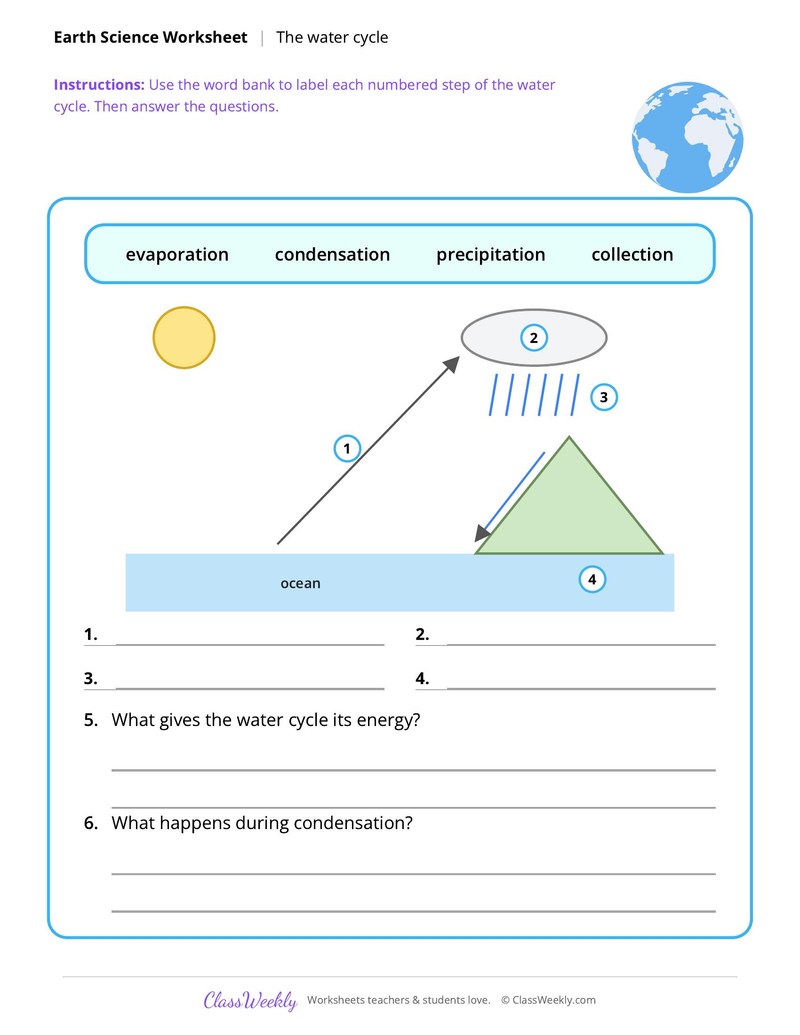
Free printable 4th grade science worksheet on the water cycle. Answer key included. Aligned to 4-ESS2-1. Part of our water cycle earth science collection.
How do I use this worksheet?
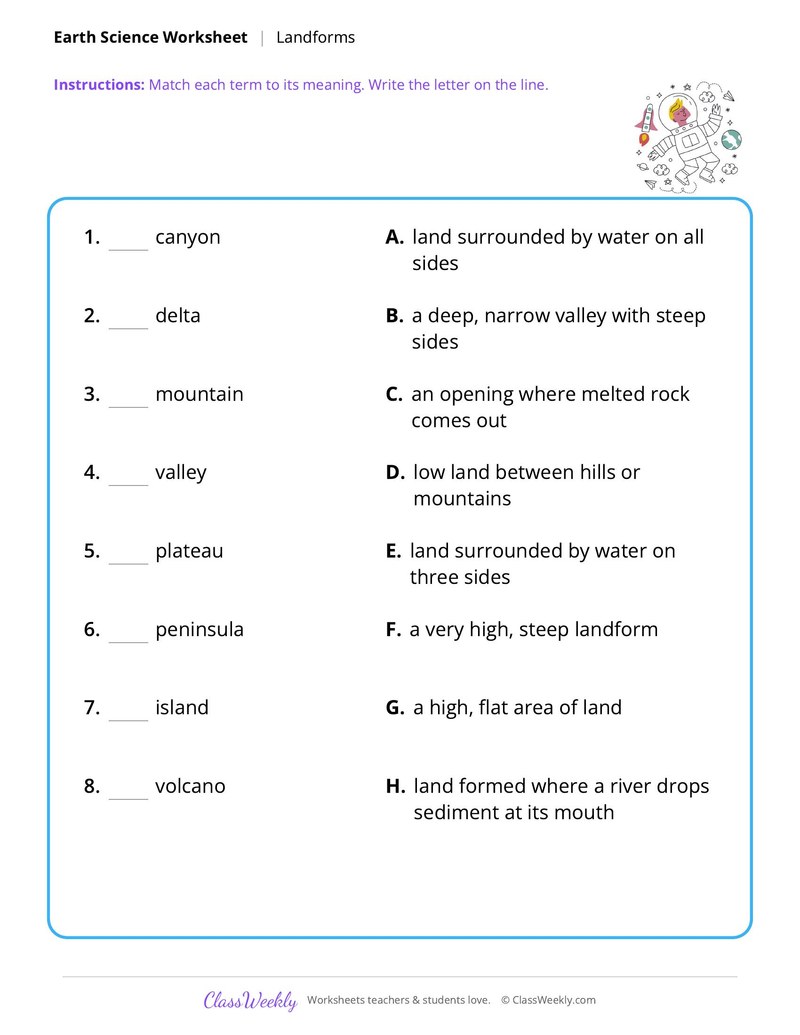
Start with something students can look at or think about: a photo, a short video, a jar on the windowsill, or a question like "what do you already know about the water cycle?" Then let them work through it independently, since students at this age benefit more from productive struggle than from being walked through each step, keeping a word bank or anchor chart in view so the vocabulary stays available. When you review, ask students how they knew, and let them point to the part of the diagram or reading that told them. These the water cycle worksheets work well as a lead in before an investigation, as a way to capture what students noticed afterward, or as review before an assessment.
What students will practice
- Students will observe and describe the water cycle using accurate science vocabulary.
- Students will gather evidence about the water cycle from diagrams, readings, data, and their own investigations.
- Students will use what they learn about the water cycle to explain what they see and answer questions about the world around them.
Curriculum Links
Next Generation Science Standards
Science · 4th Grade
Find this in the curriculum
Browse the grade, subject, and topic this belongs to.
FAQ
How do I use this water cycle worksheet?
⌄
Start with something students can look at or think about: a photo, a short video, a jar on the windowsill, or a question like "what do you already know about the water cycle?" Then let them work through it independently, since students at this age benefit more from productive struggle than from being walked through each step, keeping a word bank or anchor chart in view so the vocabulary stays available. When you review, ask students how they knew, and let them point to the part of the diagram or reading that told them. These the water cycle worksheets work well as a lead in before an investigation, as a way to capture what students noticed afterward, or as review before an assessment.
What does this worksheet teach?
⌄
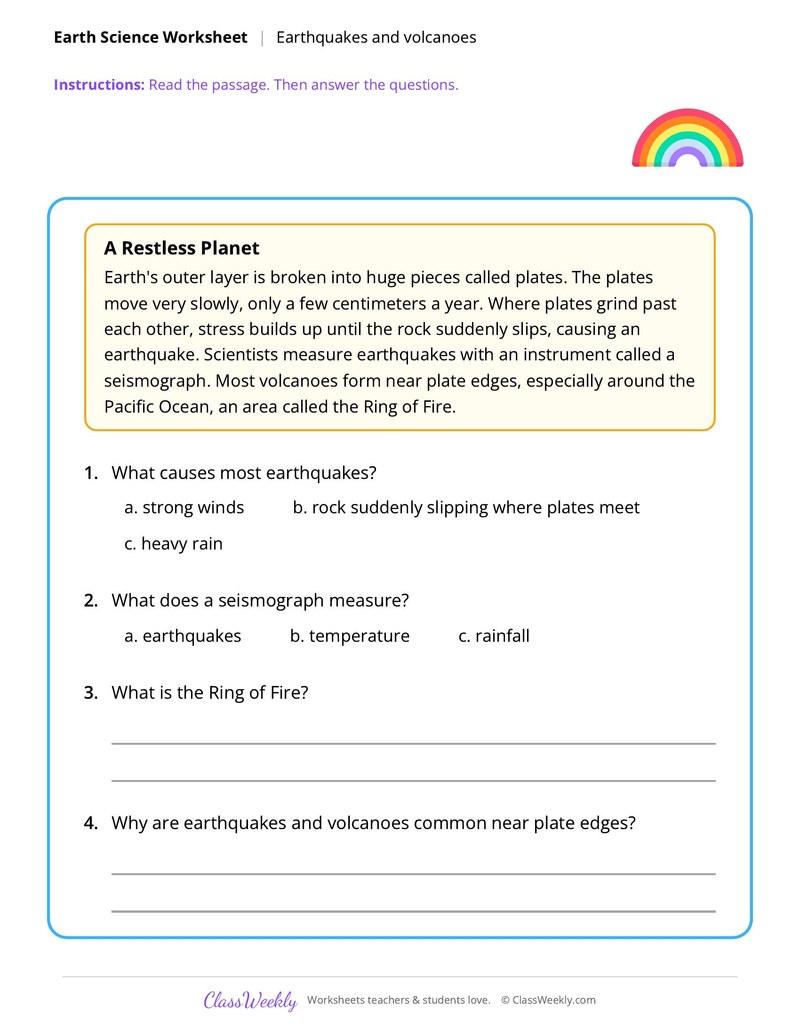
These the water cycle worksheets for 4th grade give students a clear, visual way to work through one of the big ideas in earth science. Students label diagrams, sort and classify examples, read short explanations, and answer questions that ask them to say why, not just what. Each page keeps the science vocabulary front and center so students leave with the words they need to talk about the water cycle accurately. Working through the water cycle on paper gives 4th grade students something concrete to hold onto before, during, or after the hands on part of a lesson.
Can I use this water cycle worksheet for homeschool or classroom?
⌄
Yes, both. We made it for 4th Grade Earth science, and the page works the same whether it lands on a kitchen table or a center rotation. At home, most families go through it together and talk the answers out loud, and that talking is where most of the learning happens with the water cycle. In class it runs well as independent work while you pull a small group. Print one copy or thirty, whichever the day needs.
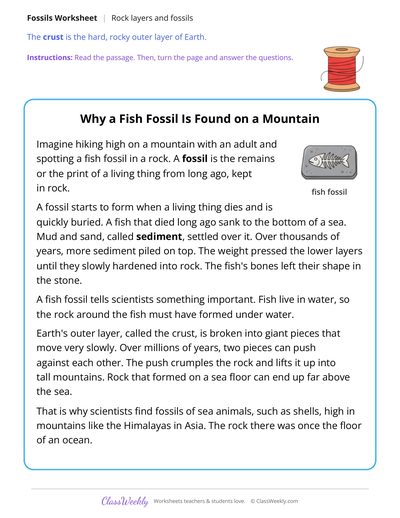
What is a fossil?
⌄
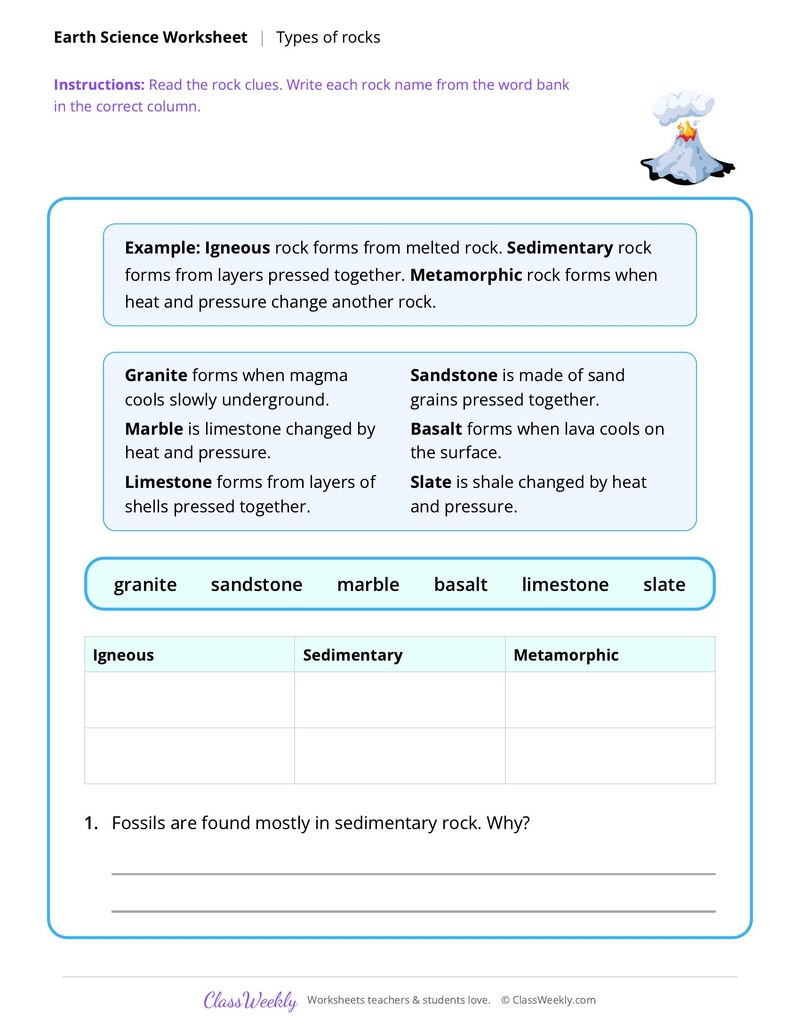
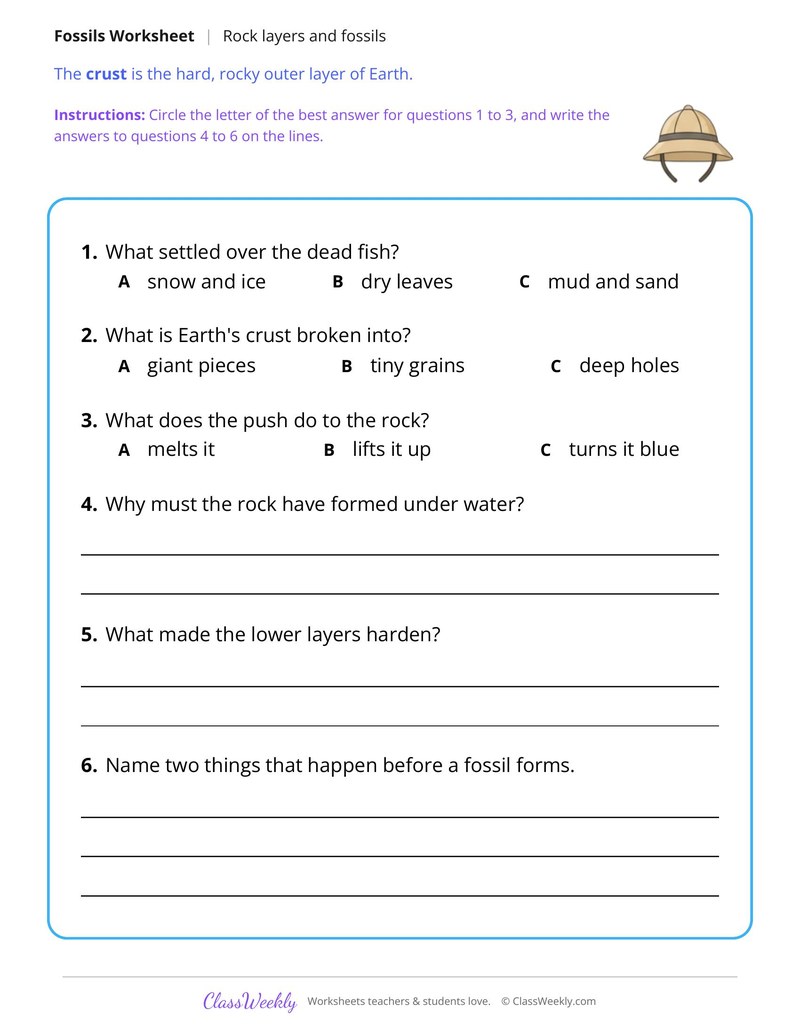
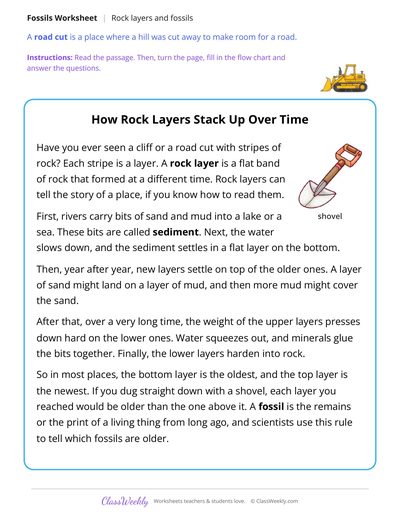
A fossil is the remains or the print of a living thing from long ago, kept in rock. It starts to form when a living thing dies and is quickly buried in mud or sand, which slowly hardens into rock. Tracks, like dinosaur footprints, are fossils too.
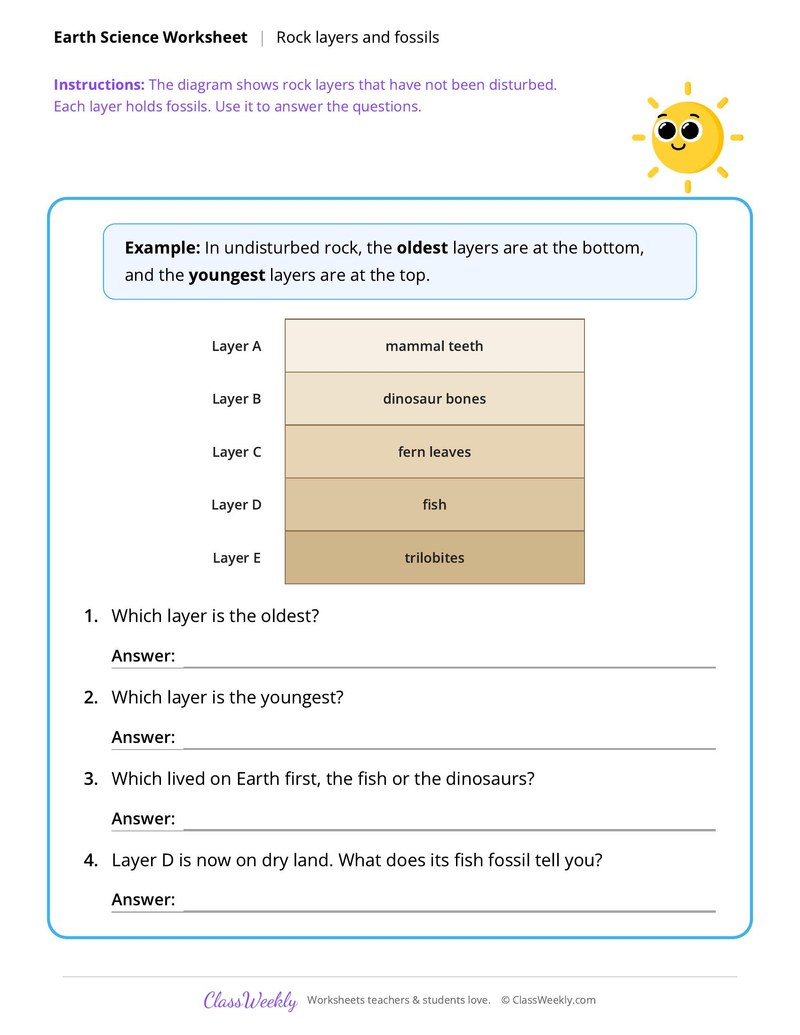
Which rock layer is the oldest?
⌄
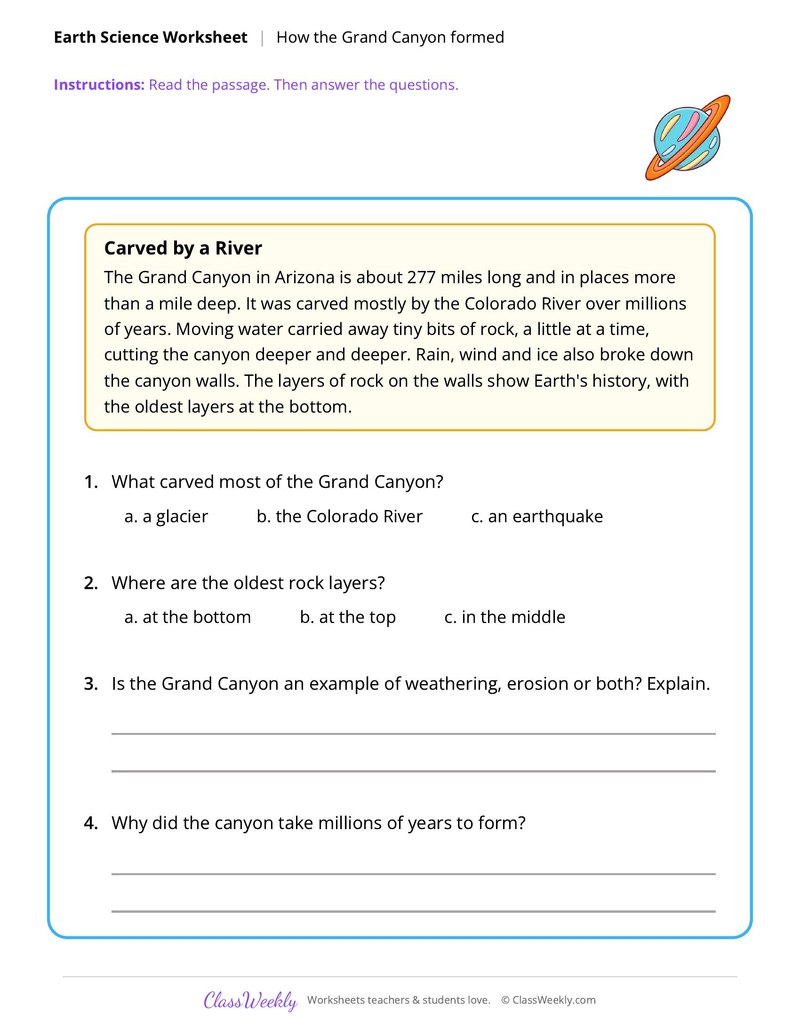
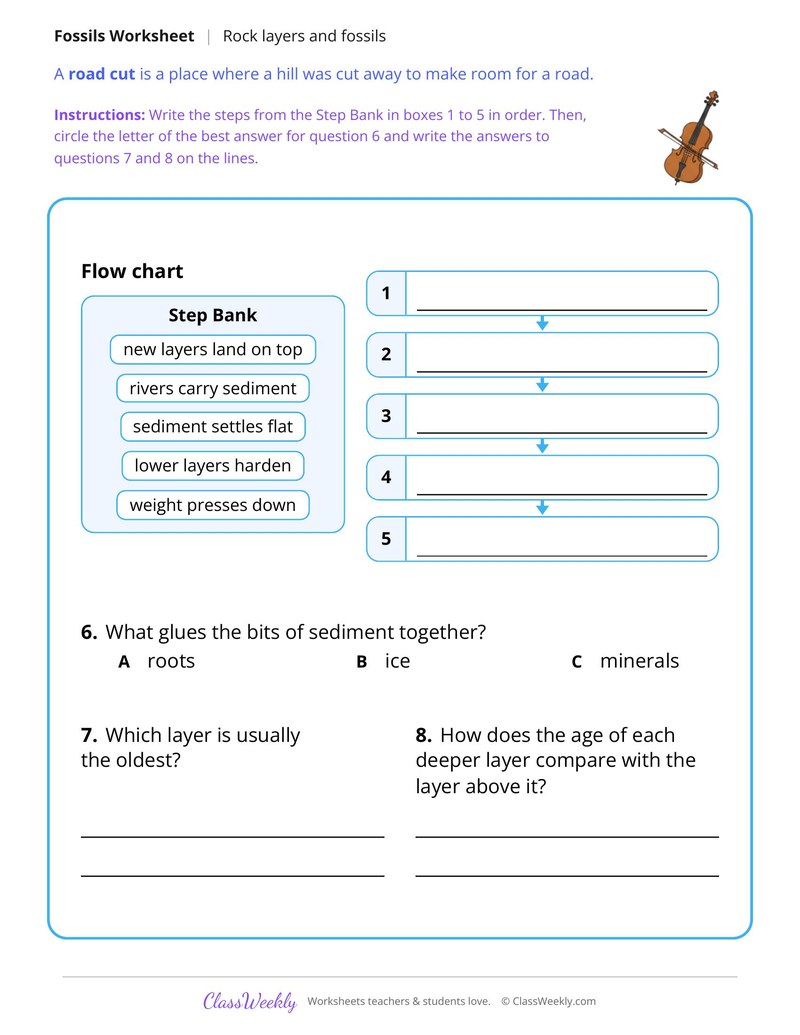
In most places, the bottom layer is the oldest and the top layer is the newest, because each new layer of sediment settles on top of the older ones. Scientists use this rule to tell which fossils are older.
How do fossils show that a place has changed?
⌄
Fossils of sea life, like clams, shells or fish, show that water once covered a place. Fossils of land life, like an oak leaf or a fern, show it was dry land. A fish fossil on a mountain or palm leaves in Wyoming show that the land or the climate changed over millions of years (4-ESS1-1).
Is there an answer key for each worksheet?
⌄
Yes. All 16 earth science sheets have an answer key. The 8 newer rock layers and fossils sheets give sample answers and say what else to accept.
Ratings & Reviews
No reviews yet. Be the first to share what you think.
Reviews are for ClassWeekly members.
Make a Request
Spotted something to fix, or want a worksheet we don't have yet? Tell us and we'll make it.
Worksheet Details
| Grade | 4th Grade |
| Subject | Science |
| Topic | Earth Science |
| Standard | 4-ESS2-1 |
| Pages | 1 page |
| Difficulty | Medium |
What is ClassWeekly?
ClassWeekly offers free worksheets and printable learning resources for kids, from preschool up. All worksheets are aligned to Common Core, NGSS, and C3 Framework standards and designed by educators. We also have free online learning games for thousands of skills, and kids' answers turn into a progress report for the grown-up. Start a free 30-day trial to download the worksheets.