How Lava Builds an Island Order the Steps
Written by Adi Ackerman, Head Teacher
"How Lava Builds an Island Order the Steps" is written for 3rd Grade (Ages 8-9). If your little one is a year younger but already steady on Earth science, the page still works. You may just need to read the instructions out loud. And if they are older and volcanoes and earthquakes never quite stuck, this is a short review rather than busywork.
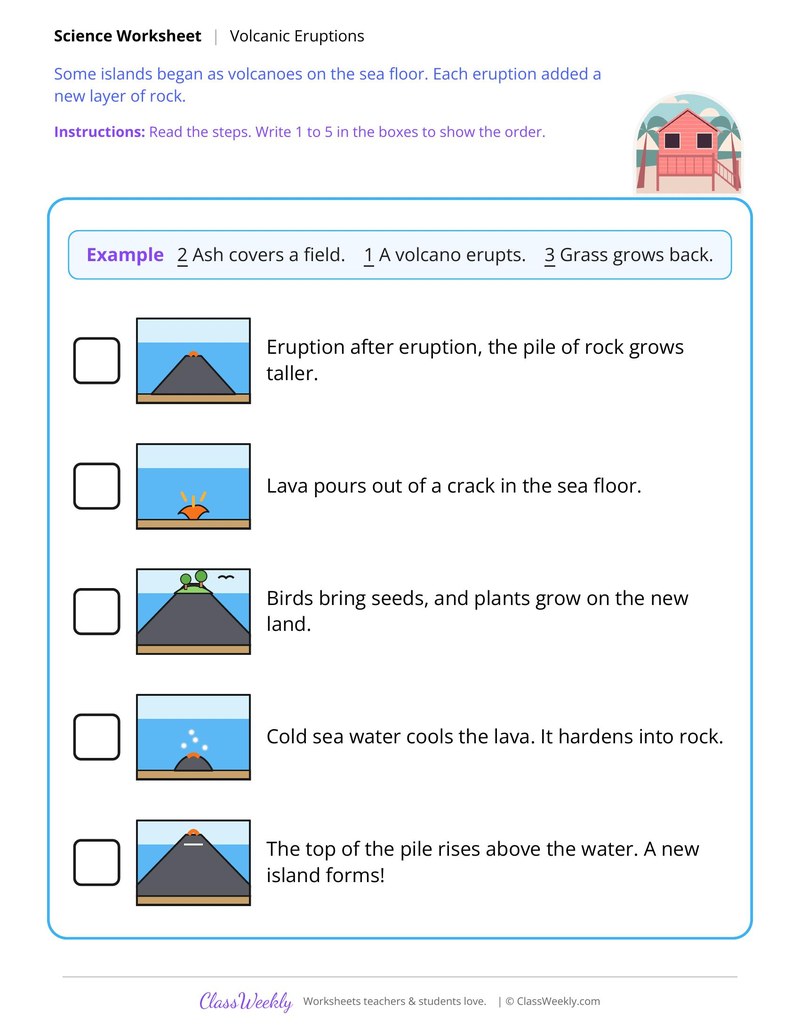
3rd grade science worksheet: number 5 steps of how lava from a crack in the sea floor piles up into an island. Answer key included. Part of our volcanoes and earthquakes earth science collection.
How do I use this worksheet?
Start with something students can look at or think about: a photo, a short video, a jar on the windowsill, or a question like "what do you already know about volcanoes and earthquakes?" Then let them work through it independently, using a partner or small group only if they want to talk through their thinking, keeping a word bank or anchor chart in view so the vocabulary stays available. When you review, ask students how they knew, and let them point to the part of the diagram or reading that told them. These volcanoes and earthquakes worksheets work well as a lead in before an investigation, as a way to capture what students noticed afterward, or as review before an assessment.
What students will practice
- Students will learn that some islands began as volcanoes on the sea floor.
- Students will order 5 steps from 1 to 5.
- Students will tell how lava cools and hardens into rock.
Curriculum Links
Find this in the curriculum
Browse the grade, subject, and topic this belongs to.
FAQ
How do I use this volcanoes and earthquakes worksheet?
⌄
Start with something students can look at or think about: a photo, a short video, a jar on the windowsill, or a question like "what do you already know about volcanoes and earthquakes?" Then let them work through it independently, using a partner or small group only if they want to talk through their thinking, keeping a word bank or anchor chart in view so the vocabulary stays available. When you review, ask students how they knew, and let them point to the part of the diagram or reading that told them. These volcanoes and earthquakes worksheets work well as a lead in before an investigation, as a way to capture what students noticed afterward, or as review before an assessment.
What does this worksheet teach?
⌄
Number 5 steps of how lava from a crack in the sea floor piles up into an island. The directions on the page read: Read the steps. Write 1 to 5 in the boxes to show the order. The page opens with a worked example, and an answer key is included.
Can I use this volcanoes and earthquakes worksheet for homeschool or classroom?
⌄
Yes, both. We made it for 3rd Grade Earth science, and the page works the same whether it lands on a kitchen table or a center rotation. At home, most families go through it together and talk the answers out loud, and that talking is where most of the learning happens with volcanoes and earthquakes. In class it runs well as independent work while you pull a small group. Print one copy or thirty, whichever the day needs.
What does volcanoes and earthquakes teach third graders?
⌄
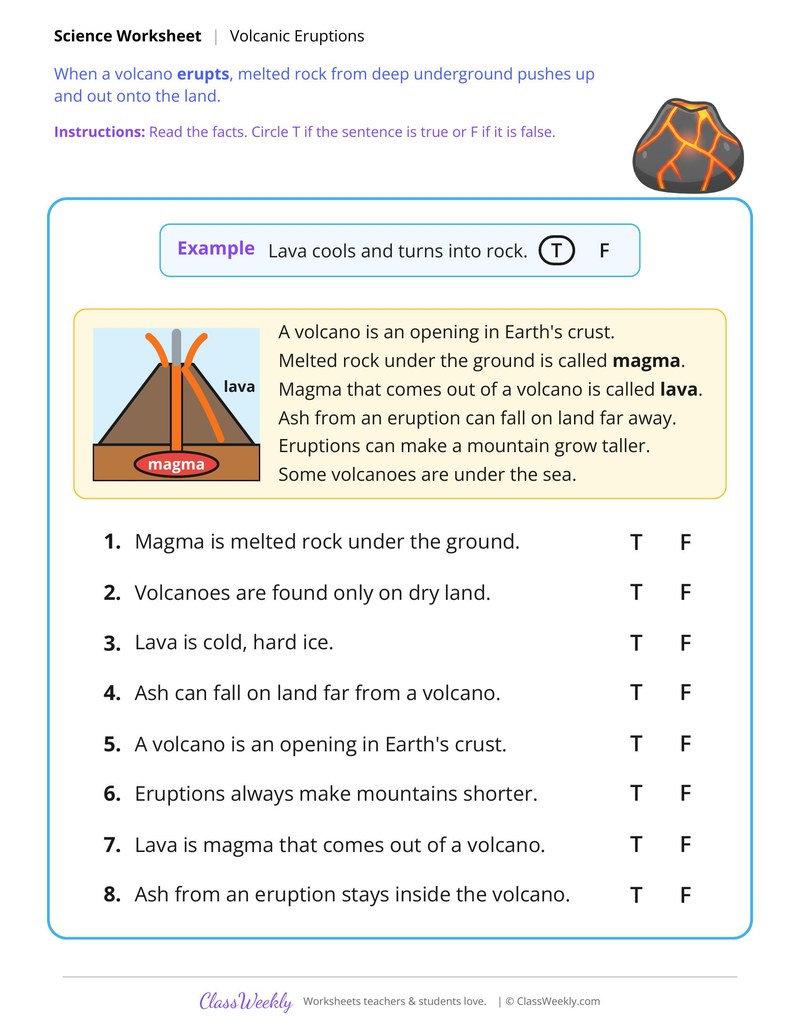
This topic teaches students that Earth is a dynamic planet with internal heat and moving plates that can cause volcanic eruptions and earthquakes. Third graders learn the basic causes of each event, explore vocabulary like magma, lava, fault, and seismic wave, and discuss how these events affect people and landscapes. It makes the abstract idea of a restless Earth concrete and memorable.
When do third graders learn about volcanoes and earthquakes?
⌄
Volcanoes and earthquakes are typically covered in Grade 3 earth science as part of a unit on Earth's dynamic processes, often alongside layers of the earth and erosion. At ages 8-9, students are naturally captivated by these dramatic events, making it one of the most eagerly anticipated units of the year. The topic also connects to engineering design discussions about how buildings are made safer.
How can I use these worksheets at home?
⌄
Watch a short video clip of a volcanic eruption or earthquake and ask your child to explain what's happening using the vocabulary from their worksheets. The diagram labeling and cause-and-effect activities are great for independent practice, while the vocabulary sections benefit from a quick review with a parent first. Many third graders are motivated to go deeper on this topic, this is a great moment to visit the library for books on natural disasters.
What earth science do 3rd graders learn?
⌄
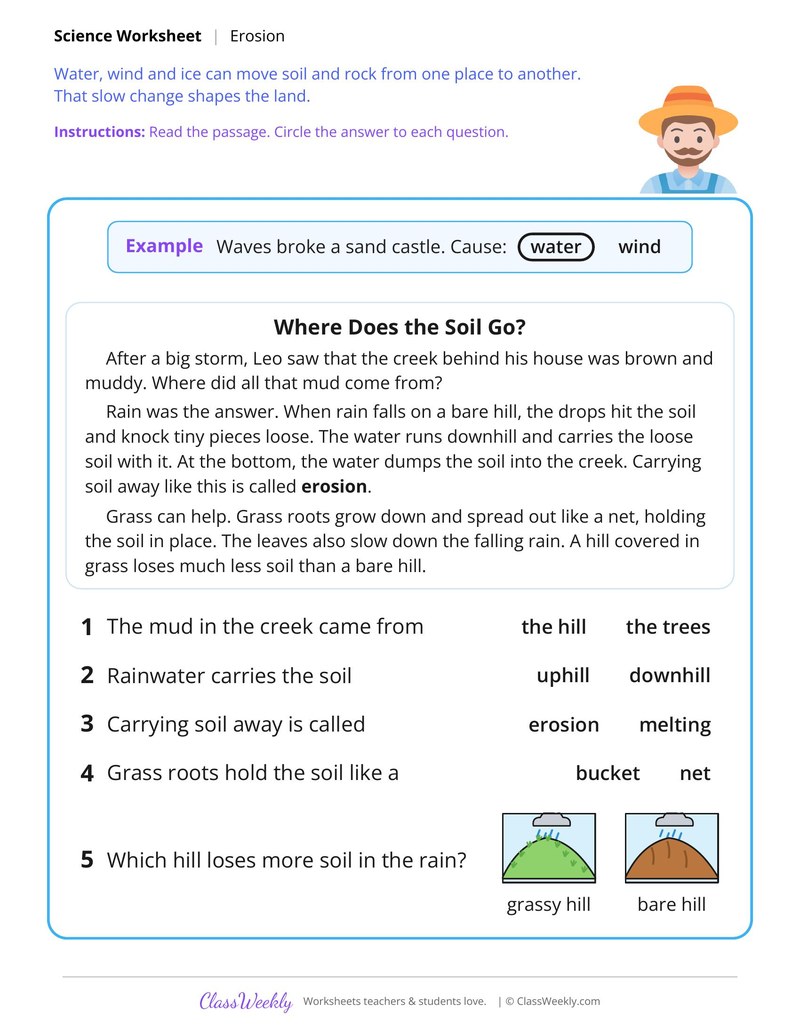
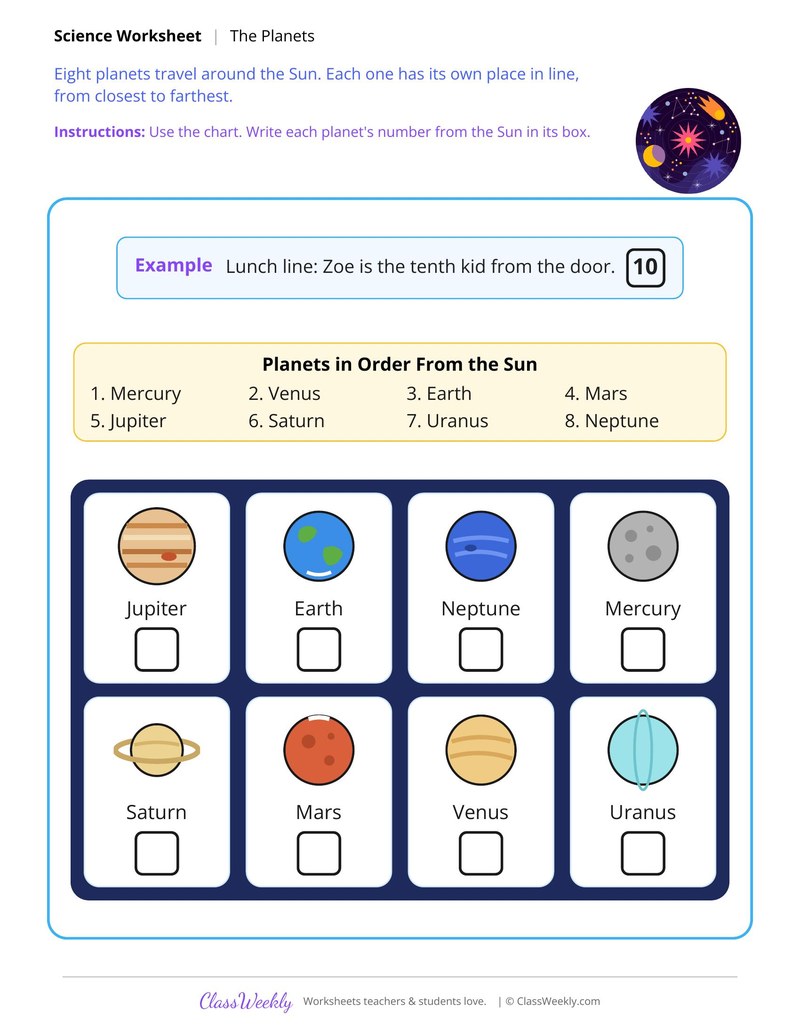
3rd grade earth science covers what Earth is made of and how it changes. Children observe rocks and minerals, sort rocks into igneous, sedimentary and metamorphic, and name bodies of water and landforms. They also study fast changes like earthquakes and slow changes like erosion, and learn the order of the planets from the Sun.
How do kids identify rocks and minerals?
⌄
They compare properties such as color, shape, texture, luster, streak and hardness. On these sheets children read a streak color chart, rank minerals with a scratch test and match mystery samples to clues like fizzing with vinegar.
What is the difference between a fast and a slow change to Earth's surface?
⌄
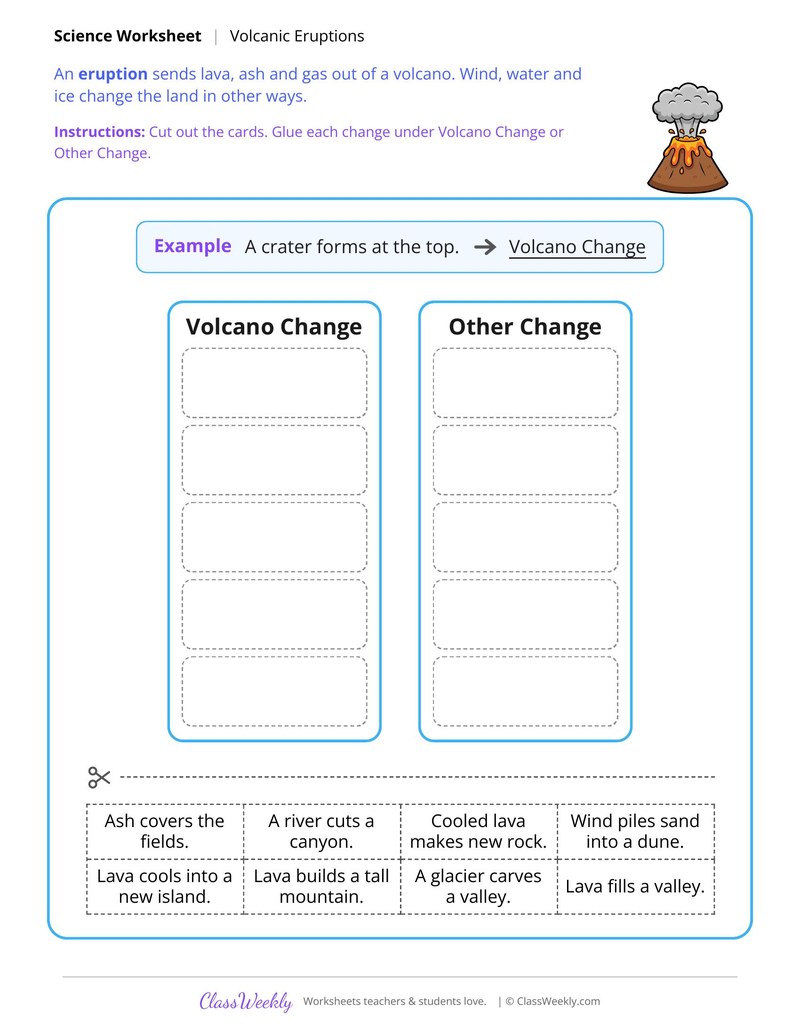
A fast change, like an earthquake, a landslide or a flood, happens in minutes or days. A slow change, like a river carving a canyon or tree roots cracking rock, takes many years. Children sort cards, color cards and read passages to tell the two apart.
Do these earth science worksheets have answer keys?
⌄
Yes, every sheet in this topic has an answer key. Each page also opens with a worked example, so children can see one item done before they start.
Ratings & Reviews
No reviews yet. Be the first to share what you think.
Reviews are for ClassWeekly members.
Make a Request
Spotted something to fix, or want a worksheet we don't have yet? Tell us and we'll make it.
Worksheet Details
| Grade | 3rd Grade |
| Subject | Science |
| Topic | Earth Science |
| Pages | 1 page |
| Difficulty | Medium |
What is ClassWeekly?
ClassWeekly offers free worksheets and printable learning resources for kids, from preschool up. All worksheets are aligned to Common Core, NGSS, and C3 Framework standards and designed by educators. We also have free online learning games for thousands of skills, and kids' answers turn into a progress report for the grown-up. Start a free 30-day trial to download the worksheets.