A Town by the River Read and Answer
Written by Adi Ackerman, Head Teacher
"A Town by the River Read and Answer" is written for 3rd Grade (Ages 8-9). If your little one is a year younger but already steady on the environment, the page still works. You may just need to read the instructions out loud. And if they are older and natural resources never quite stuck, this is a short review rather than busywork.
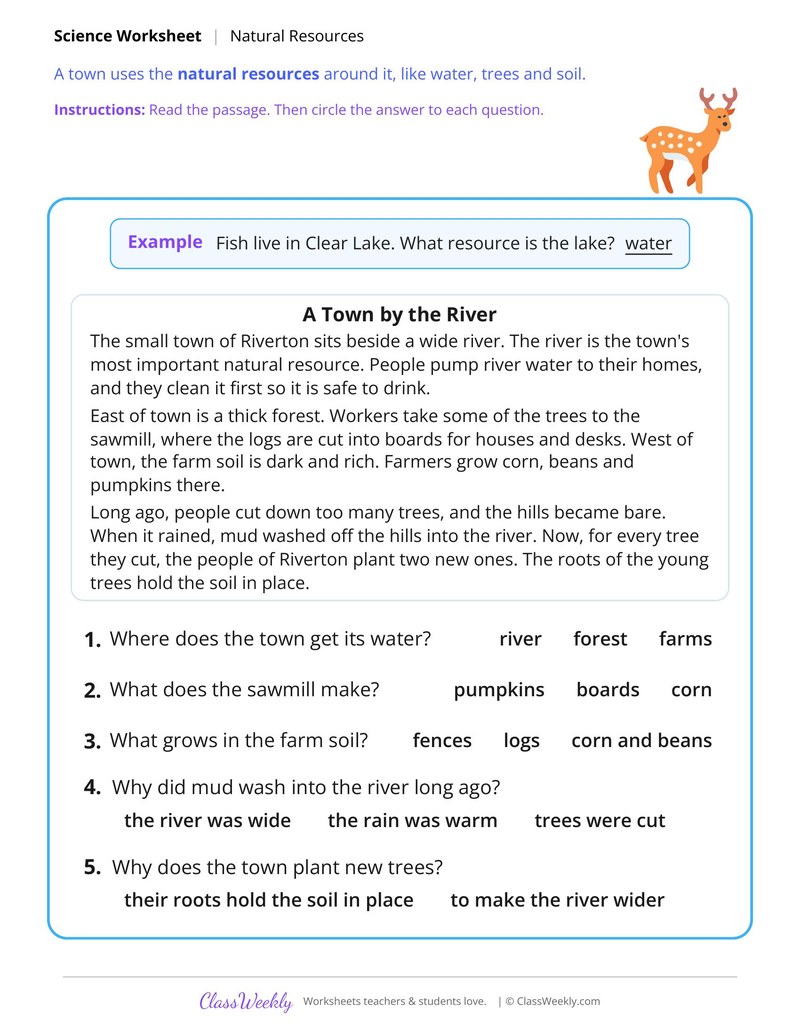
3rd grade science worksheet: read about Riverton, a town that uses its river, forest and farm soil, and circle each answer. Answer key included. Part of our natural resources environment collection.
How do I use this worksheet?
Start with something students can look at or think about: a photo, a short video, a jar on the windowsill, or a question like "what do you already know about natural resources?" Then let them work through it independently, using a partner or small group only if they want to talk through their thinking, keeping a word bank or anchor chart in view so the vocabulary stays available. When you review, ask students how they knew, and let them point to the part of the diagram or reading that told them. These natural resources worksheets work well as a lead in before an investigation, as a way to capture what students noticed afterward, or as review before an assessment.
What students will practice
- Students will read a passage about a town by a river.
- Students will tell how the town uses water, trees and soil.
- Students will explain how planting trees holds soil in place.


Curriculum Links
Find this in the curriculum
Browse the grade, subject, and topic this belongs to.
FAQ
How do I use this natural resources worksheet?
⌄
Start with something students can look at or think about: a photo, a short video, a jar on the windowsill, or a question like "what do you already know about natural resources?" Then let them work through it independently, using a partner or small group only if they want to talk through their thinking, keeping a word bank or anchor chart in view so the vocabulary stays available. When you review, ask students how they knew, and let them point to the part of the diagram or reading that told them. These natural resources worksheets work well as a lead in before an investigation, as a way to capture what students noticed afterward, or as review before an assessment.
What does this worksheet teach?
⌄
Read about Riverton, a town that uses its river, forest and farm soil, and circle each answer. The directions on the page read: Read the passage. Then circle the answer to each question. The page opens with a worked example, and an answer key is included.
Can I use this natural resources worksheet for homeschool or classroom?
⌄
Yes, both. We made it for 3rd Grade the environment, and the page works the same whether it lands on a kitchen table or a center rotation. At home, most families go through it together and talk the answers out loud, and that talking is where most of the learning happens with natural resources. In class it runs well as independent work while you pull a small group. Print one copy or thirty, whichever the day needs.
What does natural resources teach third graders?
⌄
It teaches that everything people use starts as something taken from the Earth, whether that is wood from trees, cotton from a plant, or metal from rock. Third graders practise tracing familiar objects back to their source material. This is the groundwork for understanding conservation and why some resources run out.
When do third graders learn about natural resources?
⌄
Natural resources appear in the Grade 3 earth and environmental science unit, often just before conservation. At ages 8-9 children can handle the step from an object to the material it is made of, which is more abstract than it first sounds. It pairs well with lessons on recycling and reducing waste.
How can I use these worksheets at home?
⌄
Walk around one room and pick five objects, then ask your child what each one is made from and where that material came from. Kitchens work especially well. The worksheet gives them the pattern, and the walk around the house is what makes it stick.
What is a natural resource?
⌄
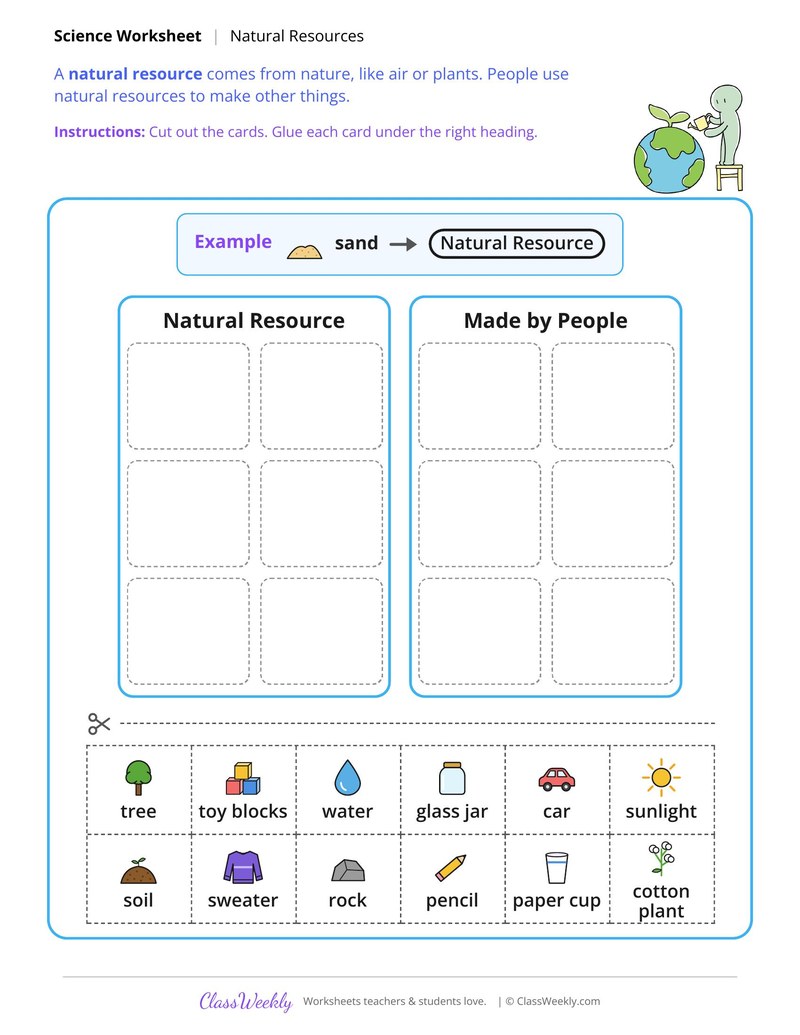
A natural resource is something from nature that people use, like water, soil, trees, rocks, air and sunlight. People did not make it. Children sort cards such as sunlight, a pencil and a cotton plant to tell natural resources from things people made.
How are coal and wind different as energy sources?
⌄
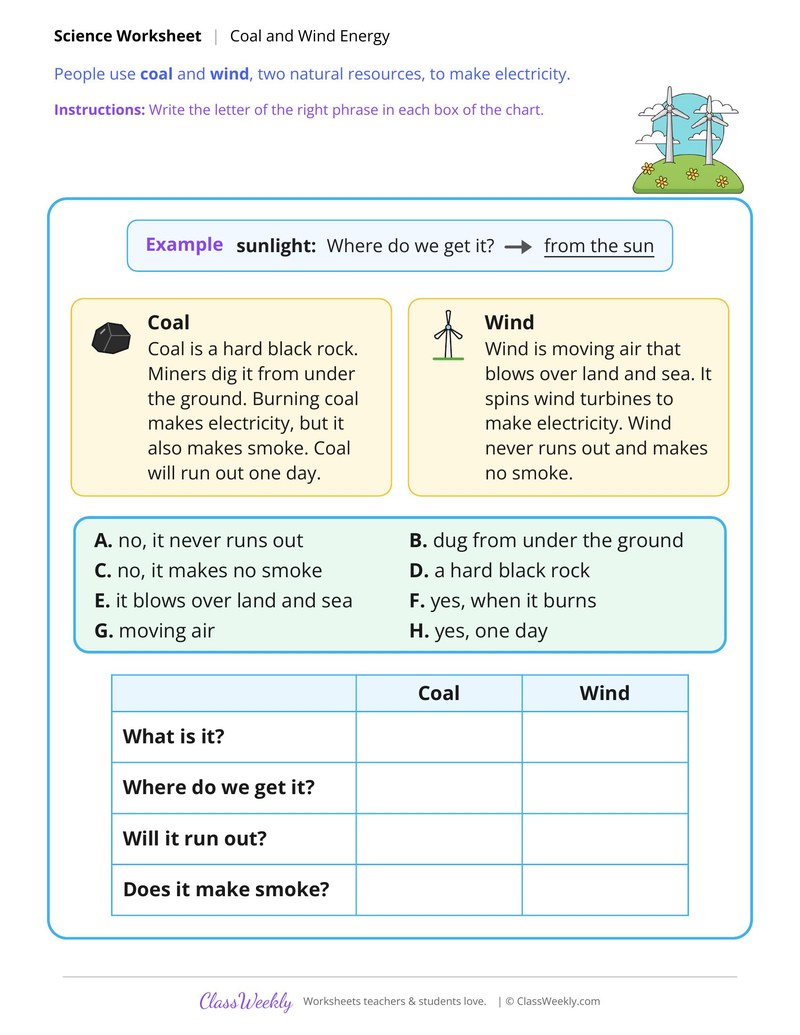
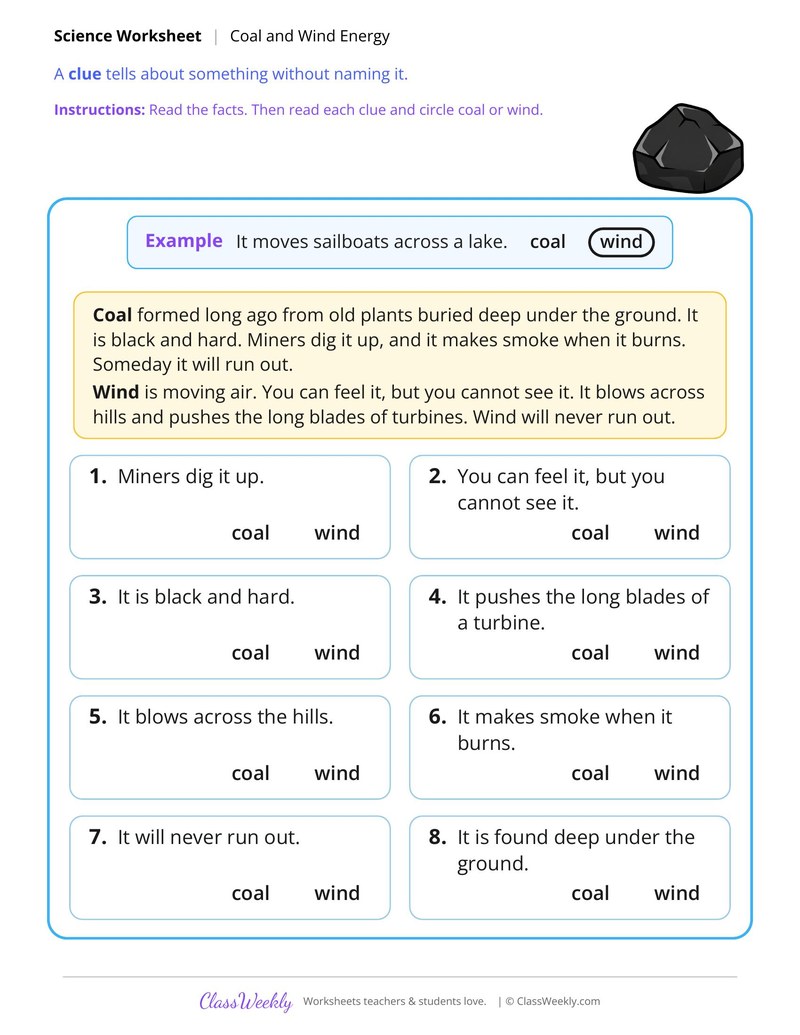
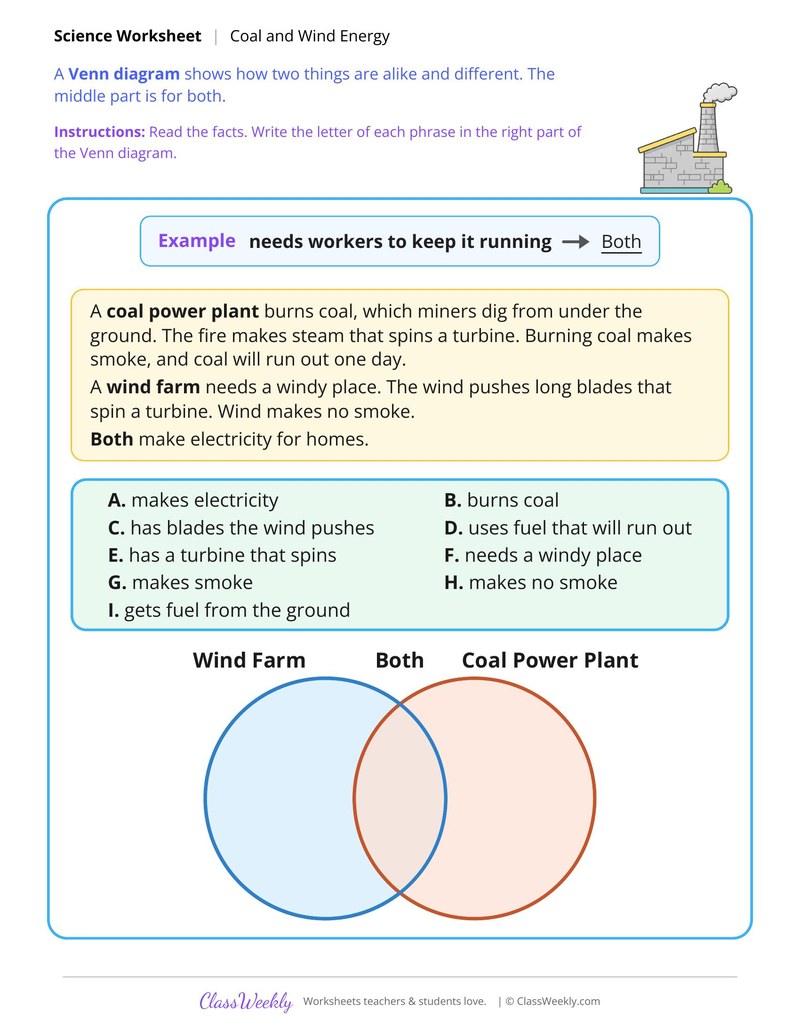
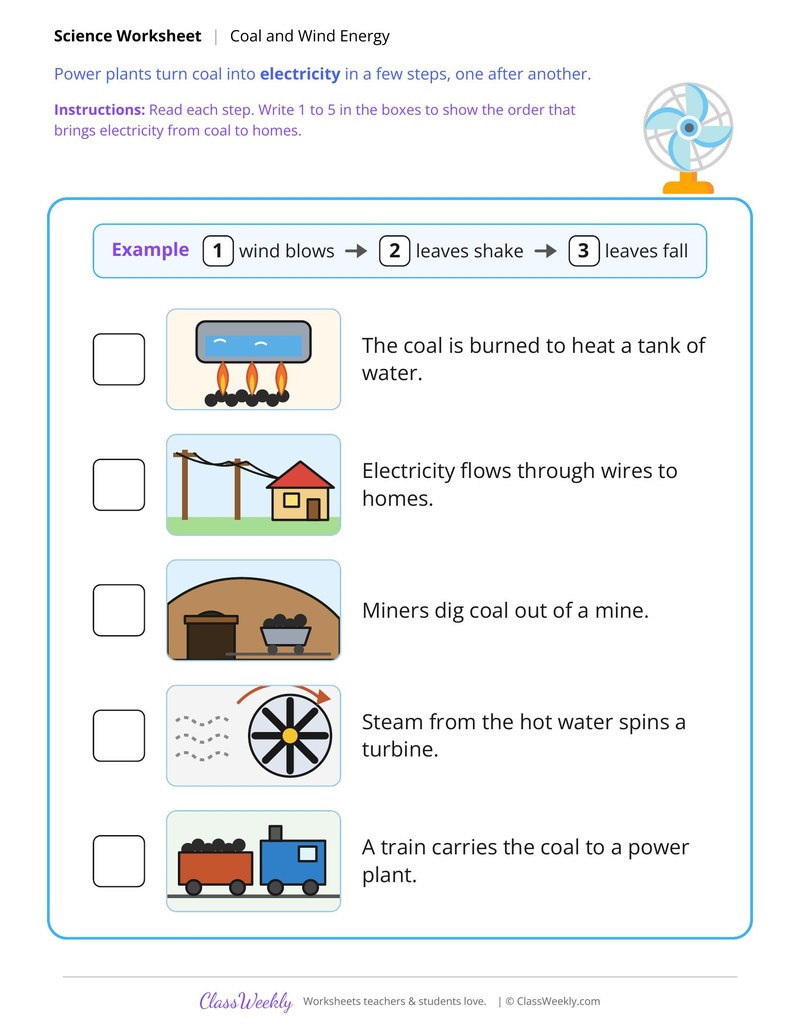
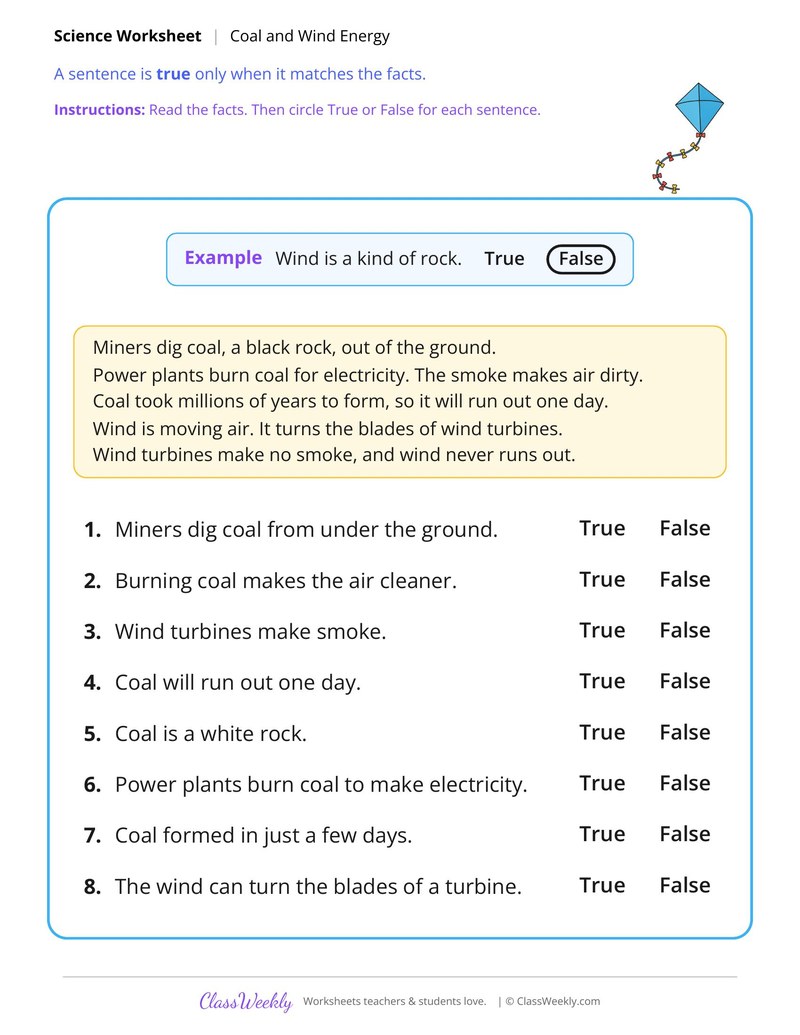
Coal is a hard black rock that miners dig from the ground. Burning it makes electricity and smoke, and it will run out one day. Wind is moving air that spins turbines, makes no smoke and never runs out.
How do these sheets teach saving resources?
⌄
A Town by the River Read and Answer tells how a town that cut too many trees now plants two for every one it cuts. Children see how tree roots hold soil in place and why using resources with care matters.
Do the environment worksheets have answer keys?
⌄
Yes, every sheet in this topic has an answer key.
Ratings & Reviews
No reviews yet. Be the first to share what you think.
Reviews are for ClassWeekly members.
Make a Request
Spotted something to fix, or want a worksheet we don't have yet? Tell us and we'll make it.
Worksheet Details
| Grade | 3rd Grade |
| Subject | Science |
| Topic | The Environment |
| Pages | 1 page |
| Difficulty | Medium |
What is ClassWeekly?
ClassWeekly offers free worksheets and printable learning resources for kids, from preschool up. All worksheets are aligned to Common Core, NGSS, and C3 Framework standards and designed by educators. We also have free online learning games for thousands of skills, and kids' answers turn into a progress report for the grown-up. Start a free 30-day trial to download the worksheets.