Making Inferences and Predictions Lesson Plan for 3rd Grade
A ready-to-teach making inferences and predictions lesson for 3rd Grade, built around inferring feelings, setting and offstage events from story clues, matching book titles to cover clues, and making and checking predictions. Print the plan, print the practice pages, and you are set.
- Time
- 47 min
- Steps
- 5
- Practice pages
- 10
- Standard
- RL.3.1
Lesson flow
47 minLearning objectives
By the end, students can:
- Use story clues and what you know to make an inference
- Infer feelings, setting, time and offstage events
- Back an inference with a clue from the story
Materials
Tick off as you get ready:
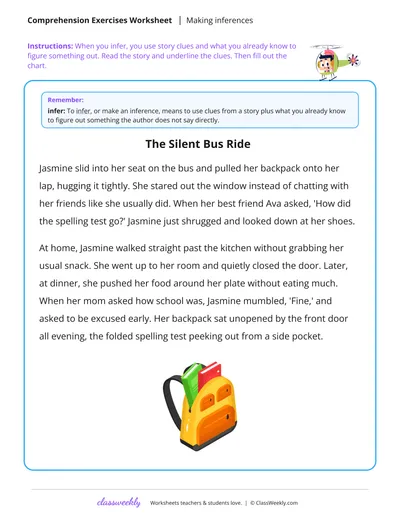
- Making inferences
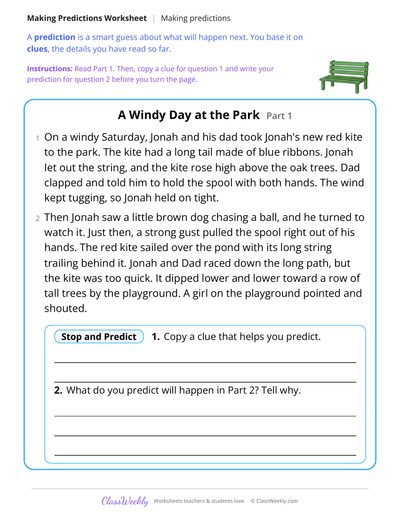
- Make and Check Predictions in a Story About a Runaway Kite
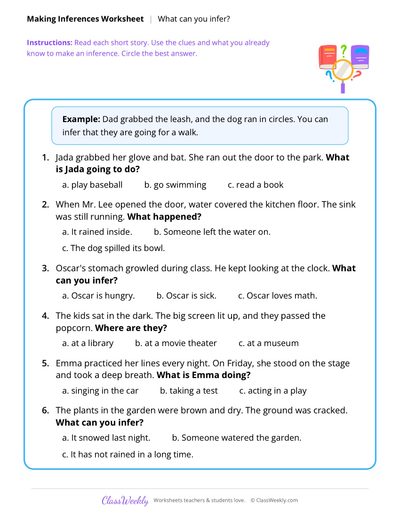
- What can you infer? (making inferences)
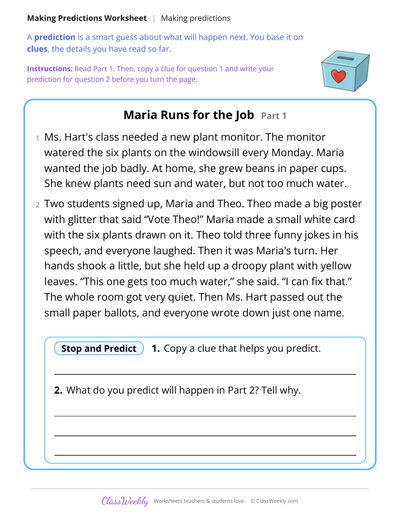
- Make and Check Predictions in a Story About a Class Election
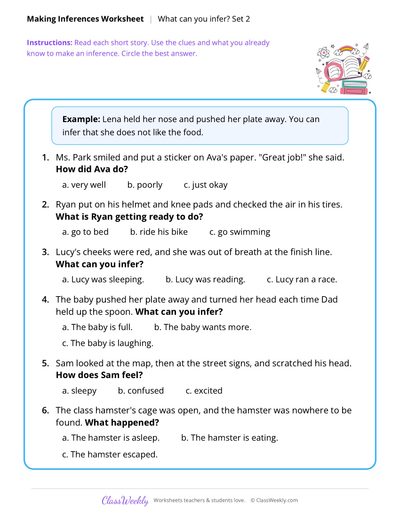
- What can you infer? Set 2 (making inferences)
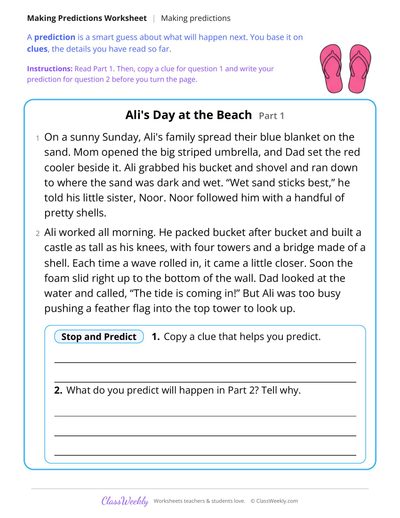
- Make and Check Predictions in a Tall Sandcastle Story
- Pencils, and whiteboard space for the modeled examples
Lesson steps
- 1
Build the background
5 min · 0-5Connect making inferences and predictions to a book the class already finished. Prior knowledge is doing most of the work in comprehension, so spend the time here.
- 2
Read aloud and think aloud
I do10 min · 5-15Read a short passage aloud and stop twice to narrate your own thinking about making inferences and predictions. Students are learning the move, not the answer.
- 3
Guided practice
We do12 min · 15-27Read a second passage together. This time students find the evidence and you record it. Push every answer back to the text with "what words told you that?"
- 4
Independent practice
You do15 min · 27-42Hand out "Making inferences". Students read and answer on their own. Circulate and ask individuals to point to the line in the text that supports their answer.
- 5
Share and close
5 min · 42-47Two or three students share an answer and the evidence behind it. Restate making inferences and predictions one final time in the students' own words, not yours.
Check for understanding
Ask each student to point to the evidence in the text for one of their answers. A student who has the right answer but cannot find the line has not yet learned making inferences and predictions.
Differentiation
Extra support
Students who stall: pull them into a small group and rebuild making inferences and predictions with concrete materials or a simpler text before asking for the written work again. Do not send the page home as homework, it will just rehearse the misunderstanding.
Extension
Students who finish early: ask them to write their own making inferences and predictions problem for a partner to solve, then check the partner's work. Creating a problem is harder than solving one and it surfaces whether they really understand making inferences and predictions.
Skills covered
- Making inferences
- Making predictions