
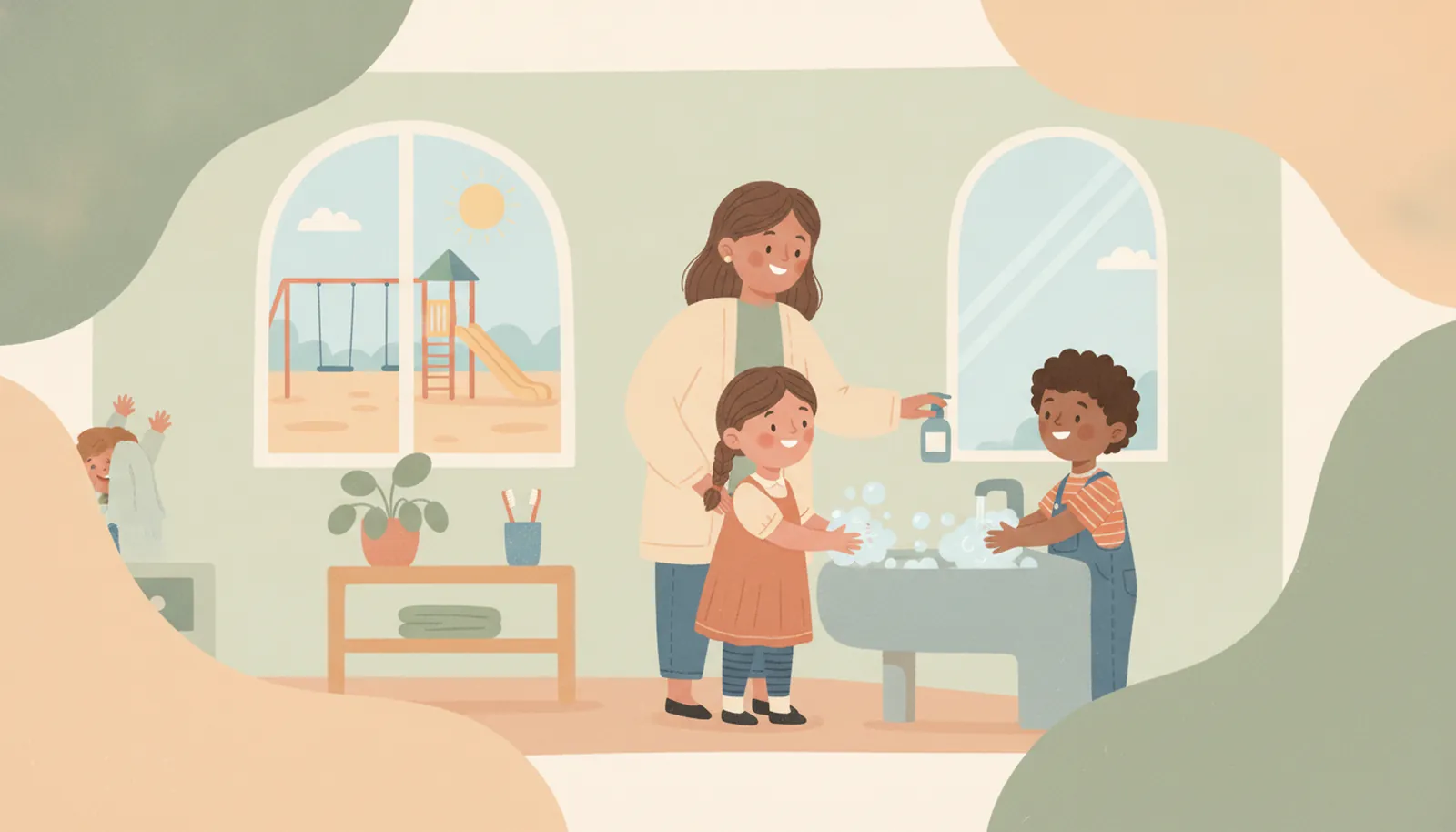
Health and Safety for Kindergarten: Teaching Healthy Habits
Get 30 days of free worksheet downloads
Key Takeaways
- The CDC's handwashing steps are wet, lather, scrub for at least 20 seconds, rinse and dry. Humming "Happy Birthday" twice is about 20 seconds.
- Teach safety as "grown-ups who can help": kids learn who to go to and what to say, instead of being taught to fear people.
- The American Academy of Sleep Medicine recommends 10 to 13 hours of sleep (including naps) for ages 3 to 5, and 9 to 12 hours for ages 6 to 12.
- The CDC recommends at least 60 minutes of physical activity a day for kids 6 and older, and active play throughout the day for preschoolers.
- Routines, pictures and practice beat lectures. Kindergartners learn health habits by doing them every day.
"Did you wash your hands?" "Yes!" (They did not wash their hands.)
If you've had this conversation, you're in very good company. Kindergartners are ready to take charge of their own health habits, but they need clear steps, lots of practice and a reason to care. Our kindergarten health and safety worksheets cover handwashing, safety, sleep, exercise and mealtime habits, the five areas we'll walk through below.
Here's how to teach each one in a way that sticks.
Teach Handwashing Step by Step
Handwashing is one of the simplest ways to keep kids (and everyone around them) healthy. The CDC calls it one of the most important steps we can take to avoid getting sick and spreading germs.
The CDC's five steps:
- Wet your hands with clean, running water.
- Lather with soap.
- Scrub for at least 20 seconds: backs of hands, between fingers, under nails.
- Rinse well.
- Dry with a clean towel or air dry.
Twenty seconds feels like forever to a 5-year-old. The CDC suggests humming "Happy Birthday" from beginning to end twice, and kids love having a song to sing.
Ways to make it stick:
- Picture steps by the sink. Our handwashing steps cut and paste lets kids put the steps in order themselves, then hang the finished page by the sink.
- The glitter test. Sprinkle a little glitter on your child's hands, then wash. Rinsing alone leaves glitter behind, while soap and scrubbing gets it off. Germs work in a similar way.
- Wash together. Kids copy what they see.
Then talk about when. Before eating, after the bathroom, after blowing your nose, after touching pets and after playing outside are the big ones. The when should you wash your hands? page turns this into a quick picture activity.
Free Kindergarten Health and Safety Worksheets


Talk About Safety With "Grown-Ups Who Can Help"
Safety lessons for young kids work best when they focus on what to do, not what to fear. Instead of "stranger danger," teach your child who they can go to if they're lost, hurt or scared.
Grown-ups who can help include:
- A teacher or school staff member
- A police officer or firefighter
- A store worker at the register
- A parent with children nearby
Practice what to say: "I'm lost. Can you help me find my grown-up?" Help your child learn their full name and a parent's phone number, too. Sing the phone number to a tune if it helps it stick. The grown-ups who can help worksheet is a good starting point for this conversation.
Other safety skills for kindergarten:
- Crossing the street. Stop at the curb, look left, right and left again, listen for cars, and always hold a grown-up's hand. Safe Kids Worldwide recommends that children under 10 cross the street with an adult. Practice with crossing the street: stop, look, listen.
- Fire safety. Teach stop, drop and roll for clothes that catch fire, and practice your family's way out of the house.
- Safety gear. Helmets for bikes and scooters, life jackets for boats, seat belts or car seats in the car.
Keep the tone calm and matter-of-fact. Kids feel safer when they know the plan.
Make Sleep a Routine
Sleep is a health habit too, and a big one for learning, mood and growth. The American Academy of Sleep Medicine (AASM) recommends:
- Ages 3 to 5: 10 to 13 hours per 24 hours, including naps
- Ages 6 to 12: 9 to 12 hours per 24 hours
Most kindergartners fall somewhere in between. If your 5-year-old needs to be up at 7:00, bedtime somewhere around 7:30 to 8:30 usually works.
A predictable bedtime routine makes falling asleep easier. A simple one:
- Bath or wash up
- Pajamas on
- Brush teeth
- Read a book together
- Lights out with a hug
Let your child put the steps in order with our bedtime routine cut and paste, then use it as a picture chart each night. If routines are a struggle in general, a visual schedule can help too.
Quick tip: try to turn off screens a while before bed. A quiet book or a calm chat works much better for winding down.
Get Moving Every Day
Kids are built to move, and moving is good for their bodies, their sleep and their mood. The CDC recommends that preschool-aged children (3 to 5) be physically active throughout the day, and that children 6 and older get at least 60 minutes of physical activity every day.
That doesn't have to mean sports. For kindergartners, activity looks like:
- Running, hopping and skipping at the playground
- Dancing in the kitchen
- Riding a bike or scooter (with a helmet!)
- Animal walks: bear crawls, frog jumps, crab walks
- Walking to the park or the mailbox
Help your child notice how their body feels after moving: heart beating faster, breathing harder, feeling warm. That's their heart and lungs at work. Track a week of activity together with my week of moving log, and celebrate every day they moved. 🙌
Build Healthy Mealtime Habits
Mealtime habits matter as much as what's on the plate. For kindergartners, focus on a few simple ones:
- Wash hands before eating (see above!)
- Drink water with meals and when thirsty
- Listen to your tummy. Eat when you're hungry, stop when you're full.
- Try new foods. A "no thank you bite" is a gentle way to explore.
- Sit together when you can, and talk about your day.
"Listen to your tummy" is a lovely skill to teach early. Ask your child, "Is your tummy still hungry, or is it full?" before they ask for seconds or leave the table. The hungry or full? listen to your tummy page helps kids notice those signals.
For food groups, fruits and veggies and building a balanced plate, our kindergarten food and nutrition worksheets go deeper.
FAQ
How do you teach kids to wash their hands? Teach the CDC's five steps: wet your hands with clean water, lather with soap, scrub for at least 20 seconds (including the backs of hands, between fingers and under nails), rinse, and dry with a clean towel or air dry. Humming "Happy Birthday" twice takes about 20 seconds. Practice together and use a picture chart by the sink.
When should kids wash their hands? Key times include before eating, after using the bathroom, after blowing their nose, coughing or sneezing, after touching animals or pet food, after playing outside, and whenever hands look dirty.
How much sleep does a kindergartner need? The American Academy of Sleep Medicine recommends 10 to 13 hours per 24 hours (including naps) for children ages 3 to 5, and 9 to 12 hours for children ages 6 to 12. Most kindergartners fall in or between these ranges.
How do I teach safety without scaring my child? Focus on what to do rather than what to fear. Teach your child which grown-ups can help (a teacher, a police officer, a store worker at the register, a parent with children), help them learn their full name and a parent's phone number, and practice simple steps like stop, look and listen at the curb.
Keep Reading
- Visual Schedules for Kids: Using Them at Home and School
- Fun Science Activities for Preschoolers That Build Curiosity
Small Habits, Big Difference
Healthy habits aren't built in one lesson. They're built at the sink, at the dinner table and at bedtime, one ordinary day at a time.
Every child is different, and some habits will take longer than others (looking at you, handwashing). Pick one area to focus on this week, and grab a few pages from our health and safety worksheets to make it hands-on. 😊

Adi Ackerman
Head Teacher
Adi is the Head Teacher at ClassWeekly, with years of experience teaching elementary students. She designs our curriculum-aligned worksheets and writes practical guides for teachers and parents.
Keep Reading
Ready to download? Try ClassWeekly free for 30 days.
Unlimited worksheets for PreK through 5th grade. Cancel anytime.