
Visual Schedules for Kids: Using Them at Home and School
Get 30 days of free worksheet downloads
Key Takeaways
- A visual schedule is a set of picture cards that shows a child what is happening now and what comes next, in order.
- Visual schedules make the day predictable, which helps many children handle transitions with less stress and fewer reminders.
- The main types are a full daily schedule, a first then board, a routine strip for one task, and a choice board.
- Set it up at the child's eye level with cards they can move, and give finished cards a place to go, like an all done pocket.
- Fade support slowly: shorten the schedule, switch from pictures to words, and move toward a simple checklist as the child grows.
"What are we doing next?" If you hear that question ten times before lunch, or if leaving the park turns into a standoff every single day, a visual schedule might be the calmest change you make this year.
Kids don't experience time the way we do. Spoken plans disappear the moment we say them. Pictures stay put.
Here's what a visual schedule is, why it helps, the main types, and how to set one up at home or in the classroom.
What Is a Visual Schedule?
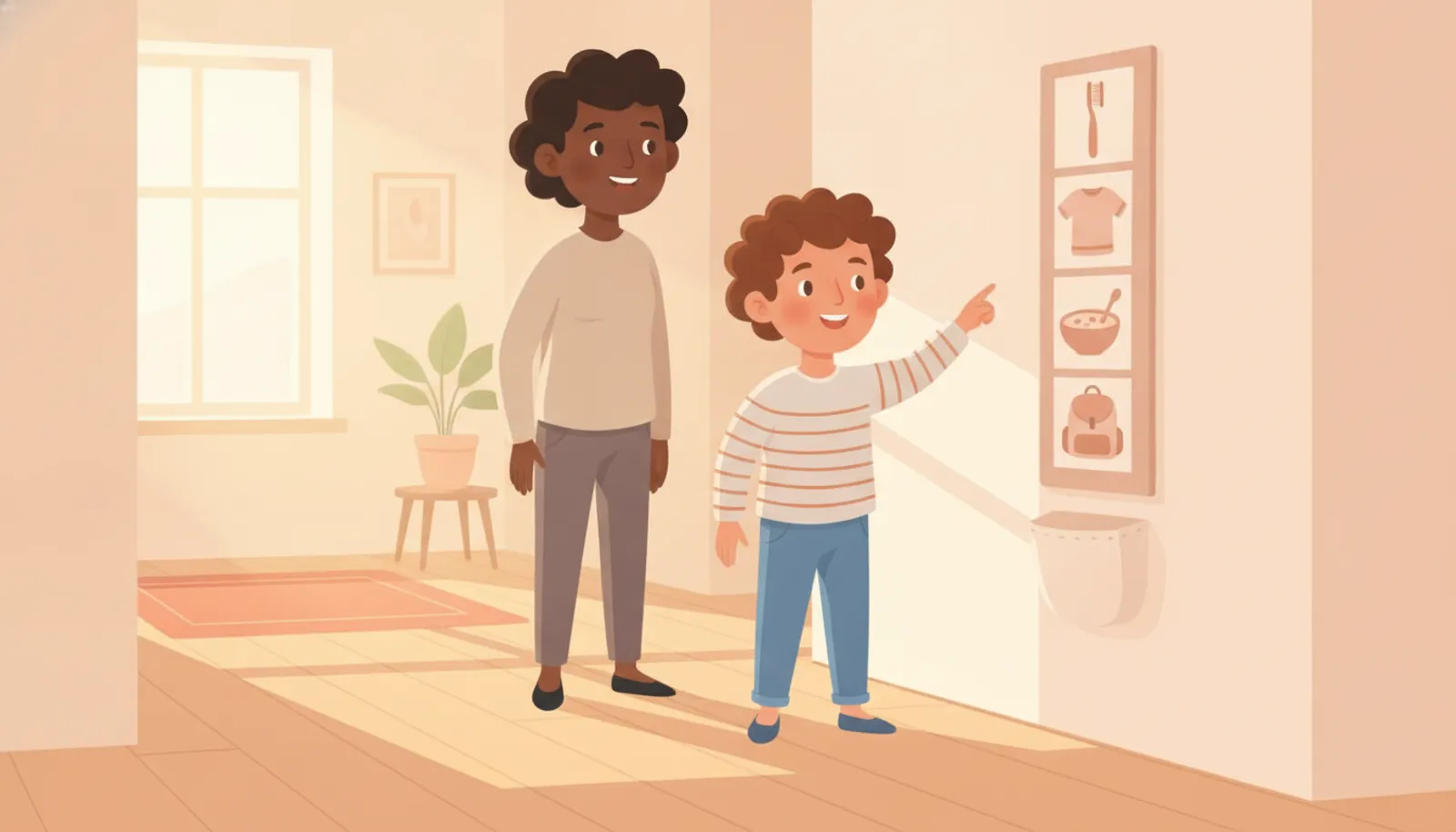
A visual schedule is a set of picture cards that shows a child what is happening now and what comes next, in order. Each card stands for one activity (breakfast, get dressed, school, playtime) and the child checks the schedule throughout the day.
The child usually takes part, too. They look at the next card, do the activity, and move the card to show it's finished. That small action gives them a sense of control over their own day.
Visual schedules are a staple in special education classrooms and in therapy, especially for autistic children. But most of our little ones benefit, since few 4 year olds can hold a list of spoken steps in their head. Our printable visual schedules cover home, school and outings, with cards ready to cut out.
Visual Schedules to Print


Why Visual Schedules Help
Visual schedules help because they make the day predictable. When a child can see what's coming, they spend less energy worrying about it and more energy doing it.
Here's what we see most often:
- Smoother transitions. Moving from a fun activity to a less fun one is easier when the child already knows it's coming, and can see the next fun thing after it.
- Fewer reminders. Instead of repeating "shoes, shoes, shoes," you point to the card.
- More independence. Kids can check the schedule themselves instead of asking an adult.
- Less anxiety. Children who worry about surprises can check that the day is going as planned.
- Language support. Pictures carry meaning for kids who are still learning words, or still learning English.
Types of Visual Schedules
There are four main types of visual schedules, and each one fits a different need. Many families and classrooms use more than one.
1. Daily schedule. A strip of 6 to 10 cards showing the main parts of the day, top to bottom or left to right. A vertical daily schedule board works well on a wall or fridge. In a classroom, the same idea becomes a whole-class schedule posted by the door.
2. First then board. Just two pictures: the task that comes first, then the activity after it. "First bath, then story." A first then board is the simplest schedule and the best place to start with a toddler or a child who's new to visuals.
3. Routine strip. A short strip that breaks one task into steps, like washing hands or packing up. These help with routines that have many small parts a child tends to forget.
4. Choice board. A set of pictures the child picks from, like three playtime options. A picture choice board gives kids a real say, which often heads off a power struggle before it starts.
How to Set Up a Visual Schedule
Set up a visual schedule at your child's eye level, with cards they can touch and move. If the schedule lives above their head, it becomes your tool, not theirs.
Here's a simple setup:
- Pick a card size. Around 2 to 3 inches square is easy for small hands and readable from a few steps away.
- Print and laminate. Laminated cards (or cards covered in clear packing tape) last much longer.
- Add hook-and-loop dots. Put one side on the back of each card and the other on the board, so cards can move on and off.
- Choose a direction. Top to bottom or left to right. Keep it the same every day.
- Give finished cards a home. An "all done" pocket or envelope at the end lets the child put each card away. A schedule board with an all done pocket has this built in.
- Teach it. Walk through the schedule together for the first few days, pointing to each card before each activity.
Quick tip: keep a card for changes. A "change" or question mark card helps children cope when the plan shifts, like an indoor recess day or a surprise visitor.
Morning and Bedtime Examples
Mornings and bedtimes are where visual schedules shine at home, because both routines repeat every day and both tend to run late.
A morning routine (5 cards):
- Use the bathroom
- Get dressed
- Eat breakfast
- Brush teeth
- Shoes and backpack
A morning routine picture strip puts these in one row your child can check off by the door.
A bedtime routine (5 cards):
- Bath
- Pajamas
- Brush teeth
- Two books
- Lights out
Try ending the bedtime strip with something your child enjoys, like stories, so the routine pulls them forward. A bedtime routine picture strip is ready to hang in a bedroom or bathroom.
Using a Visual Schedule in the Classroom
In a classroom, a visual schedule works best as one big class schedule plus small individual ones for the kids who need extra support. The class schedule sits where everyone can see it, and the teacher points to it at each transition.
A few habits that help:
- Review it every morning at circle time, so the whole class knows the shape of the day.
- Move the cards as you go, or let a classroom helper do it as a daily job.
- Give some children a desk-sized copy they can check without walking across the room.
- Flag changes early. If there's an assembly or a fire drill, show the change card in the morning, not five minutes before.
Kids who don't "need" a schedule still use it. It's simply easier to glance at a card than to ask.
Pair Schedules With Social Stories
A visual schedule shows what happens, and a social story explains why. They work beautifully together. If the schedule shows a dentist visit on Thursday, a short story read on Monday, Tuesday and Wednesday prepares your child for what the visit will be like.
Our social stories for kids cover common moments like going to the doctor, fire drills and when plans change, so you can match a story to the trickiest card on the schedule.
How to Fade Visual Support
Fade visual support slowly: shorten the schedule, add words, then move to a checklist, and bring the full schedule back on hard days. The goal is not to remove it fast, but to give just enough support for your child to feel confident while you hand over more independence.
Some gentle ways to fade:
- Shorten it. Show only the next three activities instead of the whole day.
- Add words. Put the written word under each picture, then try words alone for readers.
- Switch to a checklist. Older kids can move to a written list they tick off.
- Keep it for hard days. Holidays, trips and sick days are good times to bring the full schedule back.
Not sure why exactly, but many kids hold onto one or two cards long after they drop the rest (often the "all done" card). That's perfectly fine. Grown-ups use calendars and to-do lists too!
FAQ
What is a visual schedule for kids? A visual schedule is a row or column of picture cards that shows the steps of a day or a routine in order. The child checks it to see what is happening now and what comes next, and moves each card when that step is done.
Who benefits from a visual schedule? Visual schedules are widely used for autistic children and kids with ADHD or language delays, but most young children benefit. Toddlers, preschoolers and kindergarteners all find pictures easier to follow than spoken reminders.
What is a first then board? A first then board shows just two pictures: the task that comes first and the activity that comes after it. For example, first shoes, then park. It is the simplest visual schedule and a good starting point for young children.
How many pictures should a visual schedule have? Start small. A first then board has 2, a routine strip often has 3 to 6 steps, and a full daily schedule might have 6 to 10. If a child seems overwhelmed, show only the next few activities at a time.
What age should you start a visual schedule? Many children can follow a simple first then board from about age 2, once they recognize pictures of familiar things. Full daily schedules usually work well from preschool through the early elementary grades.
How do you stop using a visual schedule? Fade it gradually. Shorten the schedule, switch from pictures to written words, then to a simple checklist. Some children keep a schedule longer, especially on busy or unusual days, and that is completely fine.
Keep Reading
A Calmer Day, One Card at a Time
A visual schedule turns an unpredictable day into one your child can see and follow. Start with a simple first then board, add a morning or bedtime strip, and build from there.
Every child is different, so watch what helps and adjust. Browse our visual schedule cards and boards to find a set that fits your home or classroom. 🙌

Adi Ackerman
Head Teacher
Adi is the Head Teacher at ClassWeekly, with years of experience teaching elementary students. She designs our curriculum-aligned worksheets and writes practical guides for teachers and parents.
Keep Reading
Ready to download? Try ClassWeekly free for 30 days.
Unlimited worksheets for PreK through 5th grade. Cancel anytime.