
What Is a Social Story? Examples and How to Use One
Get 30 days of free worksheet downloads
Key Takeaways
- A social story is a short, positive, usually first-person story that explains a situation, what will happen, and why, so a child knows what to expect.
- Social Stories were developed by Carol Gray, a teacher in Michigan, in the early 1990s, originally for children on the autism spectrum.
- They help many children: autistic kids, anxious kids, and any child facing something new, like a first haircut or a fire drill.
- Good social stories use mostly descriptive and perspective sentences, with only a few gentle coaching sentences, and stay positive throughout.
- Read the story calmly and often, before the situation happens, rather than as a fix in the middle of a meltdown.
Some kids walk into a new situation and roll with it. Others need to know exactly what's coming before they can relax. If your little one melts down at the barber, panics at fire drills, or freezes on the first day of school, you are not alone.
A social story is one of the simplest tools for this. It's a few short pages that tell a child, calmly and kindly, what is going to happen.
Here's what a social story is, who it helps, what goes into one, and how to read and write your own.
What Is a Social Story?
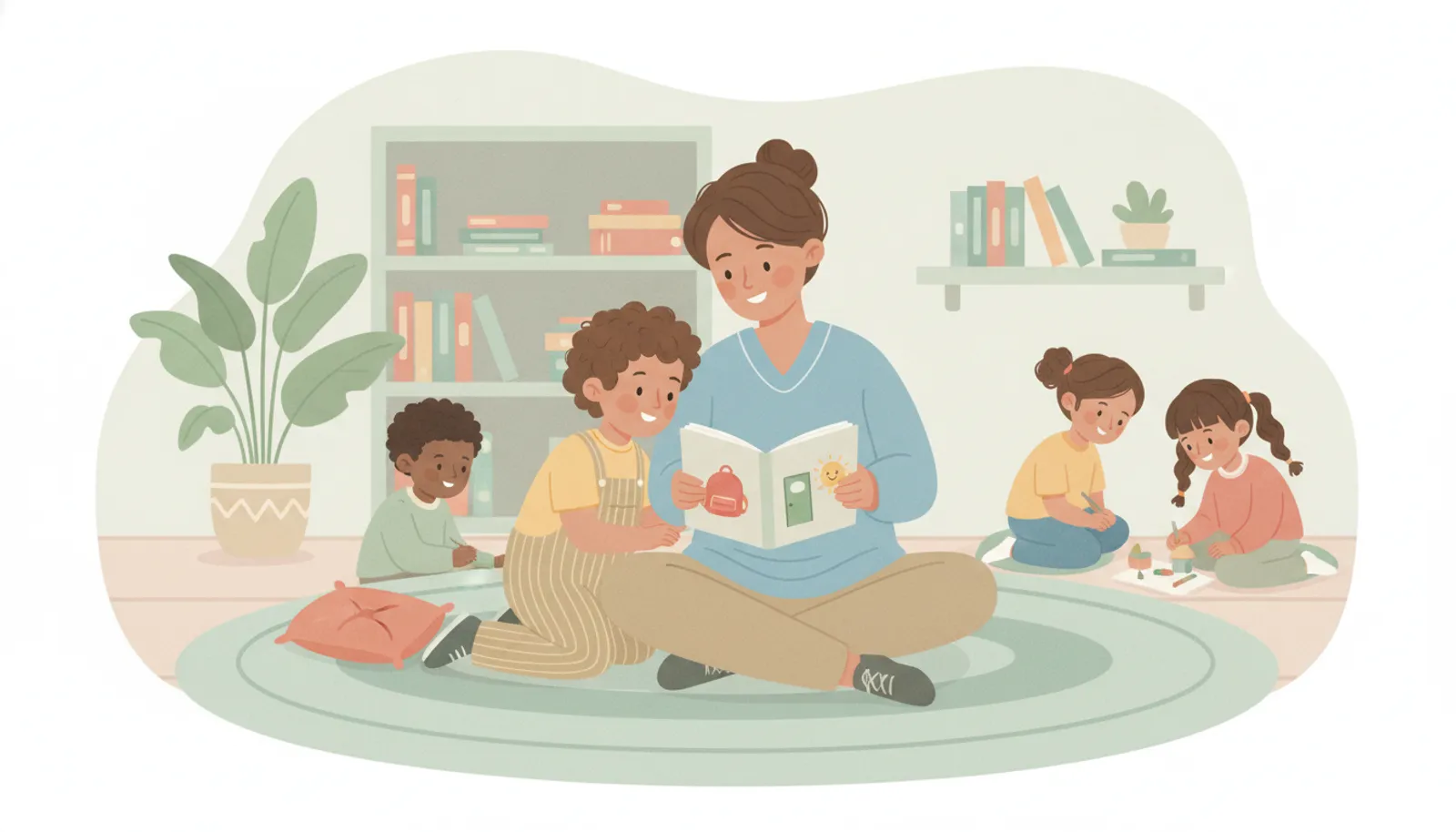
A social story is a short, positive story that describes a specific situation, what usually happens, and why, so a child knows what to expect. It is usually written in the first person ("I"), uses simple sentences, and has a picture on each page.
The approach comes from Carol Gray, a teacher in Michigan who developed Social Stories in the early 1990s while working with autistic students. Her idea was to share accurate social information in a patient, reassuring way, rather than simply telling a child what to do.
A good social story:
- Focuses on one situation (a haircut, lining up, losing a game)
- Describes what happens, step by step
- Explains why things happen, and how people might feel
- Offers a gentle idea of what the child can do
- Stays positive from start to finish
Our printable social stories cover everyday moments like going to school, washing hands and waiting in line, ready to read with your child today.
Social Stories to Print


Who Social Stories Help
Social stories help any child who feels calmer when they know what to expect. They were first designed for autistic children, and that's still where they're used most, but they're helpful well beyond that.
They work well for:
- Autistic children, who often find unwritten social rules and surprises hard
- Anxious children, who worry about what might happen
- Kids with speech or language delays, since pictures carry the meaning
- Any young child facing something new: a first dentist visit, a new baby, a move, a substitute teacher
Honestly? Most preschoolers benefit from a story about the doctor's office. Not knowing what's coming is hard at 4, for everyone.
The Sentence Types in a Social Story
Social stories use a few kinds of sentences, and most of them describe rather than instruct. In Carol Gray's original approach, the main types are descriptive, perspective and directive sentences. Her later guidance calls directive sentences "coaching" sentences and keeps them few and gentle.
Descriptive sentences state facts: where, when, who and what happens. "At school, we line up at the door."
Perspective sentences describe thoughts or feelings, the child's or other people's. "My teacher feels happy when everyone is safe."
Directive (coaching) sentences gently suggest what the child can try. "I can try to stand behind my friend."
Two rules keep the story kind:
- Use more description than direction. The story's main job is to explain, not to give orders.
- Keep it positive. Say "I can use a quiet voice" rather than "I must not scream." Words like "can" and "will try" leave room for a child to still be learning.
Gray also suggests writing some stories that celebrate what a child already does well, so social stories aren't only about problems.
A Short Social Story Example
Here is a simple six-line social story about getting a haircut, written in the first person:
- Sometimes my hair gets long, and I go to get a haircut.
- I sit in a big chair, and the barber puts a cape on me.
- The scissors make a snip, snip sound. It does not hurt.
- The barber may spray a little water on my hair.
- I can try to sit still and hold my toy.
- When it is done, my hair looks neat. I may feel proud.
Notice the mix. Most lines describe what happens and what it sounds and feels like. Only one line ("I can try to sit still") coaches, and it's phrased as something the child can try. For a ready version with pictures, see our getting a haircut social story.
How to Read and Use a Social Story
Read a social story at a calm time, before the situation happens, not in the middle of a meltdown. A child who is already upset can't take in new information. The story works by building familiarity ahead of time.
A simple routine:
- Read it together when your child is relaxed, like after a snack or at bedtime.
- Read it often. Once a day in the days before an event is a common rhythm.
- Read it right before the situation, as a quick reminder.
- Let your child hold it or turn the pages. Some kids like to read it on their own.
- Keep it nearby in a backpack, car or classroom basket.
Pair the story with the real thing when you can. For a going to the dentist social story, point to the pictures and then spot the same chair and light when you arrive.
Social stories also work hand in hand with a picture schedule. The schedule shows the order of the day, and the story explains a tricky part of it. Our visual schedules pair nicely with the stories here.
When to Use a Social Story
Use a social story whenever a situation is new, changing, or hard for your child. Common moments include:
- New experiences: starting school, riding the school bus, a first haircut
- Daily routines: washing hands, brushing teeth, getting dressed
- Social skills: sharing, waiting, taking turns, losing a game
- Big feelings: feeling angry, sad or worried
- Changes: a fire drill, a substitute teacher, when plans change
If a story isn't helping after a couple of weeks, it may need simpler sentences, clearer pictures, or a smaller focus. Try reading it with fewer words per page, or splitting one long story into two short ones. Some children also respond better to photos of the real place than to drawings, so swapping the pictures can make a big difference.
How to Make Your Own Social Story
You can write a social story in about 20 minutes with paper and a few photos or drawings. Personal details (your child's school, your car, their real teacher) make it even more powerful.
- Pick one situation. "Going to Grandma's house," not "being good everywhere."
- Watch what really happens. Note the steps, sounds and people involved.
- Write 5 to 10 short sentences in your child's voice, mostly describing.
- Add one or two coaching sentences with "I can" or "I will try."
- End on a positive note, like feeling proud or getting to go home.
- Add a picture to each page. Photos of the real place work great.
- Read it and adjust. If your child stumbles on a word, simplify it.
Keep the tone warm and matter-of-fact. Avoid promises you can't keep ("It will be fun!"), since the goal is accurate information your child can trust.
FAQ
What is a social story? A social story is a short, simple story that describes a specific situation, what usually happens, how people might feel, and what the child can do. It is written in a calm, positive tone, often in the first person, with a picture on each page.
Who created social stories? Carol Gray, a teacher who worked with autistic students in Michigan, developed Social Stories in the early 1990s. She still publishes guidance on how to write them, and the term Social Stories is associated with her approach.
Are social stories only for autistic children? No. They were first developed for autistic children, but many kids benefit, including children with anxiety, ADHD or speech delays, and any young child facing something new like starting school, a doctor visit or a new sibling.
How often should you read a social story? Many families and teachers read a social story once a day in the days leading up to an event, and again right before it. For ongoing skills like waiting or sharing, reading it at a calm time each day for a week or two is common.
What is the difference between a social story and a visual schedule? A visual schedule shows the order of activities with pictures. A social story explains one situation in sentences: what happens, why, and how people feel. Many children use both together.
Can I write my own social story? Yes. Choose one situation, write 5 to 10 short sentences in your child's voice, describe what happens and why, add one or two gentle sentences about what the child can do, and include a simple picture for each page.
Keep Reading
A Calm Story for a Big Moment
A social story is a small, gentle tool: a few positive sentences and pictures that tell a child what to expect. Read it early and often, keep it mostly descriptive, and tweak it until it fits your kiddo.
Every child is different, and that's the beauty of it. Start with one of our social stories for kids, or write your own for the moment your child finds hardest. 💕

Adi Ackerman
Head Teacher
Adi is the Head Teacher at ClassWeekly, with years of experience teaching elementary students. She designs our curriculum-aligned worksheets and writes practical guides for teachers and parents.
Keep Reading
Ready to download? Try ClassWeekly free for 30 days.
Unlimited worksheets for PreK through 5th grade. Cancel anytime.