Fix the Have Mistakes in a Diary
Written by Adi Ackerman, Head Teacher
"Fix the Have Mistakes in a Diary" is written for 3rd Grade (Ages 8-9), and it covers Common Core L.3.1.F. If your little one is a year younger but already steady on verbs, the page still works. You may just need to read the instructions out loud. And if they are older and conjugating verbs never quite stuck, this is a short review rather than busywork.
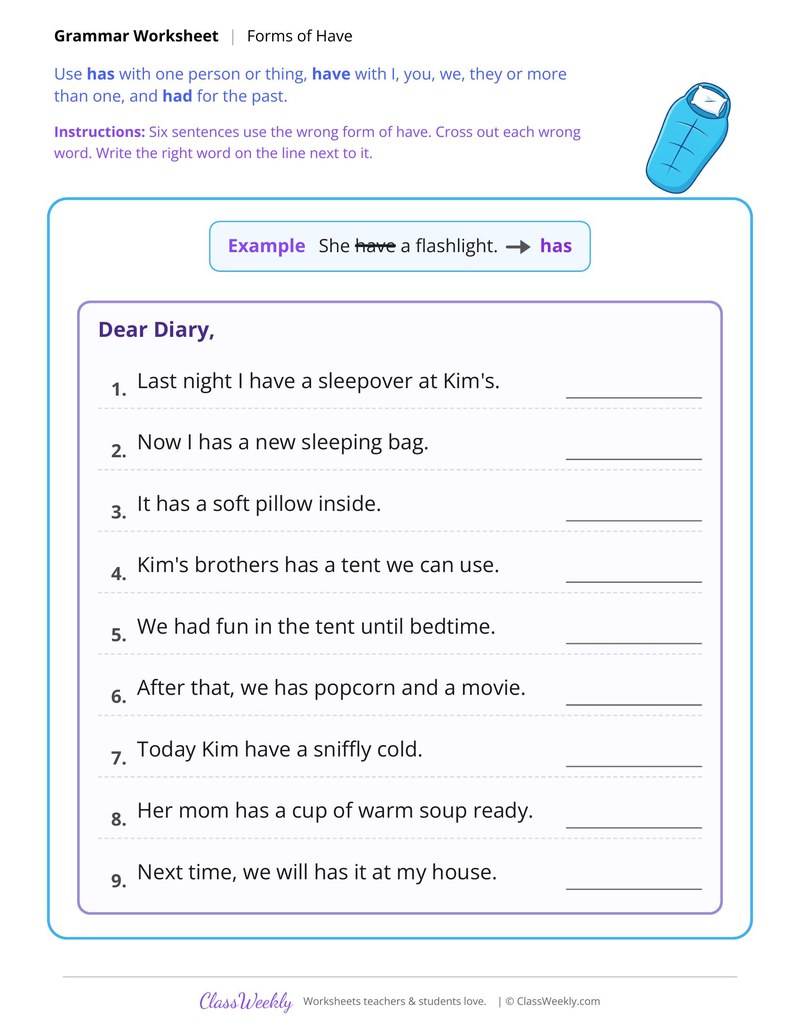
3rd grade grammar worksheet: cross out 6 wrong forms of have in a sleepover diary and write has, have or had. Answer key included. Part of our conjugating verbs collection. Aligned to Common Core standards.
How do I use this worksheet?
Introduce the skill with a brief whole-class activity, such as calling out examples and asking students to give a thumbs up when they hear conjugating verbs in a sentence. Then let students work through it independently, using a partner or small group only if they want to talk through their thinking, referring to a class anchor chart if one is available. When reviewing answers, ask students to explain why an answer is correct rather than just confirming it. These conjugating verbs worksheets work well as a focused practice activity, a homework assignment, or a warm-up at the start of a language arts lesson.
What students will practice
- Students will find 6 wrong forms of have in a diary entry.
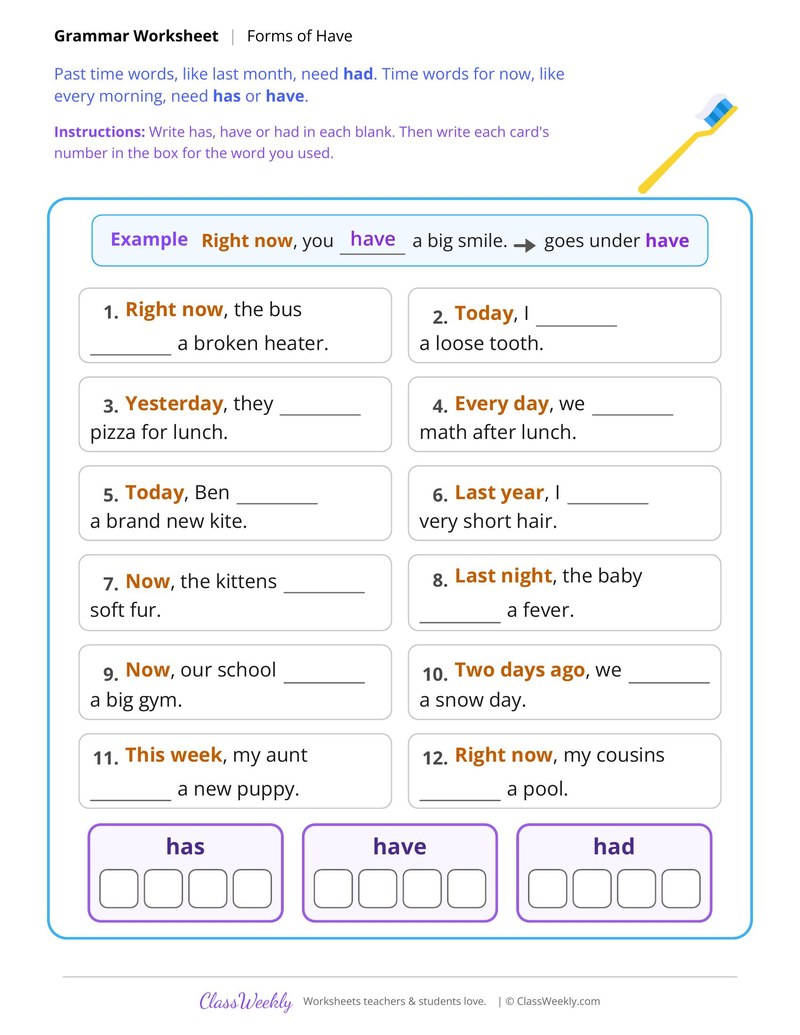
- Students will choose has, have or had to fit the subject and the time.
- Students will write the right word next to each mistake.
Curriculum Links
Common Core State Standards
Language · 3rd Grade
Standard: Ensure subject-verb and pronoun-antecedent agreement.
View all L.3.1.F worksheets →Find this in the curriculum
Browse the grade, subject, and topic this belongs to.
FAQ
How do I use this conjugating verbs worksheet?
⌄
Introduce the skill with a brief whole-class activity, such as calling out examples and asking students to give a thumbs up when they hear conjugating verbs in a sentence. Then let students work through it independently, using a partner or small group only if they want to talk through their thinking, referring to a class anchor chart if one is available. When reviewing answers, ask students to explain why an answer is correct rather than just confirming it. These conjugating verbs worksheets work well as a focused practice activity, a homework assignment, or a warm-up at the start of a language arts lesson.
What does this worksheet teach?
⌄
Cross out 6 wrong forms of have in a sleepover diary and write has, have or had. The directions on the page read: Six sentences use the wrong form of have. Cross out each wrong word. Write the right word on the line next to it. The page opens with a worked example, and an answer key is included.
Can I use this conjugating verbs worksheet for homeschool or classroom?
⌄
Yes, both. We made it for 3rd Grade verbs, and the page works the same whether it lands on a kitchen table or a center rotation. At home, most families go through it together and talk the answers out loud, and that talking is where most of the learning happens with conjugating verbs. In class it runs well as independent work while you pull a small group. Print one copy or thirty, whichever the day needs.
What verb conjugations are 3rd graders expected to know?
⌄
Third graders work with present, past, and future tenses, as well as singular and plural subject-verb agreement (e.g., 'he runs' vs. 'they run').
How does conjugating verbs connect to writing skills?
⌄
Correct verb conjugation ensures sentence clarity and grammatical correctness, which is a key expectation in 3rd grade informative and narrative writing.
What types of activities appear on conjugating verbs worksheets?
⌄
Common activities include choosing the correct verb form from a word bank, rewriting sentences to change tense, and completing conjugation tables for specific verbs.
What is a helping verb?
⌄
A helping verb, like is, was, have or will, comes right before the main verb and helps it. The main verb shows the action. In The roof was leaking, was is the helping verb and leaking is the main verb.
When do you use has, have and had?
⌄
Use has with he, she, it or one person or thing, and have with I, you, we, they or more than one. Use had for the past, whatever the subject. Time words like last night or right now tell your child which one fits.
How do you make the future tense?
⌄
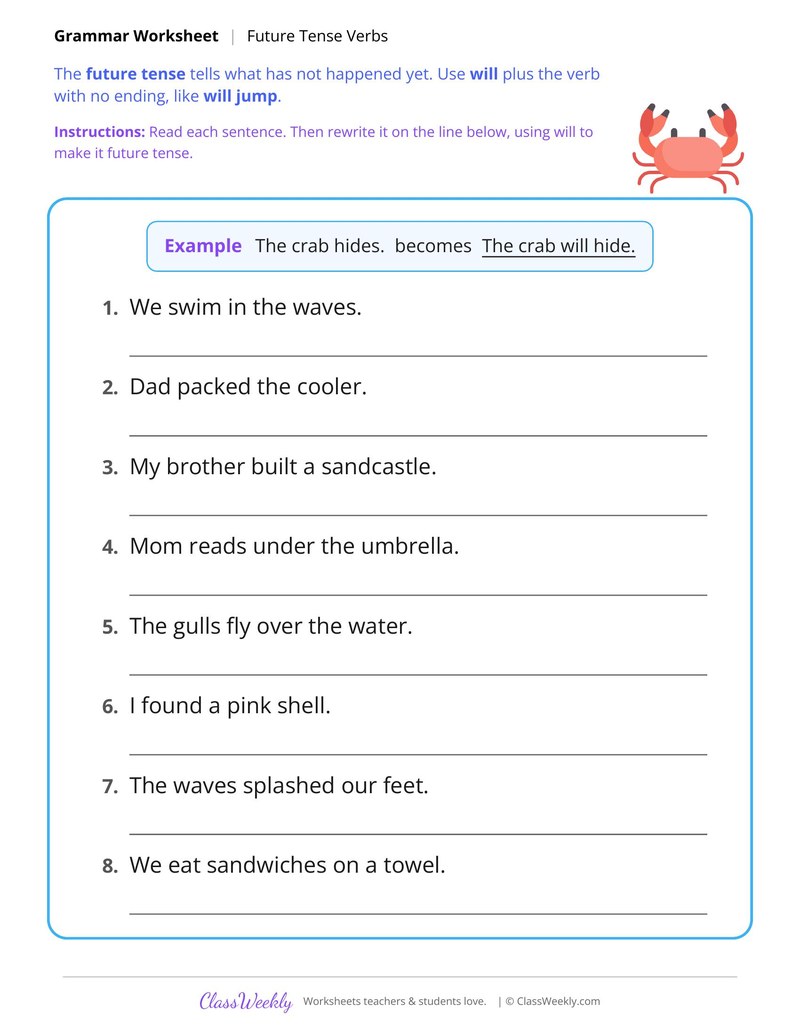
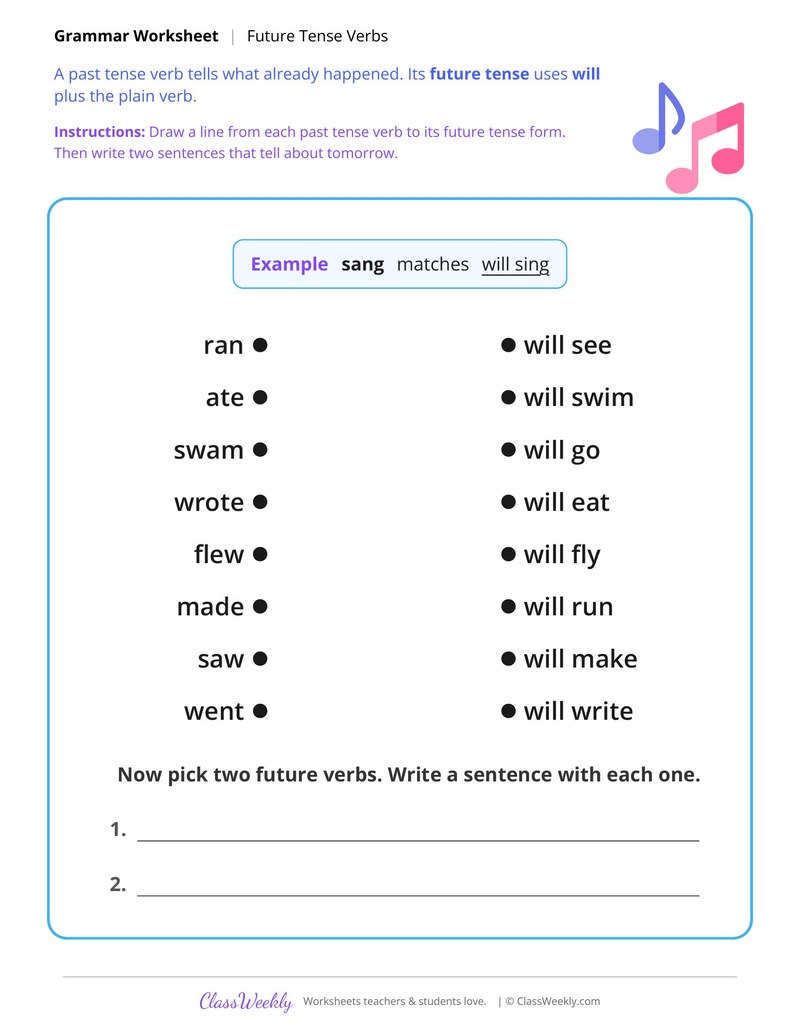
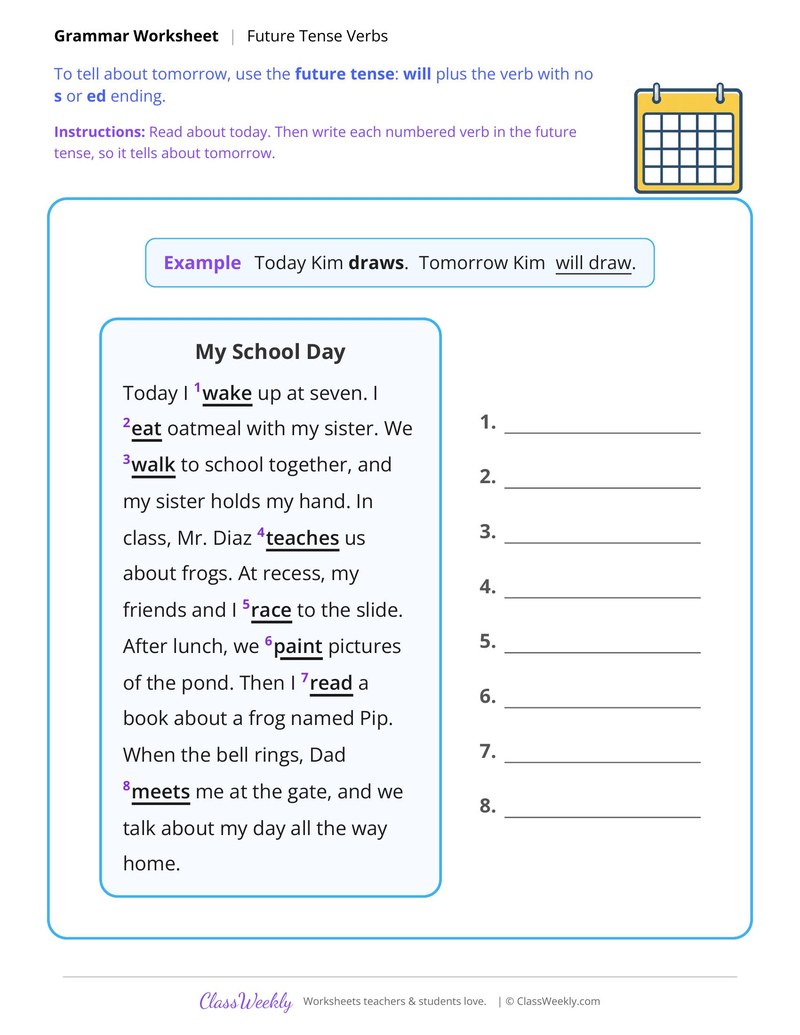
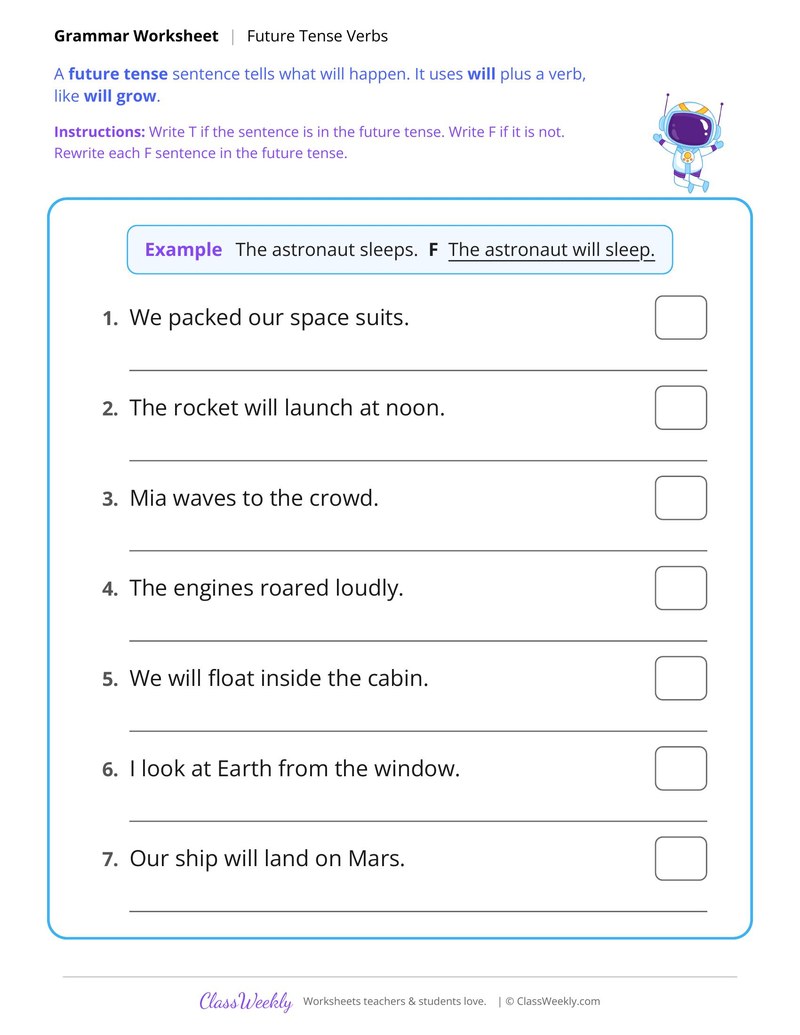
Use will plus the verb with no ending. We swim becomes we will swim, and Dad packed becomes Dad will pack. The future tense sheets practice this with beach, space and school day sentences.
What is subject verb agreement?
⌄
The subject and the verb must match. A verb that ends in s goes with one, as in the bird sings, and a verb with no s goes with more than one, as in the birds sing.
Do these verbs worksheets have answer keys?
⌄
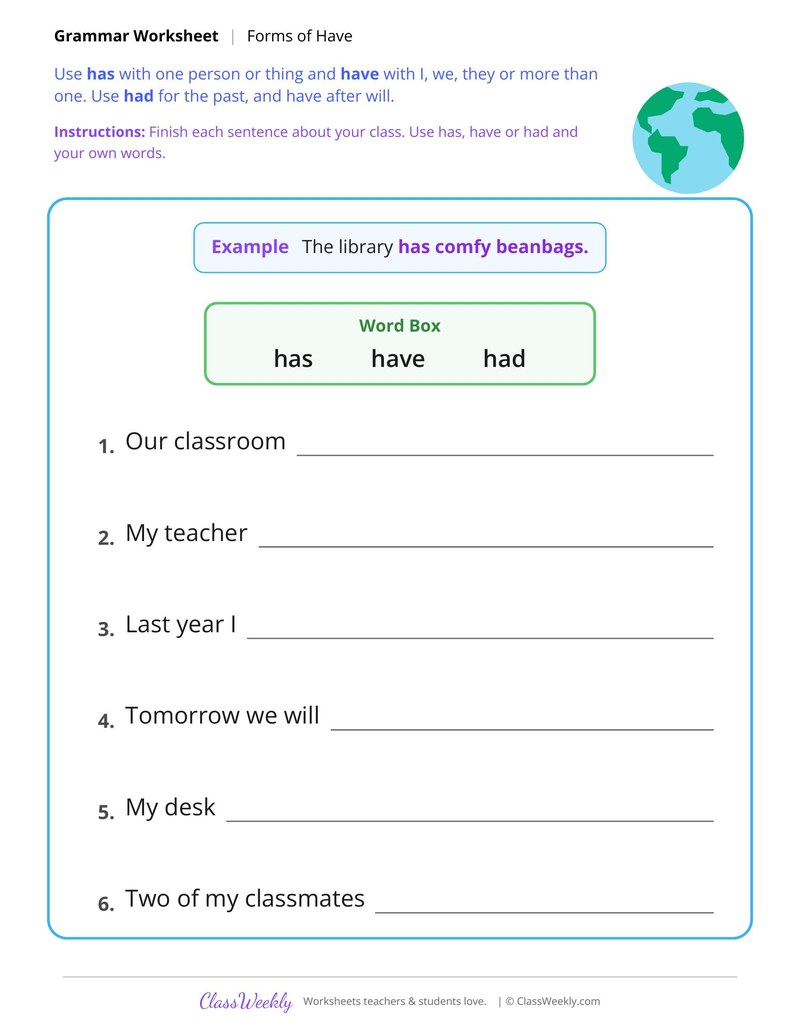
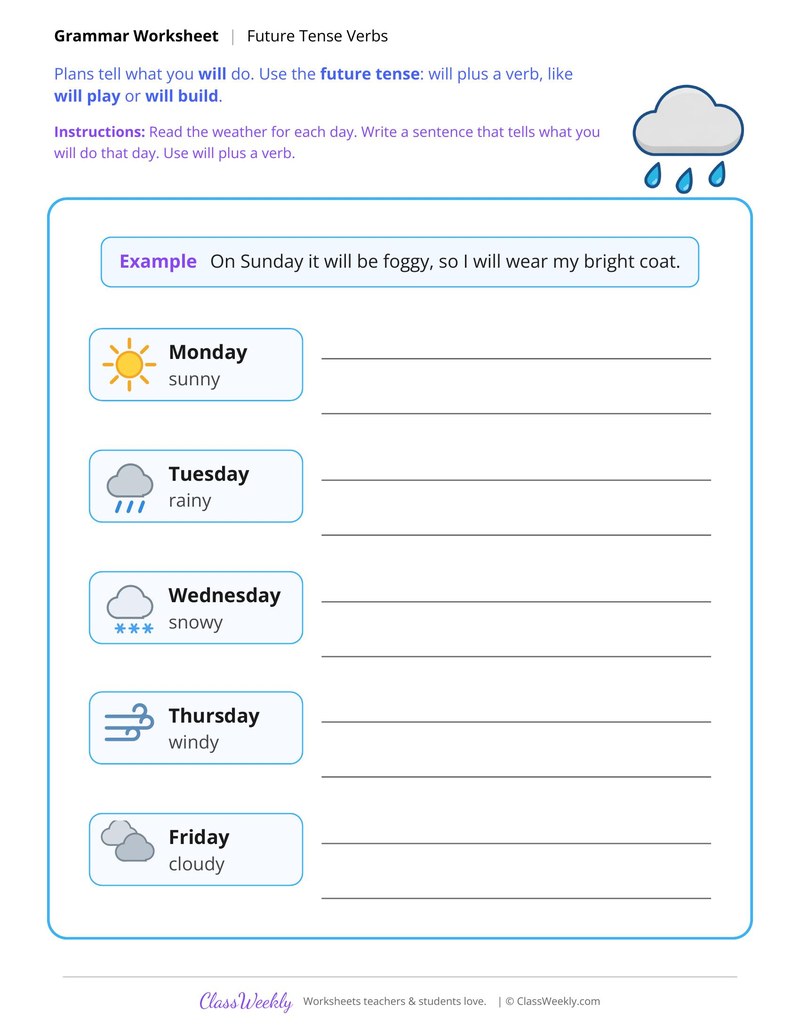
Many sheets come with an answer key. Open pages, like writing what your class has or planning a weather week, have no single right answer.
Ratings & Reviews
No reviews yet. Be the first to share what you think.
Reviews are for ClassWeekly members.
Make a Request
Spotted something to fix, or want a worksheet we don't have yet? Tell us and we'll make it.
Worksheet Details
| Grade | 3rd Grade |
| Subject | Grammar & Writing |
| Topic | Verbs |
| Standard | L.3.1.F |
| Pages | 1 page |
| Difficulty | Medium |
Learn More
What is ClassWeekly?
ClassWeekly offers free worksheets and printable learning resources for kids, from preschool up. All worksheets are aligned to Common Core, NGSS, and C3 Framework standards and designed by educators. We also have free online learning games for thousands of skills, and kids' answers turn into a progress report for the grown-up. Start a free 30-day trial to download the worksheets.