Count the Square Tiles in Odd Shapes
Written by Adi Ackerman, Head Teacher
"Count the Square Tiles in Odd Shapes" is written for 3rd Grade (Ages 8-9), and it covers Common Core 3.MD.C.6. If your little one is a year younger but already steady on geometry, the page still works. You may just need to read the instructions out loud. And if they are older and areas using rectangular grids never quite stuck, this is a short review rather than busywork.
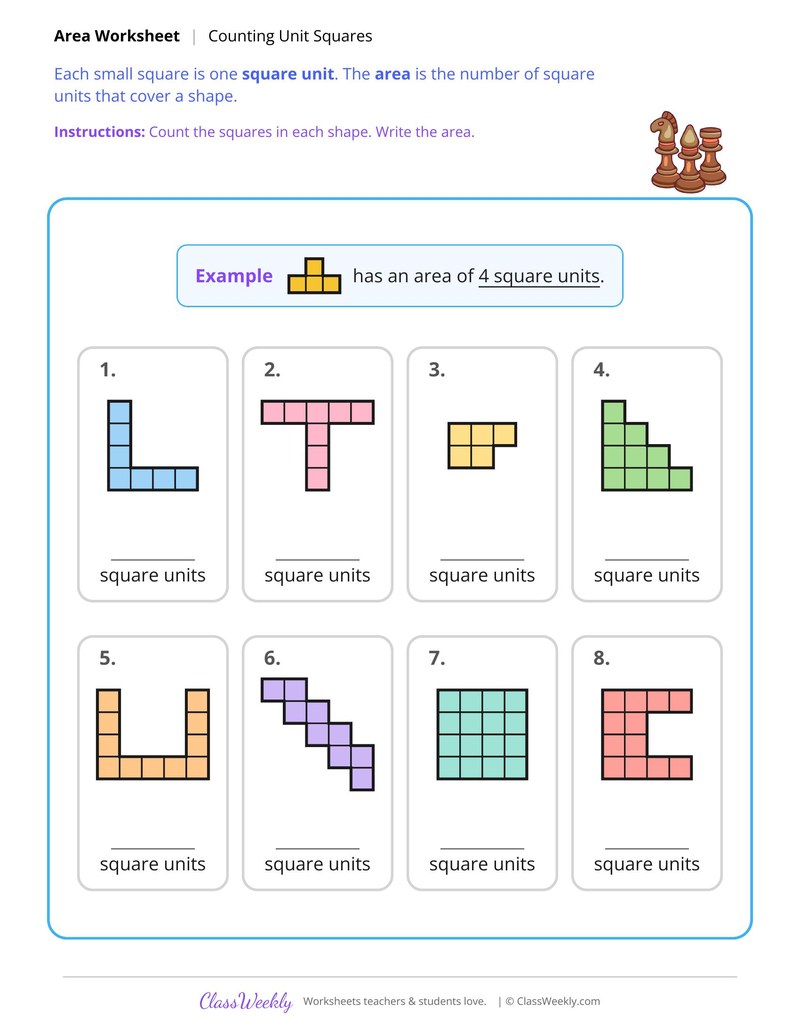
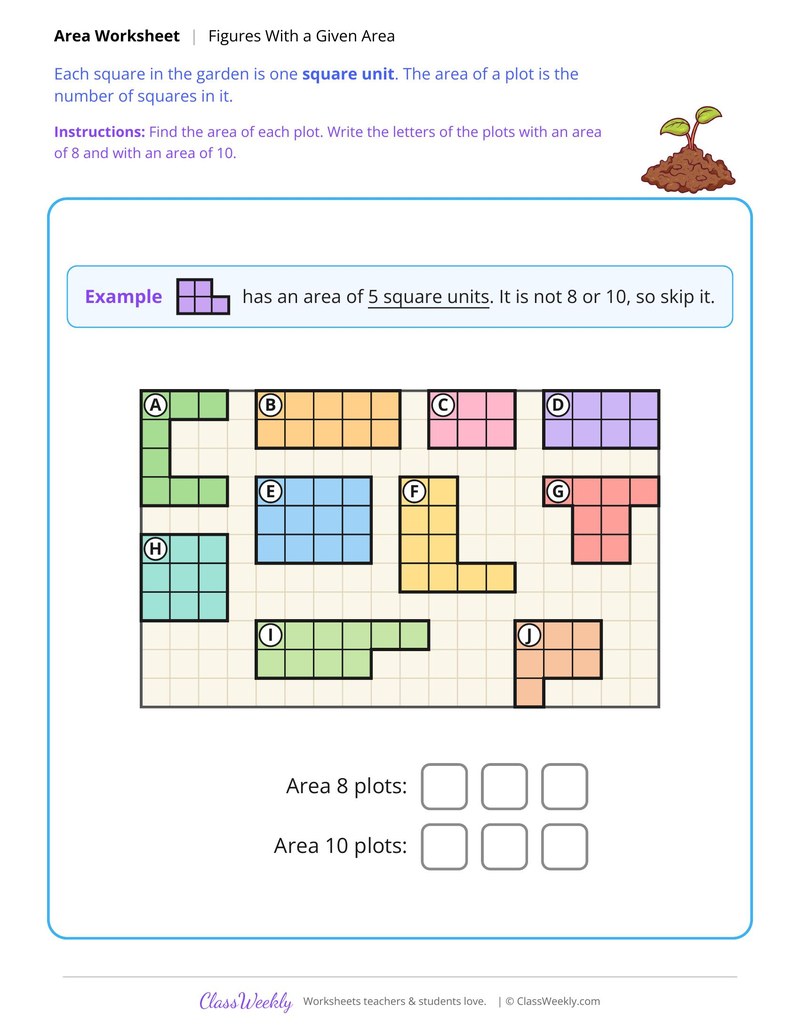
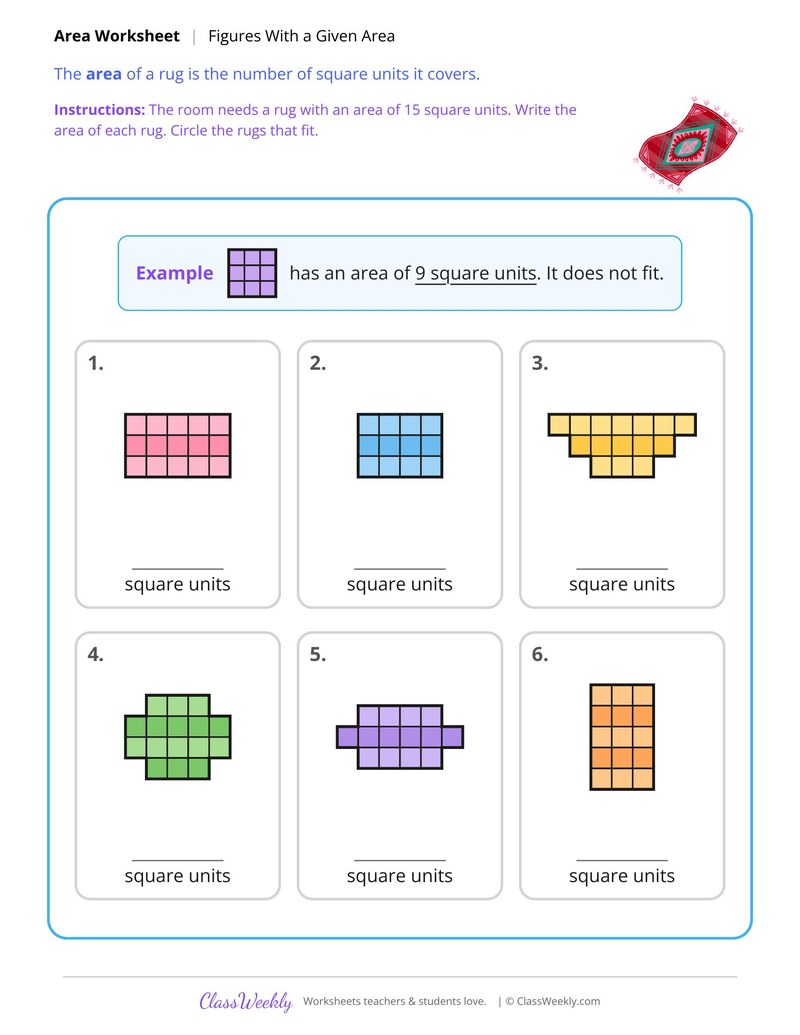
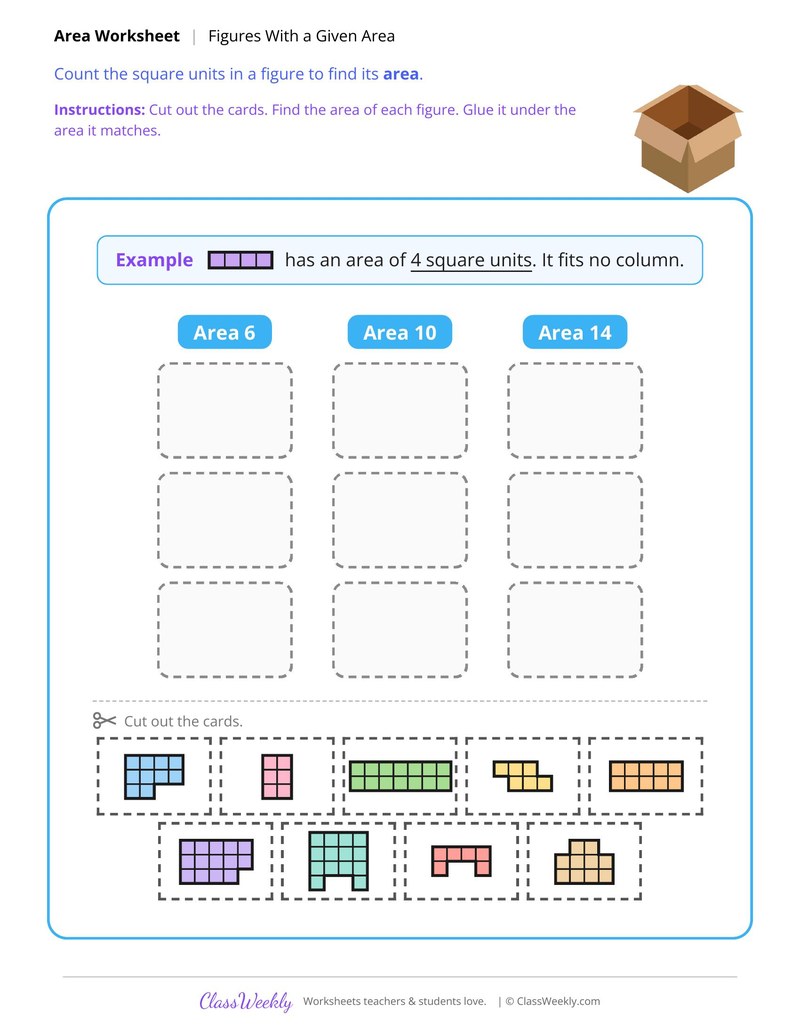
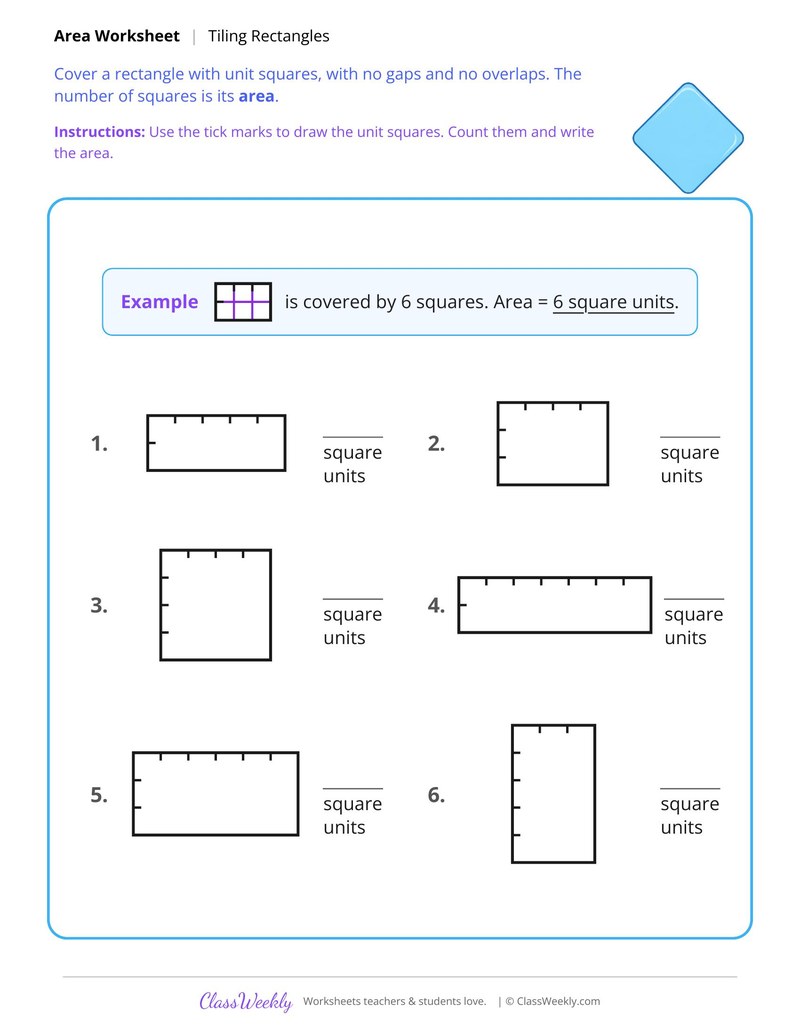
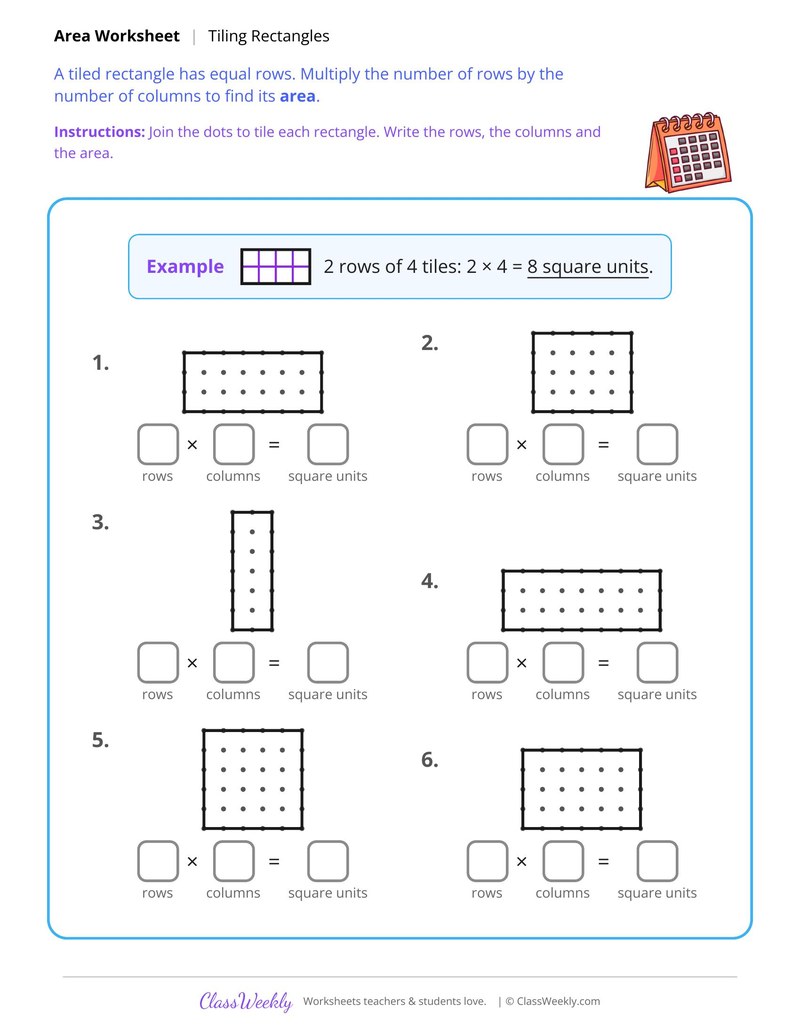
3rd grade math worksheet: count the unit squares in odd shaped grid figures and write each area in square units. Answer key included. Part of our areas using rectangular grids geometry collection. Aligned to Common Core standards.
How do I use this worksheet?
Before handing out the worksheet, briefly introduce the concept with a short oral warm-up or a visual model on the board. Let students work through it independently, using a partner or small group only if they want to talk through their thinking, encouraging them to talk through their thinking: "What strategy are you using? How do you know that is right?" After completing the worksheet, review any missed problems together and discuss the reasoning rather than just the answer. For extra support, let students use manipulatives or draw pictures alongside the written problems. These areas using rectangular grids worksheets work well as daily practice, homework, or a focused review activity.
What students will practice
- Students will explain that each small square is one square unit.
- Students will count the squares that cover a shape.
- Students will write each area in square units.
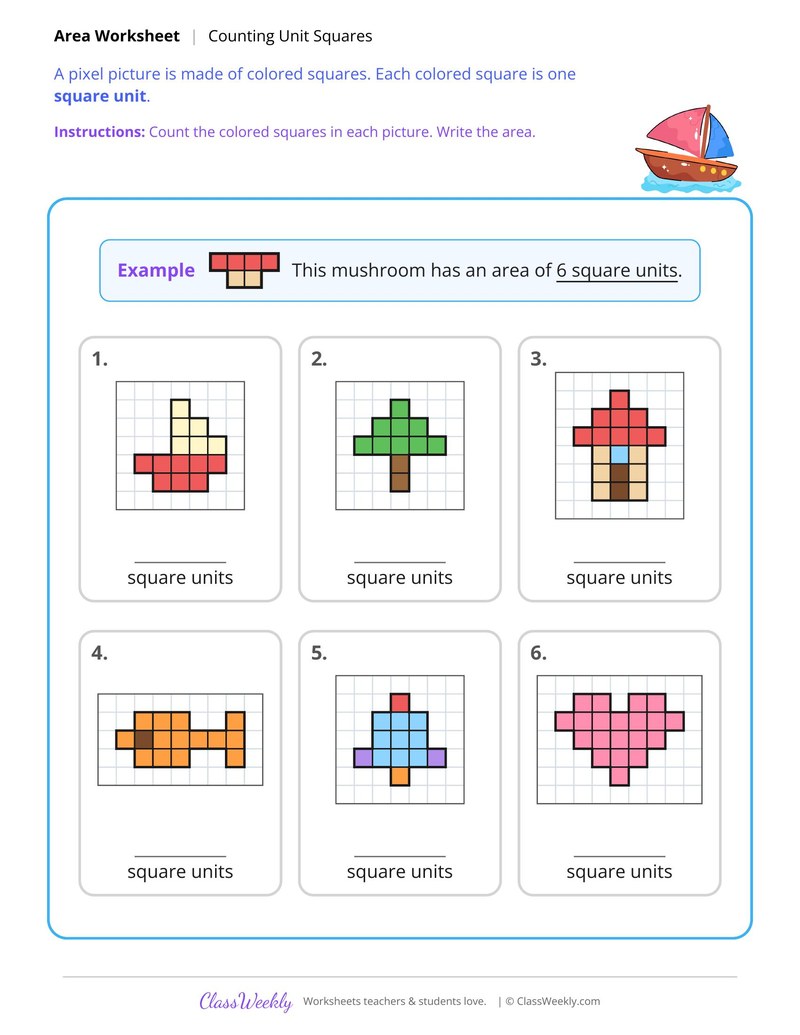
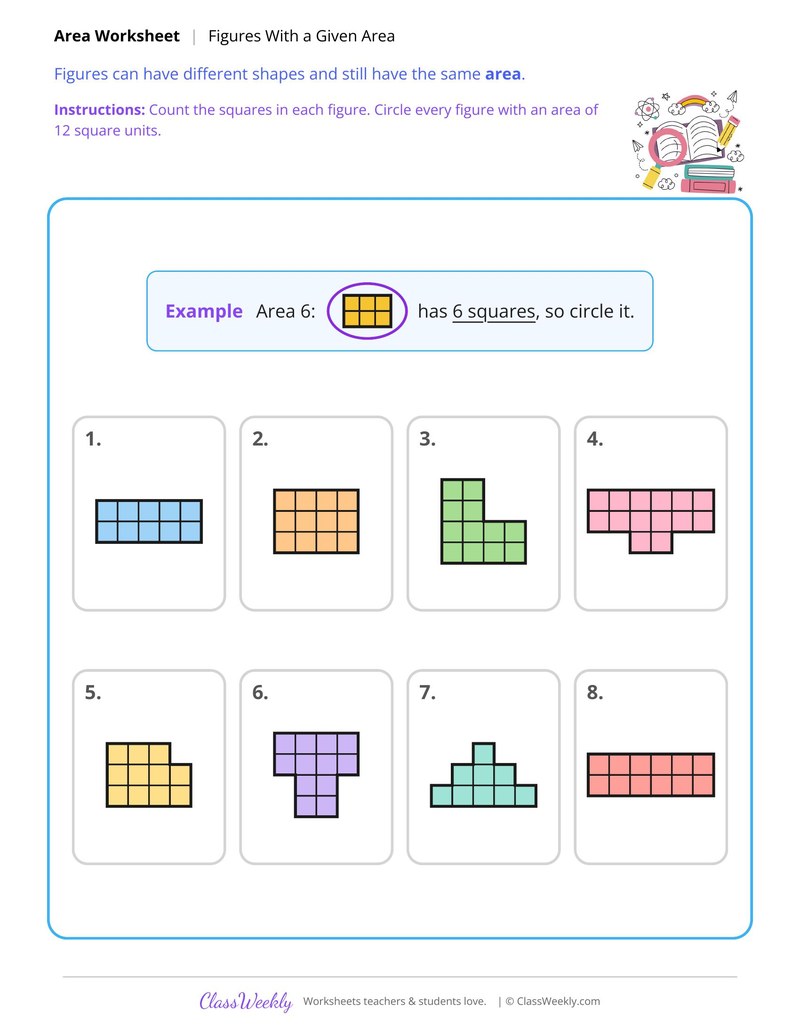
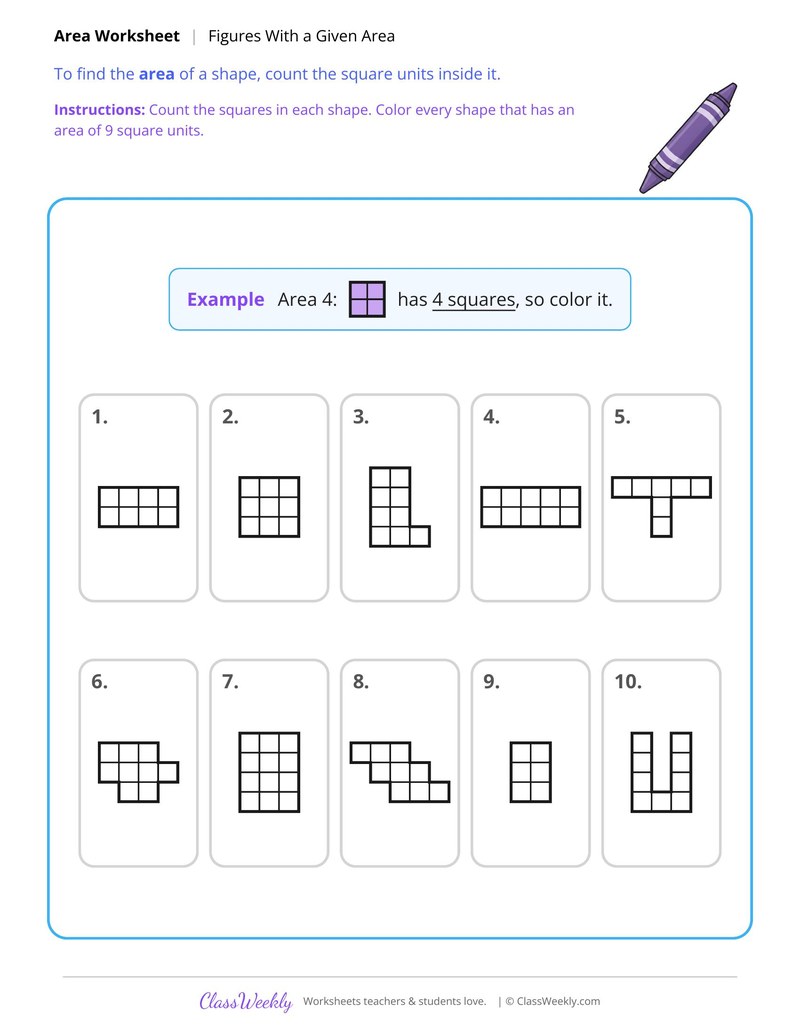
Curriculum Links
Common Core State Standards
Measurement and Data · 3rd Grade
Standard: Measure areas by counting unit squares (square cm, square m, square in, square ft, and improvised units).
View all 3.MD.C.6 worksheets →Find this in the curriculum
Browse the grade, subject, and topic this belongs to.
FAQ
How do I use this areas using rectangular grids worksheet?
⌄
Before handing out the worksheet, briefly introduce the concept with a short oral warm-up or a visual model on the board. Let students work through it independently, using a partner or small group only if they want to talk through their thinking, encouraging them to talk through their thinking: "What strategy are you using? How do you know that is right?" After completing the worksheet, review any missed problems together and discuss the reasoning rather than just the answer. For extra support, let students use manipulatives or draw pictures alongside the written problems. These areas using rectangular grids worksheets work well as daily practice, homework, or a focused review activity.
What does this worksheet teach?
⌄
Count the unit squares in odd shaped grid figures and write each area in square units. The directions on the page read: Count the squares in each shape. Write the area. The page opens with a worked example, and an answer key is included.
Can I use this areas using rectangular grids worksheet for homeschool or classroom?
⌄
Yes, both. We made it for 3rd Grade geometry, and the page works the same whether it lands on a kitchen table or a center rotation. At home, most families go through it together and talk the answers out loud, and that talking is where most of the learning happens with areas using rectangular grids. In class it runs well as independent work while you pull a small group. Print one copy or thirty, whichever the day needs.
How do students find area using a rectangular grid?
⌄
Students count all the unit squares inside a shape - often using rows and columns to apply multiplication rather than counting one by one - to find the total area in square units.
How does area work on grids connect to multiplication in 3rd grade?
⌄
Rectangular grids make it natural to see that area equals rows times columns, directly linking the geometry standard to the multiplication and arrays work students do in the same year.
What is the difference between area and perimeter that students must learn to distinguish?
⌄
Area counts the square units inside a shape, while perimeter counts the unit lengths around the outside - students commonly confuse these, so side-by-side practice helps clarify the distinction.
What geometry do 3rd graders learn?
⌄
3rd graders sort shapes by their attributes and see that squares, rectangles and rhombuses are all quadrilaterals (CCSS 3.G.A.1). They find area by counting unit squares and by multiplying length and width (3.MD.C.7) and find the perimeter of polygons and missing side lengths (3.MD.D.8). These pages also cover lines, rays, right angles and symmetry.
How do you find the area of a shape made of rectangles?
⌄
Split the shape into rectangles, find the area of each part and add. On Split the L Shape Into Two Rectangles, parts of 2 and 5 square units make a shape with an area of 7 square units. Story pages such as Pool Deck Area Problems also subtract a part that is cut out.
What is the difference between area and perimeter?
⌄
Area is the space a shape covers, counted in square units. Perimeter is the distance around its edge. On Area or Perimeter, Circle One, grass seed for a lawn needs area and a fence around a yard needs perimeter.
Can two rectangles have the same area but different perimeters?
⌄
Yes. Both a 1 by 6 rectangle and a 2 by 3 rectangle cover 6 squares, but their perimeters are 14 and 10 units. The Same area, different perimeter pages show that the rectangle closest to a square has the shortest perimeter.
Do these geometry worksheets have answer keys?
⌄
Most sheets come with an answer key. A few drawing pages, such as Draw a Figure With Each Area and Draw Parallel and Perpendicular Lines, are open tasks without one.
Ratings & Reviews
No reviews yet. Be the first to share what you think.
Reviews are for ClassWeekly members.
Make a Request
Spotted something to fix, or want a worksheet we don't have yet? Tell us and we'll make it.
What is ClassWeekly?
ClassWeekly offers free worksheets and printable learning resources for kids, from preschool up. All worksheets are aligned to Common Core, NGSS, and C3 Framework standards and designed by educators. We also have free online learning games for thousands of skills, and kids' answers turn into a progress report for the grown-up. Start a free 30-day trial to download the worksheets.