Find the Active Kids in the Park
Written by Adi Ackerman, Head Teacher
"Find the Active Kids in the Park" is written for Kindergarten (Ages 5-6). If your little one is a year younger but already steady on health and safety, the page still works. You may just need to read the instructions out loud. And if they are older and exercise never quite stuck, this is a short review rather than busywork.
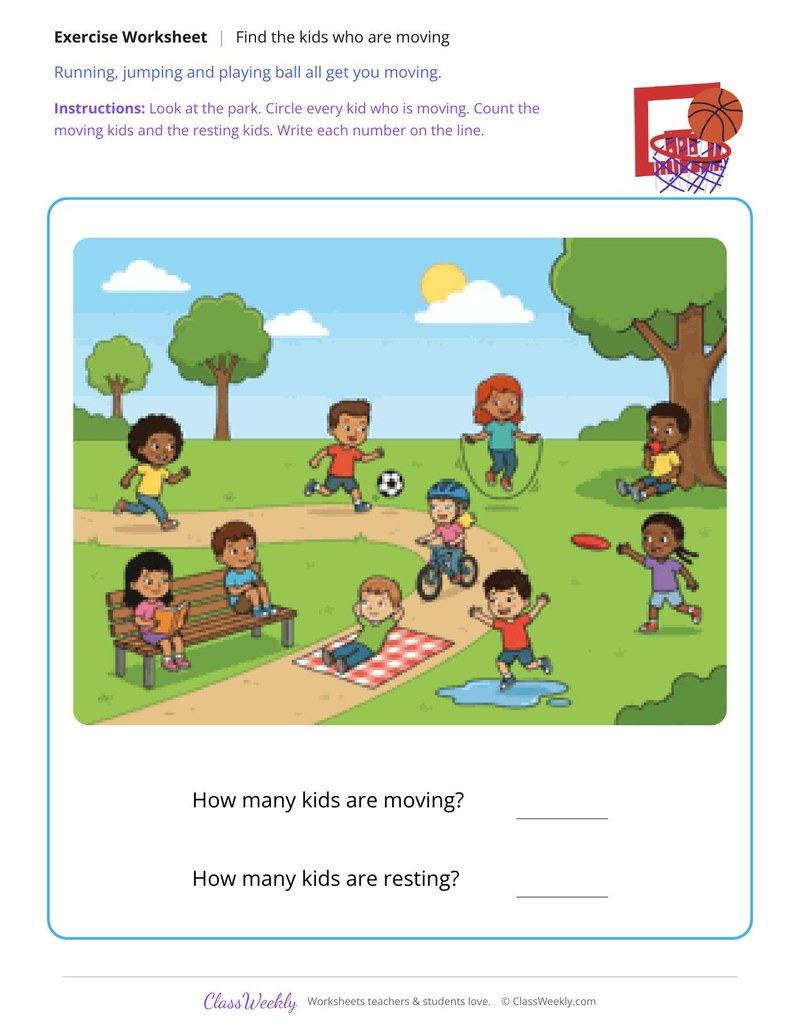
Free printable kindergarten exercise worksheet: circle every kid moving in a park scene, then count moving and resting kids. Answer key included. Part of our exercise health and safety collection.
How do I use this worksheet?
Get moving before or after the page: do ten jumping jacks and tally them, or act out each action word. Put the moving log on the fridge and color the stars together each evening. Active play of any kind counts, from dancing to a walk to the park.
What students will practice
- Students will sort active and resting activities.
- Students will count and record movement with tally marks and match action words to pictures.
- Students will track the days they are active and read a short story about exercise.
Curriculum Links
Find this in the curriculum
Browse the grade, subject, and topic this belongs to.
FAQ
How do I use this exercise worksheet?
⌄
Get moving before or after the page: do ten jumping jacks and tally them, or act out each action word. Put the moving log on the fridge and color the stars together each evening. Active play of any kind counts, from dancing to a walk to the park.
What does this worksheet teach?
⌄
Six exercise pages for Kindergarten and 1st grade. Children cut out 8 pictures and sort active and resting, count each child's jumping jacks with tally marks, match run, jump, hop and swim to pictures, and find the kids who are moving in a park scene. They also read a short story about exercise with a grown-up and answer questions, and keep a week-long log, coloring a star each day they play and move for 60 minutes. Five pages have an answer key.
Can I use this exercise worksheet for homeschool or classroom?
⌄
Yes, both. We made it for Kindergarten health and safety, and the page works the same whether it lands on a kitchen table or a center rotation. At home, most families go through it together and talk the answers out loud, and that talking is where most of the learning happens with exercise. In class it runs well as independent work while you pull a small group. Print one copy or thirty, whichever the day needs.
How much exercise do young children need?
⌄
The CDC recommends at least 60 minutes of physical activity every day for children 6 and older, and says children 3 to 5 should be active throughout the day. The moving log has children color a star for each day they play and move for 60 minutes.
Why count jumping jacks with tally marks?
⌄
It puts real numbers to movement. Children count each child's tally marks, which is good counting practice, and then can try their own jumping jacks and tally them.
What health and safety topics should kindergarteners learn?
⌄
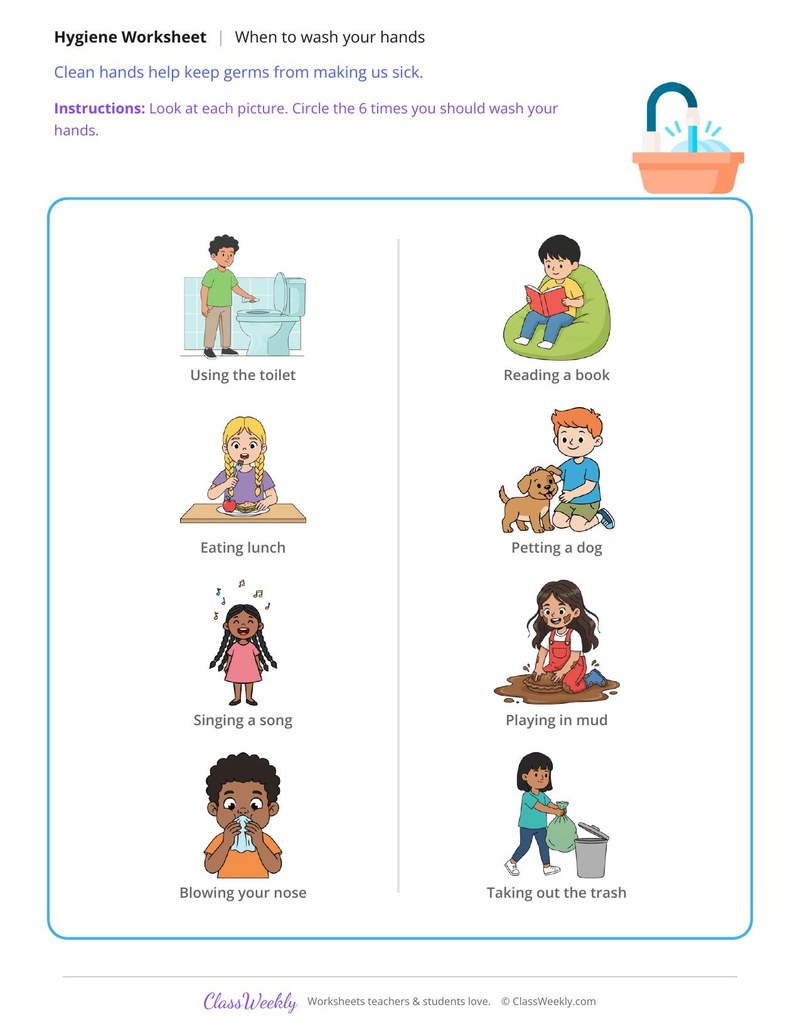
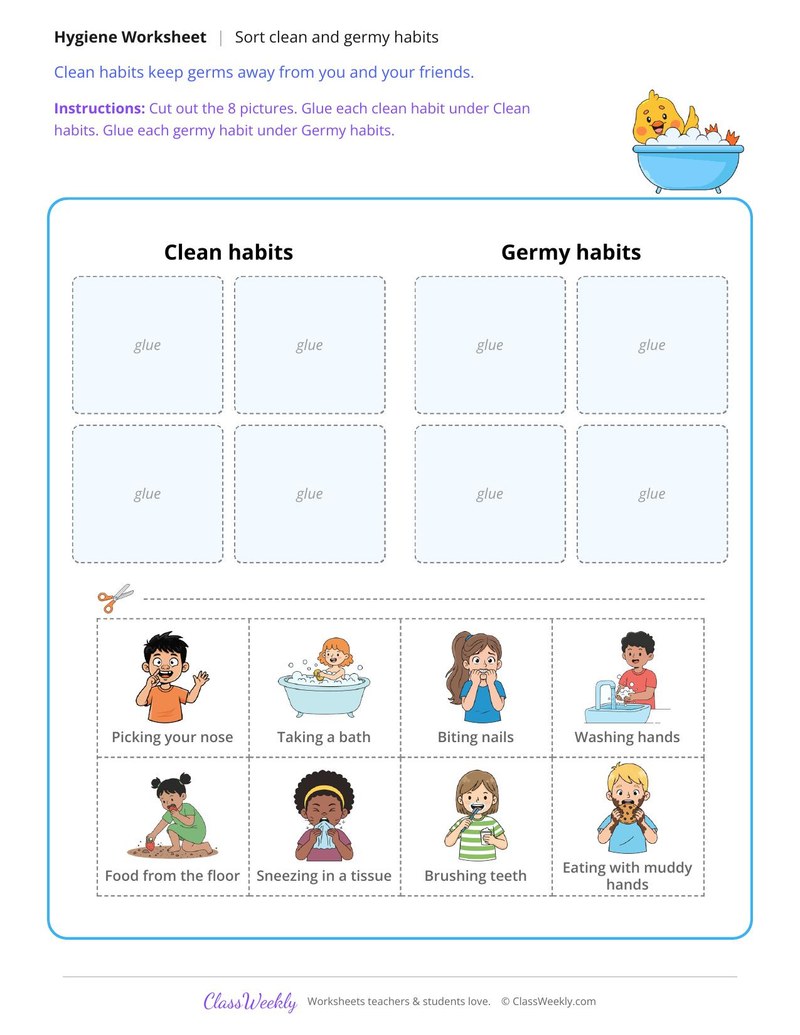
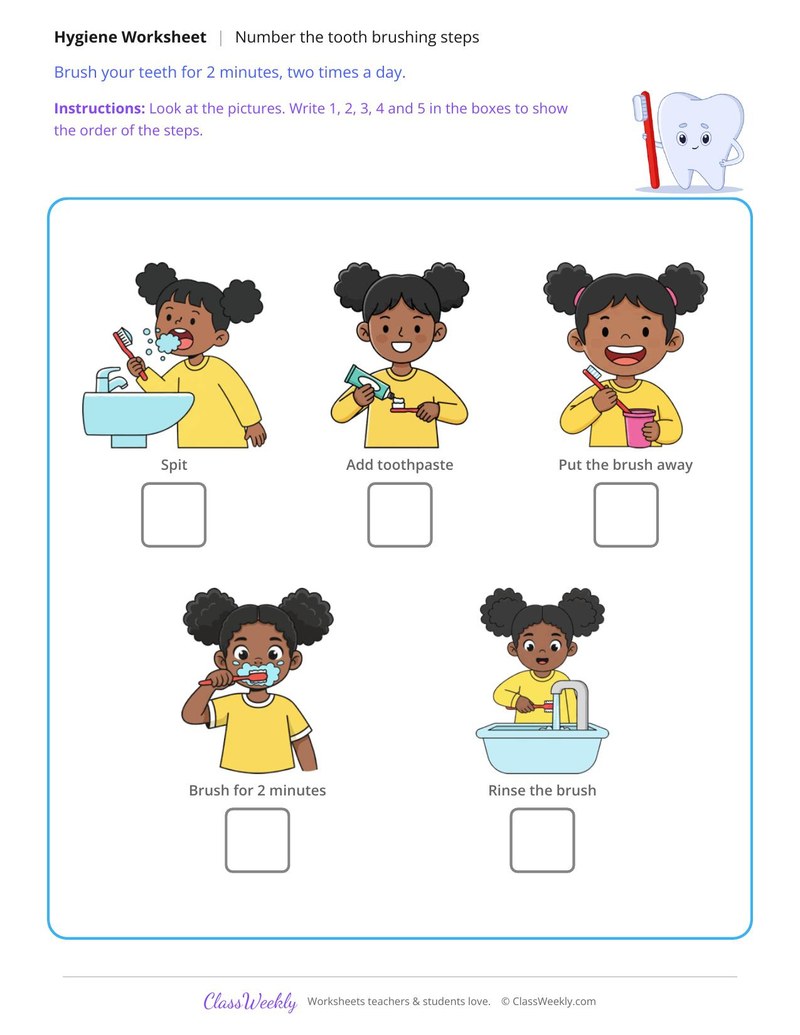
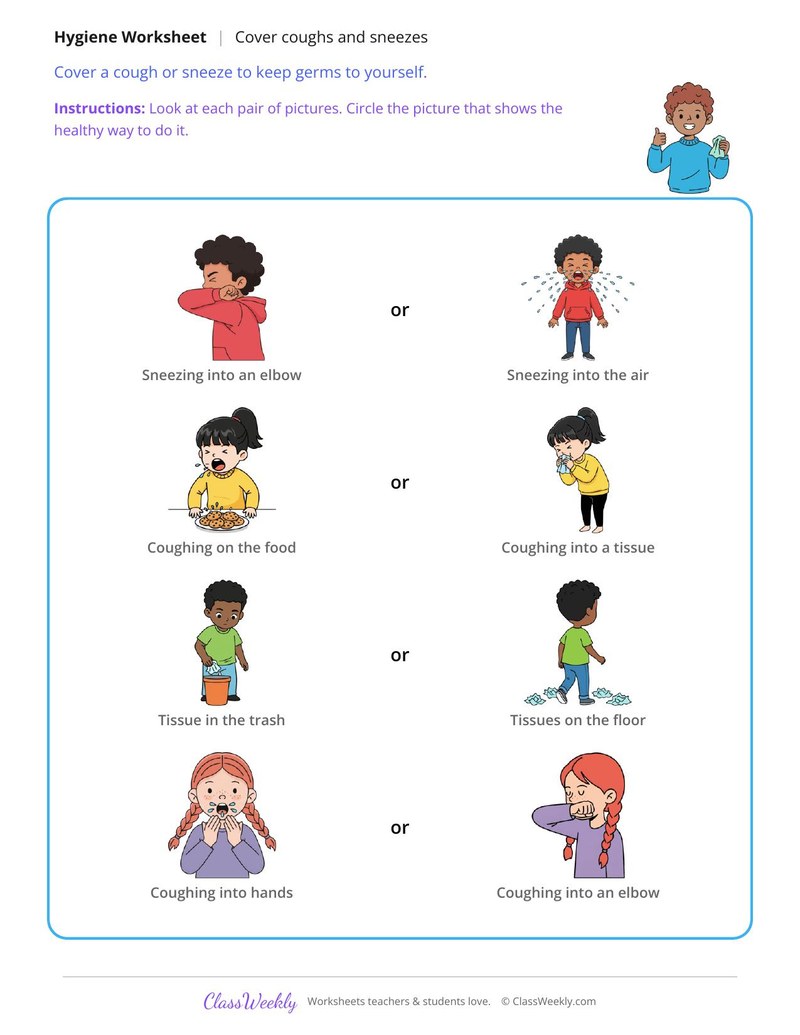
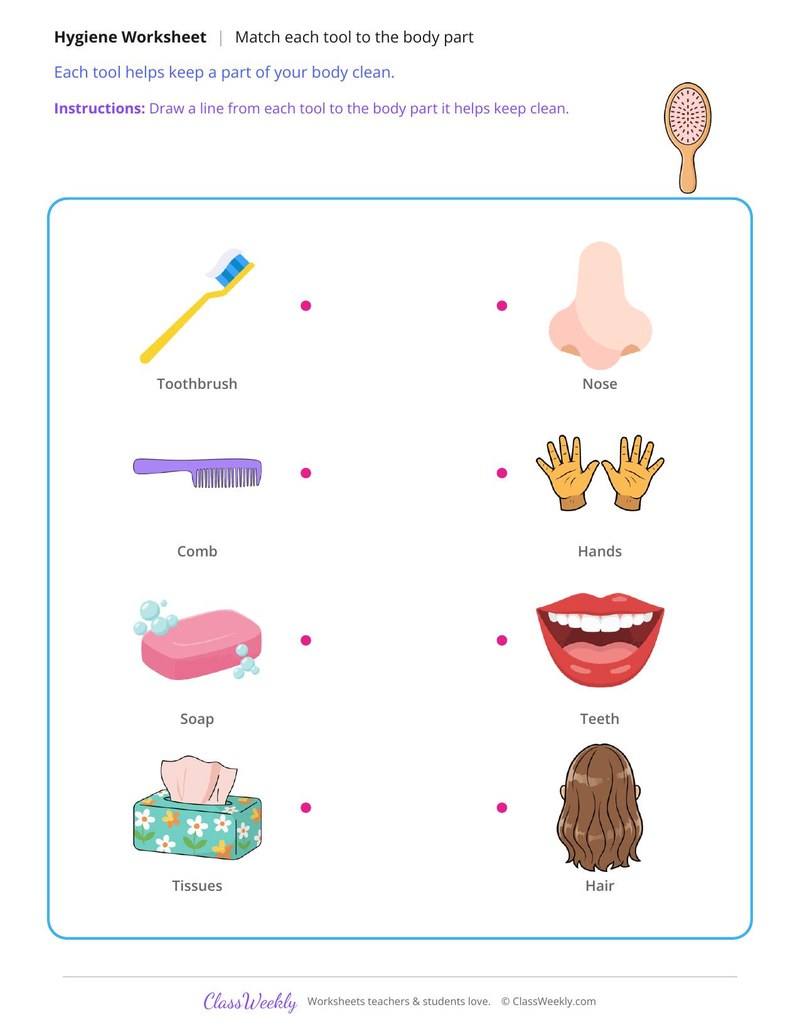
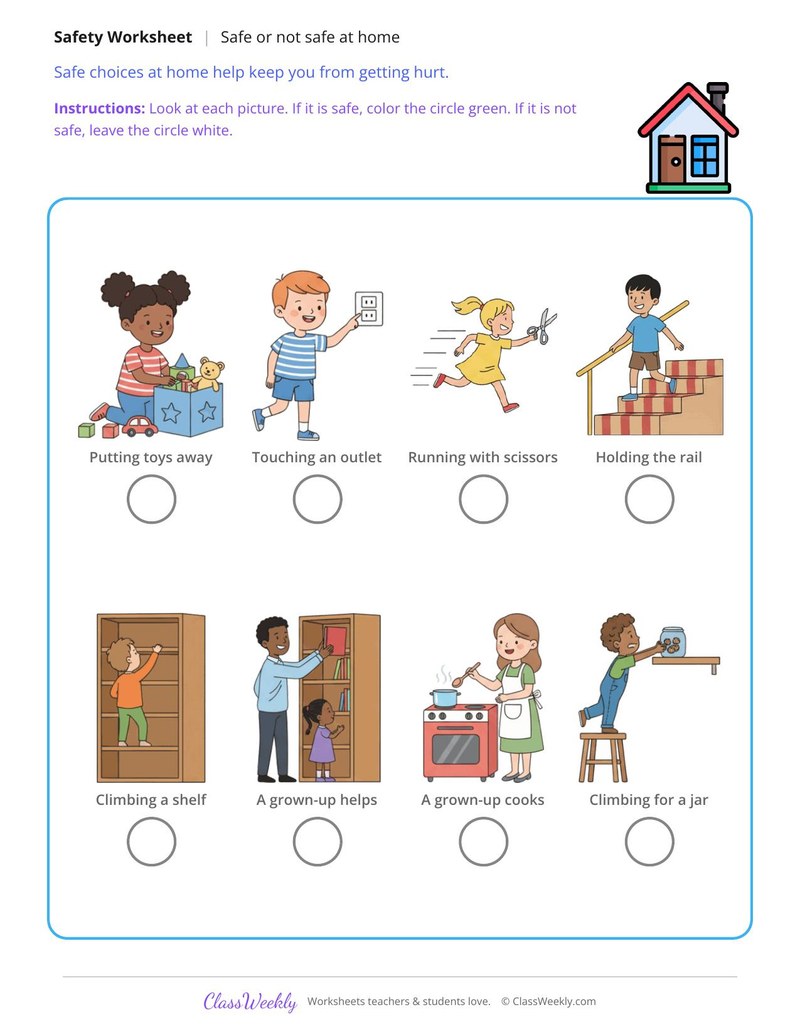
Most kindergarten health lessons cover washing hands and brushing teeth, covering coughs and sneezes, safety at home and on the street, getting enough sleep, staying active and making healthy food choices. These worksheets group them into five sets: hygiene and handwashing, safety, sleep, exercise and healthy habits at mealtime.
How do I teach my child the steps of handwashing?
⌄
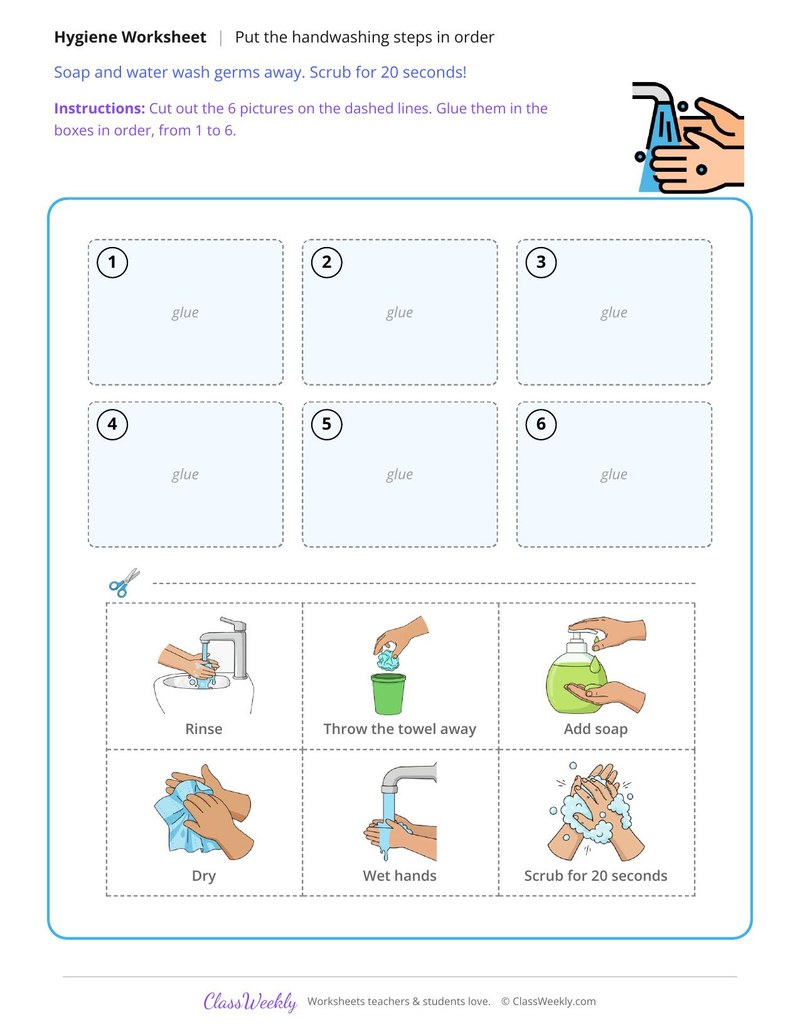
Show the steps in order: wet your hands, add soap, scrub the front, back and between your fingers, rinse and dry. Many families sing a short song while scrubbing so children keep going long enough. The handwashing steps cut and paste page lets children put the steps in order themselves, which helps them remember the routine at the sink.
How much sleep does a kindergartener need?
⌄
The American Academy of Sleep Medicine recommends 10 to 13 hours in every 24 hours, naps included, for children ages 3 to 5, and 9 to 12 hours for ages 6 to 12. A steady bedtime routine helps most. The sleep pages have children put a bedtime routine in order, sort day and night activities and count the hours between a bedtime clock and a wake-up clock.
Do these worksheets cover food groups and nutrition?
⌄
They cover healthy habits at mealtime: choosing water or milk, packing a healthy lunchbox, listening for hungry or full, mealtime manners and washing fruit. For food groups, healthy foods and fruits and vegetables, use the Kindergarten Food and Nutrition worksheets, which pair well with these pages.
Ratings & Reviews
No reviews yet. Be the first to share what you think.
Reviews are for ClassWeekly members.
Make a Request
Spotted something to fix, or want a worksheet we don't have yet? Tell us and we'll make it.
Worksheet Details
| Grade | Kindergarten |
| Subject | Science |
| Topic | Health and Safety |
| Pages | 1 page |
| Difficulty | Medium |
What is ClassWeekly?
ClassWeekly offers free worksheets and printable learning resources for kids in preschool to grade 5. These worksheets teach everyday life skills and are designed by educators. Our math, reading, science, and social studies worksheets are aligned to Common Core, NGSS, and C3 Framework standards. Become a member to access the full library and download unlimited PDFs.