Weather and Climate Fill in the Blanks
Written by Adi Ackerman, Head Teacher
"Weather and Climate Fill in the Blanks" is written for 3rd Grade (Ages 8-9). If your little one is a year younger but already steady on weather and climate, the page still works. You may just need to read the instructions out loud. And if they are older and climate vs weather never quite stuck, this is a short review rather than busywork.
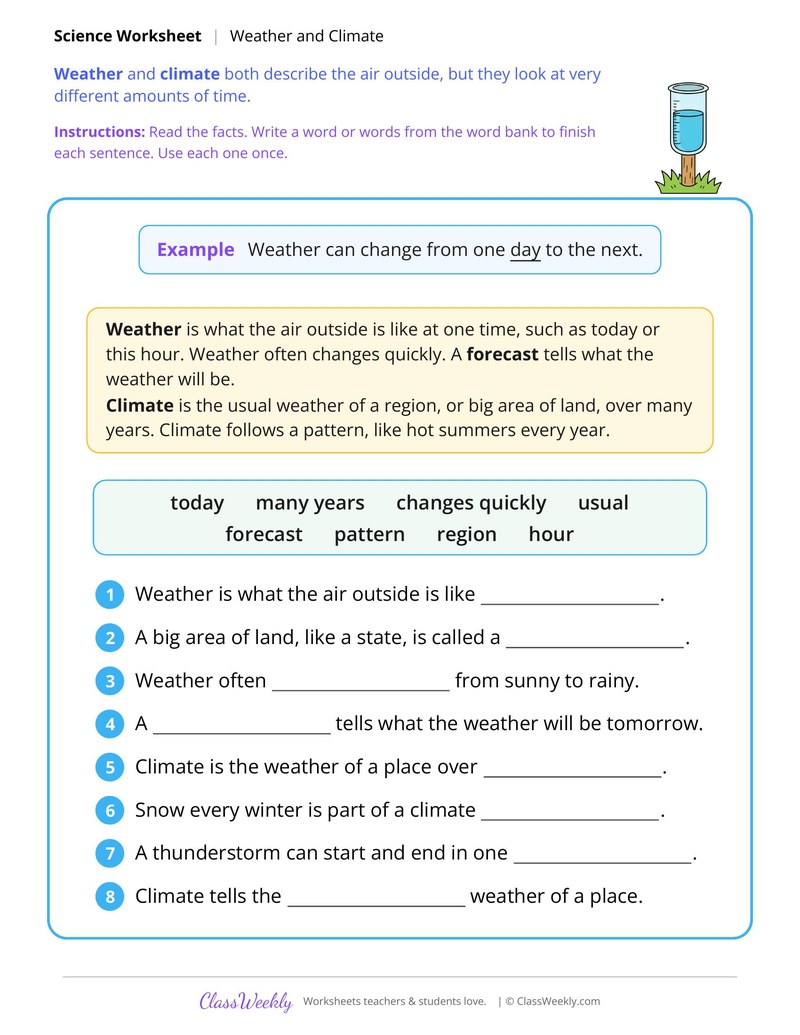
3rd grade science worksheet: finish 8 sentences with word bank words like forecast, region and pattern to tell weather from climate. Answer key included. Part of our climate vs weather collection.
How do I use this worksheet?
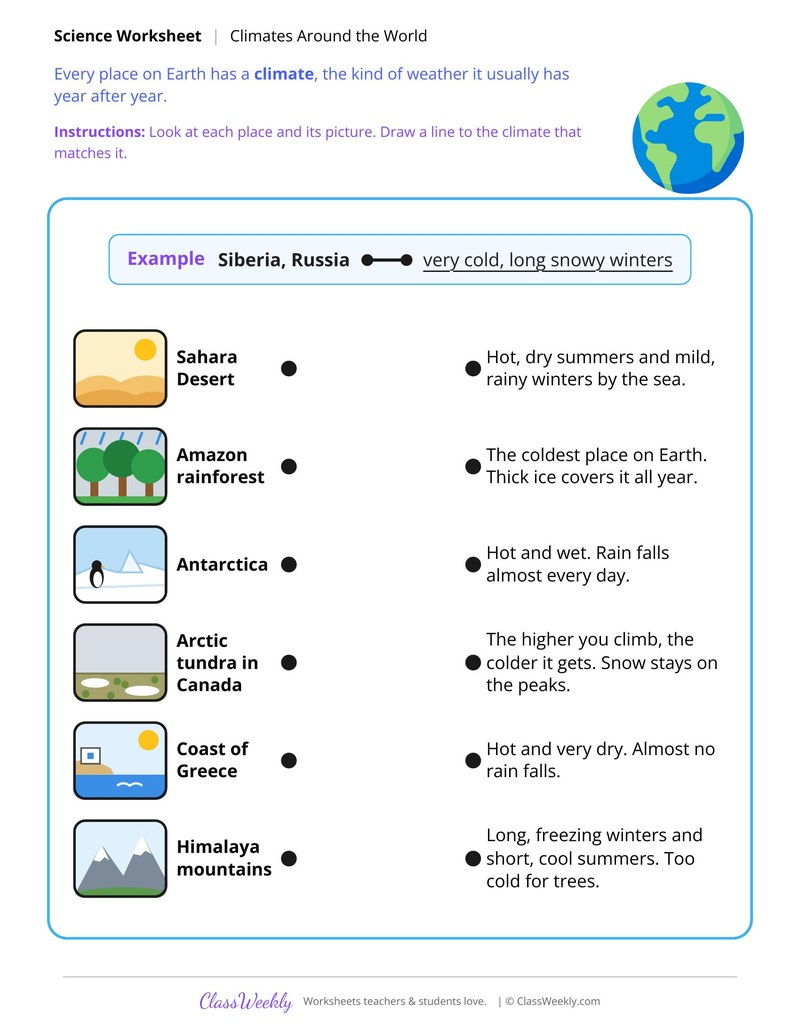
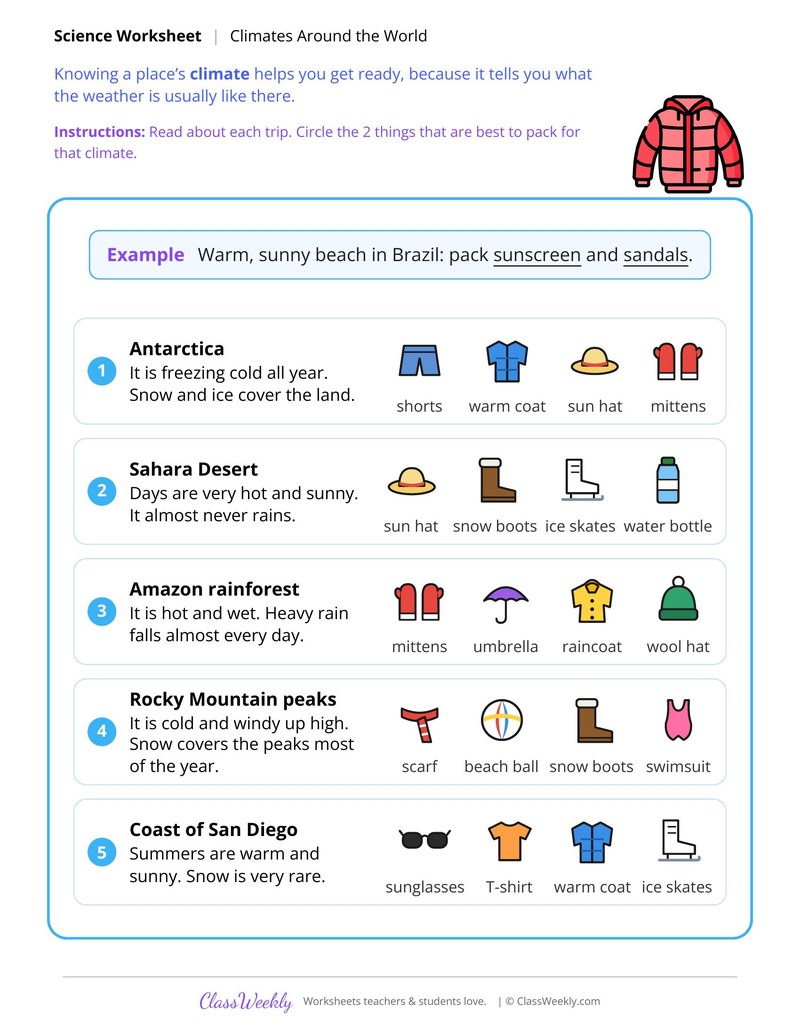
Ask your child whether today's weather matches your town's usual weather for this month. After the desert and rainforest page, name one plant or animal that could not live in the other place and talk about why.
What students will practice
- Students will read facts about weather and climate.
- Students will fill 8 blanks with words from the word bank.
- Students will explain that climate is the usual weather over many years.
Curriculum Links
Find this in the curriculum
Browse the grade, subject, and topic this belongs to.
FAQ
How do I use this climate vs weather worksheet?
⌄
Ask your child whether today's weather matches your town's usual weather for this month. After the desert and rainforest page, name one plant or animal that could not live in the other place and talk about why.
What does this worksheet teach?
⌄
Finish 8 sentences with word bank words like forecast, region and pattern to tell weather from climate. The directions on the page read: Read the facts. Write a word or words from the word bank to finish each sentence. Use each one once. The page opens with a worked example, and an answer key is included.
Can I use this climate vs weather worksheet for homeschool or classroom?
⌄
Yes, both. We made it for 3rd Grade weather and climate, and the page works the same whether it lands on a kitchen table or a center rotation. At home, most families go through it together and talk the answers out loud, and that talking is where most of the learning happens with climate vs weather. In class it runs well as independent work while you pull a small group. Print one copy or thirty, whichever the day needs.
What does climate vs weather teach third graders?
⌄
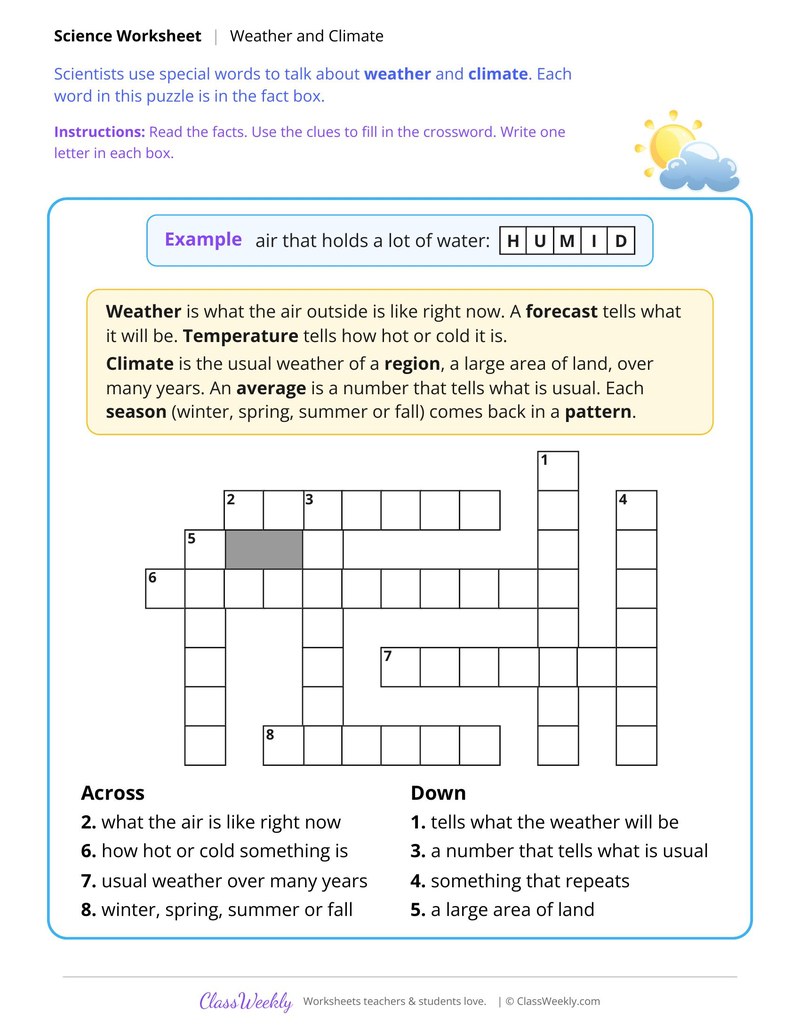
These worksheets teach third graders that weather describes day-to-day atmospheric conditions, today it is sunny and warm, while climate describes the long-term pattern of conditions in a region, this desert is dry most of the year. Students classify examples, compare the climates of different regions, and begin to understand why scientists track climate data over decades rather than days.
When do third graders learn about climate vs weather?
⌄
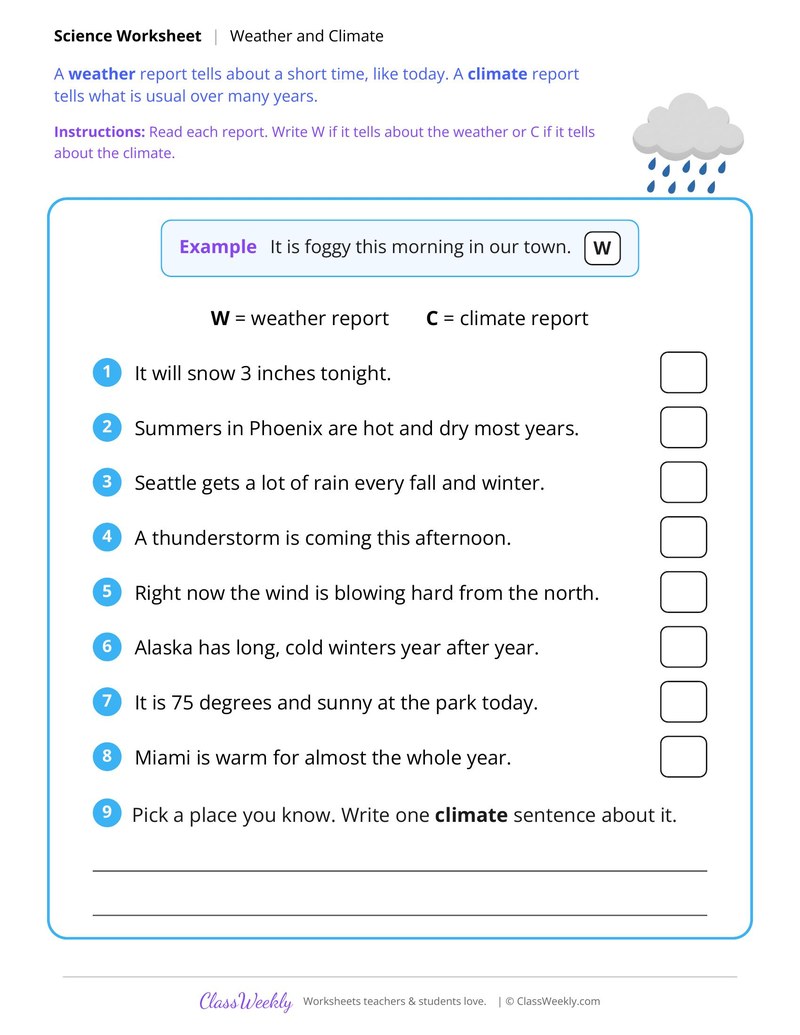
Climate vs weather is typically introduced in Grade 3 during the weather and climate unit, usually after students have studied weather patterns and severe weather. At ages 8-9, students can grasp the timescale distinction when it is anchored to familiar examples: 'Rainy today' is weather. 'Seattle gets a lot of rain every year' is climate.
How can I use these worksheets at home?
⌄
Look up the average monthly temperatures for your city and compare them to what the weather actually was this month. Ask your child: is today's weather the same as your climate? Use that real-data comparison to anchor the worksheet definitions before completing the classification activities. Connecting the concept to your own hometown makes the distinction immediately meaningful.
What is the difference between weather and climate?
⌄
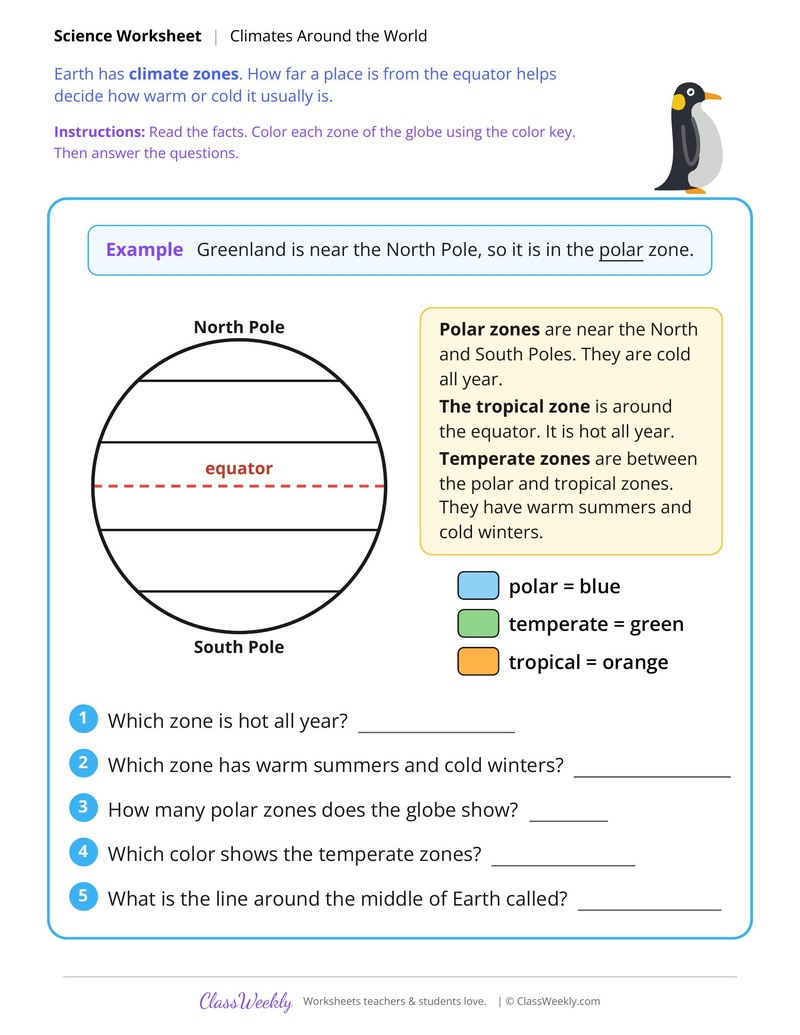
Weather is what the air outside is like today or this hour, and it can change quickly. Climate is the usual weather of a region over many years, like hot summers every year. Children sort weather reports from climate reports and fill in sentences with words like forecast and region.
How do 3rd graders read a thermometer?
⌄
They find where the red line stops and count marks from the closest number. On these sheets each small mark can stand for 2 or 5 degrees, and children read both Fahrenheit and Celsius thermometers.
How do these sheets use climate data?
⌄
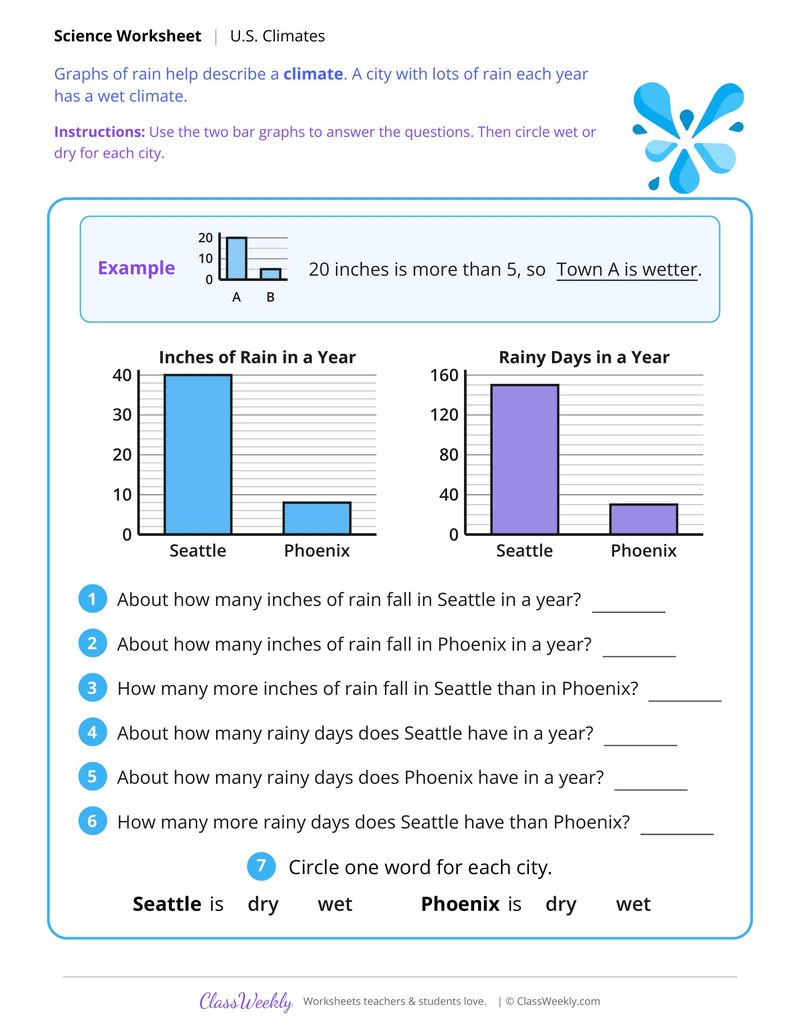
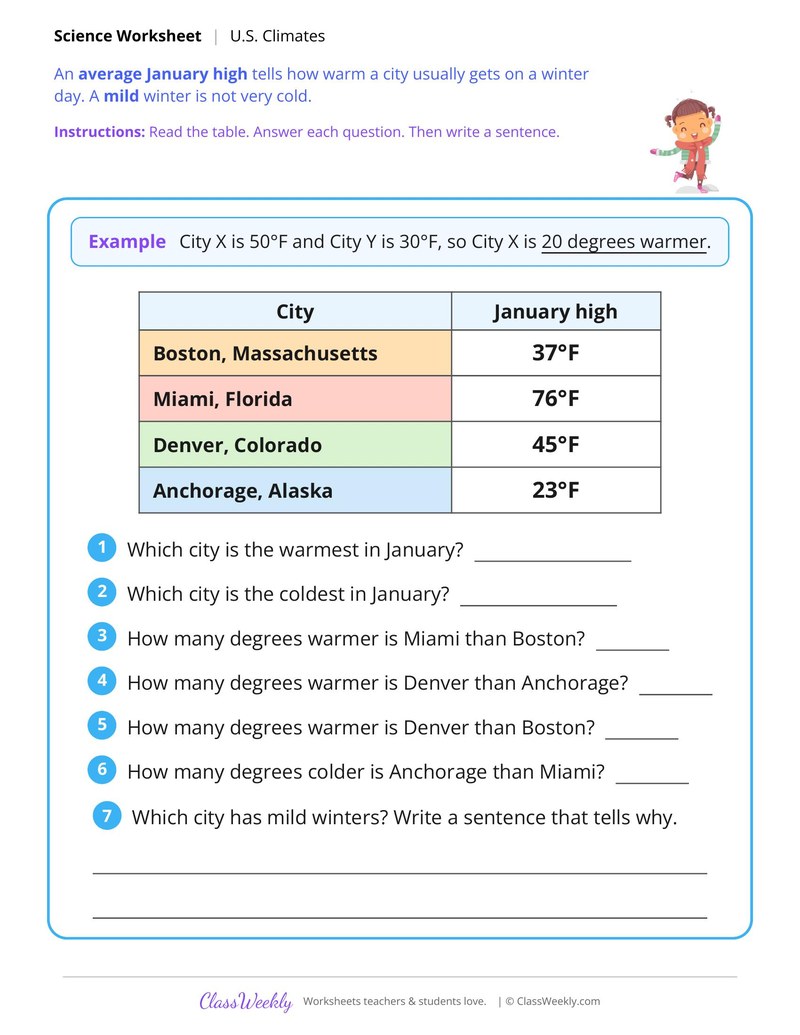
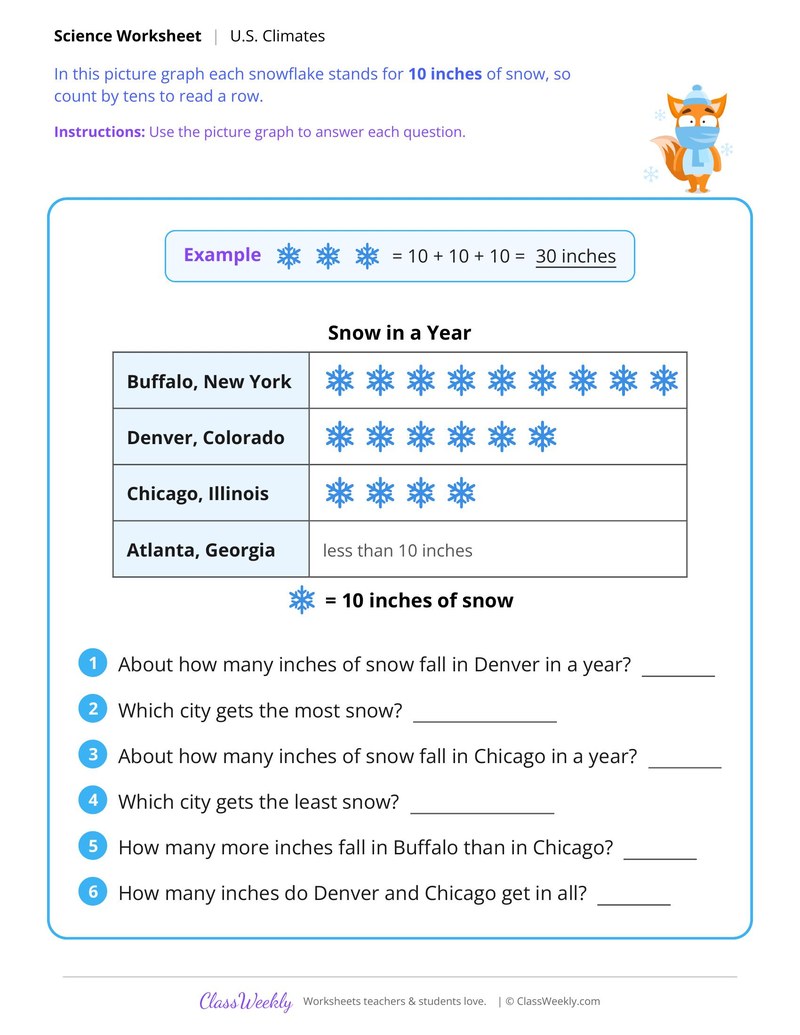
Children read bar graphs, picture graphs and tables of rain, snow and temperature for cities like Seattle, Phoenix, Miami and Anchorage. Then they describe each climate as wet or dry, mild or cold.
What weather hazard designs do kids study?
⌄
They compare rain gardens, ditches and flood walls, read a tub town flood test and match storm shutters, stilts and roof straps to the hurricane danger each one stops. Most sheets come with an answer key, and open plan pages let children design their own safe house.
Ratings & Reviews
No reviews yet. Be the first to share what you think.
Reviews are for ClassWeekly members.
Make a Request
Spotted something to fix, or want a worksheet we don't have yet? Tell us and we'll make it.
Worksheet Details
| Grade | 3rd Grade |
| Subject | Science |
| Topic | Weather and Climate |
| Pages | 1 page |
| Difficulty | Medium |
What is ClassWeekly?
ClassWeekly offers free worksheets and printable learning resources for kids, from preschool up. All worksheets are aligned to Common Core, NGSS, and C3 Framework standards and designed by educators. We also have free online learning games for thousands of skills, and kids' answers turn into a progress report for the grown-up. Start a free 30-day trial to download the worksheets.