Ways to Help at Home
Written by Adi Ackerman, Head Teacher
"Ways to Help at Home" is written for Kindergarten (Ages 5-6). If your little one is a year younger but already steady on social-emotional learning, the page still works. You may just need to read the instructions out loud. And if they are older and Kindness never quite stuck, this is a short review rather than busywork.
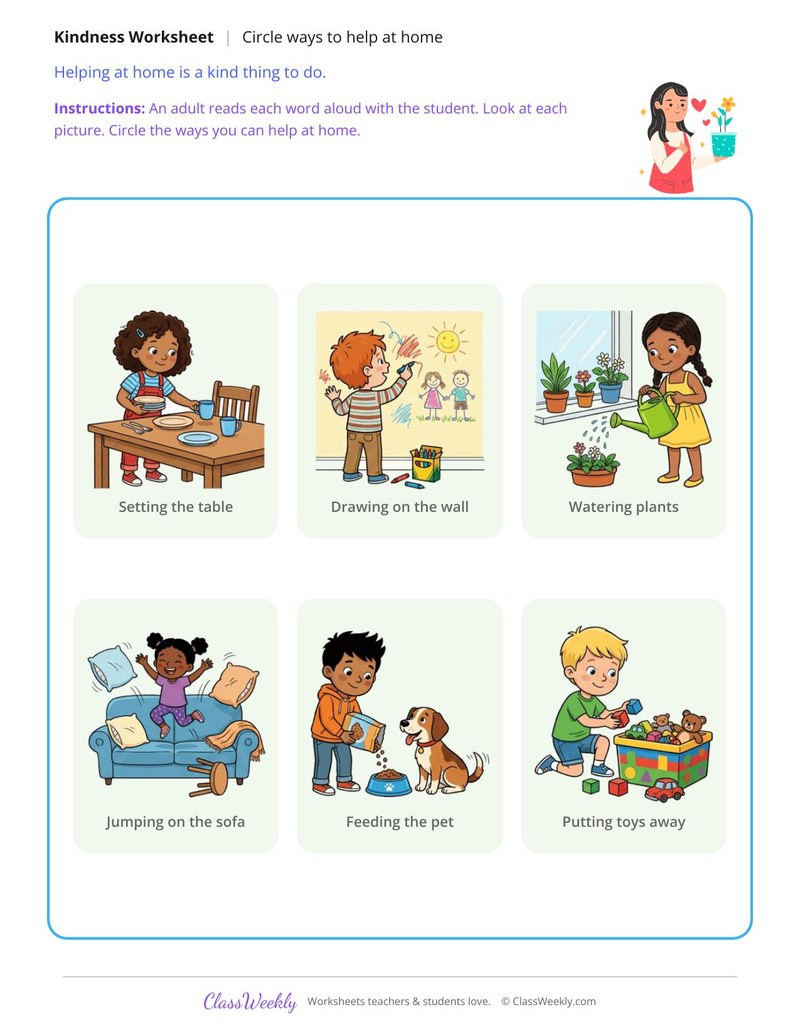
Free printable kindergarten SEL worksheet: circle the jobs you can do at home, like setting the table or feeding the pet. Answer key included. Part of our Kindness social-emotional learning collection.
How do I use this worksheet?
Before each page, share a kind thing someone did for you that day. After the draw a kind act page, pick the act your child drew and do it together that week. Kindness sticks best when children see it, do it and hear it named.
What students will practice
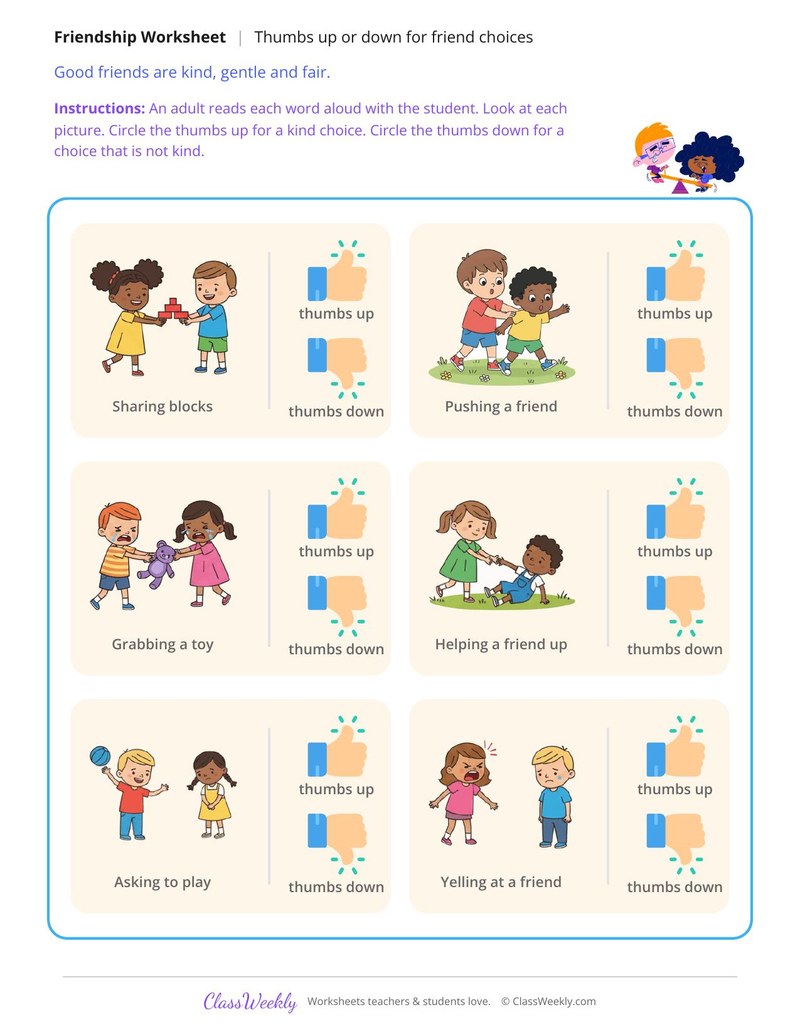
- Students will spot kind acts in pictures and tell them apart from unkind ones.
- Students will name ways to help at home and kind words to say.
- Students will plan and draw a kind act they can do for someone.
Curriculum Links
Find this in the curriculum
Browse the grade, subject, and topic this belongs to.
FAQ
How do I use this Kindness worksheet?
⌄
Before each page, share a kind thing someone did for you that day. After the draw a kind act page, pick the act your child drew and do it together that week. Kindness sticks best when children see it, do it and hear it named.
What does this worksheet teach?
⌄
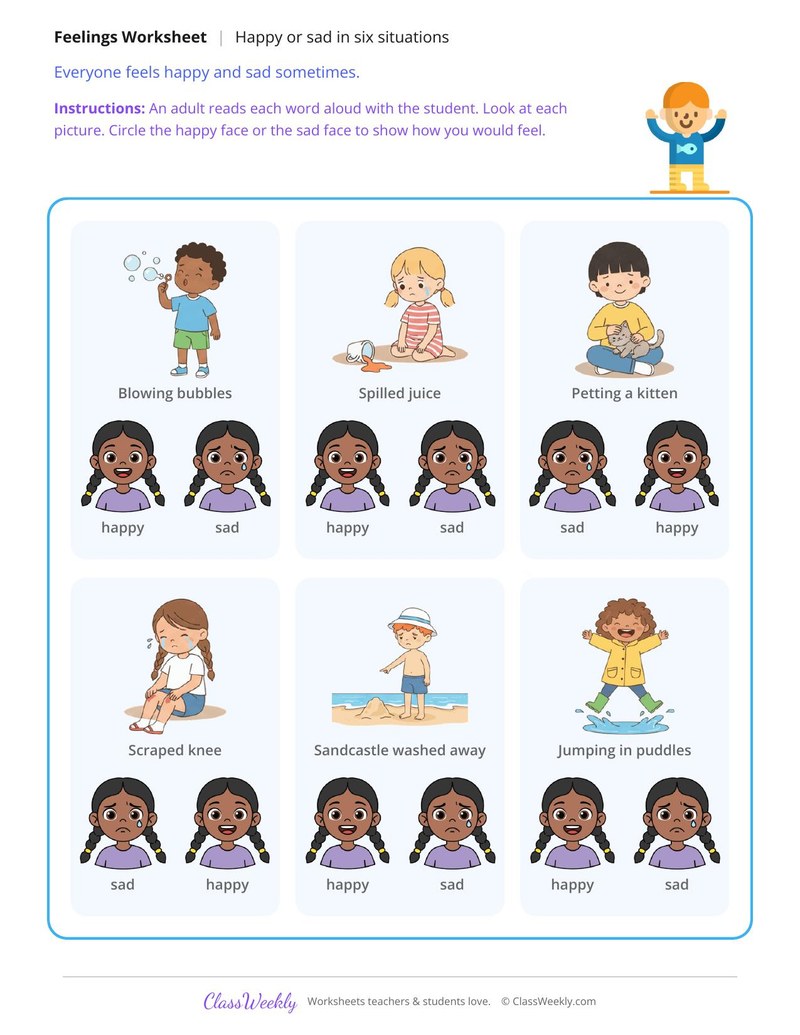
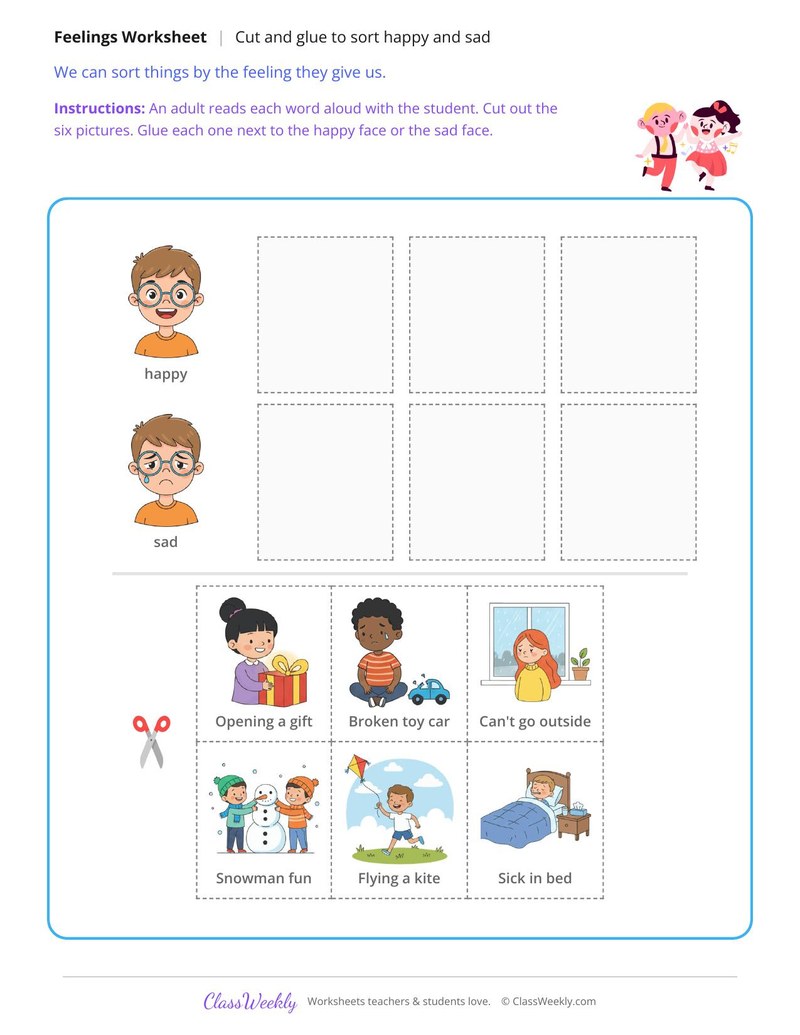
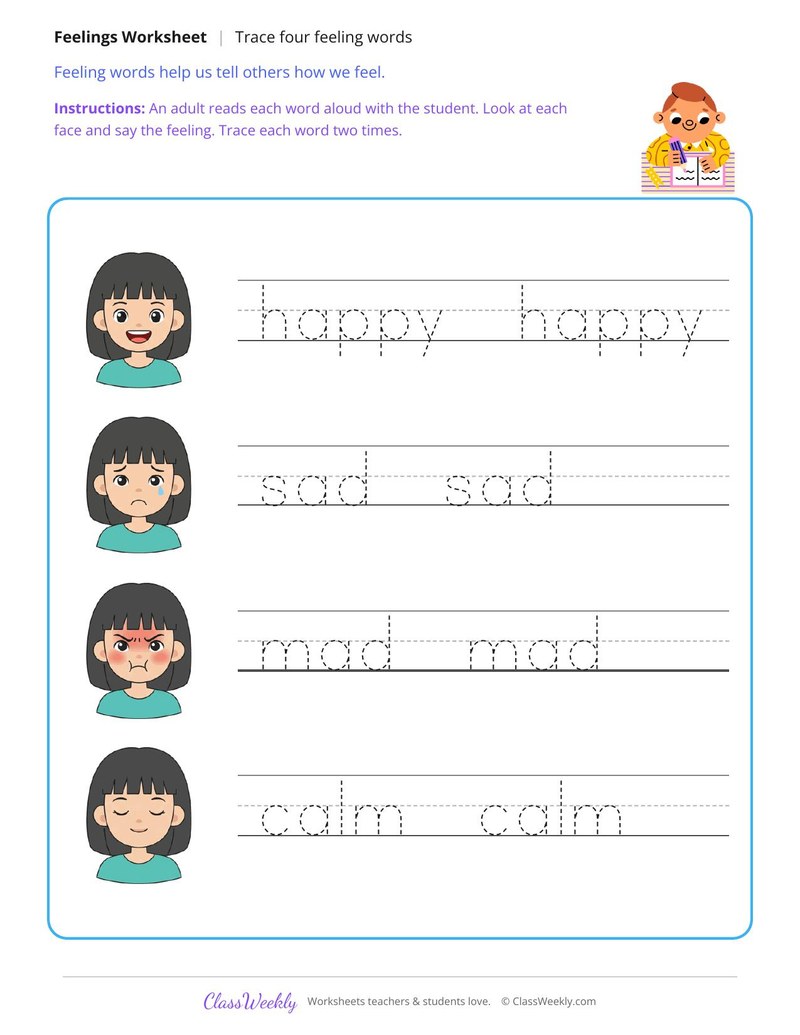
Six kindness pages for Pre-K and Kindergarten. Children color only the kind acts, circle ways to help at home, count the kind acts in a busy park scene, and match each moment to a kind word. They also trace kindness hearts and the word kind, and draw a kind act of their own using the idea pictures for help. Four pages have an answer key.
Can I use this Kindness worksheet for homeschool or classroom?
⌄
Yes, both. We made it for Kindergarten social-emotional learning, and the page works the same whether it lands on a kitchen table or a center rotation. At home, most families go through it together and talk the answers out loud, and that talking is where most of the learning happens with Kindness. In class it runs well as independent work while you pull a small group. Print one copy or thirty, whichever the day needs.
What does kindness look like for a 5 year old?
⌄
Small, everyday actions: sharing a toy, helping pick something up, asking a sad friend to play, or saying something nice. The pictures on these sheets show moments like these so children can spot them.
How can I follow up the draw a kind act page?
⌄
Pick one act from the drawing and do it together that week, then talk about how the other person felt. Doing the kind act matters more than the drawing.
What is social-emotional learning for kindergarten?
⌄
Social-emotional learning, often called SEL, is how children learn to understand their feelings, get along with others and make good choices. For 4 to 6 year olds that means naming feelings like happy, sad and mad, sharing and taking turns, using kind words, calming down with a few deep breaths, and trying again when something is hard. These worksheets practice each of those with pictures, not reading.
How do I help my child name their feelings?
⌄
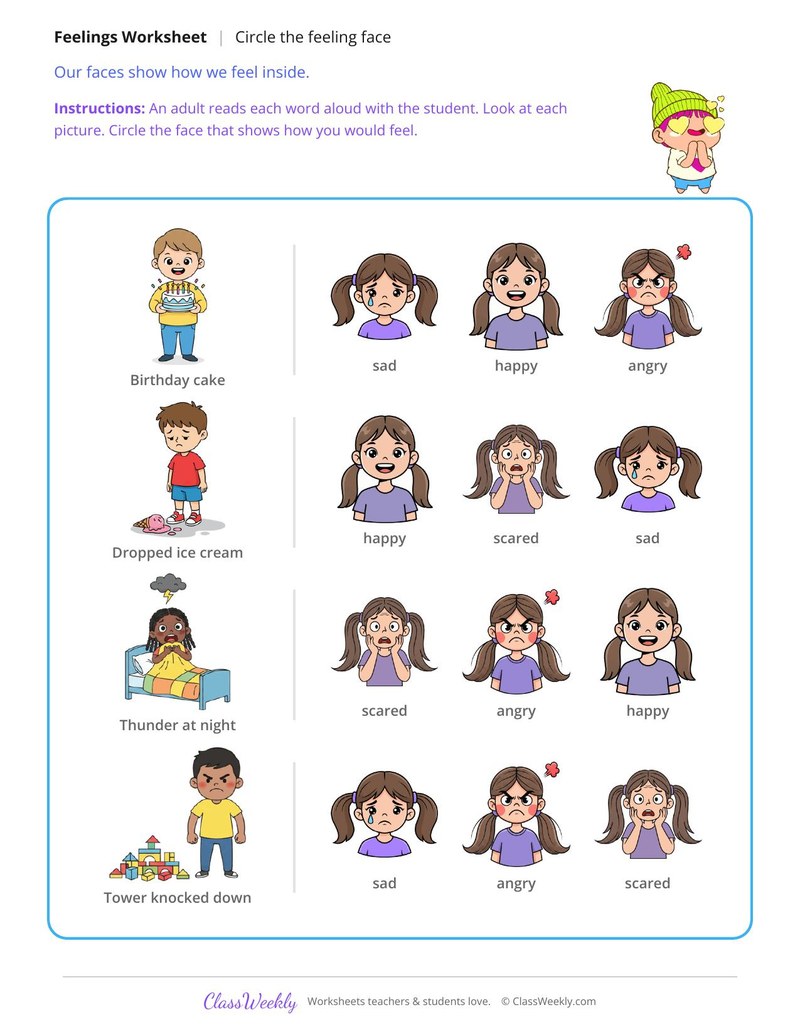
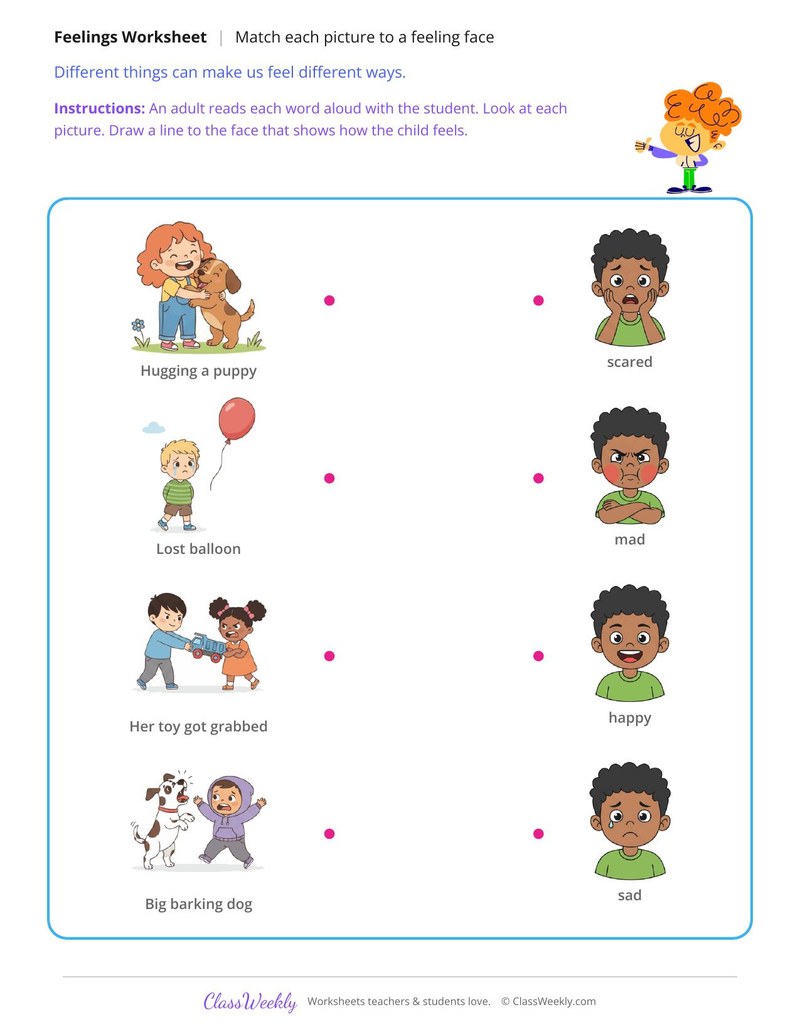
Name feelings out loud in everyday moments, yours and theirs: you look frustrated, the tower fell down. Then use a picture page to practice, like circling the feeling face or matching a picture to how it would feel. Children who have words for a feeling can tell you about it instead of only showing it, which makes the feeling easier to handle together.
What calming strategies work for young children?
⌄
Slow breathing is the easiest to teach. Belly breathing and five-finger breathing give a child something to trace or touch while they breathe in and out, and stop, breathe, think gives them three steps to remember. Practice when your child is already calm, so the strategy is familiar before a big feeling arrives, and set up a calm down corner with a few comfort items.
Can my preschooler use these worksheets?
⌄
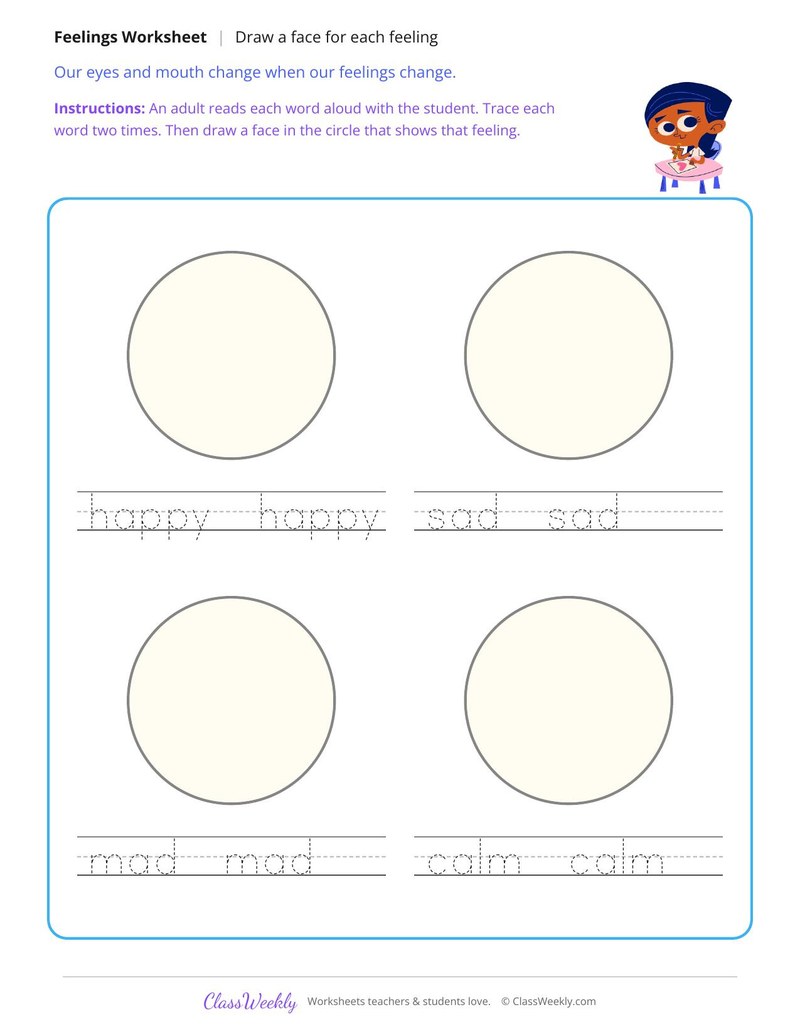
Yes. The pages are written for Pre-K and Kindergarten. Each one uses pictures and a short direction that a grown-up reads aloud, and children answer by circling, matching, coloring, tracing, drawing or cutting and gluing. The only writing is tracing a few friendly or feeling words.
Ratings & Reviews
No reviews yet. Be the first to share what you think.
Reviews are for ClassWeekly members.
Make a Request
Spotted something to fix, or want a worksheet we don't have yet? Tell us and we'll make it.
Worksheet Details
| Grade | Kindergarten |
| Subject | Social Studies |
| Topic | Social-Emotional Learning |
| Pages | 1 page |
| Difficulty | Medium |
Learn More
What is ClassWeekly?
ClassWeekly offers free worksheets and printable learning resources for kids in preschool to grade 5. These worksheets teach everyday life skills and are designed by educators. Our math, reading, science, and social studies worksheets are aligned to Common Core, NGSS, and C3 Framework standards. Become a member to access the full library and download unlimited PDFs.