
Preschool Social Studies Activities and Community Helpers
Get 30 days of free worksheet downloads
Key Takeaways
- Preschool social studies starts close to home and grows outward: me, my family, my home, my neighborhood, my country.
- All about me activities come first, because children understand the wider world by starting with themselves.
- Community helpers teach kids who keeps the neighborhood running, and who they can go to for help.
- First maps can be as simple as a drawing of a bedroom or the path from home to the park.
- Needs and wants, plus symbols and holidays, give 4-year-olds a first taste of economics, citizenship and culture.
"Who brings the mail?" "Where does the garbage go?" "Why is there a flag on that building?"
Preschoolers are full of questions about the world around them. That curiosity is the heart of preschool social studies: learning how people live, work and get along together. Our Pre-K social studies worksheets cover five topics that answer just these kinds of questions: all about me, helpers in our community, maps and places, needs and wants, and American symbols and holidays.
Here's how to teach each one with simple, hands-on activities you can do at home or in the classroom.
Start With All About Me
Social studies for young children works best when it starts close to home and grows outward. First me, then my family, then my home, my neighborhood and my country. Kids understand the wider world by starting with themselves.
All about me activities to try:
- Self-portraits. Look in a mirror together. What color are your eyes? Your hair? Then draw a picture of me.
- My family. Draw and count the people in your family. Every family looks different: two moms, a dad and a grandma, one parent, cousins who live with you. All of them count.
- Favorites. Favorite color, food, animal and game. Compare with a sibling or friend.
- Then and now. Look at baby photos. What can you do now that you couldn't do then?
The draw and count my family page adds a little counting practice, too.
Quick tip: all about me activities make lovely keepsakes. Date them and save them. You'll love comparing next year's drawings.
From "me," kids naturally widen out to the people around them. These community helpers pages are a favorite next step.
Free Pre-K Community Helpers Worksheets


Meet the Helpers in Our Community
Community helpers are a classic preschool topic for a reason. Kids already see these people every day: the mail carrier, the bus driver, the grocery worker, the doctor. Learning about them helps children understand how a community works, and who they can go to when they need help.
Helpers to talk about:
- Firefighters and police officers
- Doctors, nurses and dentists
- Teachers and librarians
- Mail carriers, bus drivers and sanitation workers
- Farmers, bakers and grocery workers
Activity ideas:
- Match the tool to the helper. A stethoscope goes with the doctor, a hose with the firefighter. Then match helpers to where they work with helpers and their workplaces.
- Dress-up play. A cardboard box becomes a fire truck, a toy stethoscope turns the living room into a doctor's office.
- Real-life thank yous. Draw a picture for your mail carrier or the crossing guard.
- Who can help me? Talk about which helper you'd go to if you were lost, hurt or sick. Our who can help me? picture match is a gentle way in.
Many communities also offer fire station visits or library story times, which make these lessons come alive.
Make Your First Maps
Maps sound advanced, but preschoolers can absolutely start. A map is just a picture of a place from above, and kids love the "bird's eye view" idea.
Start with places your child knows well:
- Position words first. In, on, under, next to, behind. Hide a toy and give clues: "It's under the table."
- A bedroom map. Look at the room from the doorway, then draw it from above. Where's the bed? The window? Try draw a map of my bedroom.
- A path map. Draw the way from home to the park, school or Grandma's house.
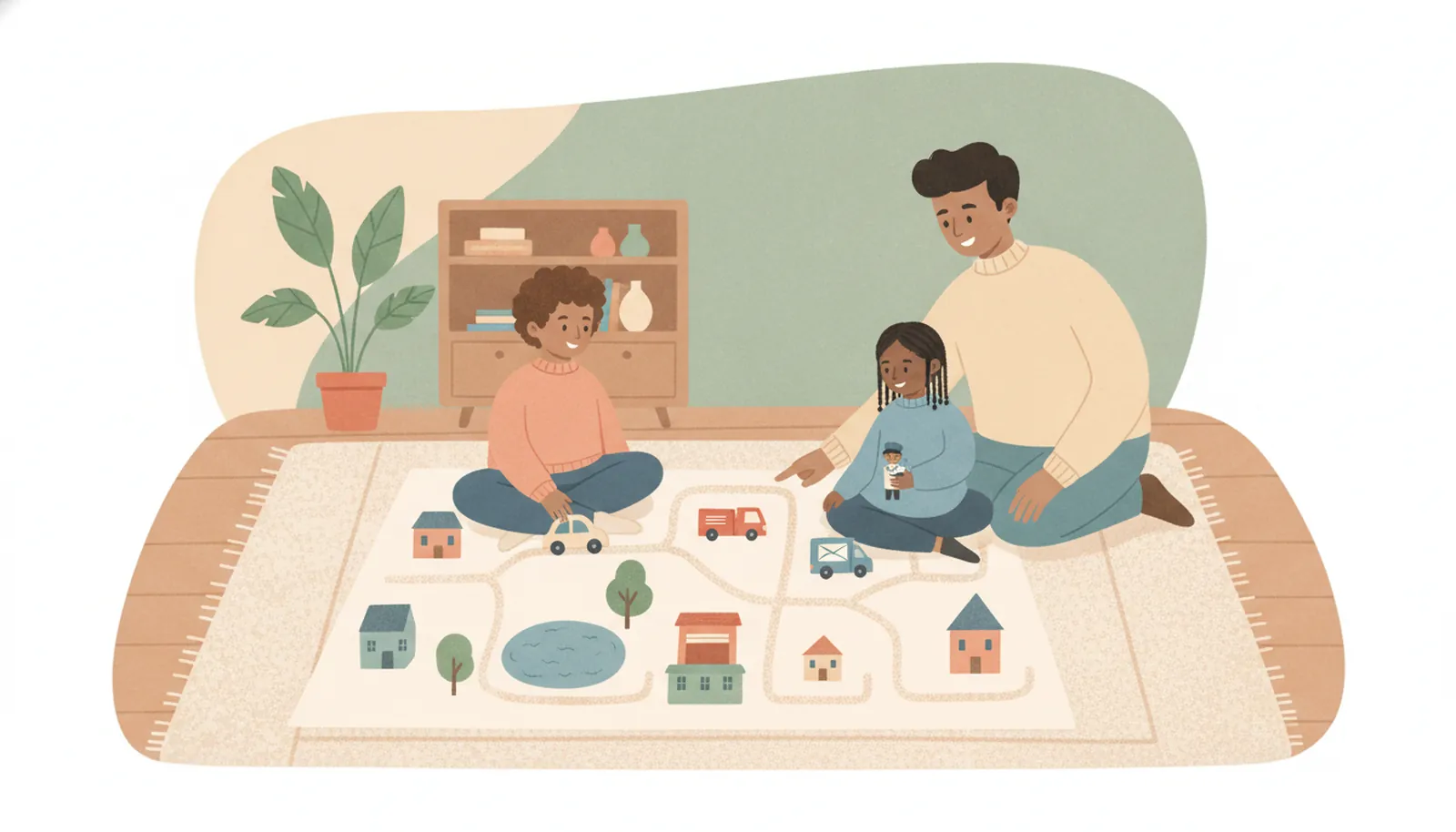
- Play maps. A play mat with roads and a toy car is a map in action.
- Land and water. Look at a globe together. Blue is water, green and brown are land.
Honestly? Your child's first map might look like a few scribbles and a big square bed. That's perfect. The idea is what matters. For older kids ready for compasses and map keys, see our social studies map tools for K-5.
Sort Needs and Wants
Needs and wants is a first step into economics, and it's surprisingly easy for 4-year-olds to grasp with pictures.
- Needs are things we must have to live and be healthy: food, water, clothes, a home, love and care.
- Wants are things that are nice to have: toys, treats, a new bike.
Activities that help:
- Picture sort. Cut out pictures and sort them into two groups. Our needs or wants cut and paste sort is ready to go.
- Grocery store talk. "We need milk. We want cookies. Which one goes in the cart first?"
- Piggy bank saving. Put a coin in a jar each week for something your child wants. Waiting is a big skill.
- Weather clothes. What do we need when it's cold? Rainy? Sunny?
Keep it judgment-free. Wanting things is normal. The goal is noticing the difference, not feeling bad about wants.
Explore American Symbols and Holidays
Symbols and holidays help preschoolers connect to their country and to the many ways families celebrate. Keep it simple and concrete.
American symbols kids can recognize:
- The American flag, with its stars and stripes. Try color the American flag.
- The bald eagle, the national bird
- The Statue of Liberty
- The Liberty Bell
Holidays to talk about include Independence Day, Thanksgiving and birthdays (every child's favorite holiday). Families also celebrate many different holidays, depending on their traditions, culture and faith. Invite your child to share how your family celebrates, and to learn how friends celebrate too. The ways families celebrate page is a great conversation starter.
Quick tip: a gratitude moment fits naturally here. "I am thankful for..." drawings around Thanksgiving are simple and sweet. 💕
Keep It Hands-On
Preschool social studies is mostly talking, playing and noticing. A worksheet is a great way to wrap up an idea, but the learning happens in the conversations around it.
A simple week:
- Monday: all about me drawing
- Tuesday: community helper dress-up
- Wednesday: draw a bedroom map
- Thursday: needs and wants sort at snack time
- Friday: talk about a family celebration
FAQ
What is social studies in preschool? Preschool social studies is about how people live together. It usually covers learning about yourself and your family, homes and neighborhoods, community helpers, simple maps, needs and wants, and symbols and holidays. It starts with the child and gradually widens to the community and country.
What are community helpers for preschool? Community helpers are people whose jobs help everyone in a neighborhood. Common examples for preschoolers include firefighters, police officers, doctors, nurses, teachers, mail carriers, farmers, librarians, grocery workers, bus drivers and sanitation workers.
How do you teach maps to preschoolers? Start with places your child knows. Draw a simple map of their bedroom from above, use a toy car on a play map, trace the route from home to school or the park, and practice position words like in, on, under, next to and behind.
How do you explain needs and wants to a preschooler? Needs are things we must have to live and be healthy, like food, water, clothes and a home. Wants are things that are nice to have, like toys or treats. Sorting pictures into two groups and talking through everyday choices at the store makes the idea concrete.
Keep Reading
- Social Studies Activities and Map Tools for K-5
- Feelings Activities for Preschoolers and Kindergarten
A Big World, One Step at a Time
Social studies for preschoolers is really about one big idea: we're all part of something bigger, a family, a neighborhood, a country. Every question your little one asks is a chance to explore it together.
Every child is different, so follow their curiosity. Start with whatever topic they're asking about this week, and find more ideas in our Pre-K social studies worksheets.

Adi Ackerman
Head Teacher
Adi is the Head Teacher at ClassWeekly, with years of experience teaching elementary students. She designs our curriculum-aligned worksheets and writes practical guides for teachers and parents.
Keep Reading
Ready to download? Try ClassWeekly free for 30 days.
Unlimited worksheets for PreK through 5th grade. Cancel anytime.