How a Caribou Herd Stays Safe, Read and Answer
Written by Adi Ackerman, Head Teacher
"How a Caribou Herd Stays Safe, Read and Answer" is written for 3rd Grade (Ages 8-9), and it covers NGSS 3-LS2-1. If your little one is a year younger but already steady on living things, the page still works. You may just need to read the instructions out loud. And if they are older and animals in groups never quite stuck, this is a short review rather than busywork.
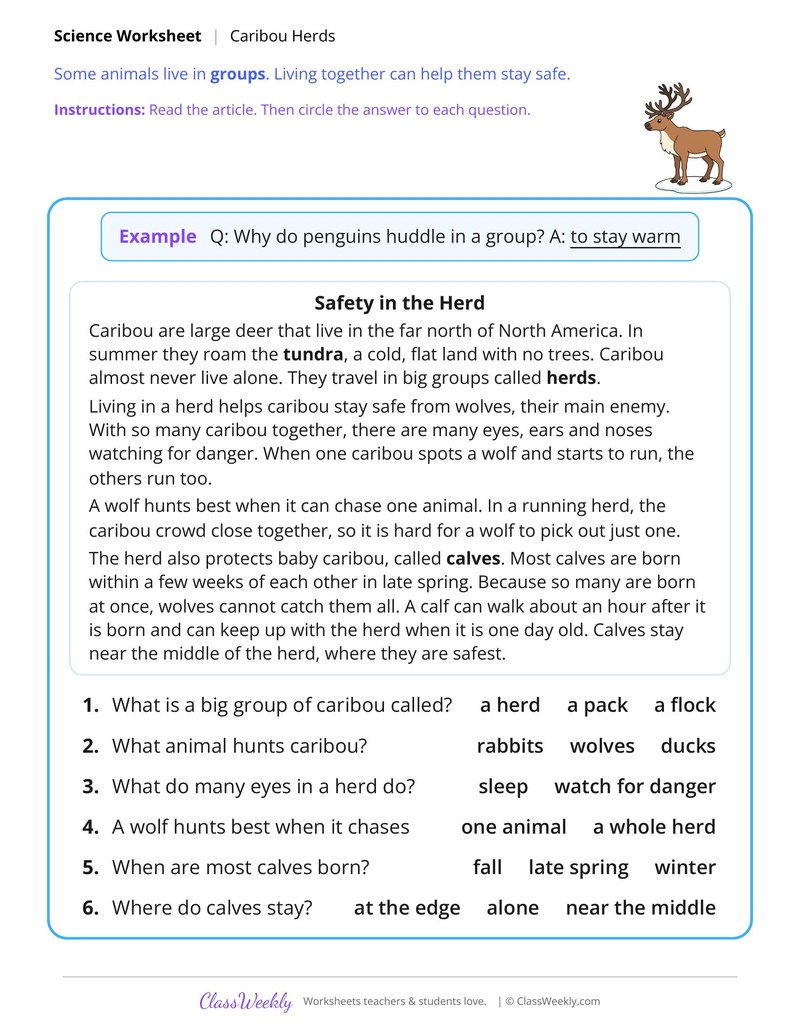
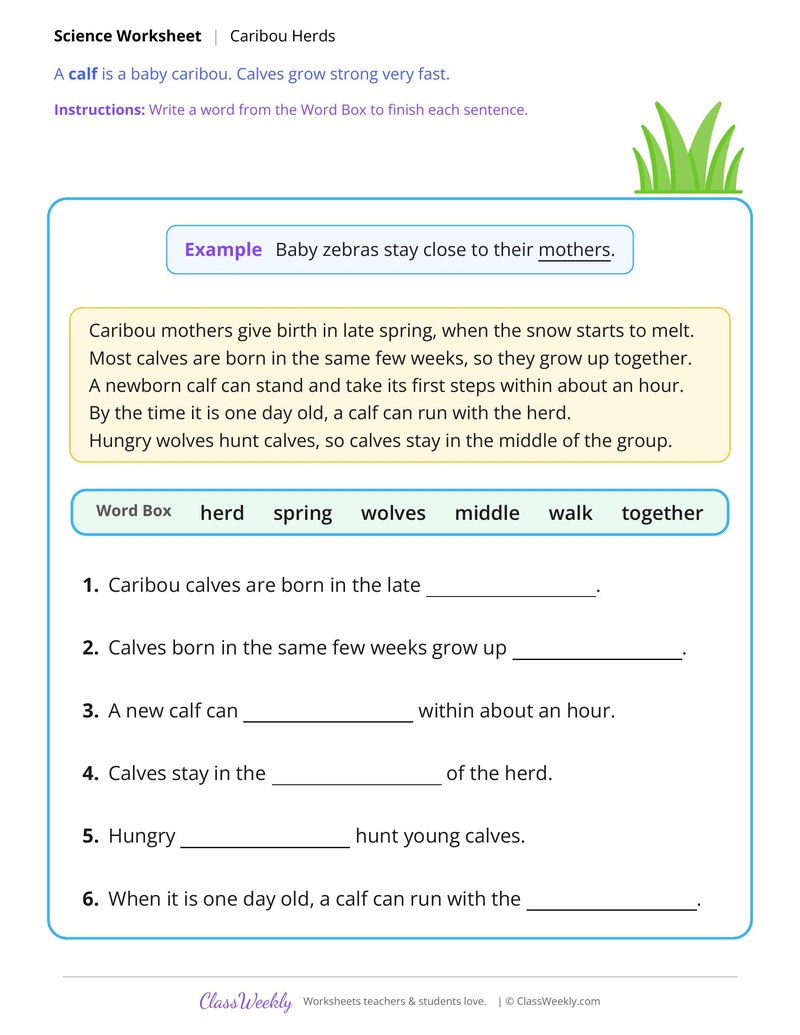
3rd grade science worksheet: read about caribou on the tundra and circle how living in a herd keeps them safe from wolves. Answer key included. Part of our animals in groups living things collection. Aligned to NGSS standards.
How do I use this worksheet?
Talk about groups your child knows, like a team or a class, and what each person does, before reading. After each page, ask what would happen if an animal lived alone. Check answers with the key.
What students will practice
- Students will read an article about caribou that travel in big herds.
- Students will learn that many eyes, ears and noses in a herd watch for wolves.
- Students will explain why a running herd makes it hard for a wolf to chase one caribou.
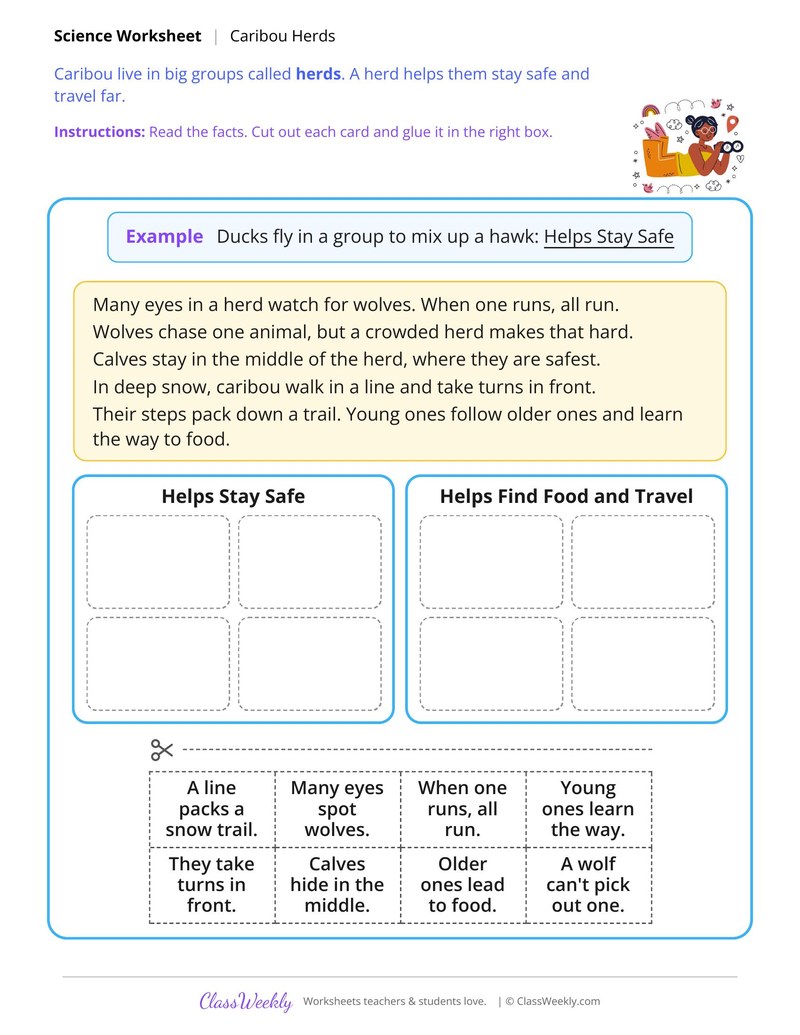
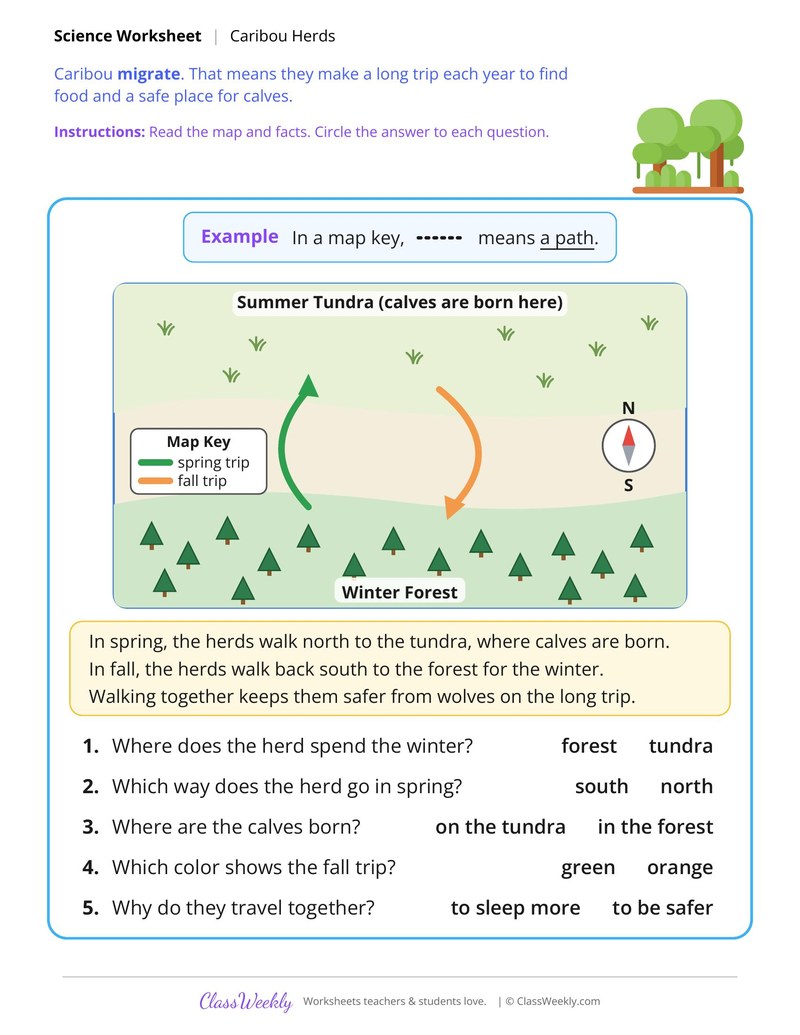
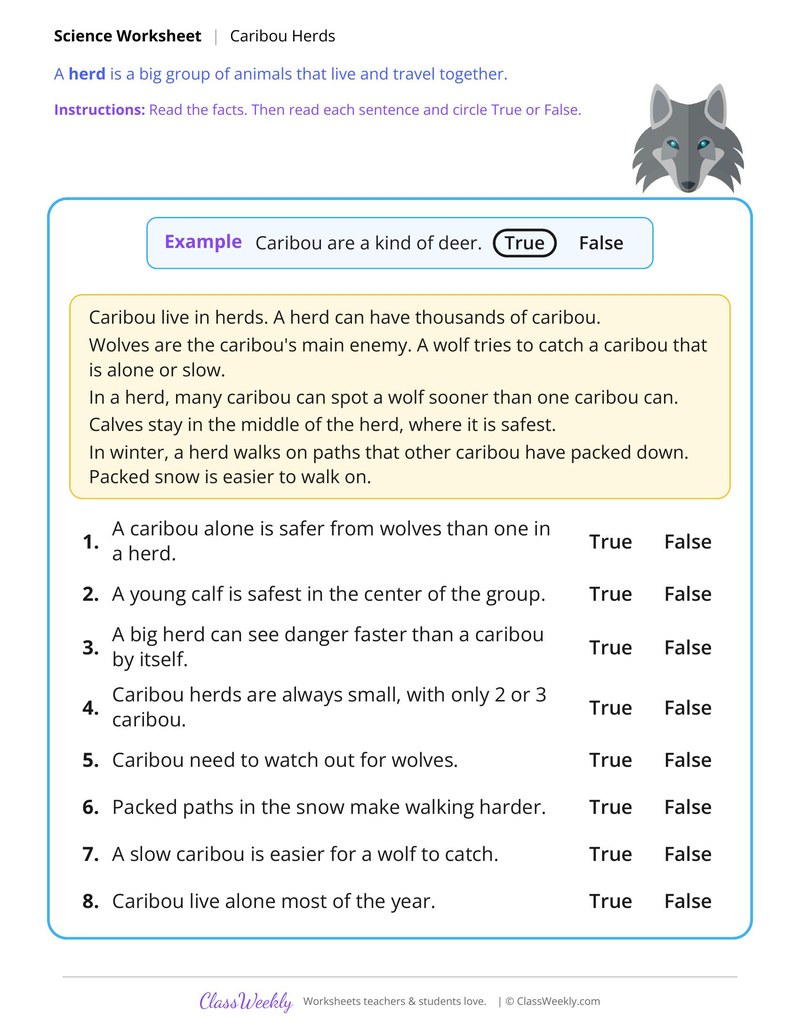
Curriculum Links
Next Generation Science Standards
Science · 3rd Grade
Find this in the curriculum
Browse the grade, subject, and topic this belongs to.
FAQ
How do I use this animals in groups worksheet?
⌄
Talk about groups your child knows, like a team or a class, and what each person does, before reading. After each page, ask what would happen if an animal lived alone. Check answers with the key.
What does this worksheet teach?
⌄
Read about caribou on the tundra and circle how living in a herd keeps them safe from wolves. The directions on the page read: Read the article. Then circle the answer to each question. The page opens with a worked example, and an answer key is included.
Can I use this animals in groups worksheet for homeschool or classroom?
⌄
Yes, both. We made it for 3rd Grade living things, and the page works the same whether it lands on a kitchen table or a center rotation. At home, most families go through it together and talk the answers out loud, and that talking is where most of the learning happens with animals in groups. In class it runs well as independent work while you pull a small group. Print one copy or thirty, whichever the day needs.
Why do some animals live in groups?
⌄
A group can find food, watch for danger and protect its young better than one animal alone. On these sheets, a zebra that spots a lion gives a loud, barking call and the whole herd runs, and elephant adults form a tight circle around the calves when lions come near.
What does 3-LS2-1 ask 3rd graders to do?
⌄
It asks children to argue from evidence that some animals form groups that help members survive. Each sheet gives a short passage, and the questions ask children to find the part that shows how the group helps.
How do geese share the work of flying in a V?
⌄
The goose at the front works the hardest. The geese behind it get a small lift from the moving air, so they use less energy. When the leader tires, it drops back to rest and another goose moves up to the front.
Is there an answer key for each worksheet?
⌄
Yes. Every animals in groups sheet has an answer key.
Ratings & Reviews
No reviews yet. Be the first to share what you think.
Reviews are for ClassWeekly members.
Make a Request
Spotted something to fix, or want a worksheet we don't have yet? Tell us and we'll make it.
Worksheet Details
| Grade | 3rd Grade |
| Subject | Science |
| Topic | Living Things |
| Standard | 3-LS2-1 |
| Pages | 1 page |
| Difficulty | Medium |
Learn More
What is ClassWeekly?
ClassWeekly offers free worksheets and printable learning resources for kids, from preschool up. All worksheets are aligned to Common Core, NGSS, and C3 Framework standards and designed by educators. We also have free online learning games for thousands of skills, and kids' answers turn into a progress report for the grown-up. Start a free 30-day trial to download the worksheets.