Hydrangea Colors and Soil, Read the Observations
Written by Adi Ackerman, Head Teacher
"Hydrangea Colors and Soil, Read the Observations" is written for 3rd Grade (Ages 8-9), and it covers NGSS 3-LS3-2. If your little one is a year younger but already steady on living things, the page still works. You may just need to read the instructions out loud. And if they are older and inherited vs acquired traits never quite stuck, this is a short review rather than busywork.
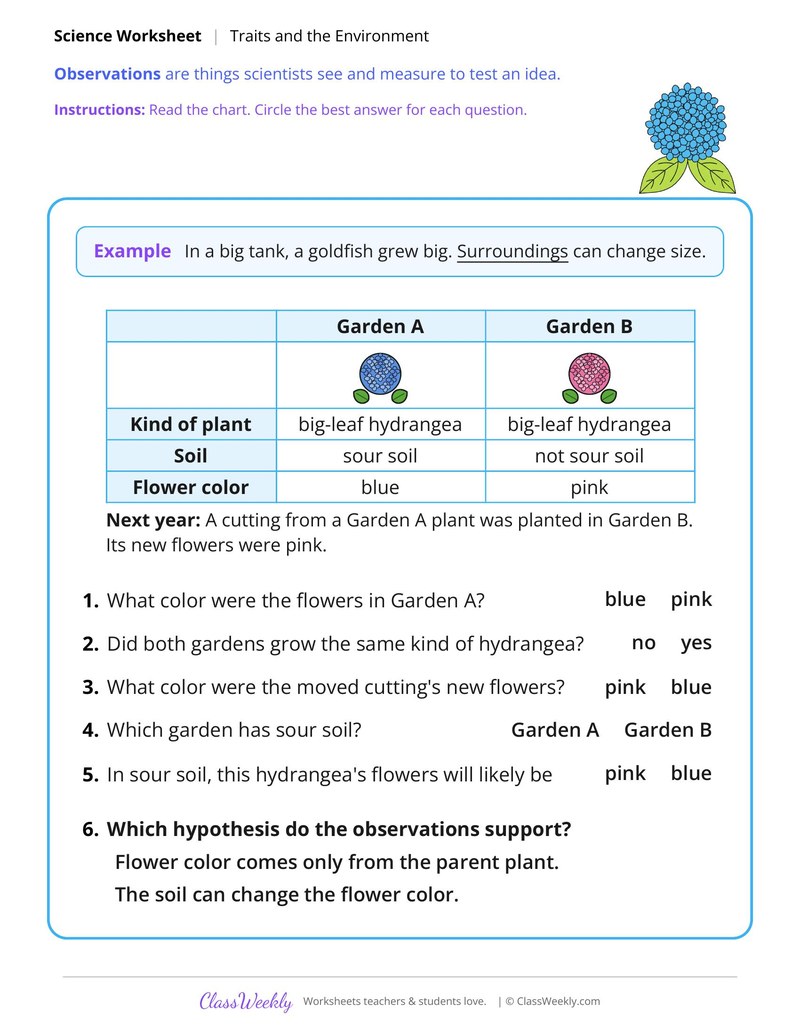
3rd grade science worksheet: read observations of hydrangeas in sour and not sour soil and circle how soil changed flower color. Answer key included. Part of our inherited vs acquired traits living things collection. Aligned to NGSS standards.
How do I use this worksheet?
Ask your child to name one thing they got from family, like eye color, and one thing they learned, like riding a bike. Then read each passage and sort what is inherited from what comes from food or practice. Check with the answer key.
What students will practice
- Students will learn that observations are things scientists see and measure.
- Students will compare blue flowers in sour soil with pink flowers in Garden B.
- Students will explain why a cutting moved to Garden B grew pink flowers.
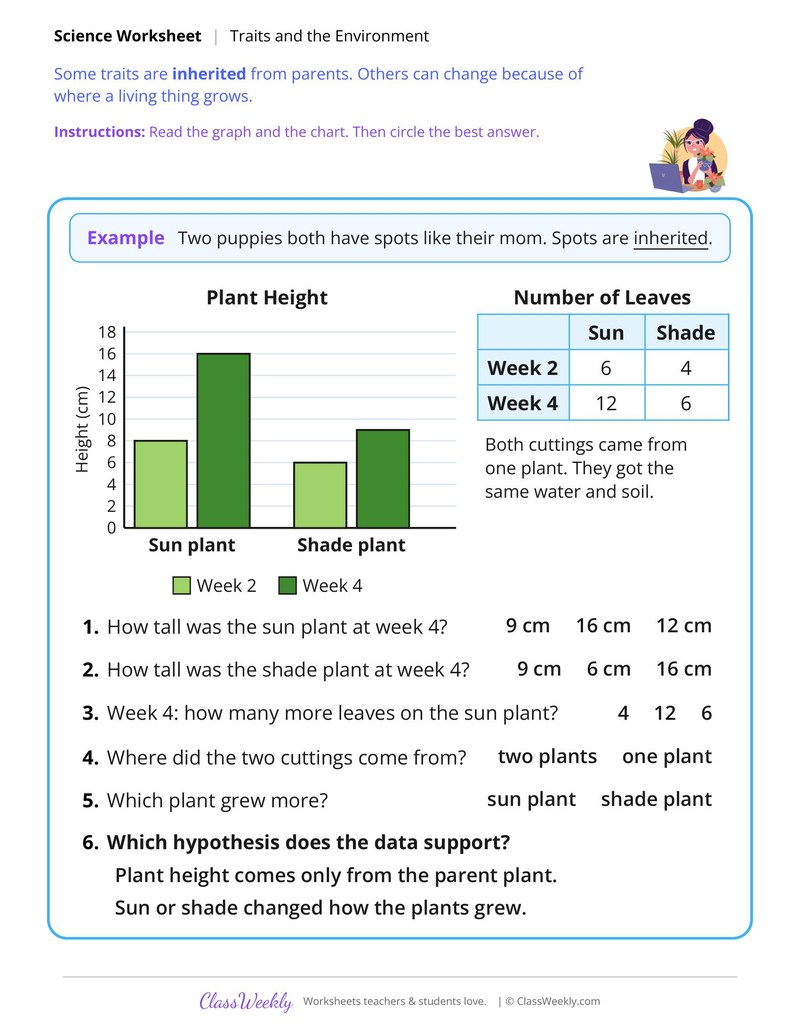
Twin Plants in Sun and Shade, Read a Chart
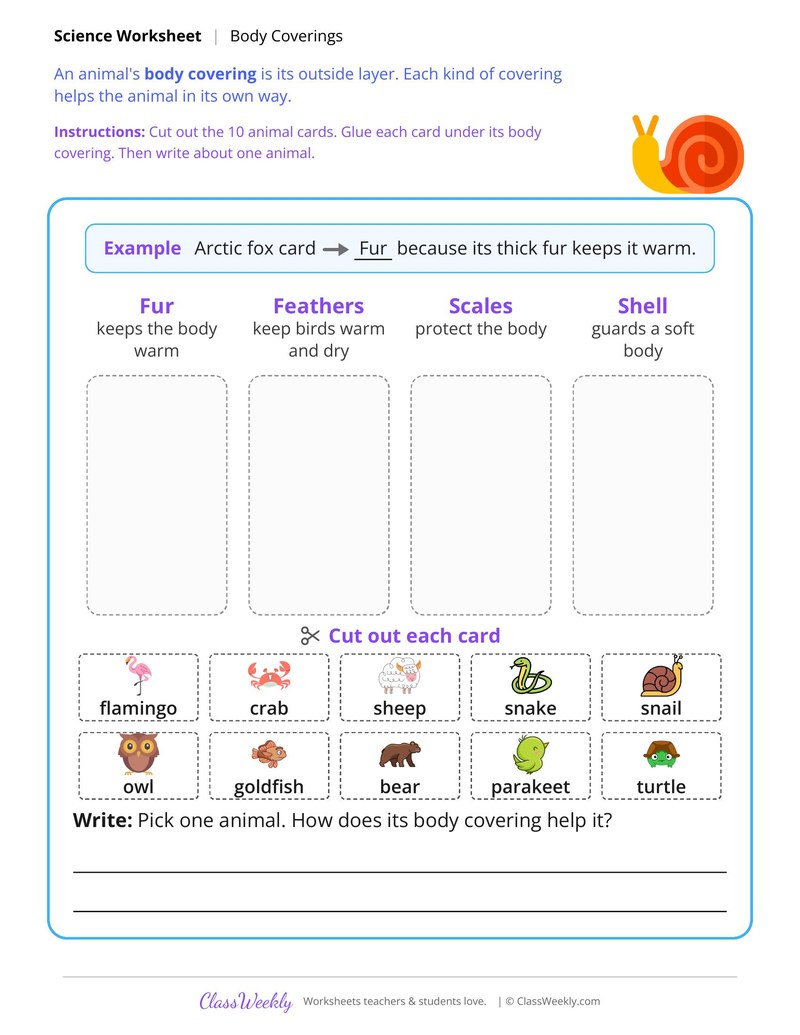
Fur, Feathers, Scales or Shell Sort and Explain
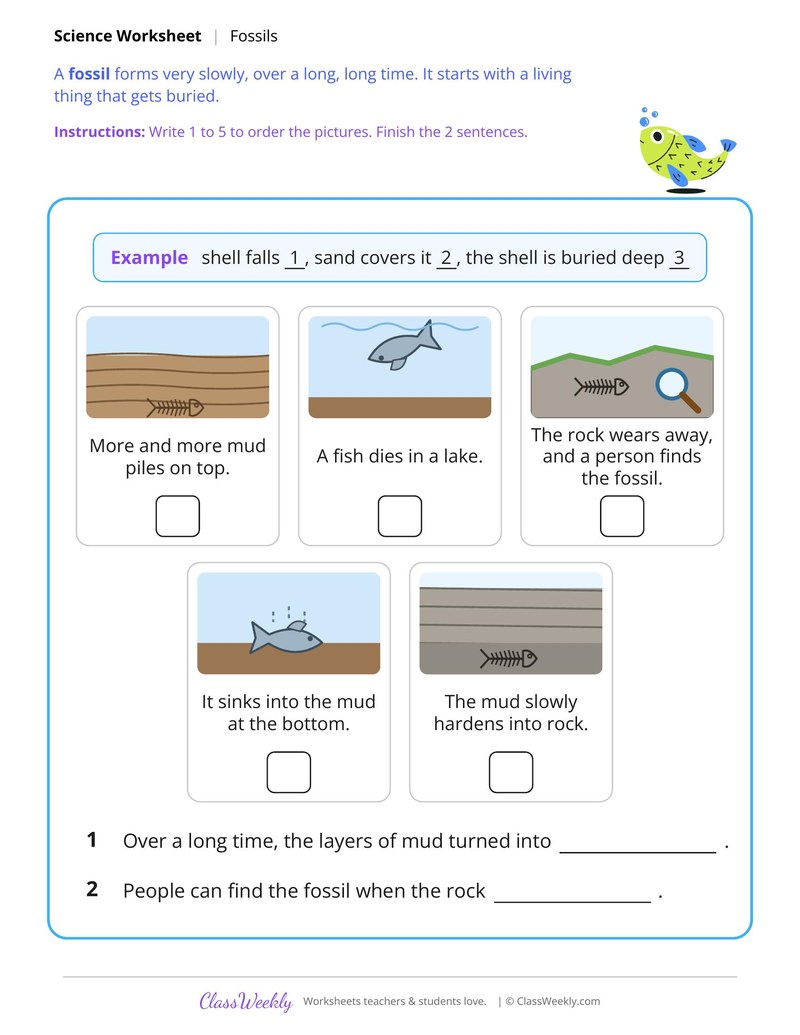
How a Fish Fossil Forms Order the Steps
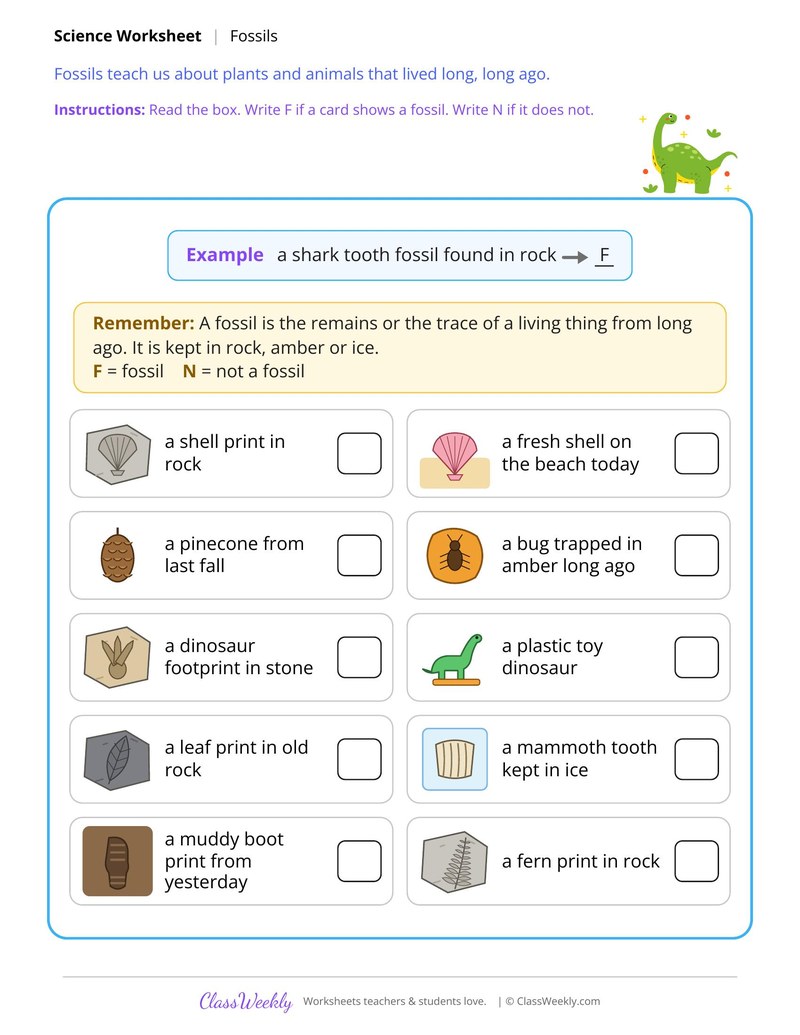
Fossil or Not a Fossil Sort
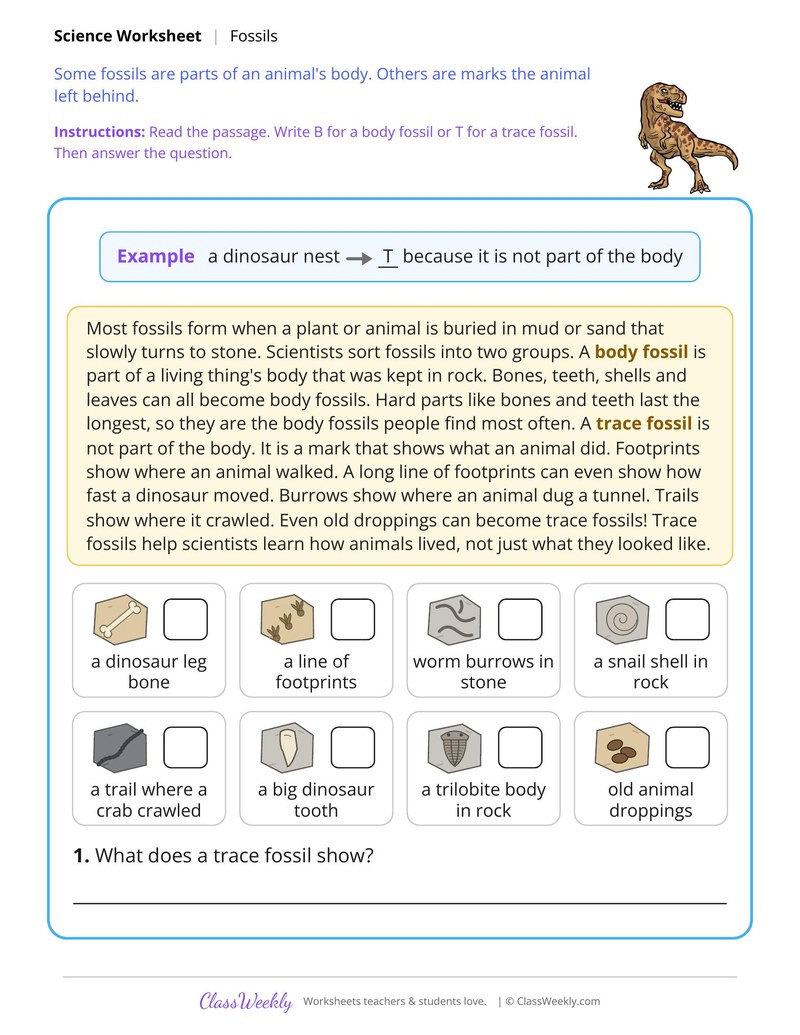
Body Fossils and Trace Fossils Read and Sort
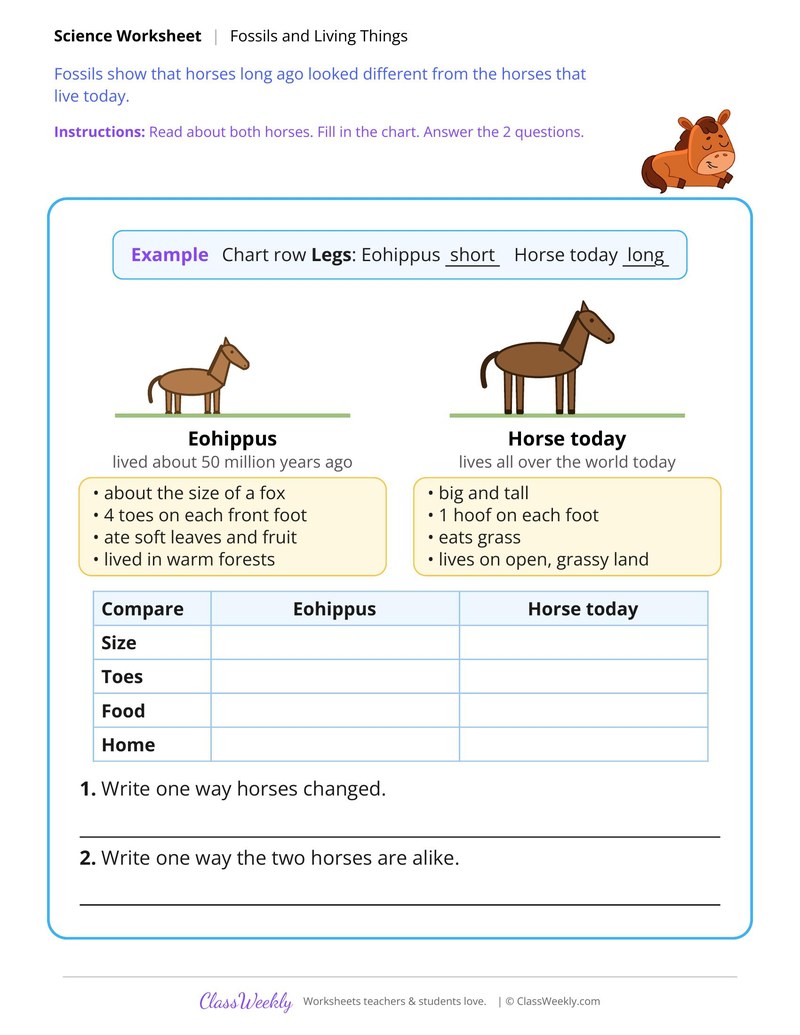
Ancient Horse and Horse Today Compare
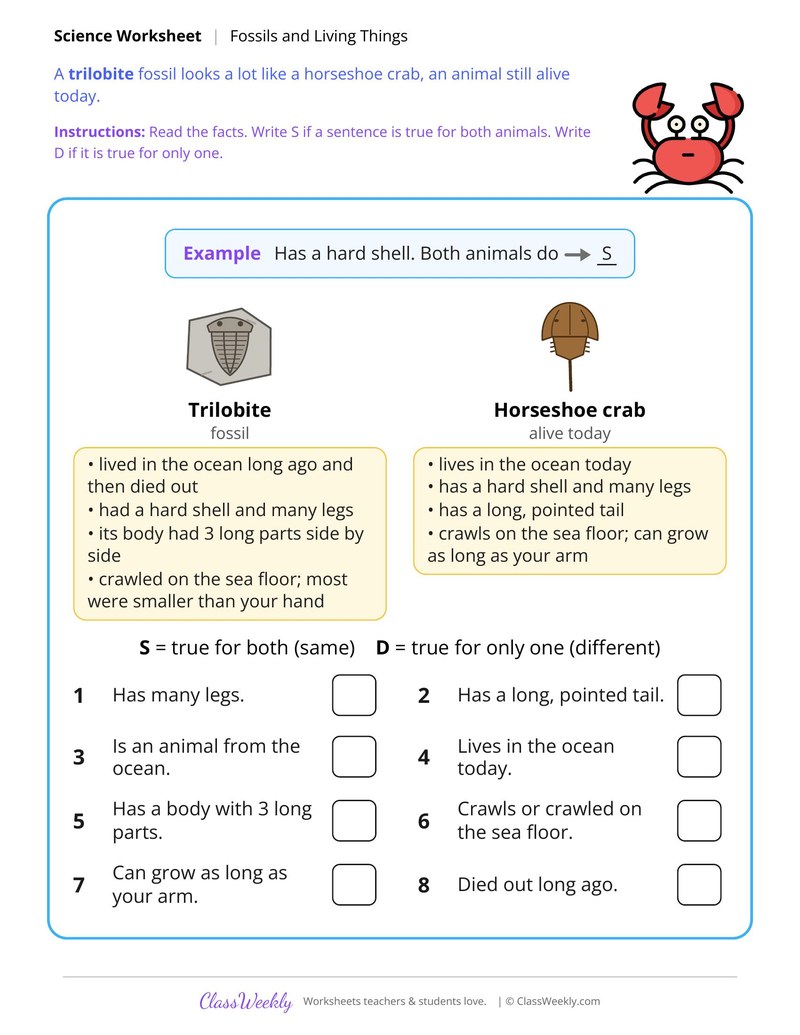
Trilobite and Horseshoe Crab Same or Different
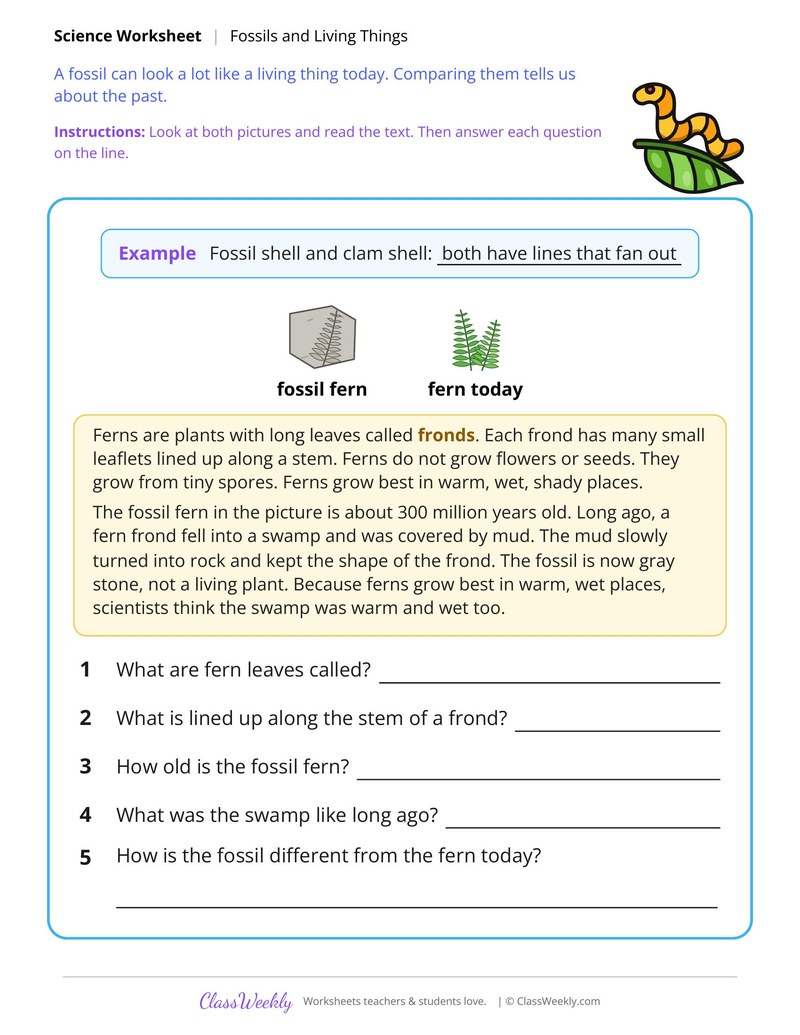
Fossil Fern and Fern Today
Curriculum Links
Next Generation Science Standards
Science · 3rd Grade
Find this in the curriculum
Browse the grade, subject, and topic this belongs to.
FAQ
How do I use this inherited vs acquired traits worksheet?
⌄
Ask your child to name one thing they got from family, like eye color, and one thing they learned, like riding a bike. Then read each passage and sort what is inherited from what comes from food or practice. Check with the answer key.
What does this worksheet teach?
⌄
Read observations of hydrangeas in sour and not sour soil and circle how soil changed flower color. The directions on the page read: Read the chart. Circle the best answer for each question. The page opens with a worked example, and an answer key is included.
Can I use this inherited vs acquired traits worksheet for homeschool or classroom?
⌄
Yes, both. We made it for 3rd Grade living things, and the page works the same whether it lands on a kitchen table or a center rotation. At home, most families go through it together and talk the answers out loud, and that talking is where most of the learning happens with inherited vs acquired traits. In class it runs well as independent work while you pull a small group. Print one copy or thirty, whichever the day needs.
What is the difference between an inherited and an acquired trait?
⌄
An inherited trait comes from the parents, like a flamingo's long legs and bent beak. An acquired trait depends on how an animal lives, like a flamingo's pink color, which comes from the shrimp and algae it eats.
Is a bird's song inherited or learned?
⌄
Both. A white-crowned sparrow is born able to sing, but it learns its exact song by listening to grown males. Scientists found that young sparrows that never heard a grown male sing still sang, but their songs were much simpler.
Which standards do these sheets support?
⌄
NGSS 3-LS3-2, which asks children to use evidence that the environment can change traits, and 3-LS3-1 on traits inherited from parents. A flamingo that gets less shrimp and algae grows paler feathers.
Is there an answer key for each worksheet?
⌄
Yes. Every inherited vs acquired traits sheet has an answer key.
Ratings & Reviews
No reviews yet. Be the first to share what you think.
Reviews are for ClassWeekly members.
Make a Request
Spotted something to fix, or want a worksheet we don't have yet? Tell us and we'll make it.
Worksheet Details
| Grade | 3rd Grade |
| Subject | Science |
| Topic | Living Things |
| Standard | 3-LS3-2 |
| Pages | 1 page |
| Difficulty | Medium |
Learn More
What is ClassWeekly?
ClassWeekly offers free worksheets and printable learning resources for kids, from preschool up. All worksheets are aligned to Common Core, NGSS, and C3 Framework standards and designed by educators. We also have free online learning games for thousands of skills, and kids' answers turn into a progress report for the grown-up. Start a free 30-day trial to download the worksheets.
Twin Plants in Sun and Shade, Read a Chart
Fur, Feathers, Scales or Shell Sort and Explain
How a Fish Fossil Forms Order the Steps
Fossil or Not a Fossil Sort
Body Fossils and Trace Fossils Read and Sort
Ancient Horse and Horse Today Compare
Trilobite and Horseshoe Crab Same or Different
Fossil Fern and Fern Today