Plant Parts on a Dinner Plate, Read and Answer
Written by Adi Ackerman, Head Teacher
"Plant Parts on a Dinner Plate, Read and Answer" is written for 3rd Grade (Ages 8-9). If your little one is a year younger but already steady on living things, the page still works. You may just need to read the instructions out loud. And if they are older and parts of a plant never quite stuck, this is a short review rather than busywork.
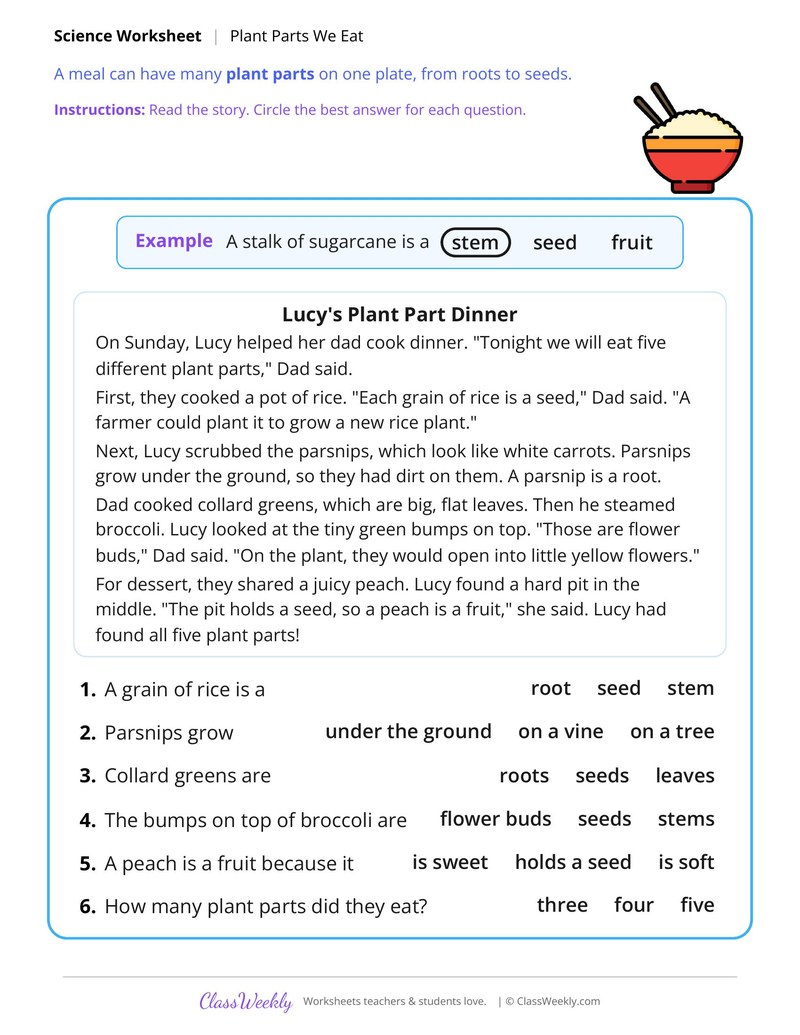
3rd grade science worksheet: read about Lucy's dinner of rice, parsnips, collard greens and broccoli and circle each plant part. Answer key included. Part of our parts of a plant living things collection.
How do I use this worksheet?
Start with something students can look at or think about: a photo, a short video, a jar on the windowsill, or a question like "what do you already know about parts of a plant?" Then let them work through it independently, using a partner or small group only if they want to talk through their thinking, keeping a word bank or anchor chart in view so the vocabulary stays available. When you review, ask students how they knew, and let them point to the part of the diagram or reading that told them. These parts of a plant worksheets work well as a lead in before an investigation, as a way to capture what students noticed afterward, or as review before an assessment.
What students will practice
- Students will read a story about cooking a dinner with five plant parts.
- Students will learn that a grain of rice is a seed and a parsnip is a root.
- Students will name broccoli as flower buds and collard greens as leaves.
Curriculum Links
Find this in the curriculum
Browse the grade, subject, and topic this belongs to.
FAQ
How do I use this parts of a plant worksheet?
⌄
Start with something students can look at or think about: a photo, a short video, a jar on the windowsill, or a question like "what do you already know about parts of a plant?" Then let them work through it independently, using a partner or small group only if they want to talk through their thinking, keeping a word bank or anchor chart in view so the vocabulary stays available. When you review, ask students how they knew, and let them point to the part of the diagram or reading that told them. These parts of a plant worksheets work well as a lead in before an investigation, as a way to capture what students noticed afterward, or as review before an assessment.
What does this worksheet teach?
⌄
Read about Lucy's dinner of rice, parsnips, collard greens and broccoli and circle each plant part. The directions on the page read: Read the story. Circle the best answer for each question. The page opens with a worked example, and an answer key is included.
Can I use this parts of a plant worksheet for homeschool or classroom?
⌄
Yes, both. We made it for 3rd Grade living things, and the page works the same whether it lands on a kitchen table or a center rotation. At home, most families go through it together and talk the answers out loud, and that talking is where most of the learning happens with parts of a plant. In class it runs well as independent work while you pull a small group. Print one copy or thirty, whichever the day needs.
What do parts of a plant worksheets teach third graders?
⌄
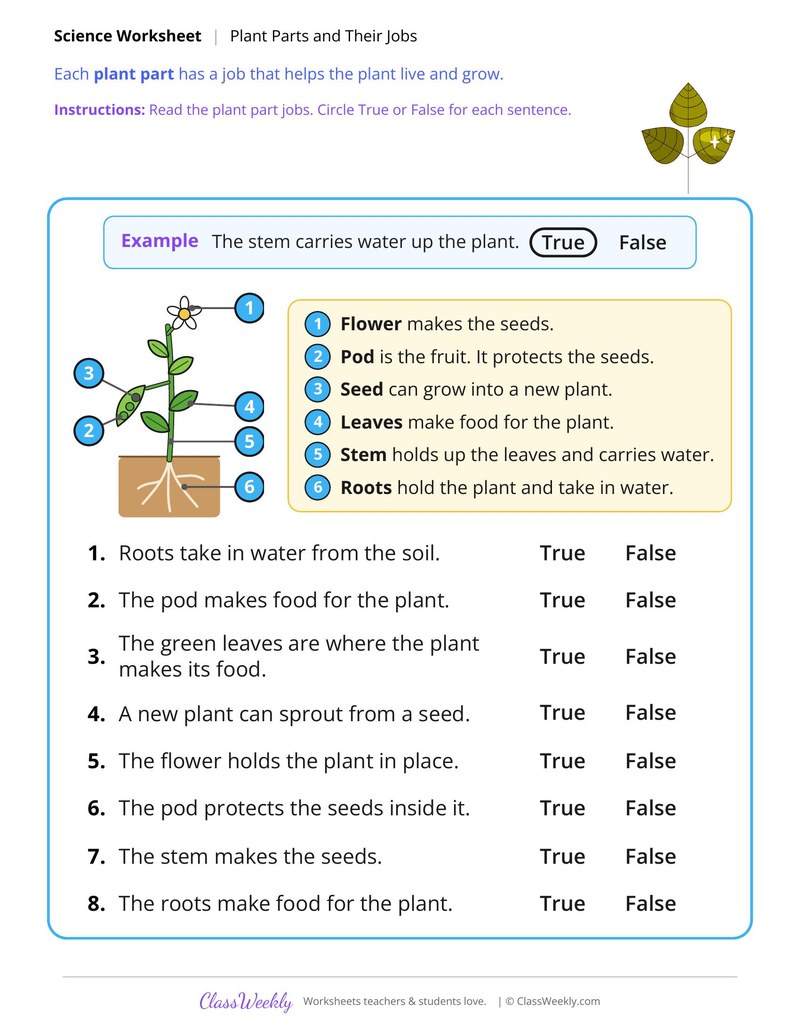
At Grade 3, parts of a plant worksheets focus on function rather than just identification. Students learn that roots absorb water and anchor the plant, stems transport water and nutrients between roots and leaves, leaves use sunlight and carbon dioxide to make food through photosynthesis, and flowers produce seeds that continue the life cycle. Students connect each structure to its role in the plant's survival and reproduction, a shift from 'what is it?' to 'what does it do?'
When do third graders learn about plant parts?
⌄
Parts of a plant with a function focus are covered in Grade 3 life science, building on the labeling introduced in K-2. The Grade 3 standard emphasizes understanding how plant structures support the plant's needs, connecting to photosynthesis, reproduction, and adaptation concepts taught at this level. It also supports science writing as students practice explaining function using cause-and-effect language.
How can I use these worksheets at home?
⌄
Dissect a flower together, a simple lily or tulip works well, and identify each part (petals, stamens, pistil, sepals) before examining the stem and roots. Use the worksheet to label parts and write the function of each. For extra depth, cut a celery stalk and put it in food-colored water overnight to see how stems transport water up from roots. Seeing the function in action makes the labels meaningful.
What do 3rd grade living things worksheets cover?
⌄
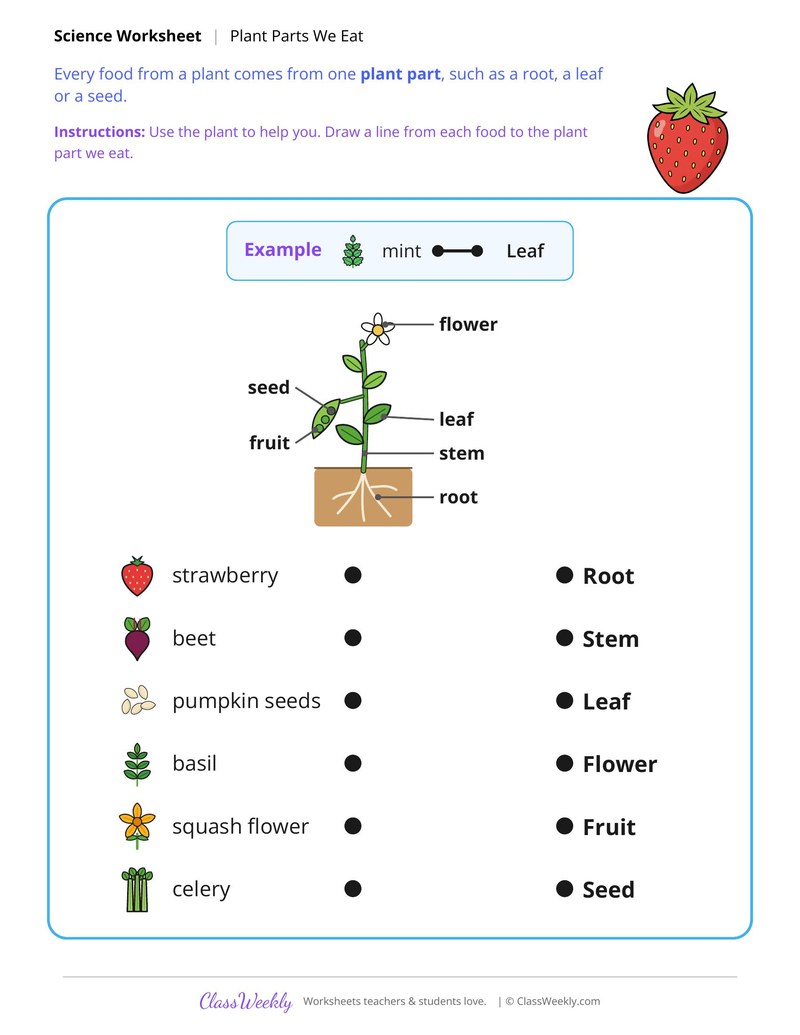
They cover how plants and animals survive, grow and pass on traits: adaptations, camouflage, animals in groups, life cycles, inherited and acquired traits and fossils. They also cover vertebrates and invertebrates, human organs, plant parts we eat and how plants make food. Most sheets pair a short passage, chart or diagram with questions.
How do plants make their own food?
⌄
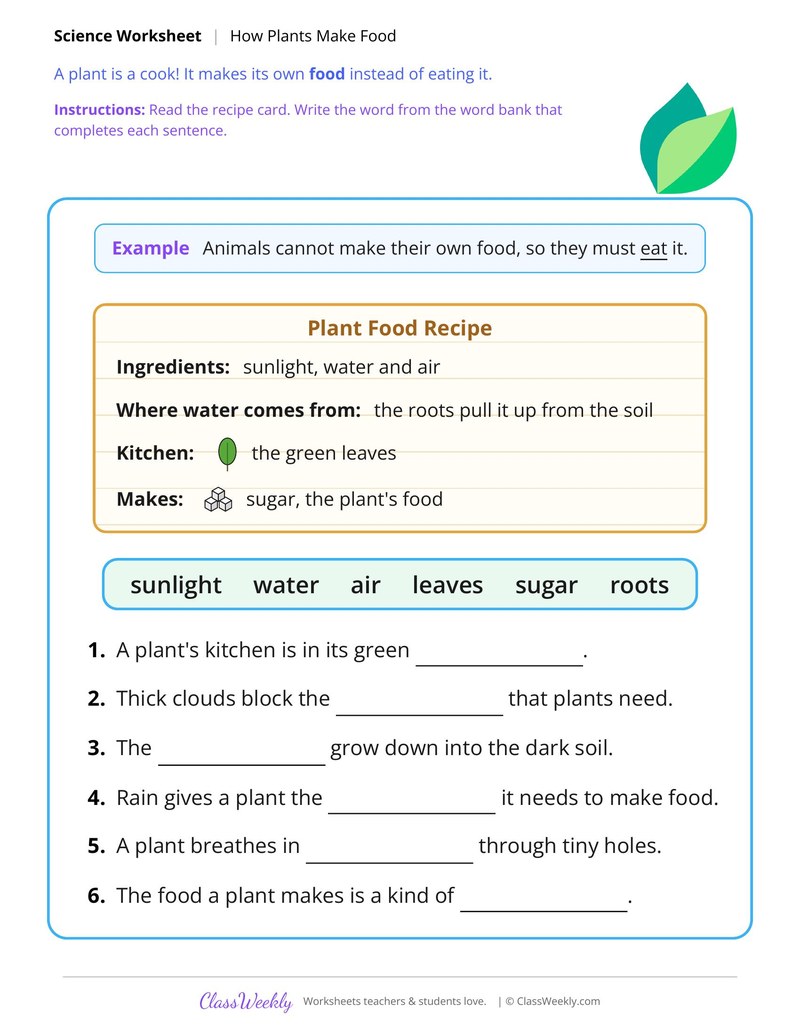
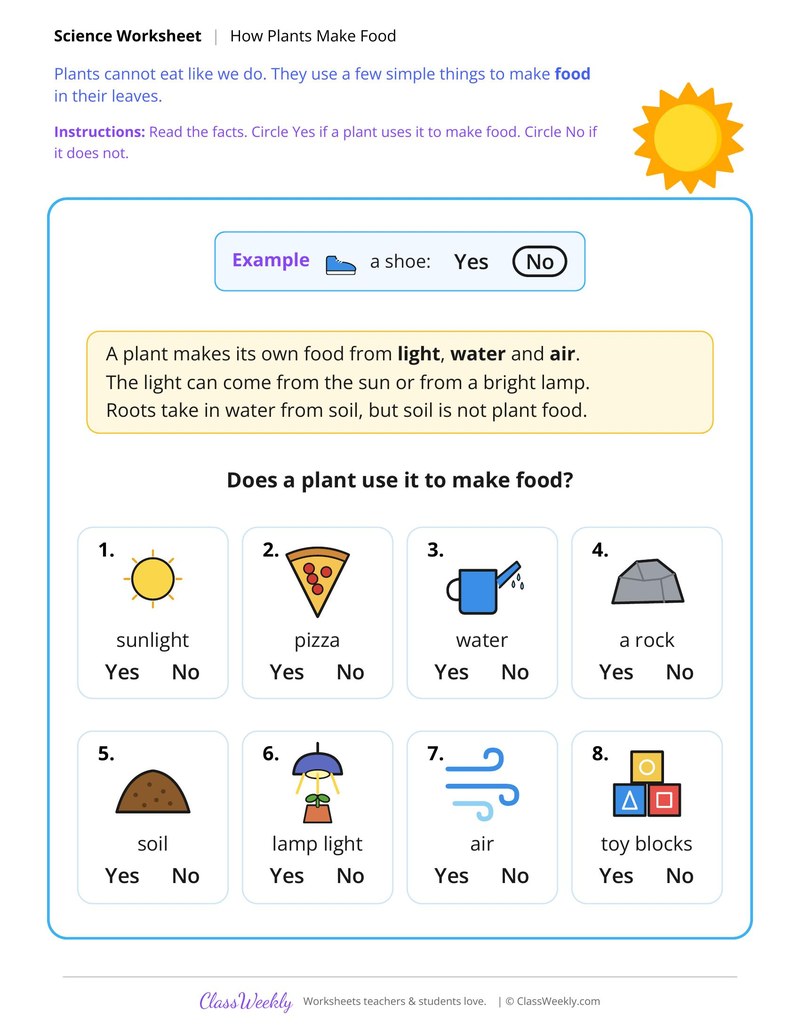
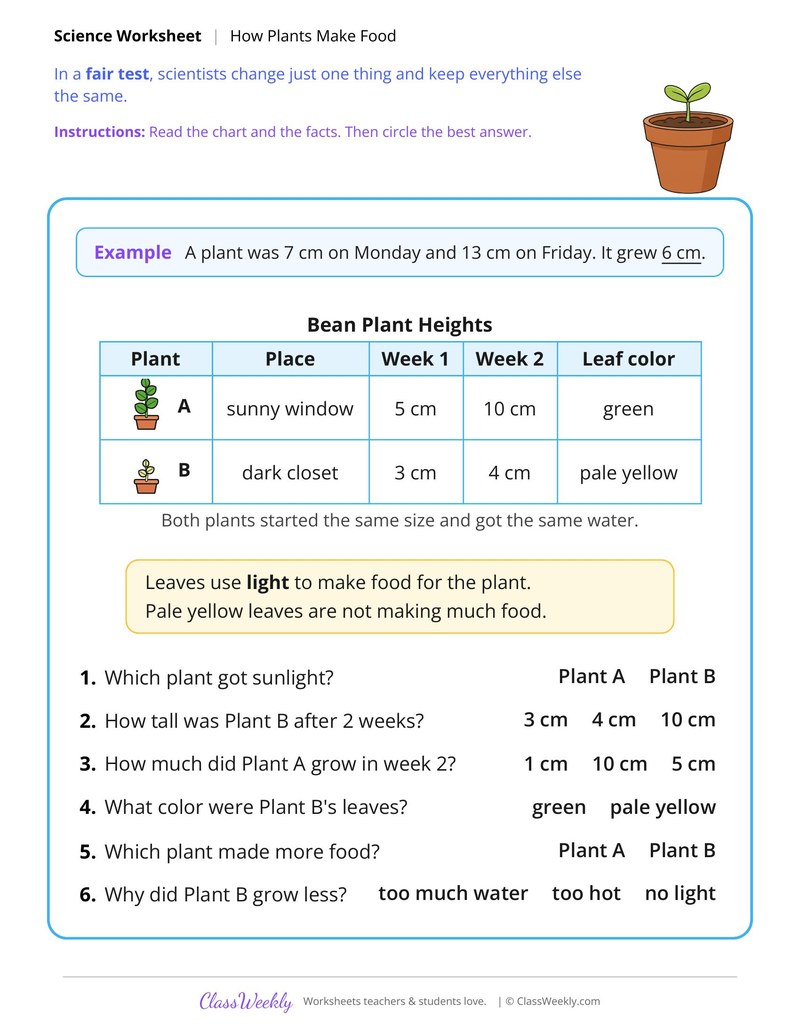
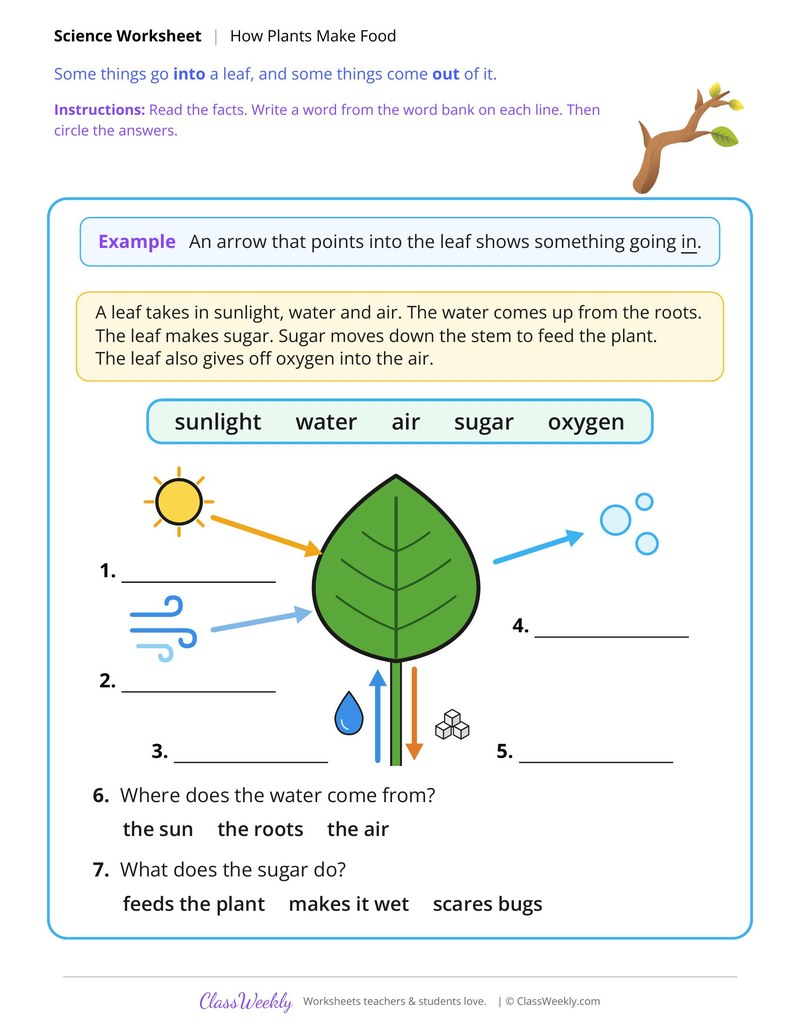
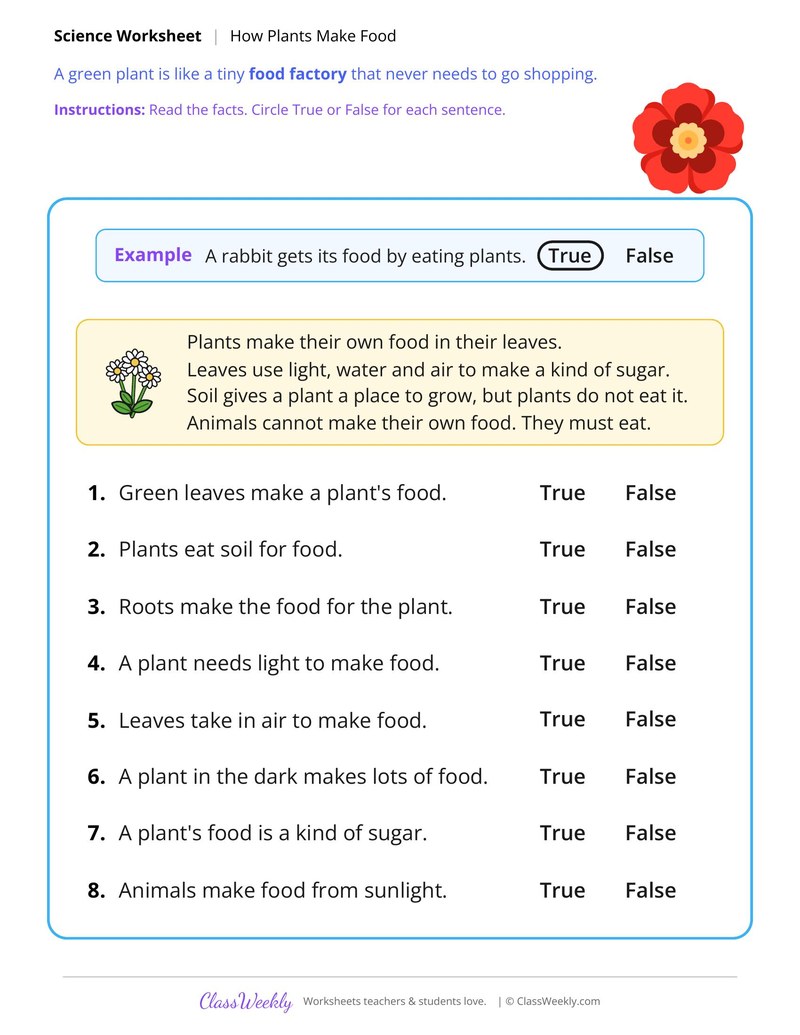
Plants make food in their green leaves. Leaves use light, water and air to make a kind of sugar, and the water comes up from the roots. Soil gives a plant a place to grow, but plants do not eat it.
What is the difference between a vertebrate and an invertebrate?
⌄
A vertebrate has a backbone, like fish, frogs, birds and mammals. An invertebrate has no backbone, like insects, worms, snails and spiders. More than 9 out of 10 kinds of animals are invertebrates.
Which NGSS standards do these sheets support?
⌄
They support 3-LS1-1 (life cycles), 3-LS2-1 (animals in groups), 3-LS3-1 and 3-LS3-2 (inherited traits and traits the environment changes), 3-LS4-1 (fossils), 3-LS4-2 and 3-LS4-3 (traits that help animals survive). The classification, organ, plant part and plant food pages have no 3rd grade code.
Is there an answer key for each worksheet?
⌄
Yes. Every living things sheet has an answer key, and each one opens with a worked example.
Ratings & Reviews
No reviews yet. Be the first to share what you think.
Reviews are for ClassWeekly members.
Make a Request
Spotted something to fix, or want a worksheet we don't have yet? Tell us and we'll make it.
Worksheet Details
| Grade | 3rd Grade |
| Subject | Science |
| Topic | Living Things |
| Pages | 1 page |
| Difficulty | Medium |
Learn More
What is ClassWeekly?
ClassWeekly offers free worksheets and printable learning resources for kids, from preschool up. All worksheets are aligned to Common Core, NGSS, and C3 Framework standards and designed by educators. We also have free online learning games for thousands of skills, and kids' answers turn into a progress report for the grown-up. Start a free 30-day trial to download the worksheets.