Today I Feel Journal Page
Written by Adi Ackerman, Head Teacher
"Today I Feel Journal Page" is written for 1st Grade (Ages 6-7). If your little one is a year younger but already steady on social-emotional learning, the page still works. You may just need to read the instructions out loud. And if they are older and feelings and emotions never quite stuck, this is a short review rather than busywork.
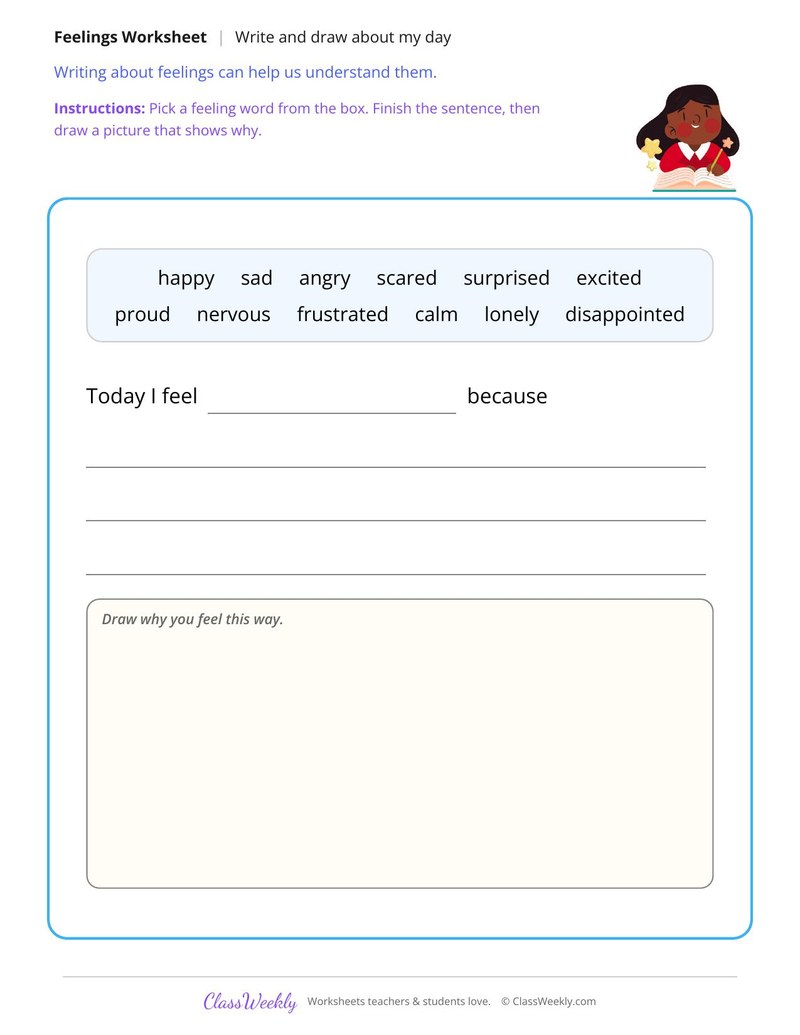
Free printable 1st grade SEL journal worksheet: pick a feeling from a 12-word box, write today I feel and why, then draw a picture to show it. Part of our feelings and emotions social-emotional learning collection.
How do I use this worksheet?
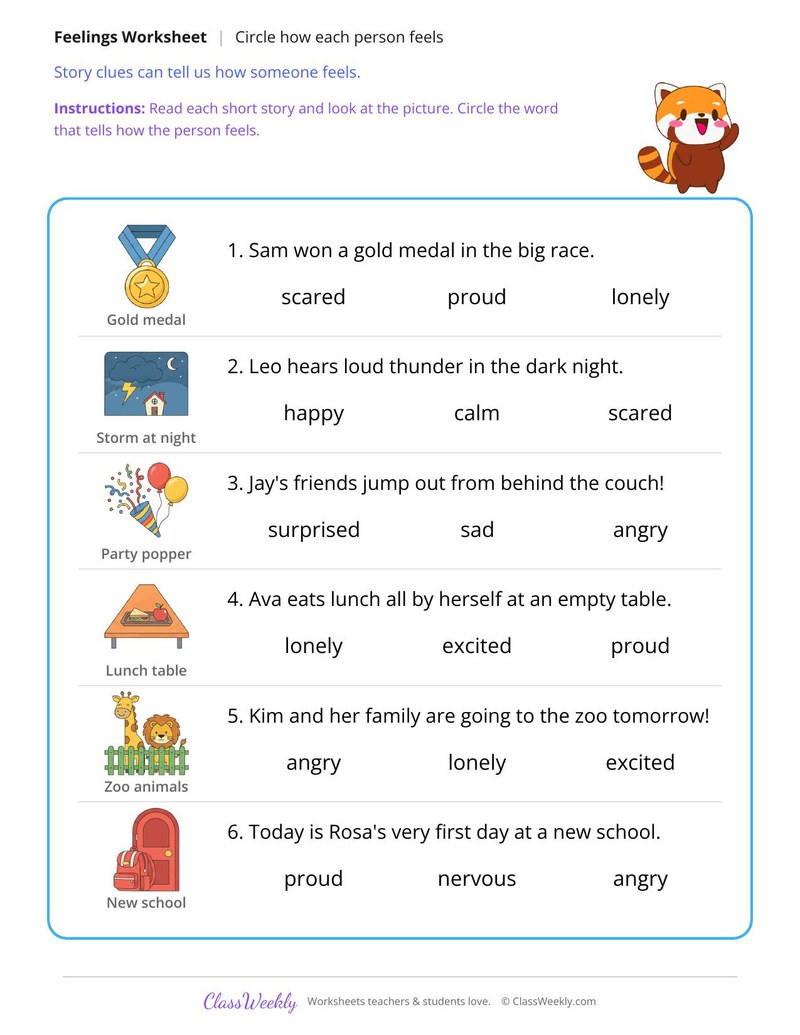
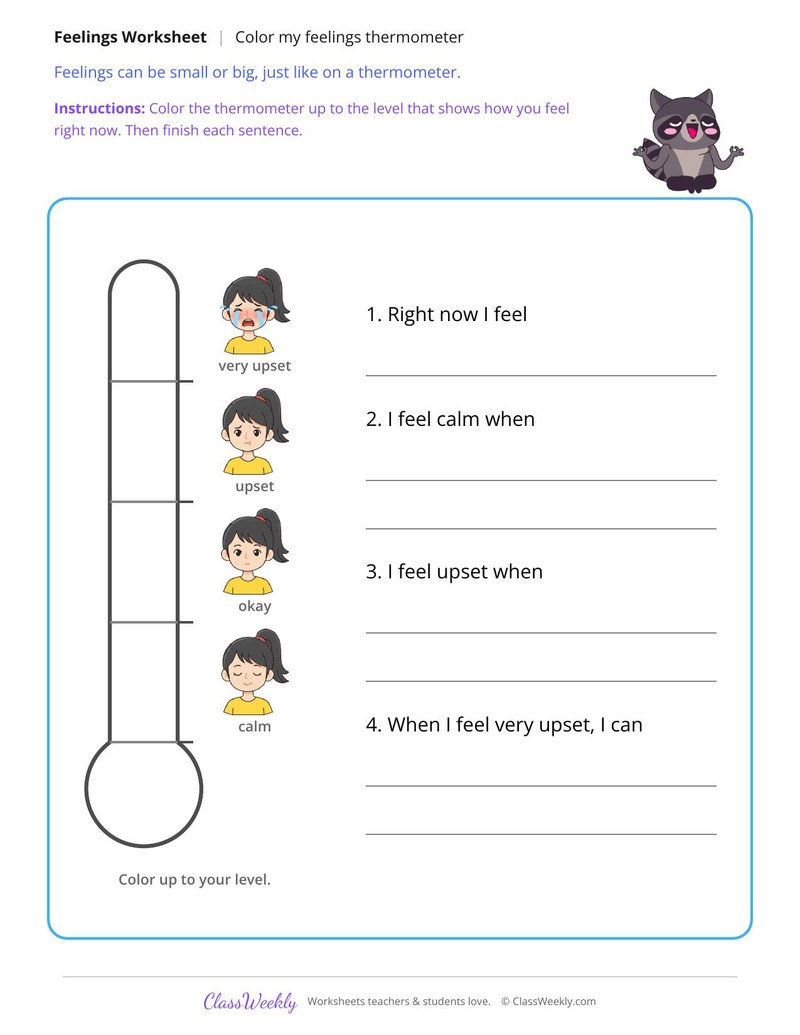
Read the feeling words together first and act a few of them out. Ask students to point to the words in a sentence that tell them how a character feels. The thermometer and journal pages work well as a weekly check-in at home or in class.
What students will practice
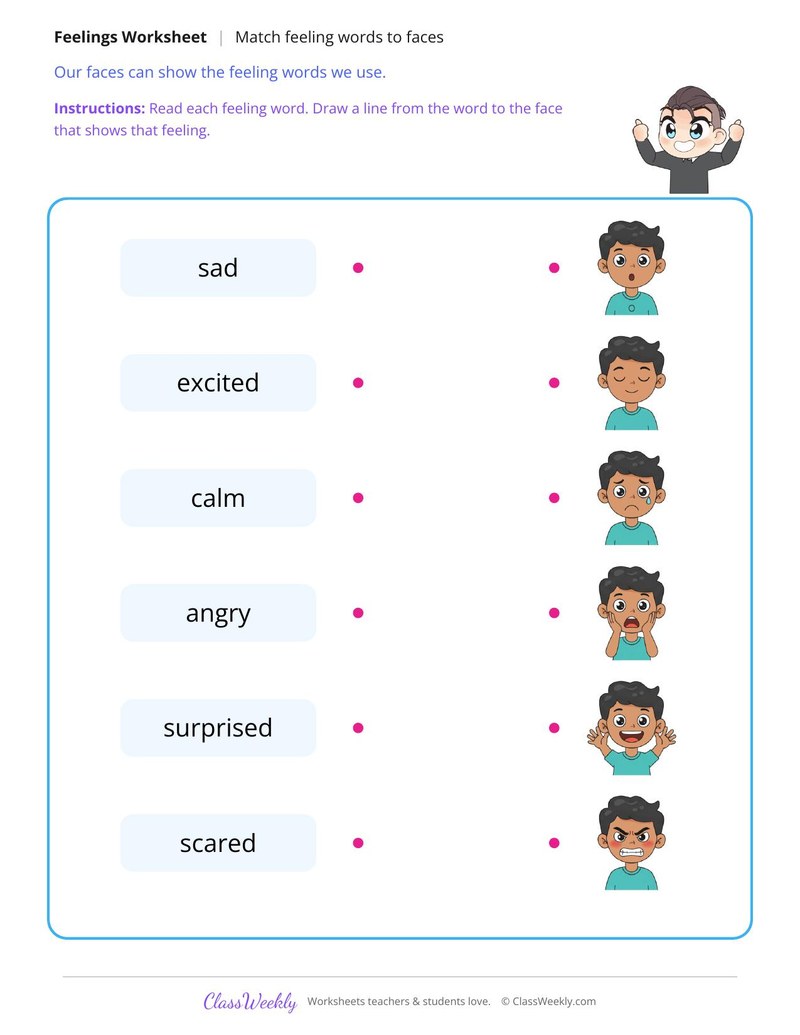
- Students will read feeling words and match them to faces and characters.
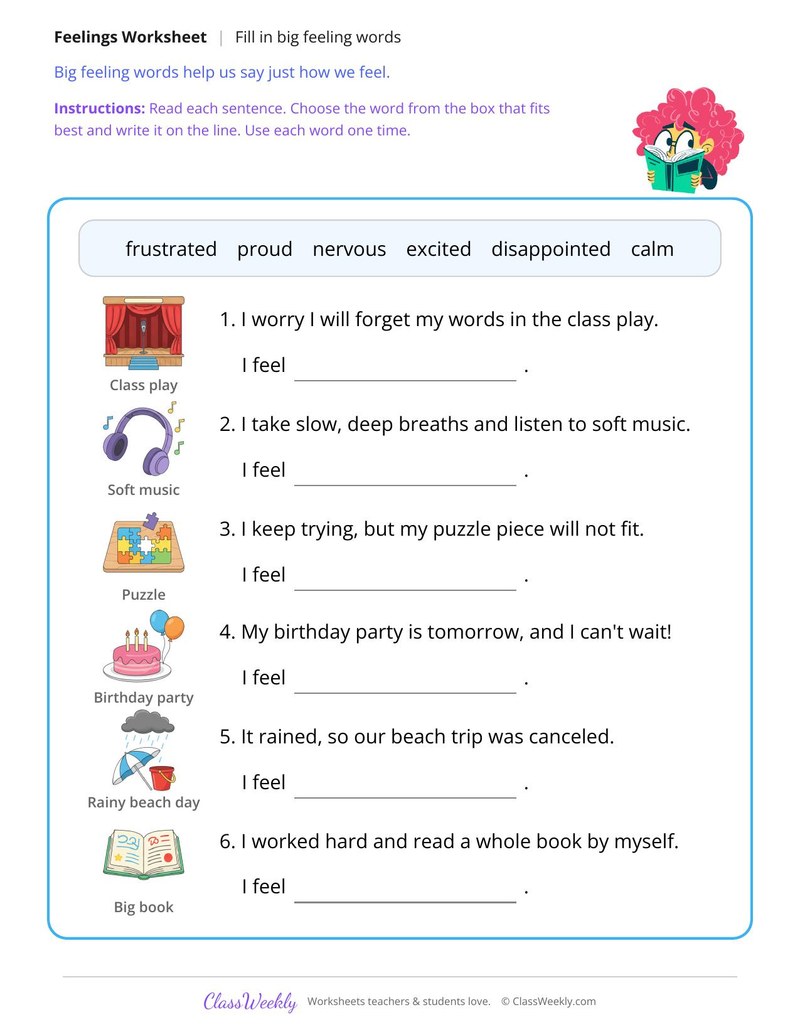
- Students will use bigger feeling words such as frustrated and proud in sentences.
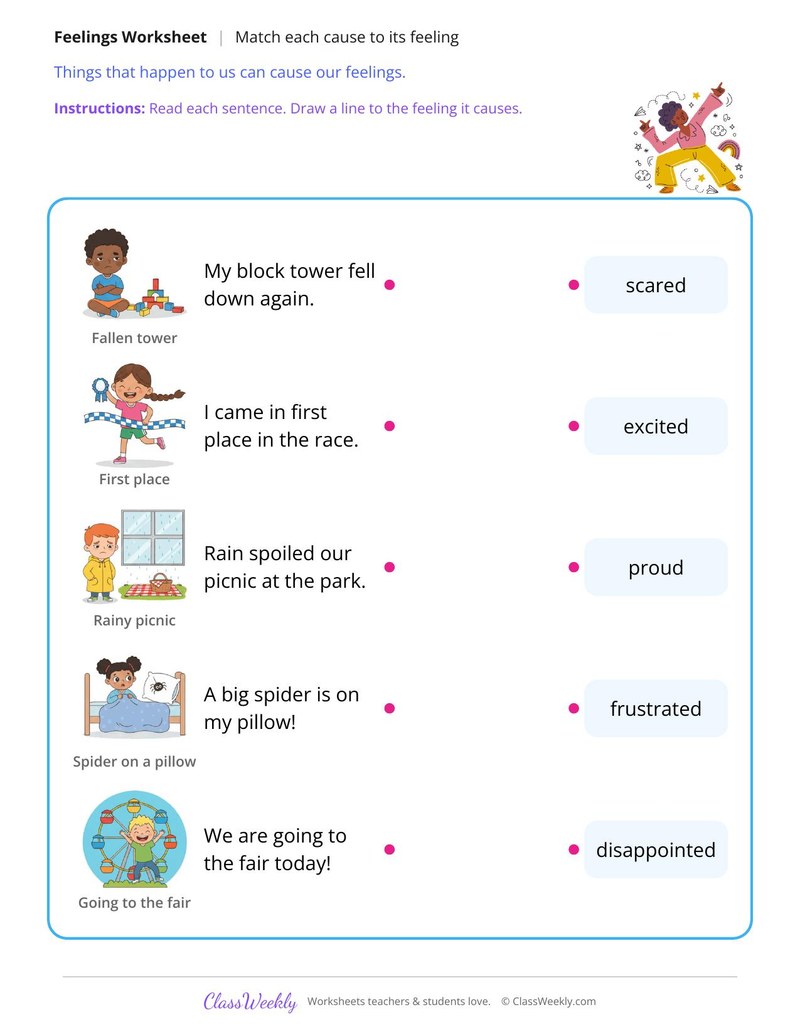
- Students will connect a feeling to what caused it and describe their own feelings in writing.
Curriculum Links
Find this in the curriculum
Browse the grade, subject, and topic this belongs to.
FAQ
How do I use this feelings and emotions worksheet?
⌄
Read the feeling words together first and act a few of them out. Ask students to point to the words in a sentence that tell them how a character feels. The thermometer and journal pages work well as a weekly check-in at home or in class.
What does this worksheet teach?
⌄
Six feelings pages for 1st and 2nd grade. Students match feeling words to faces, read short sentences and circle how each person feels, fill in big feeling words like frustrated and proud, and match each cause to the feeling it brings. They also color a feelings thermometer to show how big a feeling is and write and draw about their day on a today I feel journal page. Four pages have an answer key.
Can I use this feelings and emotions worksheet for homeschool or classroom?
⌄
Yes, both. We made it for 1st Grade social-emotional learning, and the page works the same whether it lands on a kitchen table or a center rotation. At home, most families go through it together and talk the answers out loud, and that talking is where most of the learning happens with feelings and emotions. In class it runs well as independent work while you pull a small group. Print one copy or thirty, whichever the day needs.
What is a feelings thermometer?
⌄
A thermometer drawing that shows how big a feeling is, from calm at the bottom to very upset at the top. Coloring it helps children notice a feeling growing before it boils over.
Why teach big feeling words like frustrated?
⌄
A child who can only say mad has one word for many different feelings. Words like frustrated, nervous and proud help them explain what is really going on, and help you respond to it.
What social-emotional skills do 1st and 2nd graders work on?
⌄
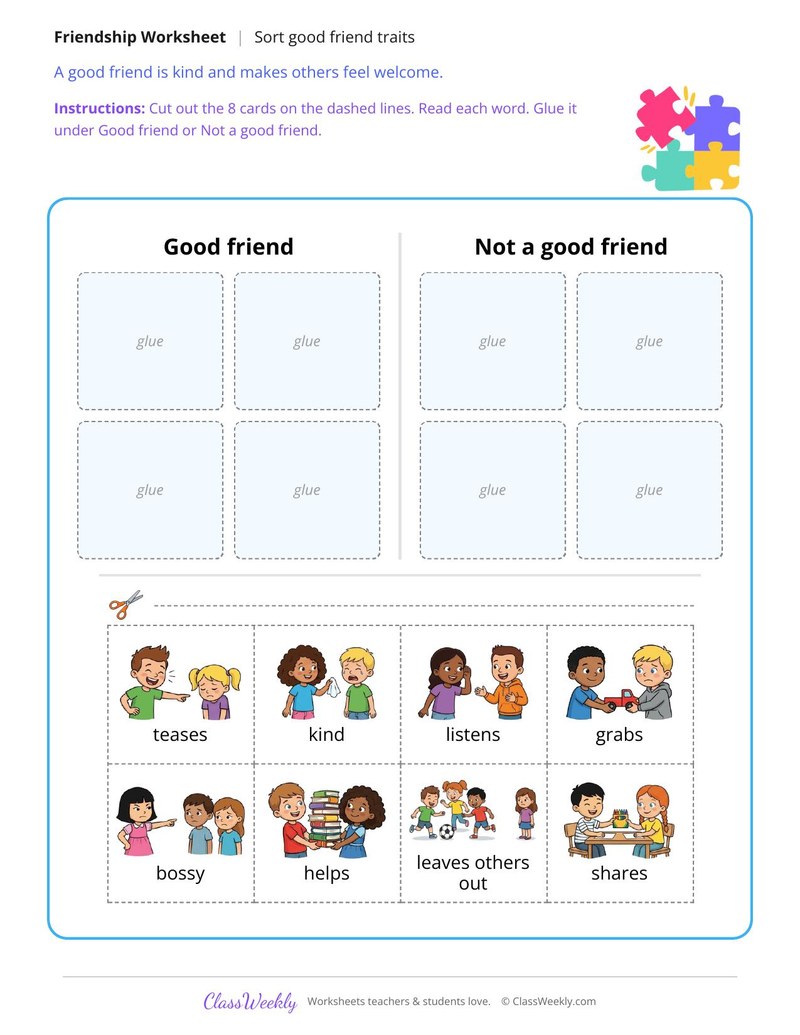
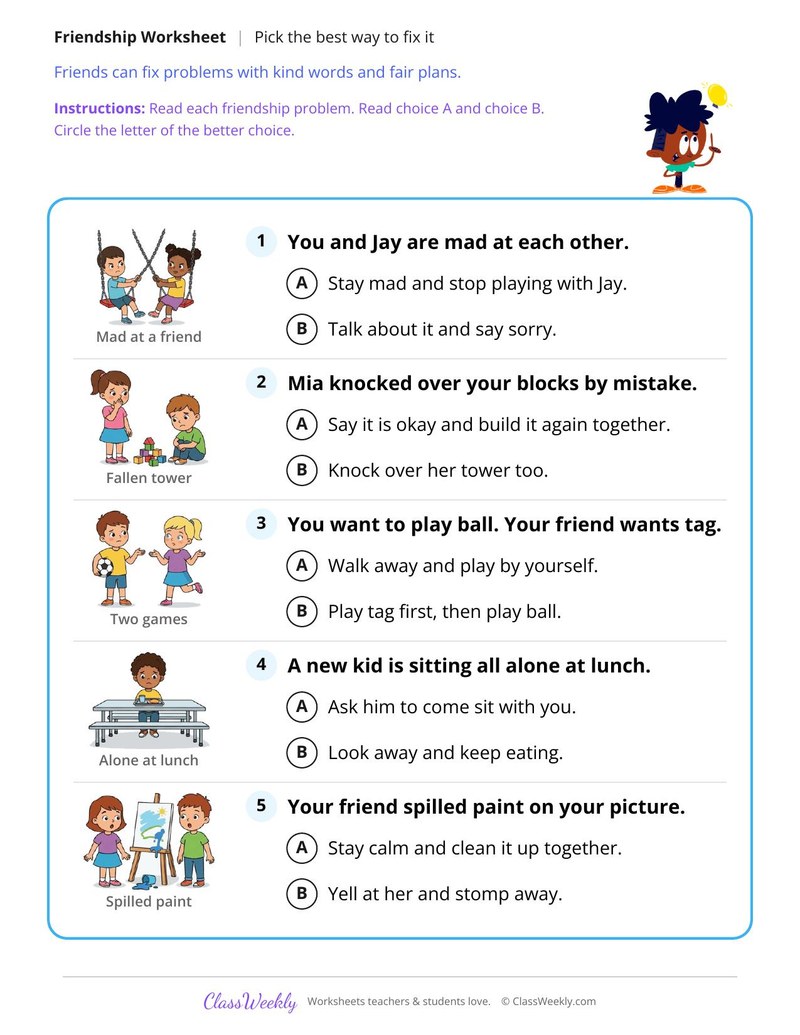
At 6 to 8, children are ready for bigger feeling words like frustrated, nervous and proud, and for noticing what caused a feeling. They practice solving friendship problems, giving compliments, seeing a situation from someone else's point of view, telling a small problem from a big one, and choosing a calm down strategy that works for them. These worksheets add short reading and writing to each skill.
What is a growth mindset for kids?
⌄
A growth mindset is the belief that you can get better at something with practice and effort. A child with a fixed mindset says I can't do it, while a child with a growth mindset says I can't do it yet. The growth mindset pages have children sort fixed and growth mindset sentences, add the word yet, and read a short story about a girl who learns from a mistake.
What does size of the problem mean?
⌄
Size of the problem is a way to help children match their reaction to what happened. A small problem, like losing a pencil, needs a small reaction and can be fixed alone. A big problem, like someone getting hurt, needs a grown-up right away. Sorting problems into small, medium and big on paper makes it easier to remember in the moment.
Are these social-emotional learning worksheets tied to a standard?
⌄
No. Social-emotional learning is taught alongside the core subjects, and these pages are not tagged to a Common Core or C3 Framework standard. Many schools follow their own SEL program, and these worksheets fit next to any of them as practice and discussion starters.
Ratings & Reviews
No reviews yet. Be the first to share what you think.
Reviews are for ClassWeekly members.
Make a Request
Spotted something to fix, or want a worksheet we don't have yet? Tell us and we'll make it.
Worksheet Details
| Grade | 1st Grade |
| Subject | Social Studies |
| Topic | Social-Emotional Learning |
| Pages | 1 page |
| Difficulty | Medium |
Learn More
What is ClassWeekly?
ClassWeekly offers free worksheets and printable learning resources for kids in preschool to grade 5. These worksheets teach everyday life skills and are designed by educators. Our math, reading, science, and social studies worksheets are aligned to Common Core, NGSS, and C3 Framework standards. Become a member to access the full library and download unlimited PDFs.