Suffix Words in a Pet Shop Story
Written by Adi Ackerman, Head Teacher
"Suffix Words in a Pet Shop Story" is written for 3rd Grade (Ages 8-9), and it covers Common Core RF.3.3.A. If your little one is a year younger but already steady on affixes and compound words, the page still works. You may just need to read the instructions out loud. And if they are older and prefixes and suffixes never quite stuck, this is a short review rather than busywork.
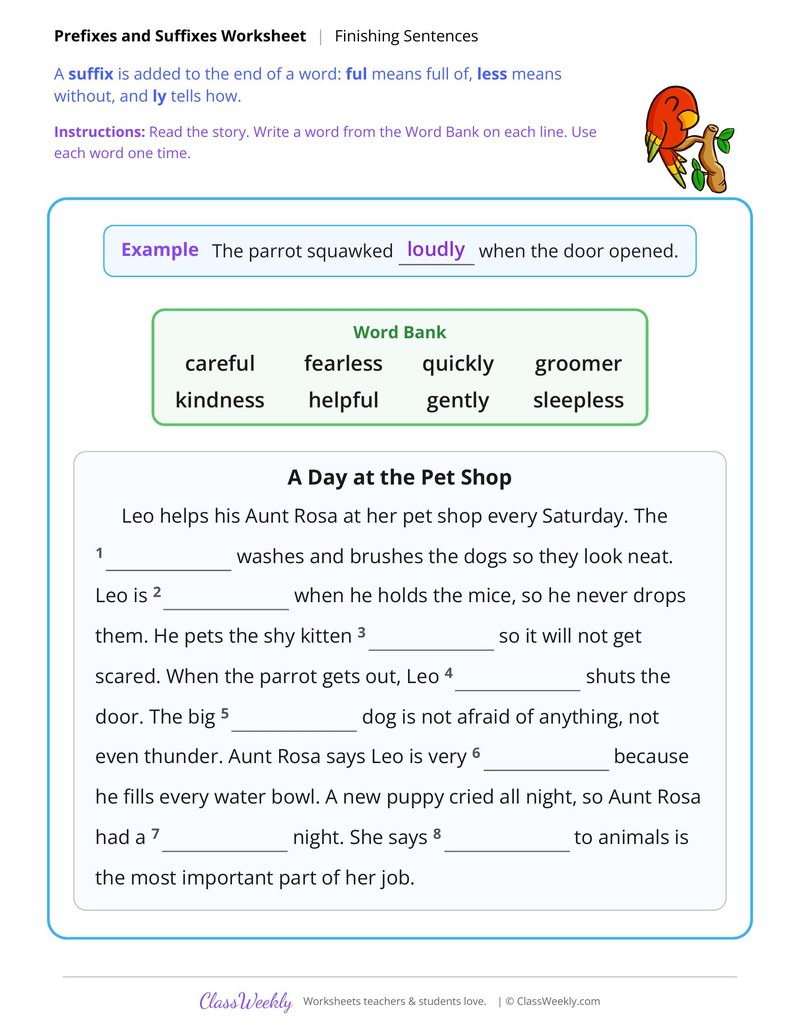
3rd grade vocabulary worksheet: write suffix words like careful, fearless and gently in A Day at the Pet Shop story. Answer key included. Part of our prefixes and suffixes affixes and compound words collection. Aligned to Common Core standards.
How do I use this worksheet?
Start with a word your child already knows well, like kind, and ask what happens when you add un to the front. Then try adding ness to the same word instead. Two changes to one word show that affixes aren't just spelling patterns, they're meaning tools, which is the entire reason this page exists rather than a plain spelling list. Keep a running list on the fridge of prefixes and suffixes as you meet new ones this year; by spring it becomes its own small reference your child built.
What students will practice
- Students will read a story about Leo at Aunt Rosa's pet shop.
- Students will write a Word Bank word on each line, like groomer, kindness and helpful.
- Students will use ful for full of, less for without and ly for how.
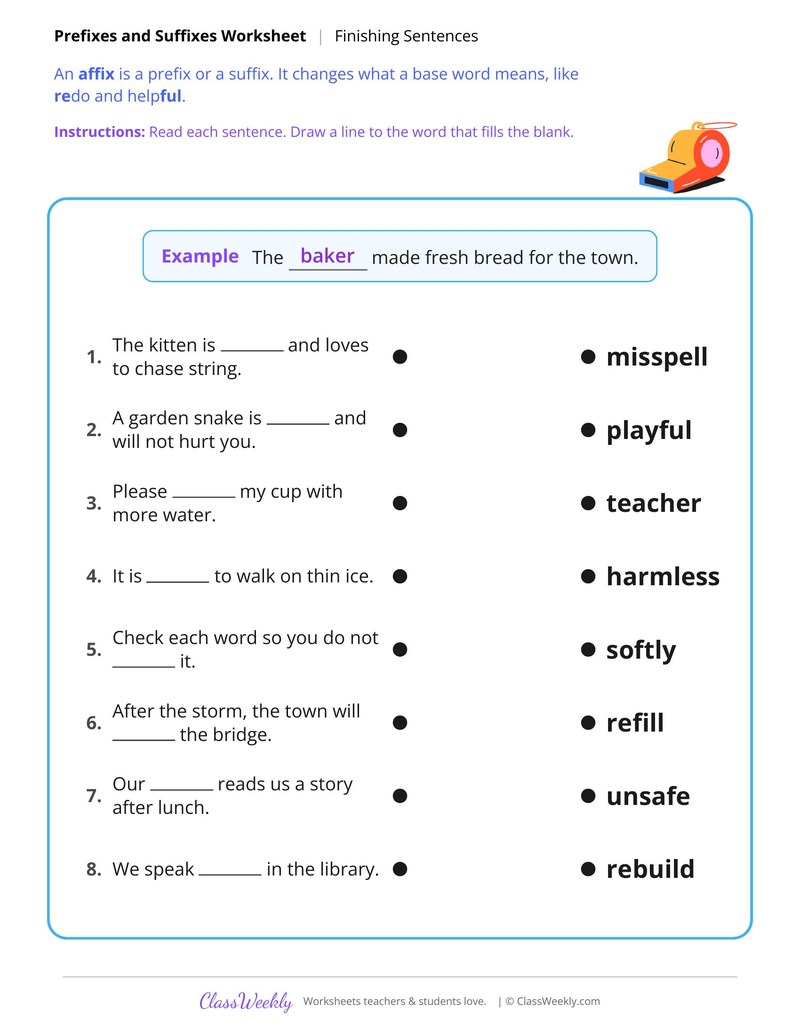
Match Sentences to Affixed Words
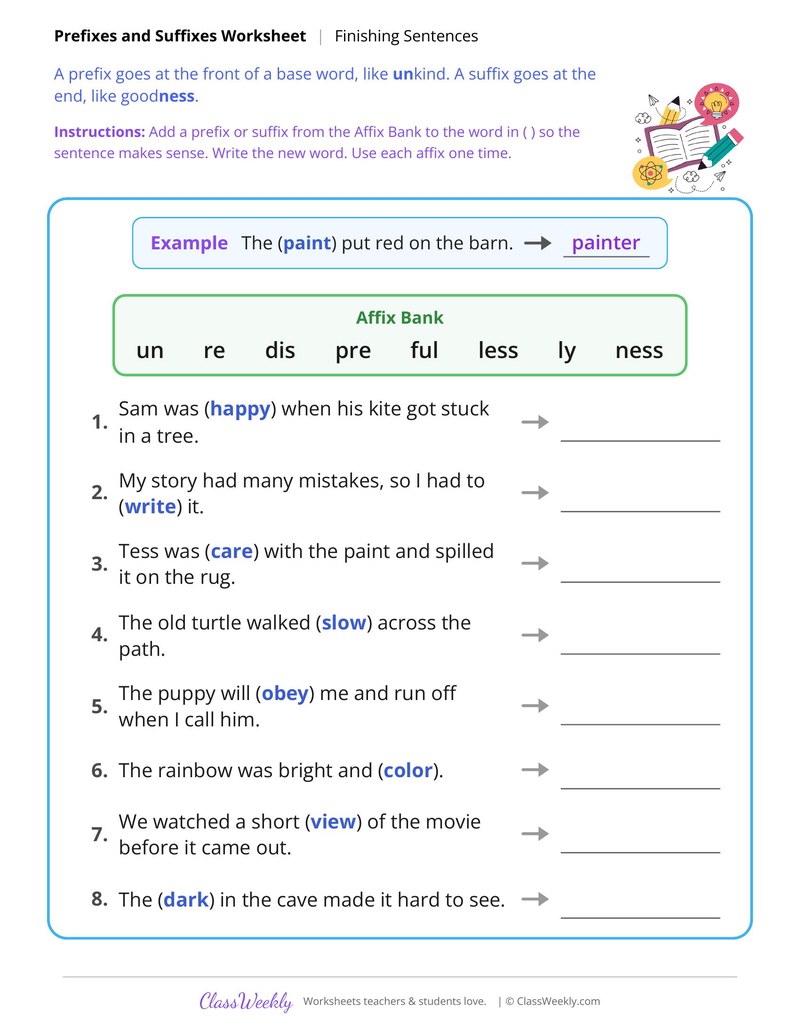
Add an Affix to Finish the Sentence
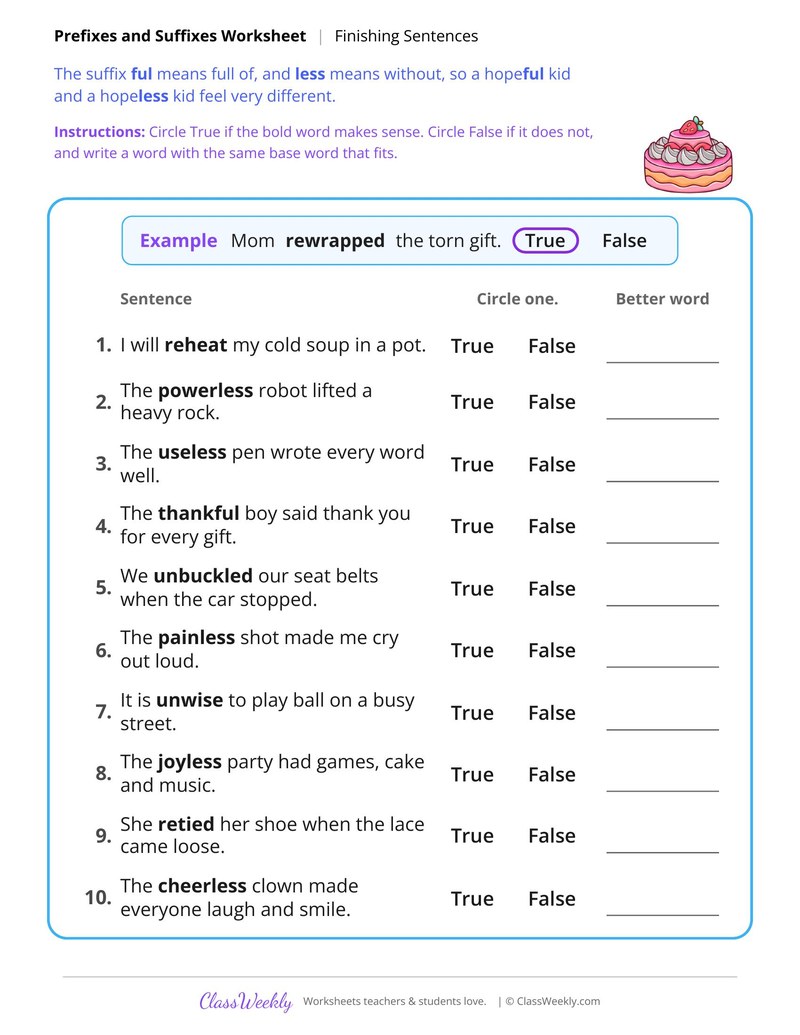
Do the Affixed Words Make Sense
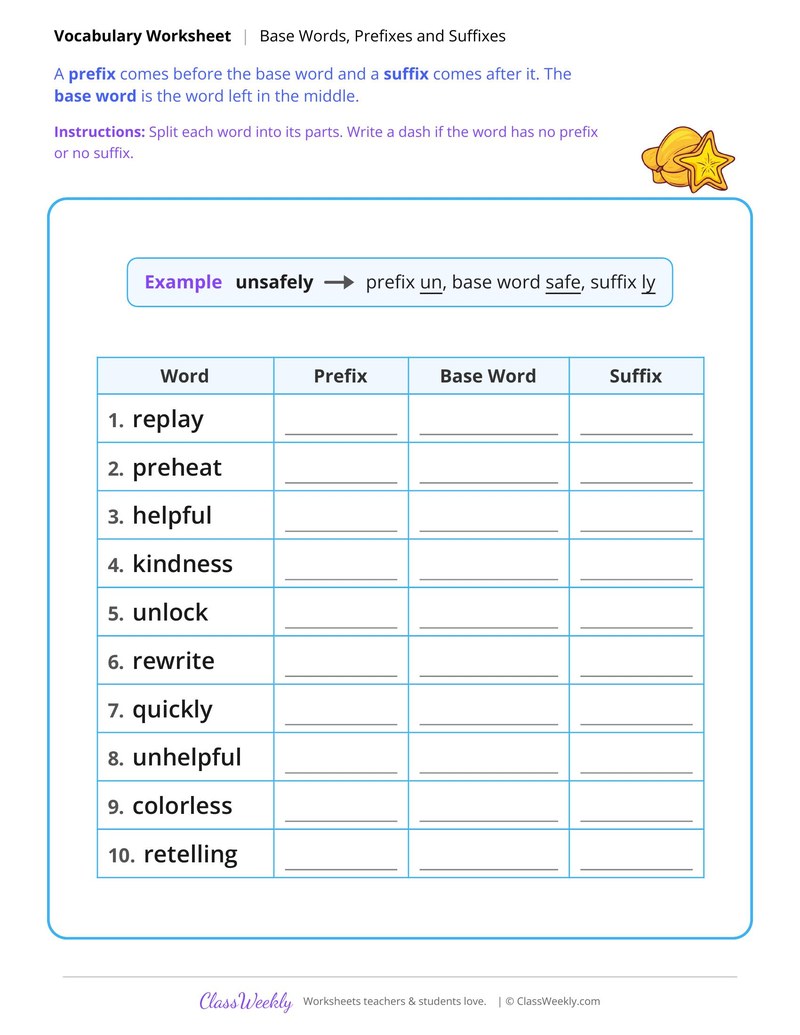
Split Words Into Prefix, Base Word and Suffix
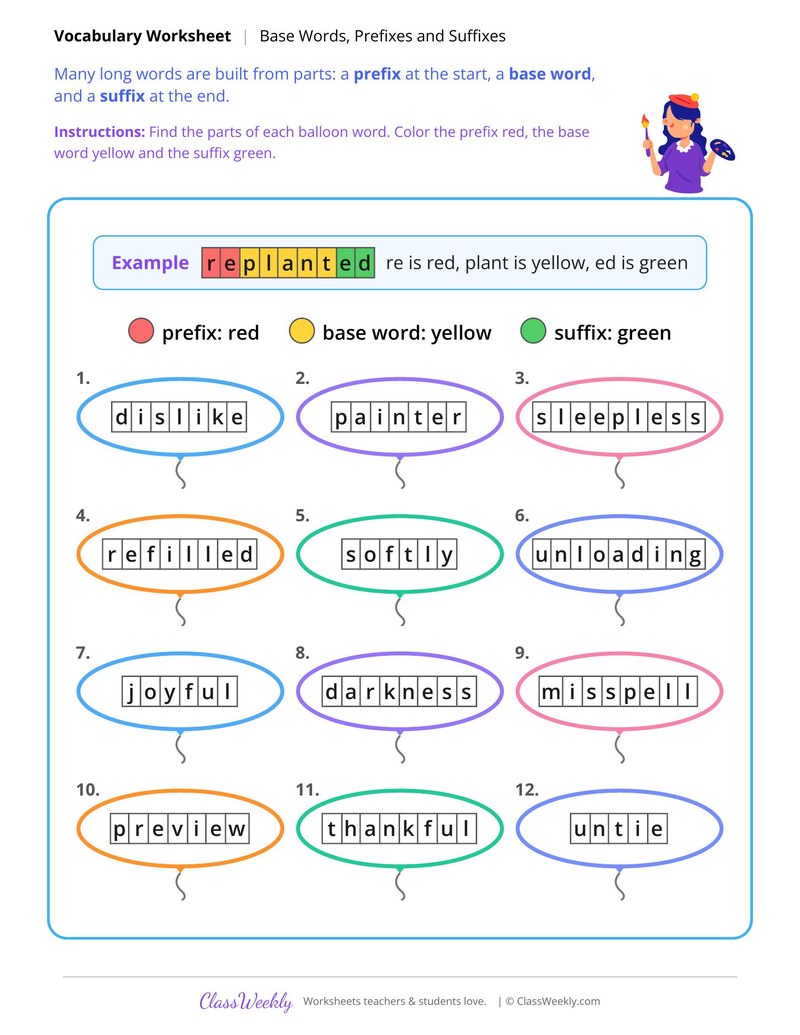
Color the Parts of Each Balloon Word
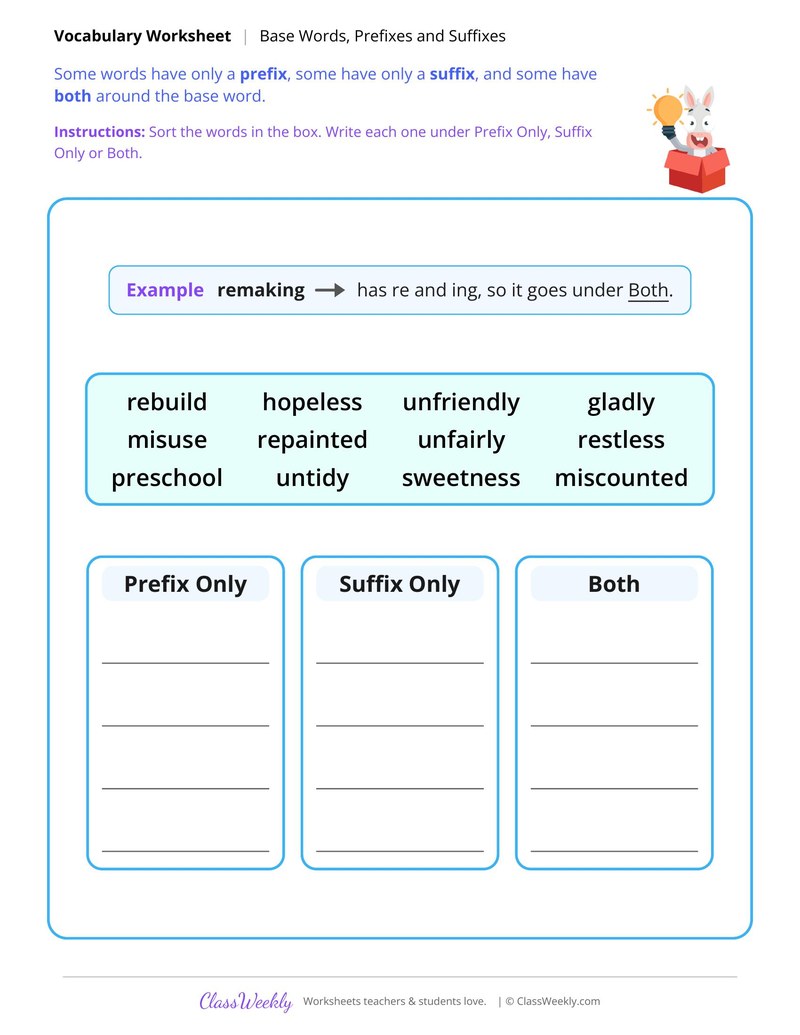
Prefix, Suffix or Both? Sort the Words
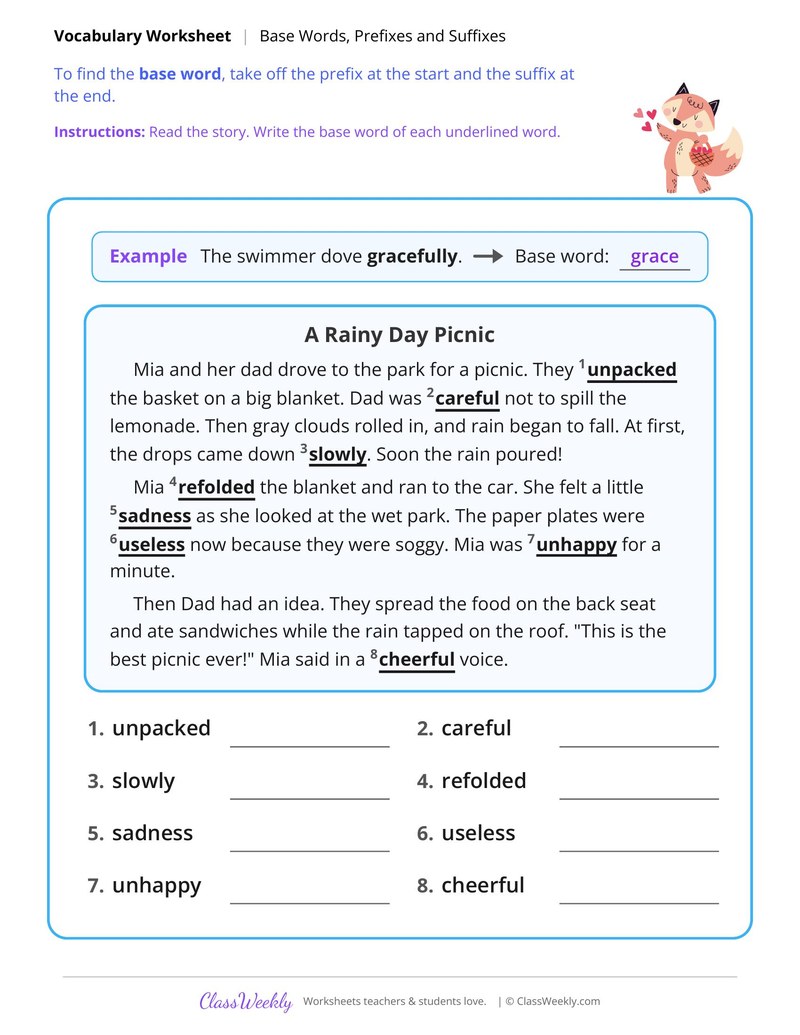
Base Word Hunt in a Rainy Picnic Story
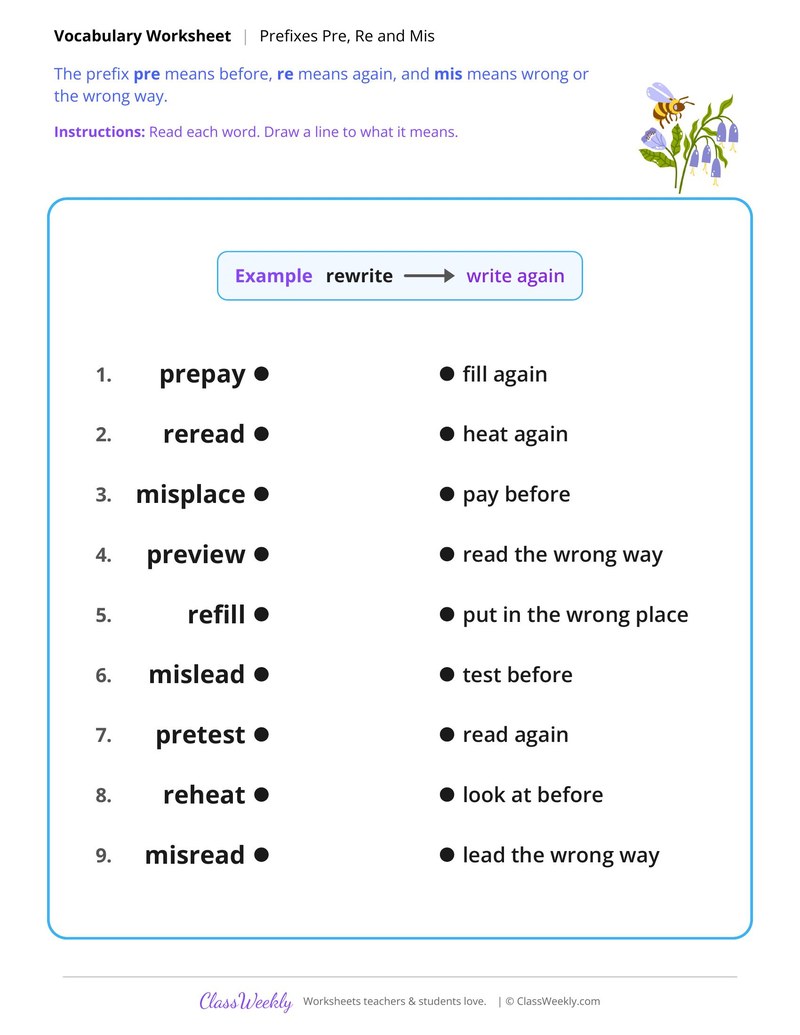
Match Pre, Re and Mis Words to Their Meanings
Curriculum Links
Common Core State Standards
Vocabulary · 3rd Grade
Find this in the curriculum
Browse the grade, subject, and topic this belongs to.
FAQ
How do I use this prefixes and suffixes worksheet?
⌄
Start with a word your child already knows well, like kind, and ask what happens when you add un to the front. Then try adding ness to the same word instead. Two changes to one word show that affixes aren't just spelling patterns, they're meaning tools, which is the entire reason this page exists rather than a plain spelling list. Keep a running list on the fridge of prefixes and suffixes as you meet new ones this year; by spring it becomes its own small reference your child built.
What does this worksheet teach?
⌄
Write suffix words like careful, fearless and gently in A Day at the Pet Shop story. The directions on the page read: Read the story. Write a word from the Word Bank on each line. Use each word one time. The page opens with a worked example, and an answer key is included.
Can I use this prefixes and suffixes worksheet for homeschool or classroom?
⌄
Yes, both. We made it for 3rd Grade affixes and compound words, and the page works the same whether it lands on a kitchen table or a center rotation. At home, most families go through it together and talk the answers out loud, and that talking is where most of the learning happens with prefixes and suffixes. In class it runs well as independent work while you pull a small group. Print one copy or thirty, whichever the day needs.
What does this worksheet cover?
⌄
It asks students to pull an affix off a word, name the base word underneath, and explain what the added piece changed about the meaning, such as unhappy meaning the opposite of happy.
How is this different from a plain spelling list?
⌄
Spelling lists test memorization. This worksheet tests whether a student understands that affixes are meaning tools, not just letters tacked onto a word.
How can I practice this at home?
⌄
Take one familiar word and add different prefixes or suffixes to it one at a time, asking your child what changes each time.
What is the difference between a prefix and a suffix?
⌄
A prefix goes before the base word, like re in rewrite, and a suffix goes after it, like ful in helpful. Both change what the base word means.
Which prefixes and suffixes do 3rd graders learn?
⌄
These sheets cover the prefixes pre, re, mis and un and the suffixes ful, less, ly, ness, able, ment and er. Review pages mix them, and sorting pages show that one suffix, like er or ful, can have two meanings.
How does a suffix change a word's part of speech?
⌄
Adding ness to an adjective makes a noun, like kind and kindness, and adding ful to a noun makes an adjective, like cheer and cheerful. Children test words in sentences and sort them by part of speech, including words from a volcano article.
Do these worksheets have answer keys?
⌄
Yes, every sheet in this topic comes with an answer key, and each one opens with a worked example.
Ratings & Reviews
No reviews yet. Be the first to share what you think.
Reviews are for ClassWeekly members.
Make a Request
Spotted something to fix, or want a worksheet we don't have yet? Tell us and we'll make it.
Worksheet Details
| Grade | 3rd Grade |
| Subject | Vocabulary |
| Topic | Affixes and Compound Words |
| Standard | RF.3.3.A |
| Pages | 1 page |
| Difficulty | Medium |
What is ClassWeekly?
ClassWeekly offers free worksheets and printable learning resources for kids, from preschool up. All worksheets are aligned to Common Core, NGSS, and C3 Framework standards and designed by educators. We also have free online learning games for thousands of skills, and kids' answers turn into a progress report for the grown-up. Start a free 30-day trial to download the worksheets.
Match Sentences to Affixed Words
Add an Affix to Finish the Sentence
Do the Affixed Words Make Sense
Split Words Into Prefix, Base Word and Suffix
Color the Parts of Each Balloon Word
Prefix, Suffix or Both? Sort the Words
Base Word Hunt in a Rainy Picnic Story
Match Pre, Re and Mis Words to Their Meanings