Tracing Sentences
Written by Adi Ackerman, Head Teacher
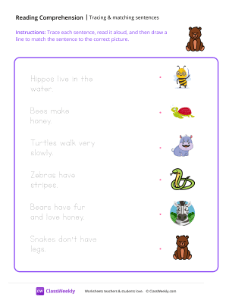
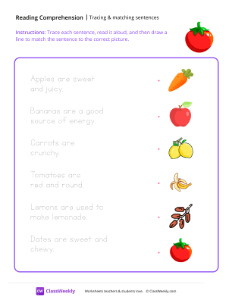
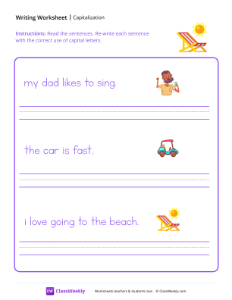
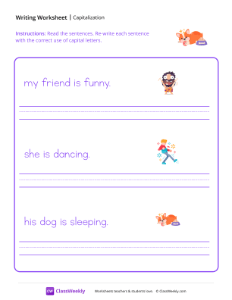
"Tracing Sentences" is written for Kindergarten (Ages 5-6), and it covers Common Core L.K.1.A. If your little one is a year younger but already steady on sentences, the page still works. You may just need to read the instructions out loud. And if they are older and tracing never quite stuck, this is a short review rather than busywork.

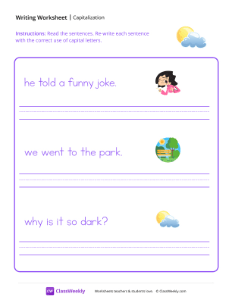
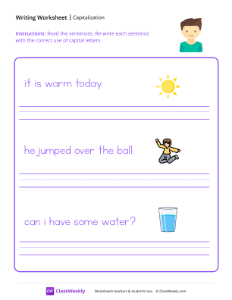
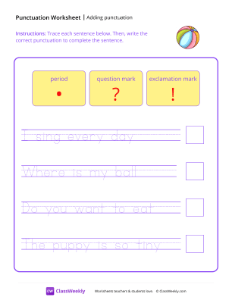
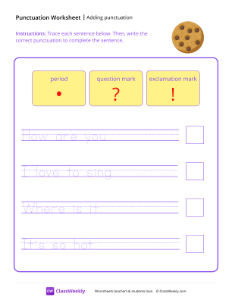
Free printable tracing sentences worksheet for kindergarten students. Part of our tracing sentences collection. Aligned to Common Core standards.
How do I use this worksheet?
Introduce the skill with a brief whole-class activity, such as calling out examples and asking students to give a thumbs up when they hear tracing in a sentence. Then let students work through it with your modeling first (do the first item together on the board), then try the rest with a partner, referring to a class anchor chart if one is available. When reviewing answers, ask students to explain why an answer is correct rather than just confirming it. These tracing worksheets work well as a focused practice activity, a homework assignment, or a warm-up at the start of a language arts lesson.
What students will practice
- Students will identify and correctly use tracing in sentences and short passages.
- Students will distinguish tracing from related language concepts and apply rules consistently.
- Students will demonstrate understanding of tracing through listening, speaking, and early decoding, in both reading and their own writing.


Curriculum Links
Common Core State Standards
Language · Kindergarten
Standard: Print many upper- and lowercase letters.
View all L.K.1.A worksheets →Find this in the curriculum
Browse the grade, subject, and topic this belongs to.
FAQ
How do I use this tracing worksheet?
⌄
Introduce the skill with a brief whole-class activity, such as calling out examples and asking students to give a thumbs up when they hear tracing in a sentence. Then let students work through it with your modeling first (do the first item together on the board), then try the rest with a partner, referring to a class anchor chart if one is available. When reviewing answers, ask students to explain why an answer is correct rather than just confirming it. These tracing worksheets work well as a focused practice activity, a homework assignment, or a warm-up at the start of a language arts lesson.
What does this worksheet teach?
⌄
These tracing worksheets for Kindergarten give students the targeted language arts practice they need to master this important grammar skill. Students identify, sort, complete, and write using tracing through a variety of exercises designed to reinforce both recognition and application. Our sentences worksheets connect grammar practice to reading and writing so students see how tracing works in real language. Building a solid understanding of tracing in Kindergarten sets students up for stronger writing and clearer communication in every subject.
Can I use this tracing worksheet for homeschool or classroom?
⌄
Yes, both. We made it for Kindergarten sentences, and the page works the same whether it lands on a kitchen table or a center rotation. At home, most families go through it together and talk the answers out loud, and that talking is where most of the learning happens with tracing. In class it runs well as independent work while you pull a small group. Print one copy or thirty, whichever the day needs.
What does sentence tracing teach kindergarteners beyond handwriting?
⌄
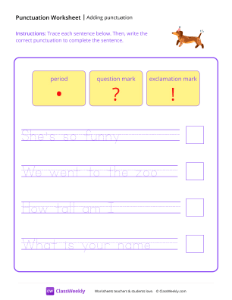
While tracing primarily builds fine motor control and letter formation habits, it also exposes children to correct sentence structure repeatedly. Each time a child traces, they internalize where capitals go, how words are spaced, and where punctuation belongs.
When should kindergarteners use tracing worksheets?
⌄
Tracing is most beneficial in early to mid-kindergarten, when children are still developing pencil grip and letter formation. It acts as a bridge between pre-writing strokes and independent writing, and can be revisited anytime a child needs handwriting support.
How can parents make sentence tracing more engaging at home?
⌄
Let your child choose a favorite colored pencil or crayon for tracing, and talk about what the sentence means after they finish. Reading the traced sentence aloud adds a literacy component to what might otherwise feel like pure handwriting practice.
What sentence skills are expected in kindergarten?
⌄
Kindergarteners should produce and expand complete sentences in shared language activities (CCSS L.K.1f). They should understand that a sentence has a naming part and an action part, begins with a capital letter, and ends with a period or question mark (L.K.2a-b). Most kindergarteners are working on applying these conventions in their own writing.
How do you teach kindergarteners to write complete sentences?
⌄
Begin with oral sentence frames: I see a ___. My favorite ___ is ___. Then support students in writing those sentences with invented spelling, leaving the beginning capital and ending period as non-negotiables. Shared writing where the teacher scribes while students dictate helps model sentence conventions. Worksheets with sentence frames and picture prompts scaffold independent writing.
Should kindergarteners use punctuation in their writing?
⌄
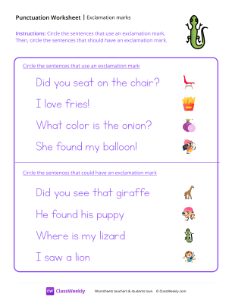
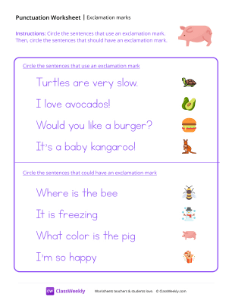
CCSS L.K.2b expects kindergarteners to recognize and produce periods, question marks, and exclamation marks. In practice, the minimum expectation is a period at the end of a sentence. Question marks for questions and exclamation marks for excitement or commands can be introduced when students are ready. Daily writing practice with explicit feedback on punctuation builds the habit.
Ratings & Reviews
No reviews yet. Be the first to share what you think.
Reviews are for ClassWeekly members.
Make a Request
Spotted something to fix, or want a worksheet we don't have yet? Tell us and we'll make it.
Worksheet Details
| Grade | Kindergarten |
| Subject | Grammar & Writing |
| Topic | Sentences |
| Standard | L.K.1.A |
| Pages | 1 page |
| Difficulty | Medium |
Learn More
What is ClassWeekly?
ClassWeekly offers free worksheets and printable learning resources for kids in preschool to grade 5. All worksheets are aligned to Common Core, NGSS, and C3 Framework standards and designed by educators. Become a member to access the full library and download unlimited PDFs.