
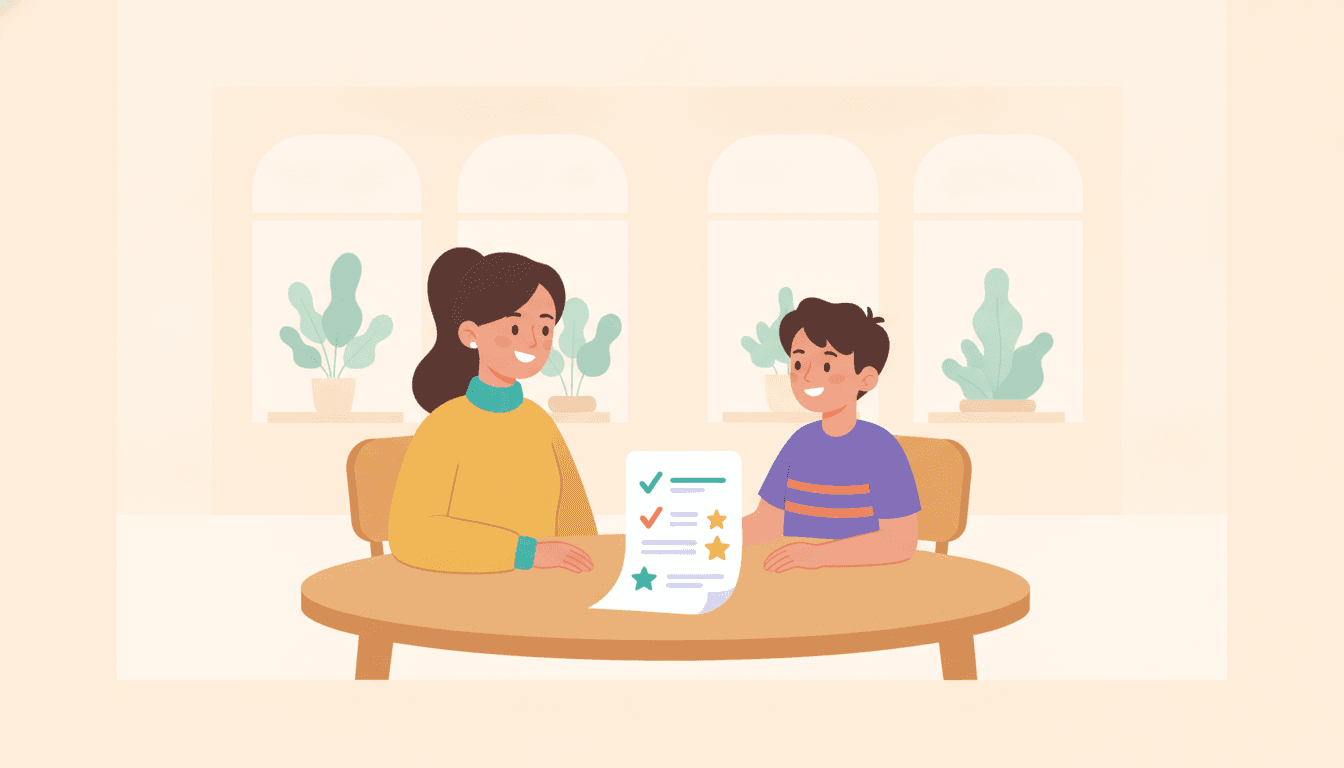
Beginning-of-Year Assessment Resources for Schools
The first few weeks of school aren't just about routines and rapport-building. For most schools, they're also when beginning-of-year assessments happen, establishing where every student is actually starting from before instruction ramps up for real.
Worth being precise up front about what this article covers. ClassWeekly is a supplemental practice worksheet library, not a formal assessment or testing platform. What follows is about the practice side that supports assessment, not a substitute for whatever formal assessment tools your school already uses.
Why Beginning-of-Year Assessment Matters (Baseline Data, Grouping Decisions)
Beginning-of-year assessment gives teachers a real starting point instead of an assumption based on last year's grade level. It informs grouping decisions (which students need extra support right away, which are ready to move faster), and it gives everyone, teachers, specialists, and parents, a shared baseline to measure progress against later in the year.
Skipping or rushing this step tends to show up later as misplaced groupings or gaps that don't get caught until a progress check flags them well into the term.
Free Kindergarten Number Worksheets


Free 1st Grade Spelling Worksheets


Free 2nd Grade Addition Worksheets


Using Standards-Aligned Practice Worksheets Alongside Formal Assessments
Once formal assessment results come in, standards-aligned practice worksheets are useful for the immediate next step: giving students targeted practice on exactly what the assessment flagged, without waiting for a new unit to naturally reach that skill. Every worksheet showing its CCSS standard means a teacher can go from "assessment flagged this specific gap" to "here's practice material for that exact standard" quickly, rather than searching broadly for something roughly on-topic.

This is squarely a practice tool, not an assessment tool. It supports what happens after the formal testing, not the testing itself.
How Beginning-of-Year Practice Needs Differ by Grade Band
The gap between assessment and useful practice material looks different in kindergarten than it does in 4th grade. In the earliest grades, beginning-of-year assessment is often about foundational skills, letter recognition, number sense, basic phonics, and the practice that follows tends to be short, highly repetitive, and delivered in small doses across the day. By upper elementary, assessment is more likely to flag specific standards a student hasn't yet mastered from a prior grade, and the practice that follows needs to target that exact standard rather than a broad skill area. A resource set that's genuinely useful across the whole beginning-of-year window needs to cover both ends of that range well, not just the grade band that happens to get the most attention.
Briefing Specialists and Interventionists Alongside Classroom Teachers
Classroom teachers aren't the only staff acting on beginning-of-year assessment results. Reading specialists, math interventionists, and special education staff are often building their own small-group plans off the same data, sometimes for the same students a classroom teacher is also tracking. Making sure the same standards-aligned resource set is available to specialists, not just classroom teachers, avoids a scenario where a student gets consistent practice in the regular classroom but different, unaligned material in a pull-out group, or the reverse. Briefing specialists at the same time as classroom staff, rather than as an afterthought, keeps the practice a student receives consistent no matter which adult in the building is delivering it.
Covering Every Grade Level With One Consistent Resource Set
Beginning-of-year assessment happens across every grade at once, which means whoever's coordinating it (often a principal or instructional coach) benefits from one consistent resource set spanning K-5, rather than different practice materials at different grade levels sourced from different places. Consistency here also makes it easier to compare how different grades are trending, since the practice material students receive afterward is drawn from the same standards-aligned source across the building.
What to Have Ready Before the First Assessment Window
- Confirm your formal assessment tools and schedule are set for the first few weeks
- Make sure teachers have access to standards-aligned practice material ready to assign as soon as results come in, not scrambling to find something once gaps are identified
- Brief staff on how to match a flagged standard to available practice material, so the handoff from assessment to practice doesn't lose time
- Set expectations for how quickly practice should follow assessment, since the value drops the longer that gap sits
Say assessment results come in on a Thursday and teachers return to their classrooms Monday. A school that briefed staff in advance on how to search by standard has practice material assigned by Monday afternoon. A school that didn't spends that same window with teachers individually hunting for something roughly on-topic, which is exactly the delay this kind of preparation is meant to prevent.
Need standards-aligned practice ready for your beginning-of-year assessment follow-up? Get Started with a school-wide license.

Adi Ackerman
Head Teacher
Adi is the Head Teacher at ClassWeekly, with years of experience teaching elementary students. She designs our curriculum-aligned worksheets and writes practical guides for teachers and parents.
Keep Reading
Ready to download? Try ClassWeekly free for 30 days.
Unlimited worksheets for PreK through 5th grade. Cancel anytime.